
Melanoma Signs and Symptoms
Watch: What makes a mole turn cancerous?
What are the early warning signs of melanoma?
In the initial stages of melanoma, the symptoms are often subtle. The first noticeable warning sign may be an unusual skin change, such as a small scaly patch, a rash or sore that does not heal, a new mole or an existing mole that suddenly changes in appearance.
What are the symptoms of melanoma?
As melanoma progresses, it may begin to cause symptoms that can be seen or felt.
What does melanoma look like?
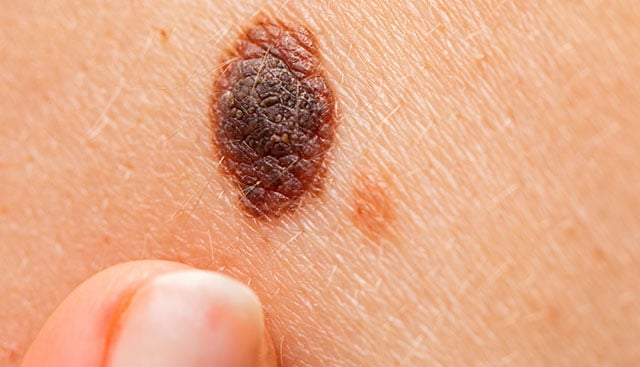
Many experts recommend using the ABCDE acronym as a guide for identifying visible warning signs of melanoma when examining moles and skin lesions. Each letter represents a specific characteristic to watch for:
- A – Asymmetry – One half of the mole does not match the other half in shape or size.
- B – Borders – The mole's edges are irregular, ragged or blurred rather than smooth.
- C – Color – The mole contains several colors or uneven shades, such as black, brown, tan, white, red or blue gradients.
- D – Diameter – The mole is larger than 6 millimeters (approximately the size of a pencil eraser).
- E – Evolving – The mole has changed in size, shape, color or elevation or displays new symptoms, such as itching, bleeding, oozing and crusting.
The ABCDE rule can be a valuable tool for the early detection of melanoma, which can save lives by significantly increasing the likelihood of successful treatment. However, it is important to be aware that not all melanomas display these characteristics. For instance, some may appear as a dark streak under a fingernail or toenail, while others might resemble an ordinary bruise that does not heal over time. In general, any unusual skin change should be discussed with a physician who can provide a prompt evaluation and appropriate treatment if needed.
What does melanoma feel like?
In the late stages of melanoma, symptoms can sometimes be felt. In addition to pain and irritation, some people notice itchy or tender nodules under the surface of the skin.
How to check for melanoma on the scalp
Detecting melanoma on the scalp can be particularly challenging because hair often obscures the skin, making visual examination more difficult. If abnormal skin changes are overlooked, the diagnosis may be delayed, allowing the melanoma to progress to a more advanced stage that requires extensive treatment. Moreover, the scalp’s rich network of blood vessels and lymphatics creates an environment where melanoma can develop and spread more readily. Due to these factors, melanoma on the scalp is considered especially dangerous, underscoring the importance of performing regular scalp checks to identify potential concerns early. To do so:
- Stand in a well-lit room.
- Part a section of hair and use a handheld mirror and an opposing mirror to examine the scalp.
- Use the ABCDE acronym to identify unusual moles, blemishes, red patches and other possible signs of melanoma.
- Continue parting the hair and examining the skin until the entire scalp has been inspected.

What are the symptoms of advanced melanoma?
As melanoma progresses, it may spread from the area of skin where it originated to other organs and tissues. The symptoms of metastatic melanoma can vary depending on the part of the body affected:
- Lymph nodes – Swollen or painful lymph nodes or hardened lumps that can be felt under the skin
- Brain – Headaches and seizures
- Bones – Fractures and bone pain
- Liver – Loss of appetite, unexplained weight loss and liver enlargement
- Lungs – Persistent coughing and difficulty breathing
Advanced melanoma can also cause fatigue, weakness and numbness in the arms or legs.

Florida's Top Choice for Cancer Care
Schedule an AppointmentBenefit from world-class care at Moffitt Cancer Center
Moffitt is well-known for its Donald A. Adam Comprehensive Melanoma Research Center of Excellence. Ours is one of the leading melanoma programs in Florida, employing more than 30 world-renowned physicians and researchers who are leading the way in investigating and developing new ways to prevent, diagnose, treat and cure melanoma. Because our physicians have unparalleled expertise, those with unusual skin changes can confidently turn to Moffitt for comprehensive care and support.
If you would like to discuss your melanoma symptoms with a specialist in Moffitt’s Cutaneous Oncology Program, you can request an appointment by calling 1-888-663-3488 or submitting a new patient registration form online. If you have already received a diagnosis, the skin cancer experts at Moffitt can review your labwork, biopsies and scans and offer a second opinion. We do not require referrals.