
How to Become a Certified Registered Nurse Anesthetist (CRNA)
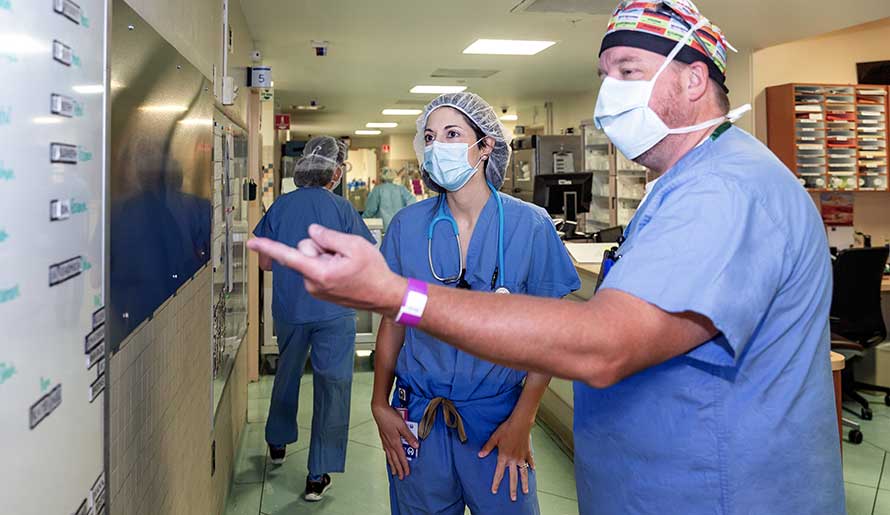
Certified registered nurse anesthetists (CRNAs) play a vital role in oncology by delivering anesthesia care to cancer patients who are undergoing surgery and other medical procedures. These highly trained professionals ensure patient safety and comfort during complex and potentially life-saving treatments, such as chemotherapy port placements, biopsies and tumor resections.
The demand for CRNAs is skyrocketing due to the increasing need for specialized anesthesia care, particularly in oncology settings. According to the U.S. Bureau of Labor Statistics, employment of nurse anesthetists is projected to grow by 40% from 2023 to 2032, significantly faster than the average for other professions. With opportunities to make a profound impact and earn an attractive salary, a CRNA career is an excellent choice for a nurse who is passionate about oncology and patient care.
The pathway to becoming a CRNA
Becoming a CRNA is a rigorous but rewarding journey that requires dedication, advanced education and clinical expertise. Here are the steps to achieving this meaningful career goal:
1. Earn a Bachelor of Science in Nursing (BSN) degree.
The first step toward becoming a CRNA is to obtain a BSN or equivalent degree. Typically, the program takes four years to complete and includes coursework in anatomy, physiology, pharmacology and patient care, along with hands-on clinical rotations. An aspiring CRNA should focus on building a strong foundation in science and nursing principles.
2. Obtain a registered nurse (RN) license.
After earning a BSN, the graduate must pass the National Council Licensure Examination for Registered Nurses (NCLEX-RN) to obtain their RN license. This credential will allow them to practice as a registered nurse and gain valuable clinical experience.
3. Gain critical care experience.
Most CRNA programs require a candidate to have at least one to two years of experience working in a critical care environment, such as an intensive care unit (ICU). This experience is essential for developing the skills needed to monitor and manage patients in high-pressure settings, a key aspect of a CRNA’s role.
4. Complete a Doctor of Nursing Practice (DNP) or Doctor of Nurse Anesthesia Practice (DNAP) program.
A CRNA must pursue a graduate program accredited by the Council on Accreditation of Nurse Anesthesia Educational Programs (COA). DNP and DNAP programs, which typically take three to four years to complete, offer further education in areas such as:
- Advanced pharmacology
- Physiology and pathophysiology
- Anesthesia techniques and patient management
- Research and evidence-based practice
Clinical training is also a significant component, with students administering anesthesia under supervision in diverse healthcare settings, including oncology-focused facilities.
5. Pass the National Certification Examination (NCE).
After completing a DNP or DNAP program, the graduate must pass the NCE administered by the National Board of Certification and Recertification for Nurse Anesthetists (NBCRNA). This exam is designed to assess their knowledge and readiness to practice as a CRNA.
6. Obtain state licensure and begin practice.
Once certified, a CRNA must obtain licensure in the state where they intend to practice. They can then begin working in various healthcare settings, including hospitals, outpatient surgical centers and cancer treatment facilities.
7. Pursue specialization in oncology anesthesia.
A CRNA who is interested in oncology can further specialize by gaining experience and training specific to cancer care. This may include:
- Administering anesthesia for procedures unique to oncology, such as radiation therapy and tumor resections
- Managing patients with complex medical conditions due to cancer and its treatment
- Collaborating with oncologists, surgeons and other specialists to deliver comprehensive cancer care
The role of CRNAs in oncology
In oncology, certified registered nurse anesthetists are invaluable in providing tailored anesthesia care to cancer patients, who often have unique and complex medical needs. The responsibilities of a CRNA can include:
- Preoperative assessments – Evaluating each patient’s medical history and health status to develop a safe and effective anesthesia plan
- Anesthesia administration – Delivering anesthesia during surgeries and other procedures while closely monitoring the patient’s vital signs
- Pain management – Providing post-anesthesia care and managing pain for patients who are recovering from cancer-related procedures
- Collaboration – Working as an integral member of a multidisciplinary team to ensure that patients receive holistic and effective cancer treatment
Why Choose Moffitt Cancer Center?
Moffitt offers unparalleled opportunities for CRNAs who are passionate about making a difference in oncology. As one of the leading cancer treatment and research centers in the United States, Moffitt provides an innovative and supportive environment for advanced practice providers. Here are some of the many reasons to consider a career at Moffitt:
- Specialized experience – You will work in a state-of-the-art facility dedicated to cancer care.
- Collaborative environment – You will join a team of experts committed to achieving exceptional patient outcomes.
- Professional growth – You will have access to continuing education, advanced training and research opportunities in oncology anesthesia.
- Patient impact – You will contribute to life-saving cancer treatments and make a meaningful difference in the lives of many patients and their families.
Take the Next Step
Becoming a certified registered nurse anesthetist is a challenging and fulfilling occupational path, especially for those who are passionate about oncology. If you are ready to advance your career and make a significant impact in cancer care, consider joining the anesthesiology department at Moffitt. With cutting-edge resources and a commitment to excellence, Moffitt is the ideal place to grow professionally and help patients in need.
Apply now to become part of a team dedicated to transforming cancer treatment and improving lives.