

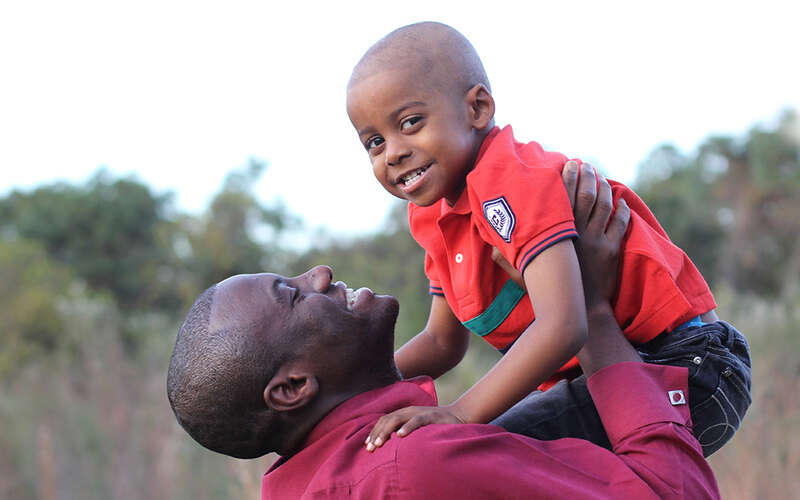
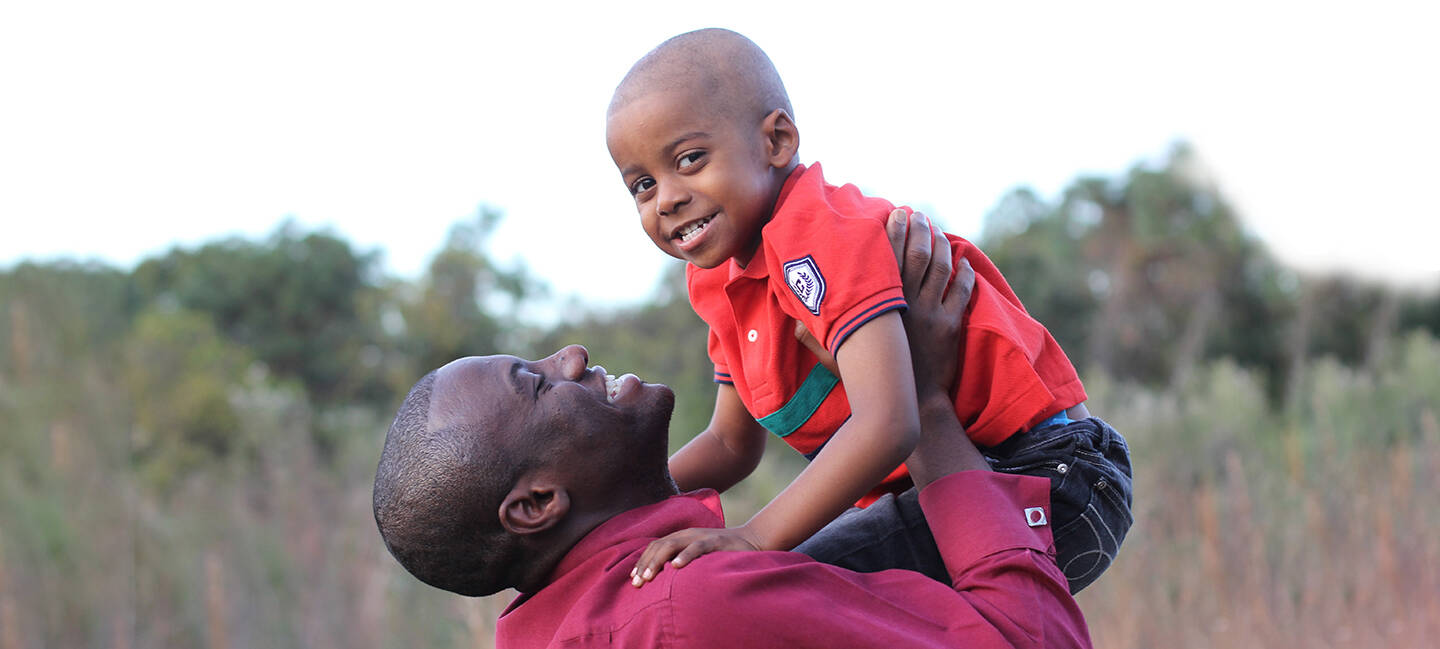
A Father’s Promise
Key Takeaways:
- Moffitt Cancer Center physician-scientist Kosj Yamoah, MD, PhD, lost his 4-year-old son Zion to a rare aggressive brain cancer
- Zion’s treatment required extensive travel for proton therapy, highlighting gaps in local access
- Moffitt’s new Speros proton therapy center aims to expand access to advanced cancer treatment for Florida families
Kosj Yamoah, MD, PhD, is a man accustomed to confronting life and death questions. As a board-certified oncologist, physician-scientist and chair of the Radiation Oncology Department at Moffitt Cancer Center, he has dedicated his life to studying and treating cancer.
A highly regarded expert in his field, Kosj currently leads a global translational research lab. He serves as a principal investigator for multiple well-funded national and international programs, and he has fostered the career development of multiple clinicians and scientists within the field.
Yet, no matter how prestigious the credentials or how accomplished the career, nothing could have prepared him for the most challenging role of his life: being a father to a son diagnosed with a rare and aggressive brain cancer.
A Devastating Diagnosis
In early 2015, Kosj was a young physician-scientist who had recently completed his medical residency and fellowship training in Philadelphia. He had earned a faculty position in Moffitt’s Radiation Oncology Department, and his family was preparing to move to Tampa. Kosj was looking forward to the future and planning his research at Moffitt.
But in April of that year, Kosj and his wife, Jaymi, noticed subtle changes in their son, Zion. Just shy of his third birthday, Zion began having a slight limp and showing unusual fatigue while playing one morning. These symptoms would have seemed minor to many parents, but they sparked alarm for Kosj. Immediately recognizing Zion’s symptoms as neurological, he knew the stakes were high.
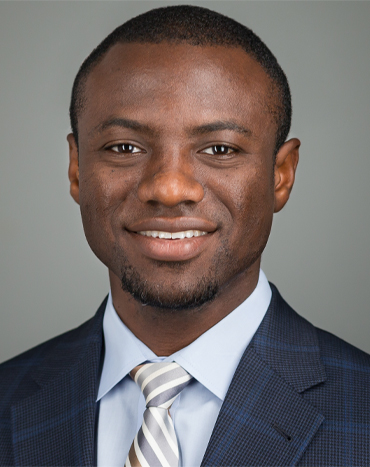
“We brought him in immediately for evaluation, and an MRI was ordered that night,” Kosj recalled. “The scan showed an 8-by-8-centimeter tumor in his brain. I felt like the floor had fallen out from under me. I’m a doctor. I’m supposed to understand disease, to fight it, to control it, but here was my child, and the rules were completely different.”
Zion’s treatment journey began in May with surgery to remove the tumor. It took five hours.
“That wait was the longest,” Kosj explained. “But he woke up like a champion with no neurologic deficits. He wanted to eat, wanted to play again with his action figures. He was back to his baseline, and we really believed that was behind us at that point. I was hoping it was a benign tumor, something that we know he’s going to get over and he’s just going to live a normal life.”
But the pathology results were grim. Zion had an atypical teratoid rhabdoid tumor (ATRT), a rare and highly aggressive childhood brain cancer. While Kosj had learned about this disease in his medical training, he committed it to memory but did not think much of it.
‘Life Was Turned Upside Down’
The Yamoahs began an exhaustive search for treatment options for their son. Together they devoured every research article, every clinical trial, every protocol available. Kosj began leaning on the same mentor who taught him about ATRT for guidance on next steps.
“I had already worked with pediatric kids with brain tumors,” Kosj said. “I started calling my friends and mentors saying, ‘What can we do? I’m not coming to you as a physician colleague, but as a parent with a child with a brain tumor.’ My life was turned upside down.”
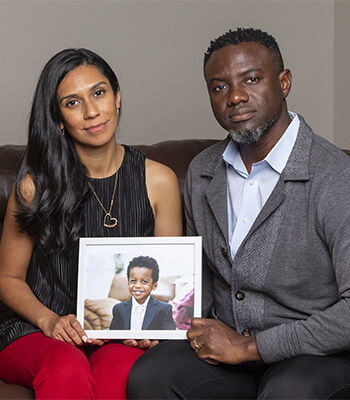
Kosj and his wife, Jaymi, explored every possible option for Zion’s treatment. At the time, that meant traveling out of state, away from family and their support network.
The best option for their son was out of state, far from home, away from family, support and everything familiar. Kosj’s mentors recommended a newer clinical trial that was underway in Memphis, Tenn. It took nearly a month to go through the processing and testing to ensure Zion was eligible.
While his family packed up and moved to Memphis, Kosj began his orientation at Moffitt.
“I was living across three states,” Kosj said. “I had my Philadelphia address, trying to sell our house, and I was renting a space in Tampa so I could work. And then I was traveling to Memphis to be with my family while Zion was getting his treatments. I was just trying to survive.”
Even with his expertise in radiation oncology, Kosj was thrust into unfamiliar terrain. A personal and professional limbo as a physician treating patients with cancer and a parent desperately seeking the best treatment for his child.
For more than four months, Zion underwent multiple rounds of chemotherapy infusion treatments in Memphis while Kosj lost precious moments with his son traveling in between.
“I felt like a failure in those moments,” Kosj admitted. “I wanted to be a supportive husband, a father and a doctor, but there’s no way to describe how much it feels like you’re failing when confronted with something like this. Trying to practice medicine when there was nothing on this planet that could save my son. Trying to support my wife while she’s handling everything on her own. That feeling of hopelessness was palpable.”
Another Painful Reality
After the trial, Zion needed to begin radiation treatments. Kosj knew the best protocol for his son would be proton therapy.
Proton therapy is one of the most advanced forms of radiation therapy available. It uses hydrogen atoms and a massive cyclotron to accelerate proton particles to nearly two-thirds the speed of light to deliver radiotherapy to cancer cells. Unlike conventional radiotherapy, proton therapy delivers a powerful, highly focused dose of radiation directly to a tumor while minimizing exposure to surrounding healthy tissue.
The result is fewer side effects and, particularly for children, a reduced risk of long-term complications. For cases like Zion’s, where the tumor is in a critical structure like the brain, this precision is crucial.
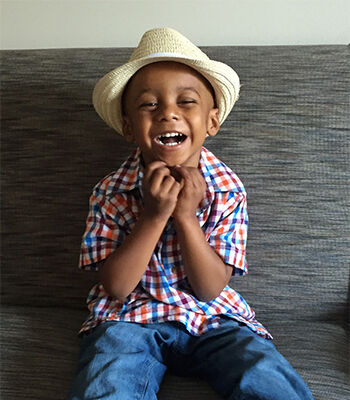
Proton therapy was the best option for Zion. It delivers a powerful, highly focused dose of radiation directly to a tumor while minimizing exposure to surrounding healthy tissue.
But, yet again, the best treatment for Zion wasn’t available in Tampa where the family was living. They were left with no other option but to travel to Jacksonville.
By the end of October, five months into the battle, Zion’s treatment was complete. For a fleeting moment, the family dared to breathe. They returned for more testing in early November to determine if Zion remained with no evidence of disease.
Kosj knew something was wrong at the next visit when Zion’s oncologist, a former colleague, called him into the room to review his son’s scans.
“I couldn’t believe my eyes,” Kosj recalled. “I thought to myself it had to be someone else’s scans. I watched my son — this happy, carefree kid — running around, playing and laughing. But his scans showed that his entire spinal cord was filled with little white spots. The amount of recurrent disease I saw in my own son’s scan was heartbreaking.”
The scans had revealed a leptomeningeal spread, a sign that Zion’s tumor had seeded the brain’s membranes and spinal fluid. The prognosis was poor.
Kosj walked out of the room and delivered the news to Jaymi himself. The shrieking cry that came from her echoed through the halls and still lingers in his memory.
“That was the worst,” Kosj said. “We were devastated, because I knew, and Jaymi knew, that this was bad.”
‘Giving Time To Live’
The family immediately sought secondary proton treatment for Zion’s recurrent disease. He was still eligible for proton treatment, but yet again, the best treatment was far from home. This time the family would travel back to Philadelphia.
By the time they arrived the following year in January 2016, Zion’s condition had severely deteriorated. ATRT is characterized as a highly aggressive cancer due to its fast growth throughout the brain, resulting in headaches, vomiting and balance issues. Zion was confused, almost in a state of paralysis.

Proton therapy gave Zion and his family nearly four months of grace and normalcy where he could simply live.
At this point, Zion couldn’t walk. He’d gone from that little boy who was running around laughing after his first proton therapy treatment to now needing a wheelchair. Kosj could tell disappointment was weighing on Zion as his world became more limited.
By March 2016, the secondary proton treatment was working. They watched their son’s spirit return. Zion gradually regained mobility. He even danced and sang on stage at the family’s church.
“Seeing him regain his strength, getting off the wheelchair and getting to dance again, getting to be on stage with his friends,” Kosj remembered, “I watched proton therapy working in real time, to give us back our son.”
By April 2016, Zion was able to be a normal kid again. Proton therapy gave Zion and his family nearly four months of grace and normalcy where he could simply live.
“If you think about a child’s life of barely four years, that is 25% of his life in normalcy,” Kosj reflected. “Giving time to live — even weeks or months — is monumental. For kids, those moments out of the hospital are precious, and when you give them the chance to live fully, you sometimes give back half of their life. That’s something we can give to our community, our city, our state and around the world.”
The Most Difficult Decision
A few months later, ATRT’s aggressive nature began to deteriorate Zion’s condition once again. And once again, the family was referred to another out-of-state facility — this time in Boston.
At this point, Kosj and Jaymi were forced to make a decision that no parent should be confronted with. Their discussions shifted from curative to palliative.
“We had been through it all,” Kosj recalled. “We knew how the disease could steal away from the quality of time that Zion had left with our family. And that was what he really needed. He needed to enjoy doing the things he loved at home, and we don’t regret that decision.”
Despite the best care, Zion died on July 7, 2016.
“In spite of the struggle, my family held it together,” Kosj said. “And it was really Zion who saw our family through it all. Through our faith and seeing our son’s love for life, we persevered.”
A Father’s Promise
In the time following Zion’s passing, the Yamoah family began to lay groundwork for new purpose. Out of the tragedy emerged two nonprofit initiatives, one offering creative arts camps and support for children with medical needs, and another focusing on the rare ATRT community providing support and research collaboration for families.
Kosj also began channeling his professional energy into another goal: bringing proton therapy to Moffitt Cancer Center.
Finding the right treatment for Zion had highlighted the stark difference between what is possible in principle and what is possible in practice. Kosj saw firsthand how the absence of certain technologies locally, like proton therapy, can leave patients and families scrambling, uprooted and under stress.
“Even as a Moffitt physician and oncologist at a top cancer center, when my son needed that resource, I had to leave the state,” Kosj said.
Confronting his own painful experience as a father and a physician, Kosj became committed to ensuring that patients in the region would not face the same hurdles his son did. Most importantly, Kosj wanted to give those families back time and quality of life.
With support from Moffitt leadership, its board and a generous $15 million philanthropic gift from the Richard M. Schulze Family Foundation, his promise has become a reality.
Investing in Hope at Speros
In the years following Zion’s passing, proton therapy technology has made major advances, and the landscape of what’s possible has changed. The formerly massive machines have shrunk in size. Imaging and radiation beam capabilities have increased targeted accuracy. Treatment planning for advanced cases has improved, and novel technologies have become widely available.
At Moffitt, the cancer center launched a new real estate development large enough for a state-of-the-art proton therapy center to finally be built. The cancer center broke ground on Speros, a 775-acre campus in neighboring Pasco County, in January 2023.
The sprawling campus is designed to be an epicenter of life sciences and innovation, a place where proton therapy and other advanced cancer modalities converge with research and clinical care.
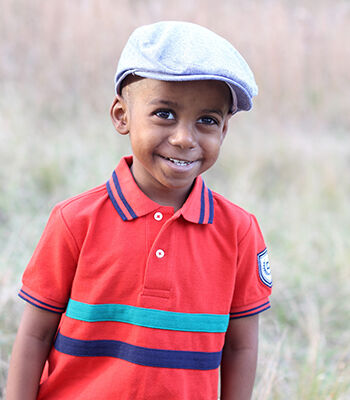
Zion’s love for life touched everyone he knew. His parents have made sure his legacy lives on, through nonprofit initiatives and Kosj’s own work to bring lifesaving proton therapy to Moffitt.
At Speros, the Tampa Bay area’s first proton therapy center will begin treating patients this summer. Initially, Moffitt will be treating adult patients and young patients who do not require anesthesia, with plans to expand access for more pediatric patients in the future.
The first 75 acres of development at Speros include the Moffitt Speros Outpatient Center, which includes the proton therapy vault housing the ProteusONE, and the Moffitt Discovery and Innovation Center, a 250,000-square-foot research facility.
“We’re transforming the spirit of discovery into purpose at Speros — a name that literally means hope,” said Josh Carpenter, DPhil, president of Speros. “We’re building a campus intentionally designed to accelerate cures and carry forward Moffitt’s legacy of healing. It’s where science and humanity intersect to provide a future where patients and families can access the very best care, right here in our community.”
With a focus on proton therapy, radiopharmaceuticals and immunotherapies, Speros aims to compress the timeline from concept to cure — giving patients and families better access to lifesaving drugs and treatments.
The vision for Speros includes a fully integrated campus where families live near care, research feeds clinical trials, technology evolves and every piece is aligned with Moffitt’s mission of prevention and cure.
For Kosj, the initiative is both personal and mission critical. It ensures patients and families no longer need to travel across the country for the best care and embeds proton therapy access into Moffitt’s clinical and research mission.
“Bringing proton treatment to Speros is more than providing a service,” he explained. “It’s a promise. Speros is where that promise becomes reality.”
A Legacy Forged From Loss
Sitting in his office in Tampa, Kosj keeps a portrait of Zion smiling above his desk. It’s a reminder of the child who sang, danced and drew joy from life even under the weight of treatment.
While Kosj doesn’t tell every patient the story of Zion — “I always want to center the patient,” he said — the memory of his son fuels his daily work as a physician and a scientist.
Moffitt’s proton therapy center serves as a symbol of his promise kept. It is a legacy forged from loss. Because for every child who will one day access proton therapy locally rather than traveling afar, Zion’s story becomes one of impact and not just sorrow.
For Kosj, when the first pediatric patient walks through the doors of the proton therapy center, Zion’s story will live on in every life touched, every family comforted and every child granted more time to laugh and dream.
