Calling in a Surgical Quarterback for a Game of Inches
Football saved Shawn Donovan’s life.
A football to be exact.
Shawn and his son Luka, who was 14 at the time, were playing catch at a park near their home in Winter Springs, Florida. It was a December night in 2022 during the town’s annual winter festival in Central Winds Park when an errant spiral led to an unusual twist of fate.
“It was dusk and starting to get dark,” Shawn said. “The festival was a little distracting. I looked away, and he threw a 20-yard pass that hit me directly in my right testicle.”
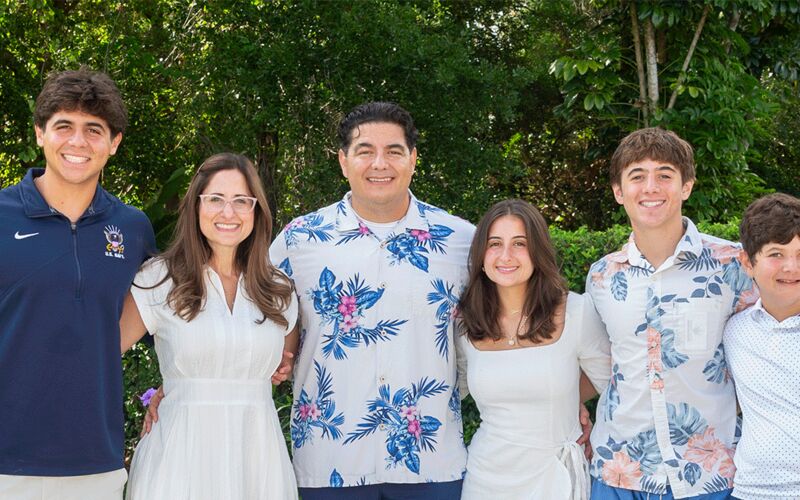
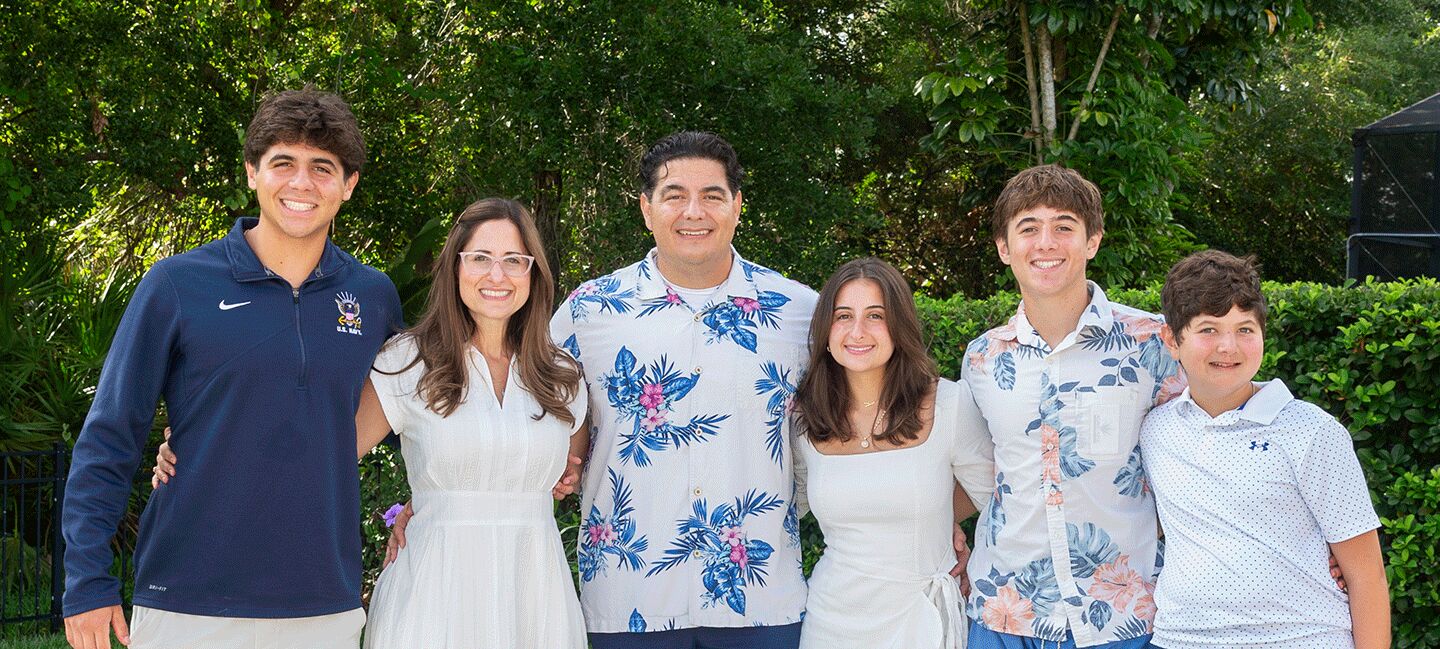
Shawn has three other children, Asher, 10; Maddox, 18; and Sophia, 20. Their family credits Luka with saving their dad’s life.
The pain at the time took his breath away. His testicle swelled up. He asked his wife, Jenny, who is a urology physician’s assistant, to give it a look. She recommended an anti-inflammatory and an antibiotic to try to reduce the swelling.
After a week with no improvement, an ultrasound was ordered.
Football is a game of inches. If that pass hit Shawn in the leg or above the waist, there’s no telling where his story would stand today. But that precision pass, or lack thereof, turned out to be the start of his cancer journey.
The ultrasound revealed a tumor in his right testicle. Within 24 hours, he had surgery to remove it.
A biopsy confirmed the suspected cancer diagnosis, but another round of imaging showed that the cancer had already spread to lymph nodes in his abdomen, chest and neck.
The next step was 10 weeks of chemotherapy.
“After chemo, those lymph nodes pretty much just got bigger,” Shawn said. “It was disheartening to go through all the side effects of chemo and not see any results. I lost my hair, was nauseous for weeks.”
With his cancer showing no signs of slowing down, it was time for a new game plan. It was time for Shawn to come to Moffitt Cancer Center.
Finding QB1
In a game of inches, it’s the fine margins and small distances that can determine the outcome of plays, games and championships. When the deciding play comes down to a single blade of grass, the best quarterbacks are not only precise, they’re surgeons on the field.
Being a surgeon on the field implies the quarterback shows accuracy, precision and ability to execute plays with efficiency and effectiveness. All while 300-pound men collapse time and space like a black hole.
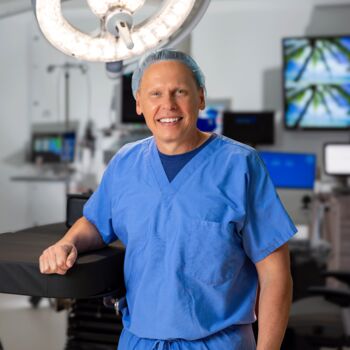
Wade Sexton, MD, kicked off the first of three surgeries by removing Shawn’s retroperitoneal lymph nodes. The team decided this was the best first step because it would require the longest recovery time.
Surgical quarterbacks are adept at making quick decisions. It may be the head coach or offensive coordinator who calls the plays, but it’s the quarterback who has the final say when he gets to the line of scrimmage and reads what the opponent is giving him.
In the world of medicine, the metaphor of the surgical quarterback gets flipped around. The best surgeons in the game often get compared to quarterbacks.
Wade Sexton, MD, is the chief medical officer at Moffitt. He’s also a member of the Genitourinary Oncology Department with a specialty in not only testicular cancer but also adrenal cancers, which are inches away from the retroperitoneal lymph nodes that Shawn would need to have removed.
Sexton would become Shawn’s new QB1. He’s the person you want calling the plays in the huddle when the game is on the line.
Whether in the operating room or on the field, Sexton is a seasoned veteran. He was a member of the 1985 Division I-AA Furman University football team that won a national championship. He wasn’t the team’s quarterback, but as a strong safety he jumped on a Georgia Southern fumble late in the game to seal a 17-12 victory for the Paladins.
As a surgeon, Sexton was the perfect choice to lead Shawn’s care team.
First Down
Surgeons lead by example in the operating room. They demonstrate expertise, decision-making under pressure and technical proficiency. Their ability to effectively manage surgeries and guide their team through complex procedures sets a standard for patient care and safety.
With Shawn facing three different surgeries, Sexton huddled up with two trusted colleagues, Kristen Otto, MD, and Jacques Fontaine, MD. After sizing up their opponent, the decision was made. It was time to call the first play. They were going to remove Shawn’s retroperitoneal lymph nodes first.
“It’s a mutual discussion amongst the team,” Sexton said. “We looked at what made the most logical sense to address first.”
The group decided that the abdominal surgery would require the longest amount of recovery. The goal was to get it out of the way first and allow for Shawn to get a jump on his most intense recovery.
Just as football is a game of inches, surgery is a game of millimeters. In order to access Shawn’s lymph nodes, Sexton also had to remove his left kidney and adrenal gland to remove all of the disease in his abdomen.
The surgery was successful, but the recovery was tougher than expected. Shawn experienced fluid loss and hypotension. He spent two weeks in the hospital to help stabilize him.
The first play worked, but there were still more yards to go.
Second Down
Otto is a surgeon in the Head and Neck–Endocrine Oncology Department at Moffitt. She can operate on your head, neck, ears, nose and throat. Inside and out. She’s an every-down running back who can catch passes and break tackles. She can do it all.
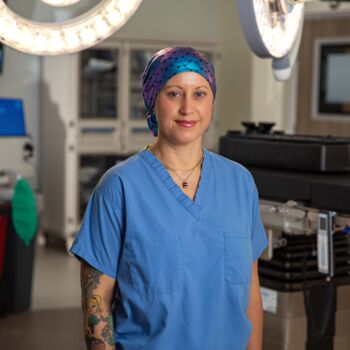
Kristen Otto, MD, took the lead in Shawn’s second surgery, removing the growth on the left side of his neck.
Sexton called her number on the next play.
“When we’re coordinating numerous surgeries, the first thing we look at is whether we can do multiple procedures at once,” Otto said. “If we’re going to put someone under anesthesia, can we take out the neck and chest lesions at the same time to reduce time in the hospital and recovery time?”
In this case, Fontaine needed to perform a robotic surgery, so Shawn’s body position would be different from where Otto would need to be to operate.
With Shawn needing weeks to recover from abdominal surgery before undergoing a thoracic procedure, the team agreed it was best to remove the lymph nodes in his neck with the time in between.
Weeks after his abdominal procedure, Otto successfully operated on Shawn, removing the growth on the left side of his neck and inching closer to a cure.
Third Down
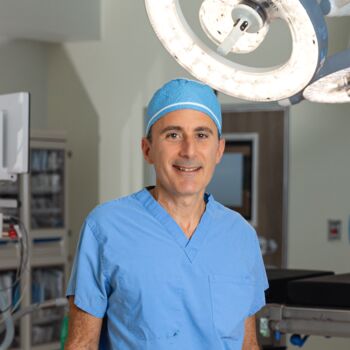
Jacques Fontaine, MD, performed the final robotic surgery to remove the cancer from Shawn’s chest.
Fontaine is a surgeon in the Thoracic Oncology Department at Moffitt. He specializes in mesothelioma, lung and esophageal cancers with an expertise in robotic surgeries.
He dissects tumors the way a veteran wide receiver dissects zone coverage. He’s got sure hands and knows how to give his QB a shot at a big play.
With one surgery left, it was Fontaine’s turn to try to win the game.
“When you’re being specifically requested to take on a case, there’s a level of personal and professional pride,” Fontaine said. “A lot of it has to do with habits. We have a great history of working together. They’ve sent me patients; I’ve sent them patients. We get along on a personal and professional level, and we communicate well with each other.”
With Fontaine finishing the drive, a third successful surgery had Shawn celebrating.
Touchdown
After three successful surgeries, Shawn was cancer free.
“I’m just happy to be alive,” he said. “I’m very grateful to have been under Dr. Sexton’s care as well as the rest of the team at Moffitt. Even though I didn’t get a buy one, get one free on all the surgeries, I am still a very satisfied customer.”
Looking back at instant replay, it’s important to break down what goes into a game-winning drive that requires every teammate playing his or her role to achieve success.
When cancer affects multiple organs, it’s typically the primary disease site that determines who leads in planning the treatment. With Shawn’s cancer originating in his testicle, that put Sexton in the lead role with his expertise in genitourinary cancers. From there, he built the rest of his offense with Otto and Fontaine.
“There has to be great communication at the base of everything,” Sexton said. “Communication amongst medical oncologists, thoracic surgeons, and head and neck surgeons in an effort to get to that end goal, which is a long-term cure.”
Otto has seen cancer affect her at a personal level. Sexton knows that connection and sees the way that Otto leaves an impact on her patients and colleagues. It generates a lot of respect, compassion and admiration. That’s all in addition to her surgical skills, which are greatly renown around the cancer center.
“I’m flattered being in the midst of very accomplished and excellent surgeons,” Otto said. “You look at who you easily work with and get along with. I’ve known them quite a while, and I know everyone’s areas of expertise and what their specialties are. We are really lucky at Moffitt to have subspecialized surgeons. We have highly specialized services here, and that extends even beyond surgery. We’re a great example of how multidisciplinary teams come together to give a patient an excellent outcome.”
Sexton chose Fontaine for his confidence and expertise in a complex case like Shawn’s. He thought he would be able to offer a minimally invasive approach to something that may come off as daunting to others. That goes a long way in helping patients in their recovery. Sexton knew Fontaine would get the job done and not compromise on complete resection so the team could work toward a long-term cure.
“You see these great surgeons every day in the hallway or the operating room or surgeon lounge,” Fontaine said. “I know Drs. Sexton and Otto so well because we have so many cases we’ve worked on together in the last 14 years, and they’re so great to be on a team with.”
Upcoming Schedule
Shawn is a Navy reservist, having left active duty in October 2021. Today he works as a project manager for Siemens Energy, involved in modernizing nuclear power plants.
He was, however, exposed to open burn pits during his Naval service and suspects that could have played a role in developing the disease.
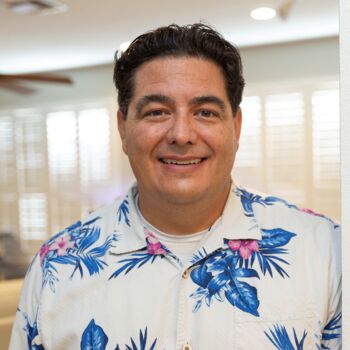
Shawn is grateful for the outstanding care he received at Moffitt, and he urges others to stay on top of annual wellness exams.
“There’s some general anxiety and PTSD from the exposures,” Shawn said. “What else was I exposed to? If I had cancer once, would it make me more likely to develop another type of cancer?”
The three surgeries were successful at removing all the visible disease from his body at the time.
A recent pain on the right side of his neck found another enlarged lymph node, though. Thankfully, additional testing determined that there was no recurrence.
Regardless what comes next, Shawn knows he has a homefield advantage at Moffitt. He also wants to use his story to help the next person who finds themselves in his shoes.
“Get yourself checked out. Don’t put off your annual wellness exams. Life is fragile,” Shawn said. “A cancer diagnosis is life changing. It’s truly a journey of faith, resilience and determination. It meant the world to our family to be in such trusted, capable hands at Moffitt. Our family is eternally grateful for the skill and guidance of Dr. Sexton, as well as Dr. Otto and Dr. Fontaine. We are also thankful for the care and encouragement I received from the nurses and clinical team after each surgery and, of course, all the prayers from my family and friends. Moffitt is truly a blessing, and I am so grateful to be evidence of the hope, strength and courage they provide their patients daily.”
This article originally appeared in Moffitt’s Momentum magazine.