Keeping Her Cool Through Breast Cancer Treatment
When the pandemic nearly shut down everything in 2020, Karen Mills almost postponed her annual mammogram at Moffitt Cancer Center. But something told her not to.
“I just thought, put your mask on and go,” she said. “And thank God I did.”
That screening revealed a small tumor buried deep near her chest wall. It was so small her doctor couldn’t feel it during an annual exam just weeks before. Mills was diagnosed with triple negative breast cancer and quickly scheduled for surgery.
After a successful lumpectomy, Mills underwent chemotherapy as a precaution. That’s when she learned about DigniCap, a scalp-cooling device designed to help patients keep their hair during treatment.
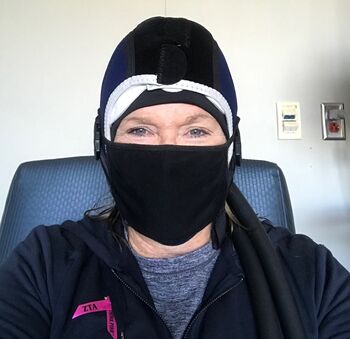
Karen Mills says the DigniCap was tight on her head but never painful. She recommends the technology to everyone.
“My husband and I looked at each other and said, ‘We are doing this,’” Mills said. “I wasn’t scared about losing my hair because I knew it would come back, but it made such a difference mentally about how I went through my chemotherapy.”
The Science Behind the Chill
Aixa Soyano, MD, a breast oncologist at Moffitt, explains how the technology works.
“The DigniCap looks like a snug swimmer’s cap that connects to a cooling machine,” she said. “It lowers the temperature of the scalp just enough to constrict the blood vessels. That reduces blood flow and chemotherapy exposure to the hair follicles.”
By cooling the scalp to around 39 degrees Fahrenheit, the system triggers vasoconstriction, or the same reflex that makes your fingers turn blue on a winter day. With less blood reaching the scalp, fewer chemotherapy drugs come into contact with the hair roots, protecting them from damage.
“It’s not perfect,” Soyano noted. “It works better with certain chemotherapy drugs than others, but most breast cancer regimens respond well.”
Clinical studies show that about nine in 10 patients keep at least half of their hair, enough that many never appear visibly bald.
Beyond the Cap
The same cooling idea is being used beyond the scalp. Patients also have the option to wear frozen gloves and slippers during treatment to prevent chemotherapy-induced peripheral neuropathy, which can cause numbness and tingling due to drugs affecting nerve endings.
Cooling the hands and feet constricts blood vessels, reducing drug exposure to those nerves.
“It’s a simple thing to do to help prevent long-term complications from chemotherapy,” Soyano said.
The Cost and the Coverage Gap
Scalp cooling technology has been approved by the FDA for nearly a decade, but it’s still not covered by most insurers as medically necessary.
“A lot of insurers don't approve or offer any coverage for this kind of system. It can get a little expensive,” Soyano explained.
Patients are charged about $250 for their personal cap and roughly $400 for each chemotherapy session. The total cost usually falls between $2,000 and $3,000, depending on the treatment plan.
However, that classification is now being challenged. New York recently became the first state to require insurance coverage for scalp cooling.
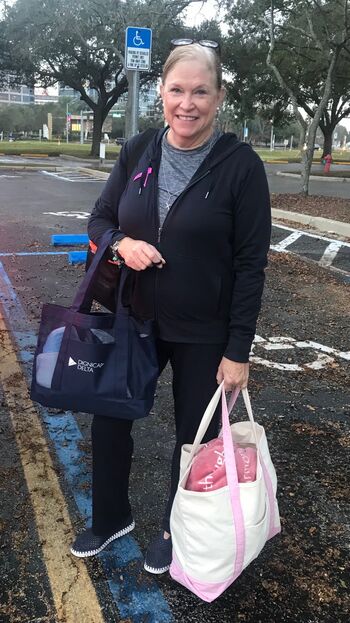
Karen Mills followed the DigniCap instructions closely by washing her hair once a week, not using heat tools and keeping her natural color.
Starting in January 2026, mechanical scalp cooling will also receive an official medical billing code, making it a recognized standard treatment nationwide and likely eligible for insurance coverage.
“I decided I was going to try this, no questions asked. But I realize not everybody can do that,” Mills said. “Hopefully, this will become a technology everyone can utilize.”
In the meantime, to help bridge the gap, various organizations like HairToStay offer stipends to qualifying patients.
“It Was a Daily Boost”
Mills had four rounds of chemotherapy between November 2020 and January 2021. Each session took longer than usual as the cap needed two hours to lower her scalp temperature before treatment and another hour to gradually rewarm it after.
She bundled up in layers, drank hot tea and settled in by herself for treatment that usually took about five and a half hours. No visitors were allowed due to pandemic restrictions.
“I expected it to be miserable, but I never got cold or sick,” Mills said. “It’s tight on your head, but not painful.”
Mills estimates she lost about 30% of her hair, but it never came out in clumps. She followed the care instructions closely by only washing her hair once a week, not using heat styling tools and keeping her natural color.
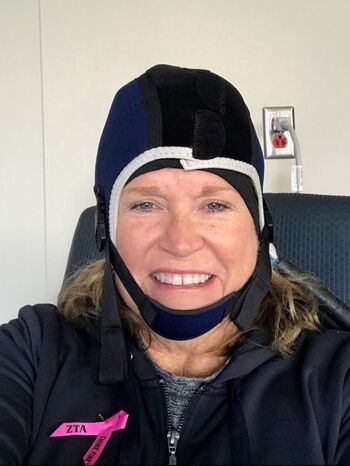
Karen Mills estimates she lost about 30% of her hair during treatment, but it never came out in clumps.
The biggest benefit for her was psychological.
“For me, it was like a daily boost,” she said. “I would walk past and a mirror and not be reminded that I was a chemo patient. That made all the difference.”
Five Years Later
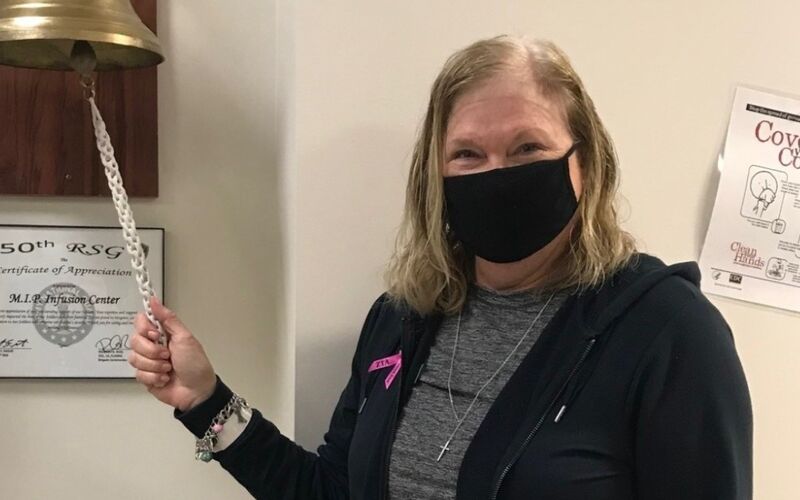
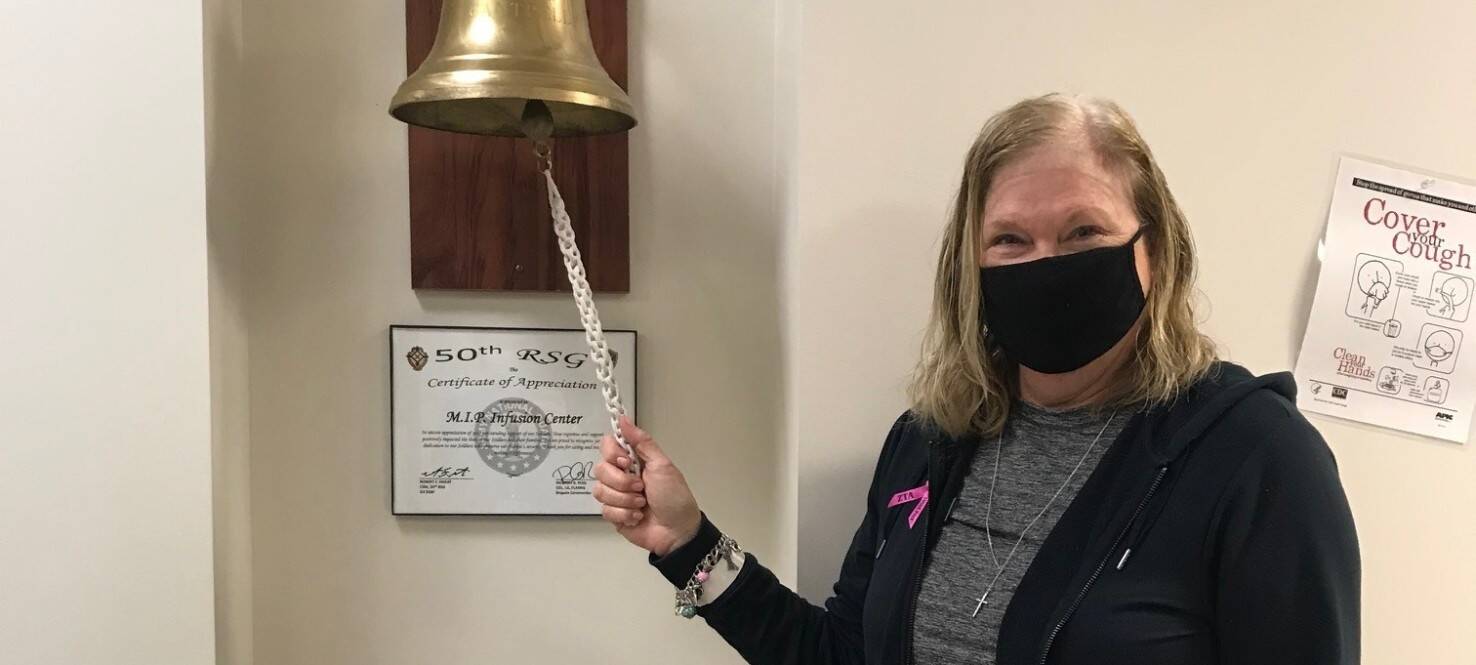
Mills has been cancer-free for four years and believes it is nothing short of a miracle. She is back to everyday life, enjoying time with her four young granddaughters.
She returns to Moffitt for annual checkups and shares with everyone the cooling technology that helped her stay positive throughout her treatment.
“I feel like it was a game-changer for me,” Mills said. “I am just so grateful. I know it won't be the same for everyone, and it depends on whether you're a candidate, but I highly recommend it.”