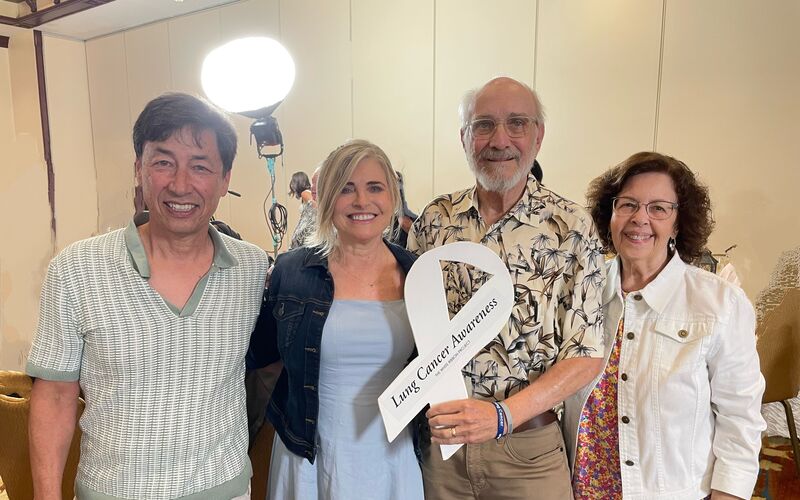

Lung Cancer Patient Strives To Make a Difference
On a random afternoon in 2012, Ed Cutler, now 79, was flipping through a magazine. He came across an article that persuaded him to get screened for an abdominal aortic aneurysm, due to his smoking history.
“A couple of months later, I called the office where I got screened to find out what the results were,” Cutler said. “The results ended up saying that there was no abdominal aortic aneurysm, but there was a mass on my liver (which later turned out to be a metastasis of lung cancer), and follow-up was recommended according to the footnote at the bottom of the report.”
After leaving multiple doctors’ offices without many answers, Cutler ended up at Moffitt Cancer Center for another opinion, which later led to his lung cancer diagnosis.
“I was familiar with Moffitt because earlier in my life, a very good friend was a patient,” Cutler said. “Although she didn’t make it, her treatments gave her an extra year of life.”
Lifesaving Clinical Trials
After briefly trying a clinical trial in 2015, Cutler joined another trial in 2016, along with 79 other participants. Both trials involved immunotherapy treatment.
“I had a complete response when the second trial finished in 2021,” he said. “This trial involved taking an oral medication.”
Cutler’s care team has found no evidence of cancer since. Due to his experience, Cutler has become an advocate for raising awareness about the disease and the importance of screening.
Importance of Screening
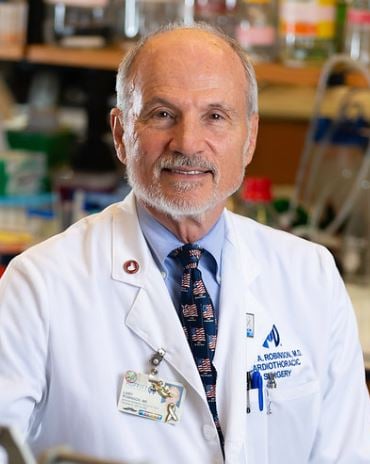
Screening awareness is something shared regularly at Moffitt and throughout the community by Lary Robinson, MD, director of Moffitt’s Lung Cancer Early Detection Center.
“If found early, lung cancer is a very curable disease, and this is usually before a person has any symptoms,” Robinson said. “For this reason, it is critically important that people who are at elevated risk for lung cancer due to their smoking history obtain a screening chest CT scan. The vast majority of lung cancers detected on a CT scan are curable.”
The U.S. Preventive Services Task Force recommends annual screening for adults age 50 and older who have smoked a pack a day for the past 20 years or two packs a day for the past 10 years and currently smoke or have quit within the past 15 years.
Cutler says he’s always open to talking to someone facing a lung cancer diagnosis. “I want to remind people to never give up,” he said. “There is light at the end of the tunnel. So many new treatments have become available in the past few years that did not exist 10 years ago.”