Paving the Way for Lung Cancer Screenings in Communities
Lung cancer is the leading cause of cancer deaths in the United States. More people die every year from the disease than from prostate, breast and colon cancers combined.
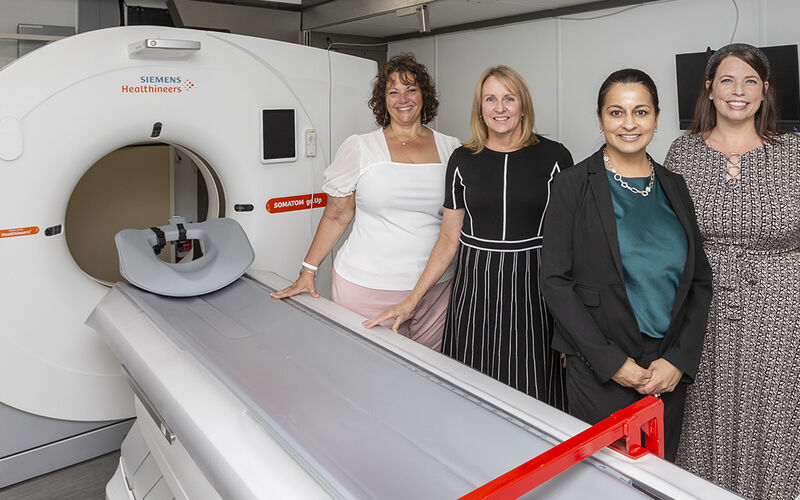
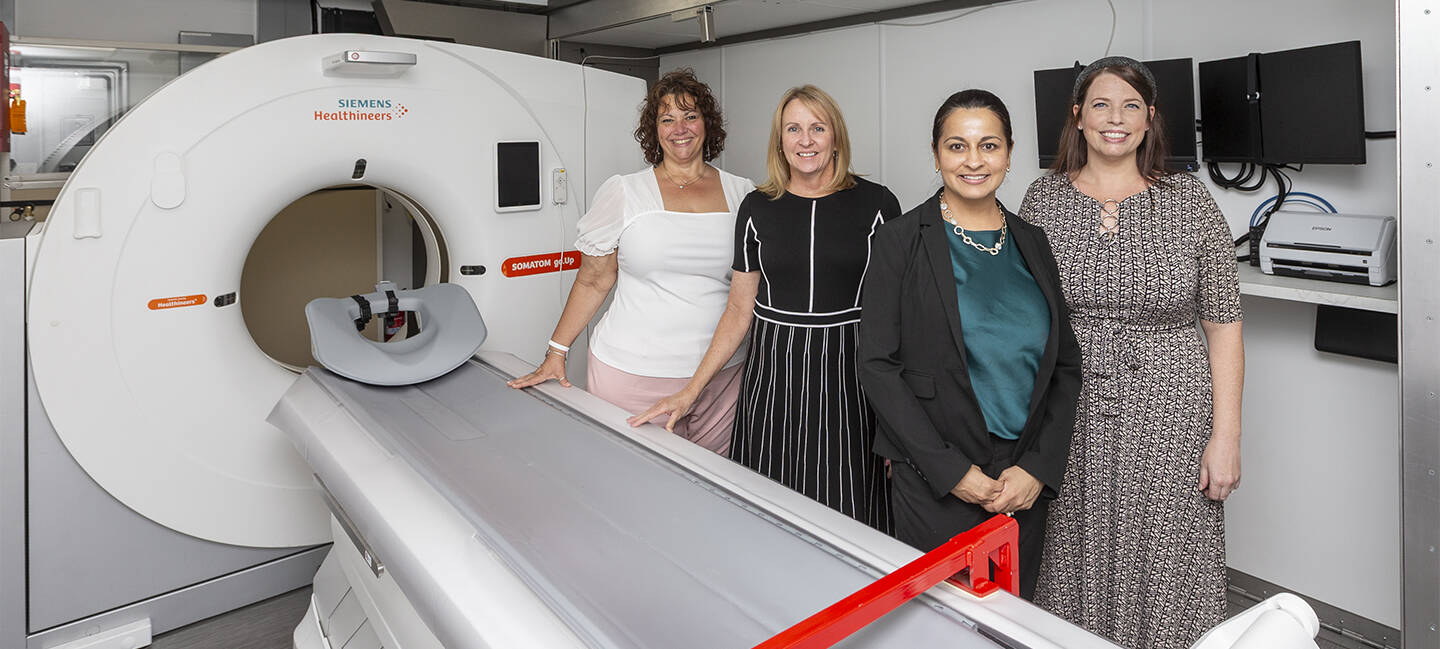
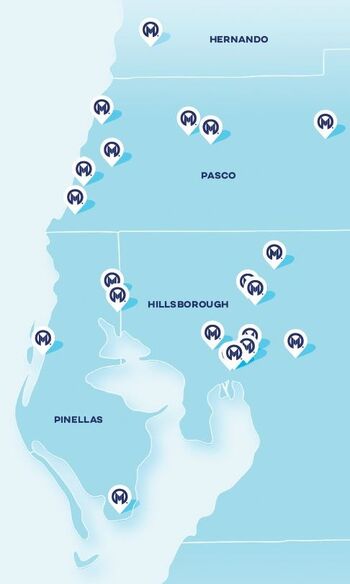
In an effort to save more lives, Moffitt Cancer Center has taken lung cancer screening on the go, launching Florida’s first mobile lung cancer screening unit, equipped with a low-dose CT scanner. In November 2024, the Ferman Family Mobile Screening Unit hit the road, making its first stop at the Florida Department of Health in Pasco County, where providers screened nine people. From there, the mobile unit has traveled throughout the Tampa Bay area, bringing screening into rural communities across Hillsborough, Pasco, Pinellas and Hernando counties.
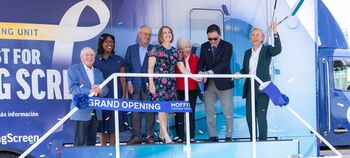
From left: H. Lee Moffitt; Jhanelle Gray, MD; Jim Ferman; U.S. Rep. Kathy Castor; Celia Ferman; Patrick Hwu, MD; and Tampa Mayor Jane Castor celebrate the launch of the mobile screening unit. The Ferman family and Rep. Castor provided crucial support to make the mobile unit a reality.
These types of screenings are crucial for early detection. Lung cancer may show no symptoms in the early stages of the disease, often leading to late detection. Research has shown that early detection is associated with a higher five-year survival rate of around 65%, compared to around 10% with late detection. At Moffitt, the five-year survival rate with early detection is around 70%, compared to around 16% with late detection.
The U.S. Preventive Services Task Force recommends annual screening for adults age 50 and older who have smoked a pack a day for the past 20 years or two packs a day for the past 10 years and currently smoke or have quit within the past 15 years.
Despite recommendations, less than 3% of eligible Floridians undergo screenings. There is a reason this number is low, says Michelle Smith, manager of Moffitt’s mobile screening program.
“Our biggest hurdle remains a lack of awareness,” Smith said.
That’s why the team has developed a program to pave the way for screening visits in the community. The program combines tobacco education with education on lung cancer and screening.
Once a mobile lung cancer screening unit event is scheduled, a Moffitt expert such as Vani Simmons, PhD, director of the Tobacco Research and Intervention Program, visits the host site several days in advance to provide an educational session for community members.
“These sessions focus on who qualifies for screening, why early detection is important and what to expect during the low-dose CT screening process,” Simmons said. “We also emphasize that you do not have to be a current smoker to be eligible for screening. For those who are current smokers, we are very committed to providing support and education to help with quitting smoking by using a nonjudgmental approach that meets people where they are.”
In addition to increasing awareness, the team works to bring the unit to communities that have historically faced difficulties accessing care due to challenges such as a lack of transportation or living far from a screening facility.
Since launching in the fall of 2024, the mobile lung cancer screening unit visited 21 sites by the end of fiscal year 2025. Throughout those visits, 119 people received a low-dose CT scan, with the scan being the first for 112 of those individuals. Of those screened, 9% had a notable finding and 2% had a significant finding.
Since launching in the fall of 2024, the mobile lung cancer screening unit visited 21 sites by the end of fiscal year 2025.
For those screened at each event, imaging results are usually available within five days. If suspicious nodules are detected, a Moffitt team member reaches out to schedule an appointment for further evaluation.
As the mobile lung unit makes its way into more communities, the team is excited for the opportunity to raise awareness and save more lives.
“I have heard from people who have shared that if we hadn’t brought the mobile unit out to them, they wouldn’t have gotten the screening they needed,” said Stephanie Wright, a lung cancer screening coordinator at Moffitt. “Being able to get out into the community, where there isn’t a screening facility nearby, and providing accessibility to people is crucial.”