Scientist Explores How Intake of Essential Mineral Could Impact Lung Cancer
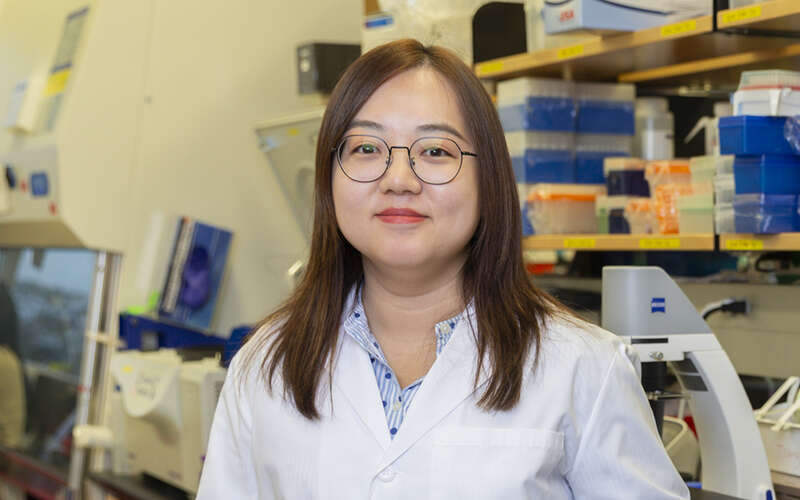
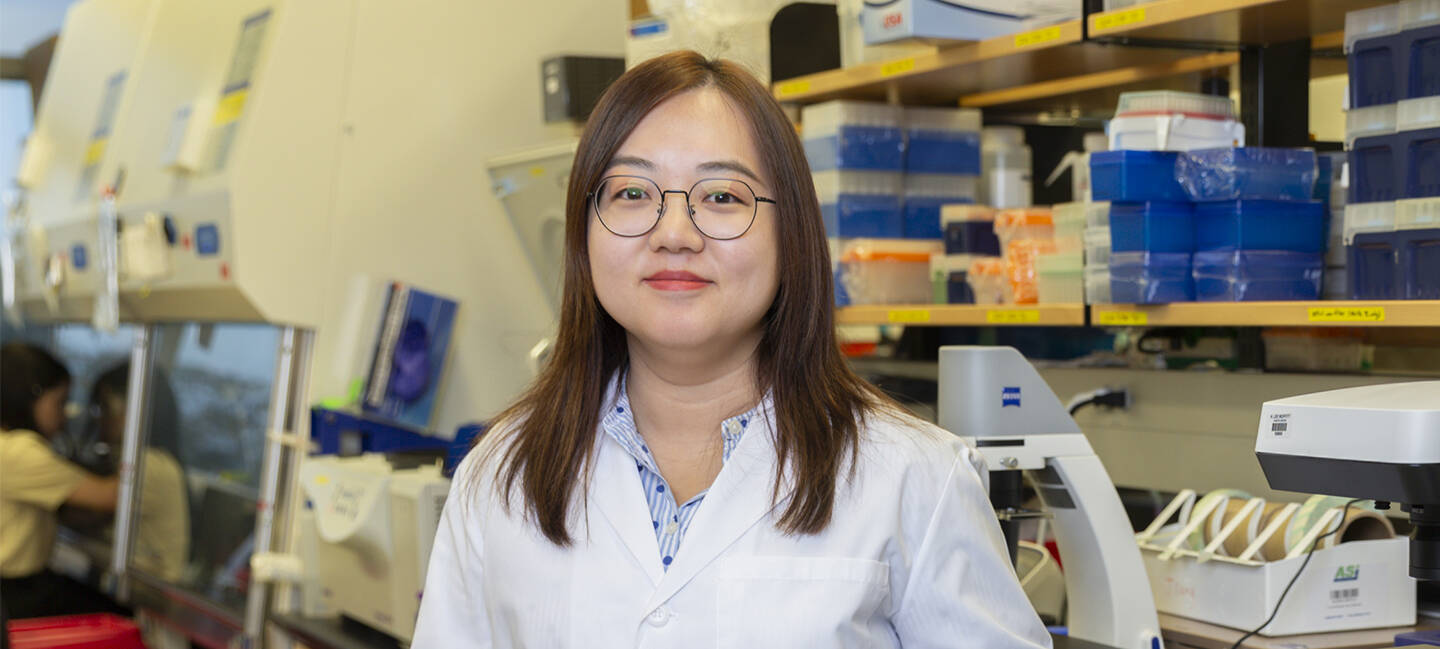
Dietary research is becoming a cornerstone of understanding how cancer forms, grows and responds to treatment. Diet can contribute to both the prevention and development of cancer, research has shown. At Moffitt Cancer Center, scientists like Chang Jiang, PhD, are at the forefront of exploring this vast area of research.
As a scientist in Moffitt’s Cancer Biology and Evolution Program, Jiang focuses her research on selenium, an essential mineral found in foods that are high in protein such as fish, poultry, meat, eggs and Brazil nuts, as well as whole grains. Selenium plays a crucial role in the body’s metabolism, immune system, thyroid function and reproductive health. It may also play a role in cancer, Jiang’s research suggests.
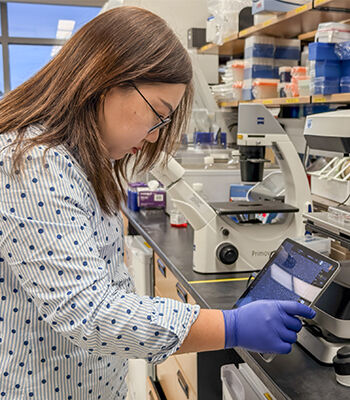 Jiang works to measure how selenium levels in the body compare with selenium levels in the fluid within tumors and the tumor microenvironment. Understanding differences in these levels may provide clues to how to better target therapies.
“We are studying selenium intake in the diet and how that affects tumor initiation, tumor growth, the tumor microenvironment and treatment efficacy,” explained Jiang, whose research currently focuses on non-small cell lung cancer.
Her lab works to measure how selenium levels in the body compare with selenium levels found in the fluid within tumors and the microenvironment surrounding tumors. Understanding differences in these selenium levels may provide clues to how to better target therapies for these tumors.
“My research aims to find the vulnerabilities of this special environment, to understand how the cancer cells differ from normal cells, how they are metabolically different, so we can use different strategies to treat them,” she said. “For example, can we give the patient different diets to make the cancer cells more vulnerable to a new treatment or a traditional treatment strategy?”
Another element of Jiang’s research focuses on targeting certain genes involved in selenium metabolism. Specifically, her lab is exploring KEAP1/NRF2 and KRAS mutations, which are common in non-small cell lung cancer.
“For example, patients with KEAP1/NRF2 mutations show very strong resistance to chemo, radiation and immunotherapy. So I am trying to find a way to reverse this scenario, to sensitize them to chemo, radiation or immunotherapy,” she said. “My current data indicates KEAP1/NRF2 mutations may rely on selenium uptake to exhibit their antioxidant capacity. So I’m trying to restrict the selenium uptake of KEAP1/NRF2 mutation tumors through diet intervention.”
Similarly, her lab is exploring how selenium levels could impact the effectiveness of sotorasib, a targeted therapy used to treat non-small cell lung cancer with KRAS G12C mutations.
“My ultimate goal is to contribute to precision medicine by identifying metabolic vulnerabilities,” she said.
Expanding the Research
Jiang’s current research is being conducted in preclinical models, but she has plans to further the science through collaborations. She is currently working with Eric Haura, MD, associate center director for Clinical Science, to collect tissue samples from patients with lung cancer. She also plans to work with Moffitt’s Rapid Tissue Donation Program to collect lung tumor samples for testing. These partnerships will enable her to begin assessing selenium levels in tumors from humans.
In addition to her role in the Cancer Biology and Evolution Program, Jiang has a secondary appointment in Moffitt’s Bioengineering Department. She hopes to put the power of engineering to use in her research.
“My long-term goal is to build a system where we can mimic the tumor microenvironment of the patients,” she said. “I want to collaborate with the bioengineers to use the patient cells to rebuild a system where we can feed the cells with different nutrients to recreate the nutrition level in the patients.”
Collaborating Toward a Shared Mission
The opening of Moffitt’s 775-acre Speros campus in 2026 will further empower scientists like Jiang to collaborate with experts from other areas. The Moffitt Discovery and Innovation Center at Speros will bring scientists from departments such as Drug Discovery, Metabolism and Physiology, Bioengineering, Molecular Oncology, and Tumor Microenvironment and Metastasis together under one roof.
In April 2025, Jiang went to a ceremony celebrating the placement of the final steel beam atop the research facility at Speros, and she could feel the excitement.
“I am really looking forward to this opportunity because Moffitt is putting a lot of the researchers with similar research backgrounds together so we can work together,” she said. “The building is designed in a very collaborative way, so we can have more room, more facilities to discuss our work together. I think that will enhance the collaboration even more.”
Jiang emphasizes the power of collaborative research, particularly in the vast field of oncology.
“A single person cannot do all the things,” she said, noting her lab’s specific expertise in genetic screening and mass spectrometry and how that complements Haura’s significant clinical expertise. “I have a lot of collaboration because I strongly believe we go together, we learn from each other, we work together using our unique expertise, so that we can accomplish our mission for cancer patients.”