Skip to nav Skip to content

Key Takeaways For Busy Providers

  • Head and neck cancers are rising, particularly affecting younger populations, with projections suggesting a 30% annual increase by 2030. 

  • Early-stage head and neck cancer patients have an average five-year survival of 80%, compared to only 40% when the cancer has metastasized.

  • High-risk patients include those with HPV infection, tobacco, or alcohol use. 

  • Patients with non-healing oral lesions, persistent sore throat, ear pain, voice change, or neck mass lasting >2-3 weeks can be evaluated at Moffitt. A head and neck cancer diagnosis is not required for a Moffitt consultation.

  • Liquid biopsy and saliva-based testing enhance diagnostic accuracy and staging.

  • Patients with a head and neck cancer suspicion can be see by the experts in our Head and Neck Oncology Program within one week.

Head and neck cancers represent the seventh most common malignancy worldwide, with an estimated 72,680 new cases expected in the U.S in 2025. Primary care physicians and ENTs are often the first to catch the early signs. Your clinical expertise provides the first life saving opportunity to identify subtle symptoms that patients might dismiss or attribute to less serious conditions. 

Our direct referral pathway ensures that when you suspect head and neck malignancy, your patients can be evaluated by our specialized team within one week.

An Evolving Epidemiology

The global incidence of head and neck cancers is rising across many countries, particularly affecting younger populations, with projections suggesting a 30% annual increase by 2030. Most striking is the shift we're witnessing in oropharyngeal cancer, where incidence has surged by 78% over recent decades while larynx cancer incidence has declined by 27%.

As the disease drivers shift, so do the statistics. HPV-related oropharyngeal cancer has become one of the most rapidly increasing malignancies in high-income countries, now surpassing traditional tobacco and alcohol-related disease.

Recognizing the Subtle Signs and Serious Symptoms

Head and neck cancers often present with symptoms that patients and even healthcare providers might initially attribute to benign conditions. Persistent sore throat and neck lumps rank among the most common presenting symptoms, but the spectrum extends well beyond these obvious signs and may vary from patient to patient.

Symptoms to look out for

  • Non-healing oral ulcers or lesions persisting beyond 2-3 weeks
  • Unexplained persistent sore throat (particularly when unilateral)
  • Difficulty swallowing or persistent odynophagia
  • Unexplained weight loss or voice changes
  • Persistent earache without an obvious infectious cause

Oral Cavity Cancer Specifics

  • 90% originate from squamous cells lining the mouth structures
  • Look for red, pink, gray, or white patches that may be flat or raised
  • Non-healing sores, unusual lumps, or rough, crusty mouth texture
  • Associated findings: loosened teeth, unexplained numbness, mouth bleeding, or chronic halitosis

Resource: Oral Cavity Q&A with Dr. Caitlin McMullen

Physical Examination Key Points

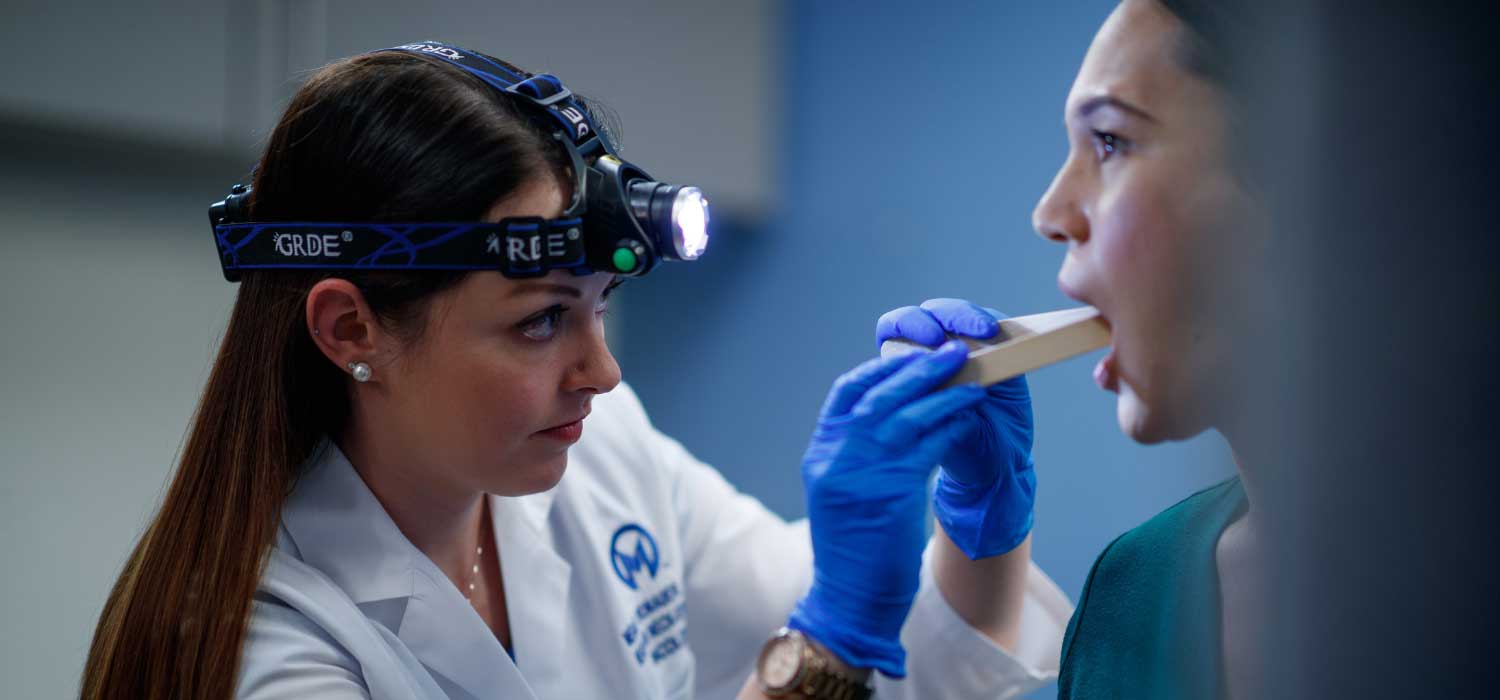
  • Systematic evaluation of the mouth, lips, tongue, and gums for open sores, growths, or suspicious lesions
  • Careful palpation of the head and neck for lumps or swollen lymph nodes, which often represent the first site of disease spread

High-Risk Population Considerations

  • Patients with tobacco use, heavy alcohol consumption, or known HPV infection warrant heightened surveillance
  • Visual screening for oral cavity cancers is highly effective in early detection among high-risk tobacco and alcohol users
If a patient exhibits any of the signs and symptoms listed above, you can refer them directly to Moffitt for a consultation using our online form, even if a confirmed diagnosis has not been established.
Our Head and Neck cancer experts will perform a thorough evaluation within one week and report the results back to you.

Diagnostics

While traditional approaches, including clinical examination, imaging, and tissue biopsy, remain foundational, advanced technologies expand our Head and Neck Oncology Program’s diagnostic capabilities.

Liquid biopsy is perhaps the most significant innovation in head and neck cancer diagnostics. For HPV-positive head and neck squamous cell carcinoma (HNSCC) cases, liquid biopsy demonstrates a sensitivity of 90-95% and a specificity greater than 98%. Moffitt’s saliva-based testing is particularly promising for oral cavity cancers, often demonstrating higher sensitivity than plasma-based approaches.

Other techniques, including endoscopy, fine-needle aspiration (FNA), and biomarker and genetic testing, can help pinpoint, stage, and develop effective treatment plans for suspicious lesions with greater precision.

The Importance of Timely Consultation

Primary care and ENT physicians are often the first to encounter patients with early, subtle symptoms. If you can recognize when a persistent complaint warrants a more thorough examination and when to refer to a comprehensive cancer center, it can be lifesaving.

Early detection dramatically improves survival and functional outcomes. Early-stage head and neck cancer patients have an average five-year survival of 80%, compared to only 40% when the cancer has metastasized.

If you suspect cancer in the head, neck, and oral cavity, it’s worth referring that patient to Moffitt for an exam from a head and neck cancer expert, a diagnosis is not required.

Our partnership model ensures direct communication channels between referring physicians and Moffitt specialists, rapid access to multidisciplinary team evaluation, and comprehensive staging with treatment planning.

Collaborative Care Beyond Treatment: Partnering with Moffitt

Moffitt’s multidisciplinary approach coordinates comprehensive care that may involve surgery, medical oncology, radiation oncology, and supportive services within specialized teams. We maintain seamless communication with referring physicians throughout treatment, provide regular progress updates, and ensure coordinated care transitions back to community providers after treatment completion.

This partnership enhances rather than replaces community care relationships. We share a common goal—helping patients achieve cancer-free status and return to enjoying their lives—and together, we can accomplish it. When you refer patients to Moffitt, they gain rapid access to specialized care, cutting-edge clinical trials, and comprehensive support services, all while preserving your important relationship. 

Treatment Excellence and Clinical Research

Our patients benefit from surgical innovations, including transoral robotic surgery for minimally invasive tumor removal, precision techniques that preserve function while achieving complete resection, and specialized reconstruction options for complex cases. 

We often utilize advanced immunotherapies, such as next-generation tumor-infiltrating lymphocyte therapy, specifically developed for head and neck cancers and shows promising survival outcomes with appropriate patient selection. We also prioritize clinical research to discover effective treatment methods. Recent clinical trials have investigated combination immunotherapy approaches, including one specifically for HPV-negative patients,  as well as a new class of therapeutic biologics and targeted PD-1 therapies for aggressive, metastatic cancers. 

Radiation can also be helpful in many cases, used either alone or in conjunction with chemotherapy or surgery. Moffitt may use adaptive radiotherapy with dose de-escalation to more precisely pinpoint tumors while reducing toxicity to nearby healthy tissues. Gene-tailored takes it a step further to identify HPV-positive patients who may benefit from lower radiation doses to minimize adverse effects. 

Early Recognition Saves Lives

Through collaborative partnership, we can ensure that every patient receives optimal care while maintaining the physician-patient relationships that form the foundation of excellent healthcare. 

If you have a patient with a suspicious lesion, lump or other symptom, complete our online form or contact a physician liaison for rapid access to our Head and Neck Oncology experts. 

As part of our efforts to shorten referral times as much as possible, online referrals are typically responded to within 24 - 48 hours, and we strive to see all head and neck cancer patients within one week.