
Larry's Story
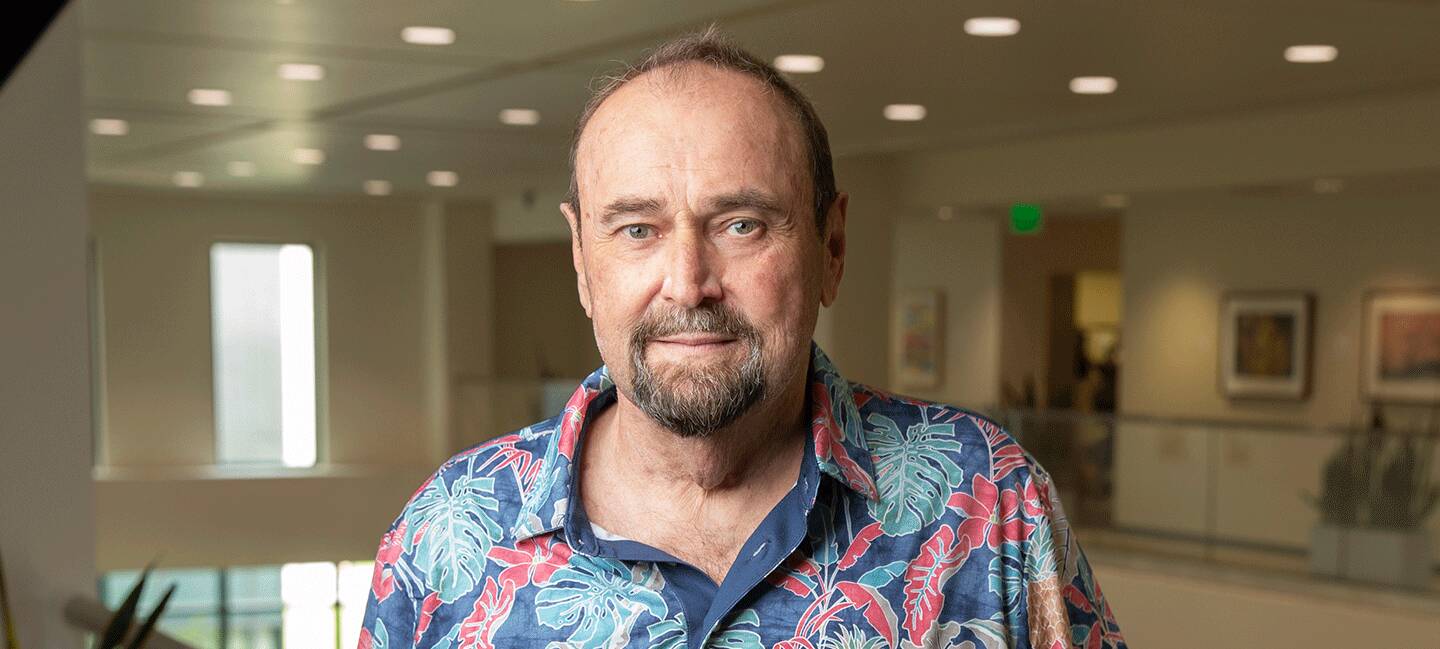
Meet Larry
Cutaneous T-Cell Lymphoma | Total Skin Electron Beam Radiation Therapy
“The doctor told me I had to immediately get an appointment with Moffitt.”
A rash that wouldn't heal and a rare cutaneous T-cell lymphoma (CTCL) diagnosis
For years, Larry Hart’s life revolved around family gatherings, time with his grandchildren, and the cherished routines of retirement in Port Orange. But in 2020, something small began to interrupt that ease of life. The skin on his hands started peeling, cracking and becoming painfully sensitive.
At first, it seemed like nothing serious. A dermatologist prescribed prednisone. Larry used it on and off for years, assuming the issue was just a stubborn rash.
“I tried a whole bunch of stuff,” he said. “Nothing would work.”
What began on his hands slowly spread to his feet. By early 2024, the discomfort was constant. When he stopped prednisone to see an allergist, everything escalated at once.
“Exactly four days after I took my last prednisone, I began to look like I had the measles,” Larry said. “There were spots all over most of my body.”
The rash grew angrier, the pain sharper. A holiday weekend he’d planned with his grandkids slipped away as the condition consumed him.
“It was breaking my heart that I missed my grandkids being here,” the 73-year-old said. “But it was pain that I can’t even describe.”
Even after an ER visit, he left without answers.
A photo of Larry's skin rash changed everything
By September, Larry’s skin had deteriorated into open sores and welts. His wife, Lynn, brought photos of his skin to her own dermatologist during an appointment. The doctor took one look and said, Get him in here today.
A biopsy confirmed what years of treatments had missed: cutaneous T-cell lymphoma (CTCL), a rare type of non-Hodgkin lymphoma that begins in the skin’s T-lymphocytes and often mimics far more common rashes.
“The doctor told me I had to immediately get an appointment with Moffitt,” Larry remembered.
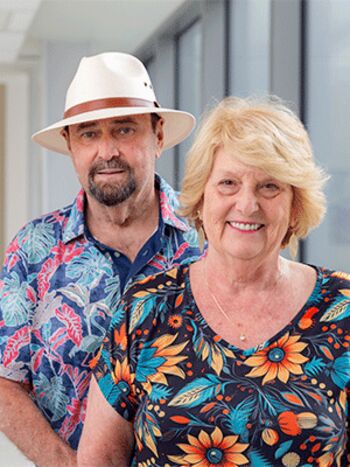
A race against time to begin treatment
When Larry first met Yumeng Zhang, MD, a specialist in CTCL at Moffitt Cancer Center, she quickly laid out a plan for total skin electron beam radiation therapy — a highly specialized technique available at only a few centers in Florida.
But Larry’s health was collapsing fast. He could no longer walk or stand for long. He shivered uncontrollably as his body lost its ability to regulate temperature. His skin was covered in painful tumors. Even speaking took effort.
“I consider myself a pretty experienced doctor in cutaneous T-cell lymphoma, and at that moment, I was even scared,” Zhang said.
She faced an impossible choice: risk moving forward with treatment he desperately needed, or delay it and risk losing the window to act.
Zhang made the call.
She worked with radiation oncologist Michael Montejo, MD, to get Larry in that same day at Moffitt’s International Plaza location. The team adjusted the therapy so Larry could sit through part of the session — the only way he could physically tolerate it.
That evening, Lynn drove him to Moffitt’s Magnolia campus, where he was admitted for inpatient care. His body was entering renal failure from septic shock.
Larry had finally reached the right treatment, just in time.
 The Only Florida-based NCI-designated Comprehensive Cancer Center
Recognized for its scientific excellence, Moffitt is the only National Cancer Institute-designated Comprehensive Cancer Center based in Florida.
Intensive Care and an Extraordinary Team Effort
In the ICU, Moffitt’s inpatient team started dialysis and stabilized Larry while Dr. Zhang coordinated chemotherapy and localized radiation for his most severe lesions.
“We were doing everything we could to control the disease,” Zhang remembered.
Little by little, Larry began to improve. Over 18 days, the tumors on his skin started shrinking. His strength returned. On Dec. 2, he transitioned to outpatient care, completing eight sessions of total skin electron beam radiation by early January.
By late January, he was off dialysis. The fiery red lesions that once covered his body faded to a lighter purple. His hands, which were the first signal something was wrong, were finally back to normal.
Larry calls his recovery “miraculous.”
Zhang calls it the result of expert collaboration.
“It takes a village to treat a patient,” she said. “If any one of us had fallen short, Larry wouldn’t be here today.”
Why CTCL Awareness Saves Lives
CTCL affects about 3,000 people a year in the United States, yet many, like Larry, spend years being treated for eczema or other benign skin conditions.
“We see this pattern too often — patients misdiagnosed. Then they get delayed treatment, and they deteriorate,” Zhang said. “CTCL shouldn’t land patients in the ICU.”
Her mission is to change that. Zhang partners with dermatologists and community physicians across Florida, helping them recognize CTCL’s early warning signs and understand when to refer patients for advanced care. She consults with local oncologists, offers virtual guidance and stays connected with teams treating her patients close to home.
“For every missed disease, you see a person behind it,” she said. “That’s what drives me.”
Life After Crisis
With his cancer now under control, Larry receives regular bloodwork, phototherapy and a bimonthly injection called Pegasus through his local care team. He returns to Moffitt every few months for follow-up with Zhang.
Today, he feels healthy, almost unbelievably so.
“I’m starting to believe in my head that if I pinch myself, I’m going to wake up from a dream because I am absolutely feeling 100%,” he marveled.
But the memory of those years lingers.
“All this could have been averted if I was diagnosed a little sooner,” he said. “This didn’t need to get as bad as it did.”
His journey is a powerful reminder: even rare cancers can be treated effectively when they’re recognized early, and when patients find the expertise they need, right when it matters most.