
Sean's Story
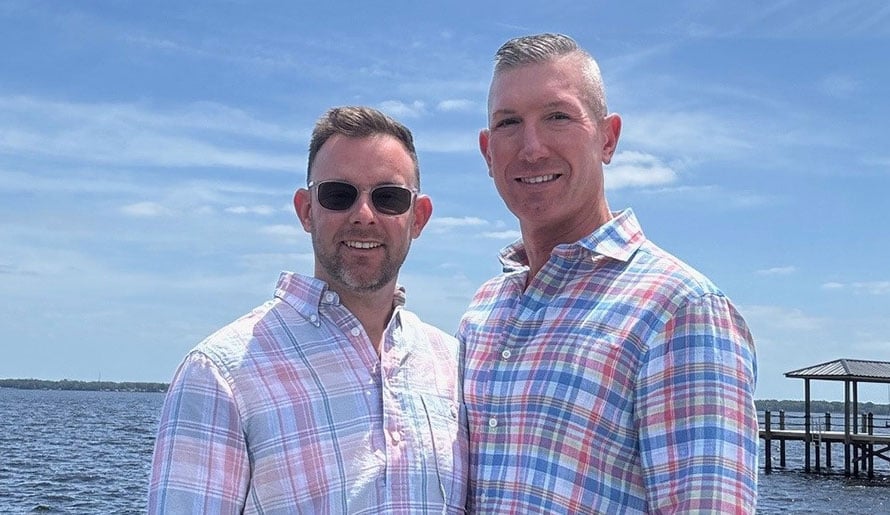
Sean Powell, MSW, LCSW, CCM, OSW-C
Director, Social Work and Patient Support Services Non-Hodgkin's Lymphoma Patient
"Don’t be afraid to tell friends and family you don’t want to talk about cancer."
I’ve been an oncology social worker for 26 years, and for almost 10 of those, I’ve had the honor of leading Moffitt’s Social Work Department. In that time, I’ve helped countless people navigate the impact cancer has on relationships. When I agreed to write this article on how cancer affects relationships, summer had just begun and I was looking forward to pool days, cookouts and vacation. Little did I know I would receive my own cancer diagnosis the next day: Stage 3B non-Hodgkin’s lymphoma.
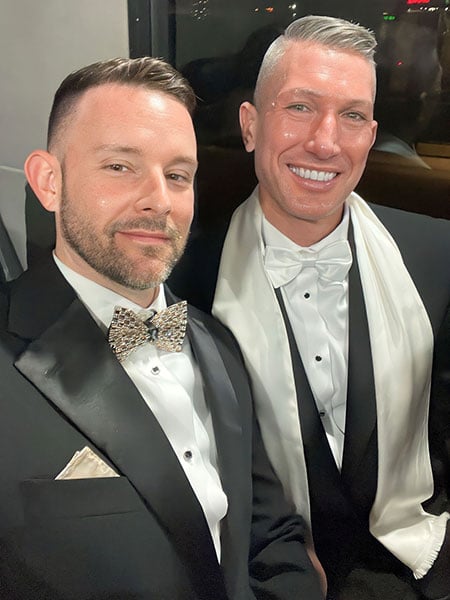
Sean, right, and Mike celebrating Christmas in New Orleans
Suddenly, I was on the other side of health care. At first, I couldn’t write this article; It was all too fresh. Then, one morning, I realized I was in a unique position as a social worker and patient, watching relationships change in real time.
At home, dinner table talk with my spouse changed from workdays and weekend plans to scan results, symptoms, and what we were facing. I knew all the conversations couldn’t be cancer focused, that wasn’t good for us or our relationship. We set aside time to take care of the cancer-related business and then moved away from it, making sure to talk about his day and hobbies. That balance gave him space for self-care and me the quiet I needed.
I called a friend to share the news. After repeating my story for what felt like the millionth time, I changed the subject and asked about her recent vacation. She began sharing details of her vacation, then stopped, apologizing for talking about something joyful. I told her to keep talking. Normal conversation was exactly what I needed. Don’t be afraid to tell friends and family you don’t want to talk about cancer. Everyday tasks, stories and celebrations are a relief.
I also began to dread the question, “What can I do?” While well-intentioned, the offer to help became tiring. I find most of us try to be as independent as possible, so asking for help with specific tasks is not commonplace or comfortable. I would usually glaze over this question with humor. One day, after learning the news, one friend skipped the question and simply said, “I’ll bring dinner Wednesday night.” This was a welcome relief. I felt no guilt and I knew it would give my husband a break from cooking. Offering specific help, like running an errand or walking the dog, is far more meaningful than open-ended offers.
A wise chaplain once said, “never underestimate the power of presence.” People want to help or say something to make a situation better. Unfortunately, sometimes our attempt to fill an awkward silence or offer words of encouragement doesn’t quite land as intended. Words like, “You need to stay positive” “This was God’s plan,” or “Everything will be ok” don’t bring the solace with which they were intended. Instead, offering a safe space where your loved one can just exist, and not say anything can be comforting. Sometimes the most comfort comes not from words but from sitting quietly together watching a movie, a lake or children at play.
Lastly, show yourself and your loved one’s grace. None of us are prepared for this journey. Relationships and communication will change. You have the right to set boundaries and ask for help. Support groups, chaplains, social workers, or trained survivors can help you improve your communication and find resources for support.
If you are interested in any of the services, please call Social Work and Chaplaincy Care at 813-745-8407.
This story was originally published in the PARTNERS newsletter. Visit Moffitt.org/PARTNERS for more stories and to learn more.