
What is Synovial Sarcoma?
Synovial sarcoma is a rare cancer that typically occurs near large joints, such as the shoulders, hips, knees and ankles. While these soft tissue tumors usually form in cells around the joint linings (synovial tissues), they can also develop in other soft tissues throughout the body, such as muscles, ligaments and fat.
In the United States, synovial sarcoma is diagnosed in approximately 1,000 people each year, many of whom are teenagers and young adults. Although the tumors tend to grow slowly, the cancer can be aggressive and may spread (metastasize) to other parts of the body, such as the lungs.
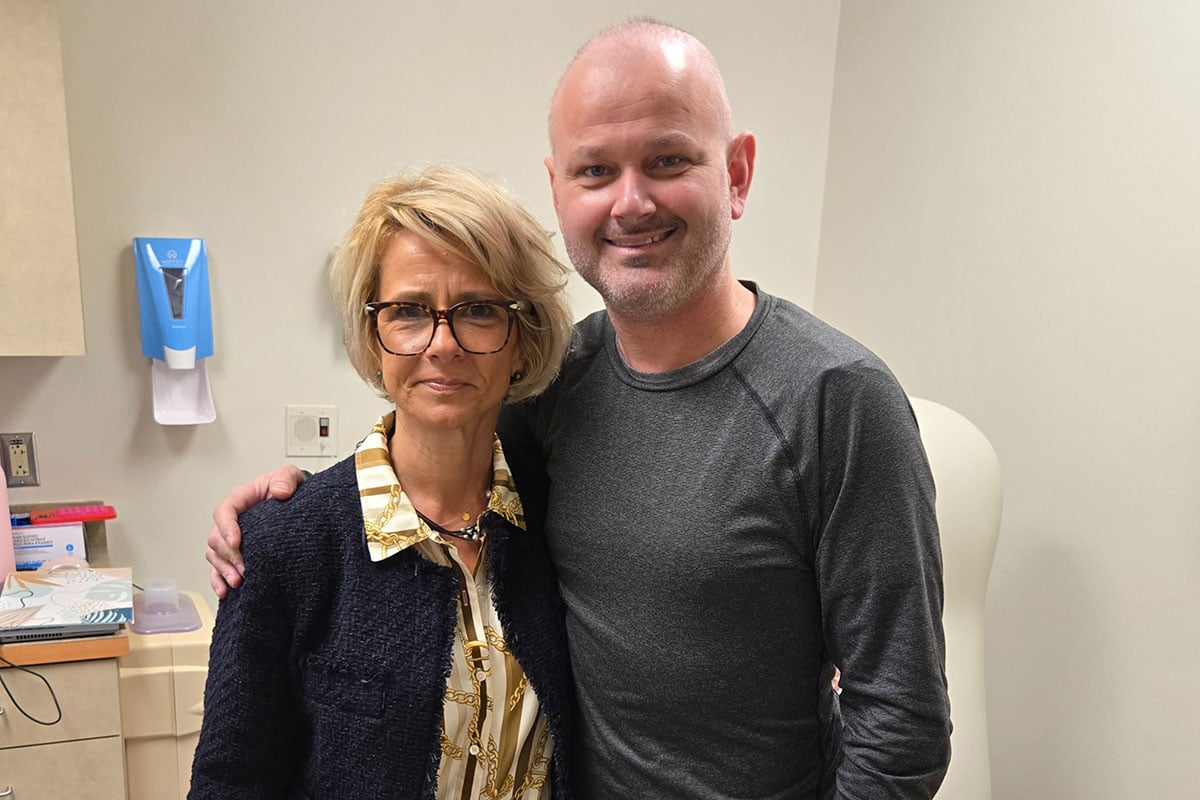
Overcoming a Rare Cancer with a Revolutionary New Therapy
Read Patient JP Malherbe's StoryWhat causes synovial sarcoma?
Synovial sarcoma is caused by an abnormal change in the inner cellular structures that hold genetic information (chromosomes). Specifically, two pieces of different chromosomes—one from the X chromosome and one from chromosome 18—wrongly switch places. The swap creates a new, abnormal gene that should not exist. The new gene produces a protein that can cause cells to grow uncontrollably, leading to the formation of a tumor.
Risk factors for synovial sarcoma include:
- Young age (most cases are diagnosed before age 35)
- Radiation therapy for a previous cancer
- Frequent exposure to certain chemicals, including vinyl chloride, arsenic and thorium dioxide
- Long-term swelling (chronic lymphedema) in the arms or legs
-

Approximately 1,000
people diagnosed with synovial sarcoma each year in the U.S.
-

Age 35
most synovial sarcoma cases are diagnosed
What are the symptoms of synovial sarcoma?
Because synovial sarcoma usually grows slowly, the cancer can go undetected for up to two years. As the tumor progresses, noticeable symptoms may develop in the affected area, such as:
- A painless lump under the skin
- Sudden, sharp pain
- Swelling
Additionally, though rare, synovial sarcoma may develop around the chest, neck or head and interfere with breathing or swallowing.
How is synovial sarcoma diagnosed?
If synovial sarcoma is suspected based on the symptoms, the physician will typically perform a physical examination and order diagnostic testing, which may include:
- Imaging tests, such as X-rays, magnetic resonance imaging (MRI) scans or computed tomography (CT) scans, to help the physician visualize the tumor and assess its location and size
- Genetic testing to check for mutations known to be associated with synovial sarcoma tumors
- Biopsy to remove a sample of suspicious tissue for microscopic examination by a pathologist, who can identify cancerous cells
After diagnosing synovial sarcoma, the physician will stage the tumor based on its size and spread. Synovial sarcoma is staged from 1 to 4, with higher numbers indicating more advanced tumors.

What are the treatment options for synovial sarcoma?
Synovial sarcoma treatment can vary based on the location and stage of the tumor and the patient’s age and overall health. In general, an early diagnosis is the key to achieving the best possible outcome and quality of life.
In most cases, the primary treatment for synovial sarcoma is surgery to remove the tumor. Other options may include:
- Radiation therapy – High-energy beams focused on a targeted area of the body can destroy cancer cells and shrink a tumor.
- Chemotherapy – Potent cancer-fighting drugs administered orally or intravenously can enter the bloodstream and travel throughout the body to seek and attack widespread cancer cells.
- Immunotherapy – Certain medications can boost the body’s immune system and help it identify and fight cancer cells.
- Targeted therapy – Anti-angiogenesis inhibitors can prevent a tumor from forming new blood vessels, cutting off the blood supply needed to fuel cancer growth.
Groundbreaking Gene Therapy for Metastatic Synovial Sarcoma
In 2024, the U.S. Food and Drug Administration (FDA) approved Tecelra (afamitresgene autoleucel), marking it as the first engineered T-cell receptor (TCR) therapy approved for treating solid tumors. An autologous T-cell immunotherapy, Tecelra uses a patient’s own T cells, which are genetically modified in a lab to target the MAGE-A4 antigen in synovial sarcoma cells. Administered in a single infusion, Tecelra differs markedly from the cytotoxic systemic therapeutic options traditionally used to treat metastatic synovial sarcoma.
The approval of Tecelra is a milestone in the development of cell therapies for solid tumors in general and in the treatment of metastatic synovial sarcoma in particular. This is significant because traditional synovial sarcoma treatment approaches often fall short in metastatic cases due to rapid tumor growth and progression.
Moffitt was the first facility in the world to offer the treatment following the FDA approval.
Benefit from world-class care at Moffitt Cancer Center
Moffitt’s high-volume Sarcoma Program is led by a multispecialty team that focuses exclusively on soft tissue and bone cancers, resulting in an unparalleled level of expertise in diagnosing and treating these uncommon and complex tumors. We offer the latest treatment options for synovial sarcoma, including a robust portfolio of clinical trials. Moffitt participated in the clinical trials for Tecelra, and we are proud to be the first cancer center in the world to offer this innovative therapy to adults with metastatic synovial sarcoma.
If you would like to learn more about synovial sarcoma, you can request an appointment with a specialist in our Sarcoma Program by calling 1-888-663-3488 or submitting a new patient registration form online. We do not require referrals.
References
National Cancer Institute: Synovial Sarcoma
American Cancer Society: Soft Tissue Sarcoma
 Florida's First NCI-designated Comprehensive Cancer Center
Recognized for its scientific excellence, Moffitt is the state's longest-established National Cancer Institute-designated Comprehensive Cancer Center.