
Adolescents and Young Adults with Cancer: Living Through Premature Menopause in My 20s
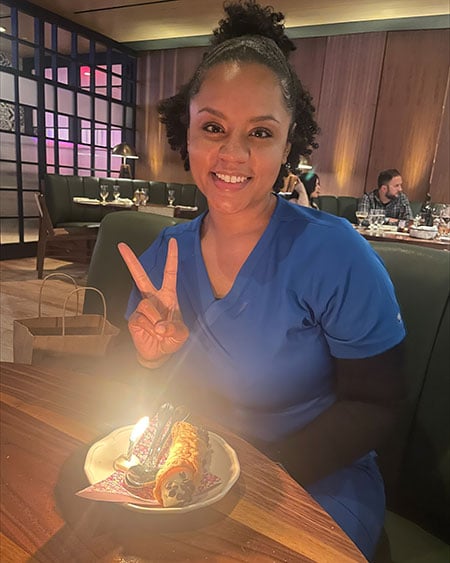
Jasmine celebrating her “second” birthday after two years of remission.
When I first heard the words, “You have cancer,” I went numb. I was only 25. It was all a blur. Within three days, I had signed forms I barely understood, had a PICC line placed and watched my first round of chemo drip into my arm. At the time, side effects didn’t matter, I just wanted to live.
After months of chemotherapy, immunotherapy, radiation, a last-minute egg freeze and a bone marrow transplant, I reached remission! I thought life would go back to normal. But instead, the side effects became my reality. Two months after finishing treatment, my period stopped. Soon came hot flashes, night sweats, brain fog, a low intimacy drive and severe vaginal dryness. It was also difficult to make peace with the possibility of not having children.
I will never forget the first time I had a pelvic exam after treatment; it felt like sandpaper. Even sitting or moving was painful. I was embarrassed and confused, and nothing from the drugstore helped. I also avoided intimacy with my boyfriend. The thought of pain made me afraid to try. This added to the distance, and we went a while without intimacy.
My doctor suggested hormone replacement therapy, but was cautious about the risks. I was desperate for answers. That’s when I was referred to pelvic floor therapy. At first, I was nervous, but the therapist taught me simple exercises that reduced my pain and gave me back control of my body. Daily estrogen gel also stopped the hot flashes and eased the dryness.
Premature menopause in my 20s was not what I expected after surviving cancer. It has been painful and isolating, but I’ve learned that support and treatment exist. Don’t wait until the pain is overwhelming — talk with your doctor early about hormone therapy and pelvic floor therapy. And most importantly, talk with your partner. You are not alone.
If you're experiencing reproductive or fertility-related side effects, talk with your care team. Support is available.
This story was originally published in the PARTNERS newsletter. Visit Moffitt.org/PARTNERS for more stories and to learn more.