
My Journey from Diagnosis to Empowerment
From an early age, I learned the importance of self-advocacy. Diagnosed with mild cerebral palsy as a child, I had to advocate for myself to communicate my needs to those around me. This skill became crucial in my battle with cancer.
In 2021, I competed in my first triathlon. Finishing eighth in my age division, among able-bodied competitors, reinforced my belief in the power of perseverance.
A few months later, my face, stomach, hands and feet were swollen, my blood pressure was dangerously high, my scalp was peeling and I noticed unusual hair growth on my face. Despite my discomfort and concerns, doctors and specialists were unable to provide answers. They dismissed my symptoms, suggesting that since I had only gained 15 pounds, my swelling was not severe enough to warrant concern.
Determined to find answers, I documented my symptoms, creating a detailed timeline and taking photos of the changes. I consulted a local specialist who, after negative results from allergy and autoimmune tests, decided to order a scan.
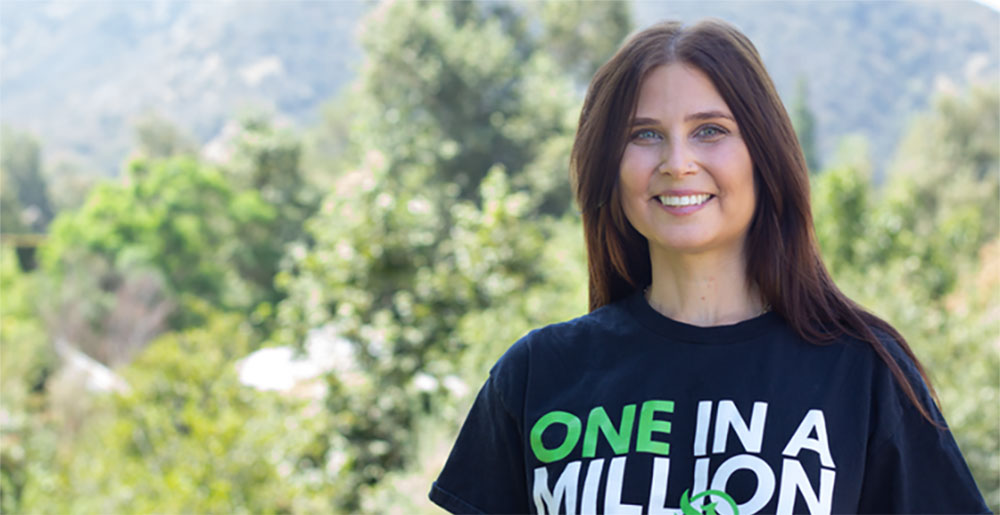
The scan revealed a 16cm tumor on my adrenal gland. Initially, I was told the tumor was unlikely to be cancer. I sought a second opinion, where the endocrinologist identified it as adrenocortical carcinoma (ACC), a rare cancer affecting one in a million people. The tumor was also responsible for causing Cushing's syndrome due to its excessive cortisol production. At 32 years old, I was told that I would likely be a chronic cancer patient.
Despite the difficulty in obtaining a diagnosis—an ordeal that took four months, which is relatively short for ACC or Cushing's—I was fortunate compared to many who suffer from delays due to limited education, healthcare access or misdiagnosis.
Following surgery, I began treatment at Moffitt. Due to ACC’s rarity, there is only one FDA-approved medication, which I started a month after surgery, alongside 28 rounds of radiation to my adrenal bed. Shortly after, I experienced a recurrence in my spine, hips, liver, lungs and shoulder, as recurrence is not uncommon for ACC. I underwent additional treatments including a different chemotherapy regimen, radiation, a liver ablation and eventually switched to immunotherapy and a new chemotherapy pill that showed promise but was typically used to treat other cancers.
Fortunately, since October 2022, my tumors have been shrinking and are stable. I continue to be closely monitored by my team at Moffitt and have consulted with ACC specialists across the country. This collaborative approach provides comfort and options, allowing me to receive care locally while traveling.
Though I live with chronic cancer and adrenal insufficiency that has to be managed, I have found ways to thrive. Self-advocacy remains crucial. I actively participate in online ACC support groups as well as the Moffitt AYA group. My journey has also led me to help launch and serve as Vice President of Adrenal Cure Collective, a non-profit dedicated to raising awareness and funds for a cure for ACC.
Since my diagnosis, I have been driven by the desire to heal so I can advocate for others. My story has even been shared in several national news outlets. I am grateful for the opportunity to continue this mission and to be a voice for those facing similar battles.
This story was originally published in the PARTNERS newsletter. Visit Moffitt.org/PARTNERS for more stories and to learn more.