
What Matters Most?
In 2019, Moffitt was recognized by the Institute of Health Care Improvement for its commitment to providing excellent care to older adults. As part of the Age Friendly Health System, Moffitt is committed to ensuring your needs are discussed at every visit. Our goal is to address the specific needs of older adults with cancer while focusing on what matters most to you personally during your cancer journey. We use the 4M framework: What Matters, Medication, Mentation and Mobility.
You are a partner in your healthcare. Before each appointment, think about your cancer journey. Some things to consider using the 4M framework include:
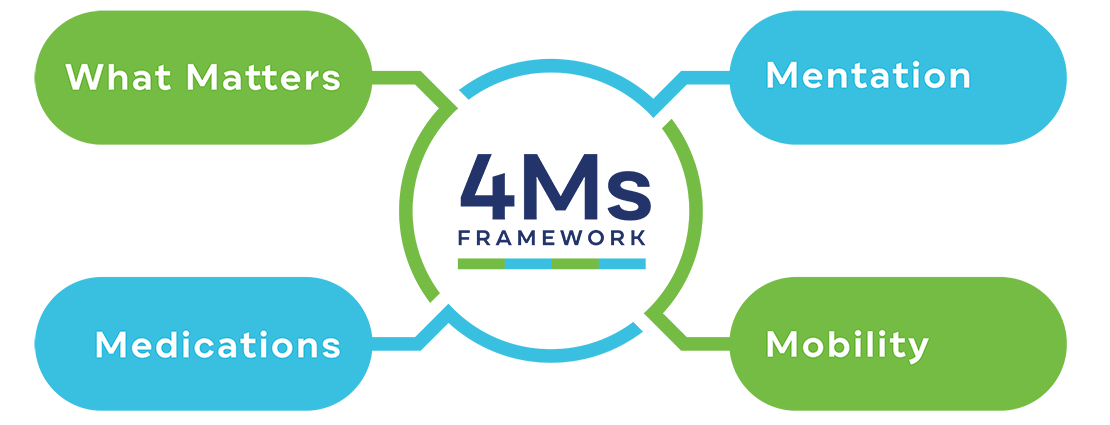 What Matters Most to Me?
Think about what is most important to you in life; things you want your health care team to understand about you as an individual. Who are the most important people in your life? What do you view as essential to your quality of health and well-being? If something were to happen to you, who would you turn to for help making healthcare decisions? Take a moment and think about who you are and what you are facing right now. What is the most important thing that comes to mind?
Medication
Make sure you understand your medications and what they do for you. Our bodies change with age in ways that can increase the chances of side effects from medications. One way to help prevent complications from medicine is to understand why you are taking them and to address any concerns about them with your health care provider. Are there any medications you feel unsure about taking or how to take? List your concerns and questions.
Mentation
Thinking and memory, mood and mental health matter! Just like your body changes with age, so can your brain. Some ways to support mentation include engaging in meaningful activities and managing stress and anxiety. Are you feeling sad most days? Have you lost interest in things you used to enjoy? Are you experiencing forgetfulness? List two things you do that help you relax and seek a friend or professional to talk to.
Mobility
Stay as physically active as possible. Set a realistic daily mobility goal, something active you can do every day. This goal may start small and then change as you get more physically active.
For example: Walk outside for 15 minutes every day. Do daily chair exercises for 10 minutes first thing in the morning. Do light yoga or tai chi online or with a friend.
Have questions about the 4Ms? Be sure to write down any questions you have for your care team ahead of time so you can discuss them during your next visit.
This story was originally published in the PARTNERS newsletter. Visit Moffitt.org/PARTNERS for more stories and to learn more.