
Robotic Surgery for Gastrointestinal Cancer Treatment
Robotic surgery is playing an increasingly important role in the treatment of gastrointestinal (GI) cancers, providing a minimally invasive option for many patients undergoing complex surgery, such as the Whipple procedure. With robotic assistance, a skilled surgeon can perform highly intricate surgical techniques with enhanced precision, dexterity and control. One of the most advanced robotic systems used today is the da Vinci Surgical System, which facilitates fine tissue dissection, accurate tumor removal and improved visualization of difficult-to-access areas within the abdominal cavity.
ACS Surgical Quality Partner for 30+ Years
Continuously Accredited by the American College of Surgeons Commission on Cancer since 1989 for our commitment to providing comprehensive, high-quality and multispecialty patient-centered care.
What is robotic surgery?
Robotic surgery involves the use of a computer-assisted system, such as the da Vinci Surgical System, which enables the surgeon to operate using robotic arms inserted through a few small incisions. The robotic arms are equipped with a high-definition, three-dimensional (3D) camera and specialized surgical instruments that can rotate and maneuver with greater dexterity than the human hand. Throughout the procedure, the surgeon remains in complete control, guiding the instruments in real time from a nearby computer console.
How is robotic surgery used in gastrointestinal cancer treatment?
Robotic surgery can be used to treat a wide range of gastrointestinal cancers, including:
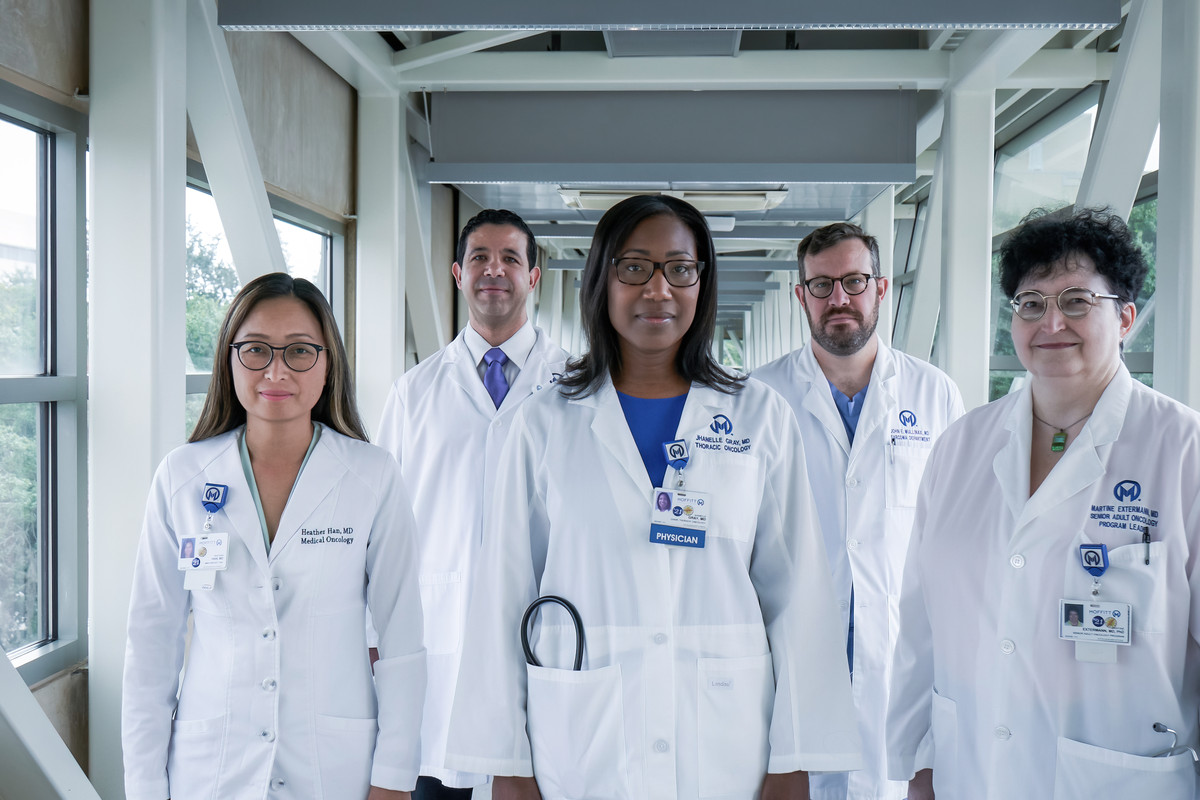
Florida's Top Choice for Cancer Care
Schedule an AppointmentWhat are the potential benefits of robotic surgery for gastrointestinal cancer treatment?
Compared to traditional open surgery, robotic-assisted surgery offers several key advantages, including:
- Smaller incisions
- Less blood loss
- Lower risk of infection
- Shorter hospital stay
- Faster recovery
- Reduced post-operative pain
- Improved preservation of surrounding healthy tissues
- Minimal scarring
These benefits can be especially important for a cancer patient, who may need to begin further treatment, such as radiation therapy or chemotherapy, shortly after surgery.
Who is a good candidate for robotic surgery for gastrointestinal cancer treatment?
Robotic surgery can be a safe and effective treatment option for many patients with early- to mid-stage gastrointestinal cancer. However, it is not suitable in every clinical scenario. In general, an ideal candidate:
- Has early-stage or localized GI cancer – Robotic surgery is best suited for treating small tumors confined to a specific area of the gastrointestinal system, such as the stomach, colon, rectum, pancreas, liver or esophagus.
- Is in overall good health – The patient must be sufficiently healthy to tolerate anesthesia and the physical demands of surgery. While an individual with a well-controlled chronic condition, such as diabetes or hypertension, may still be eligible, a significant cardiac, pulmonary, or other systemic issue may rule out their candidacy.
- Requires precise or minimally invasive intervention – Robotic assistance provides the surgeon with enhanced visualization and greater surgical precision, which can be especially valuable when removing a tumor located in a narrow or hard-to-reach area of the GI tract, such as the deep pelvis or behind delicate blood vessels.
- Does not have extensive surgical adhesions or prior radiation treatment – Abdominal surgery and radiation therapy can sometimes create dense scar tissue, which can make robotic surgery more challenging.
How to prepare for robotic surgery for gastrointestinal cancer treatment
Preparing for robotic surgery involves several important steps to help ensure a safe procedure and smooth recovery. These include:
- Medical evaluations – The surgical team will conduct a thorough preoperative assessment, including a medical history review, physical exam, blood work and imaging. The patient may also meet with specialists, such as an anesthesiologist or cardiologist, depending on their health status.
- Medication management – The patient may be advised to stop taking certain medications before surgery, such as blood thinners and nonsteroidal anti-inflammatory drugs (NSAIDs), which can increase the risk of bleeding. It is important to closely follow the physician’s instructions on which medications to continue, adjust or temporarily stop.
- Fasting and bowel preparation – Most patients will need to fast for a set number of hours, usually beginning after midnight the night before surgery. For certain GI procedures, bowel preparation may also be required to empty the intestines.
- Lifestyle considerations – The patient will likely be encouraged to engage in light physical activity, eat a healthy diet and stay well-hydrated in the days leading up to the procedure. If the patient smokes, they will be advised to quit several weeks before surgery to reduce the risk of complications.
- Preoperative guidelines – The healthcare team will provide detailed instructions on how to prepare for surgery, what to bring to the surgical center and when to arrive. It will be important to closely follow these recommendations and ask clarifying questions if necessary.
What to expect after robotic surgery for gastrointestinal cancer treatment
After robotic surgery, the patient can generally expect a shorter hospital stay and a quicker recovery compared to traditional open surgery. While individual experiences can vary, common aspects of the postoperative period include:
- Initial recovery – The patient will be closely monitored in a recovery area before being moved to a hospital room. Any pain can usually be managed with prescribed medication, and the patient will begin walking within one day to promote healing and help prevent complications, such as blood clots.
- Nutrition and physical activity – The patient may start with a liquid diet before gradually returning to solid foods, depending on the type of GI surgery performed. Light activity is usually encouraged soon after surgery, while strenuous activity will be limited for several weeks.
- Follow-up care – The surgical team will schedule follow-up appointments to monitor healing, review pathology results and discuss any further treatment if needed. Most patients return to their normal routine within a few weeks.
What are the risks and potential complications of robotic surgery for gastrointestinal cancer treatment?
While robotic surgery offers many advantages over traditional open and laparoscopic surgery, it still carries certain risks and potential complications. General surgical risks include:
- Bleeding – Though rare, bleeding during or after the procedure may occur, sometimes requiring a blood transfusion or additional intervention.
- Infection – As with any GI surgery, there is a risk of infection at the incision sites or within the abdominal cavity.
- Injury to surrounding structures – During GI surgery, there is a slight risk of injury to nearby organs and tissues, such as the bladder, liver, pancreas and blood vessels.
Procedure-specific risks include:
- Anastomotic leak – Though rare, if part of the bowel is removed and reconnected, the connection (anastomosis) may leak, which could lead to a serious infection or require further surgery.
- Delayed bowel function – After GI surgery, it can take some time for normal bowel function to resume, which may lead to nausea, bloating or constipation.
Robotic-specific considerations include:
- Longer operating time – While robotic surgery offers enhanced surgical precision, it may take longer to complete than traditional open or laparoscopic surgery, particularly in a complex case.
- Technical malfunction – Though extremely rare, equipment failure or issues with the robotic system may occur, potentially necessitating conversion to an open or laparoscopic procedure.
Anesthesia risks include:
- Respiratory or cardiac complications – General anesthesia carries inherent risks, particularly for a patient with a preexisting heart or lung condition.
- Reactions to anesthesia – Allergic reactions or other adverse responses to anesthetic agents can occur.
Possible postoperative complications include:
- Blood clots – The risk of deep vein thrombosis (DVT) or pulmonary embolism (PE) increases after major surgery, especially for a patient with limited mobility during recovery.
- Hernia at incision site – Over time, the patient may develop a hernia at one of the small incisions made during the robotic procedure.
Although these adverse effects are relatively rare, the surgical team will carefully assess the patient’s individual risk profile and take appropriate precautions to minimize any complications. Robotic surgery for GI cancer is usually performed by a highly experienced surgeon at a high-volume cancer center, where complication rates are generally low.
Benefit from world-class care at Moffitt Cancer Center
The multidisciplinary team in Moffitt’s renowned Gastrointestinal Oncology Program includes surgical oncologists, medical oncologists, radiation oncologists, radiologists, nurses and other specialists. Working closely together, these experts develop a personalized treatment plan to help each patient achieve the best possible outcome and quality of life. We are proud to offer the latest advances in GI cancer treatment, including robotic procedures performed with the assistance of the groundbreaking da Vinci Surgical System.
Of course, while robotic technology is a leading innovation in modern surgery, a robotic surgical system is only as good as the surgeon behind the console. Moffitt’s surgeons bring extensive expertise to the operating room, and we consistently achieve outcomes that exceed national averages. Recently, our team reached a significant milestone in completing 200 robotic-assisted Whipple procedures, which is more than any other hospital or cancer center in the southeastern United States. Our surgeons have also performed more than 100 robotic-assisted liver resections and approximately 1,000 robotic-assisted gastric and esophageal surgeries, ranking Moffitt among the highest-volume providers of robotic GI surgery in the nation.
If you would like to learn more about robotic surgery for gastrointestinal cancer treatment, you are welcome to talk with a specialist in the Gastrointestinal Oncology Program at Moffitt. To request an appointment, call 1-888-663-3488 or submit a new patient registration form online. We do not require referrals.