From the Court to the Clinic, This Endoscopist’s Strength Is Helping Patients
Youth sports can teach you certain lessons that last a lifetime. Keep your eye on the ball. Focus on the fundamentals to build a strong foundation. Strength comes from training. Winning is rewarding, but losing gives you opportunities to grow.
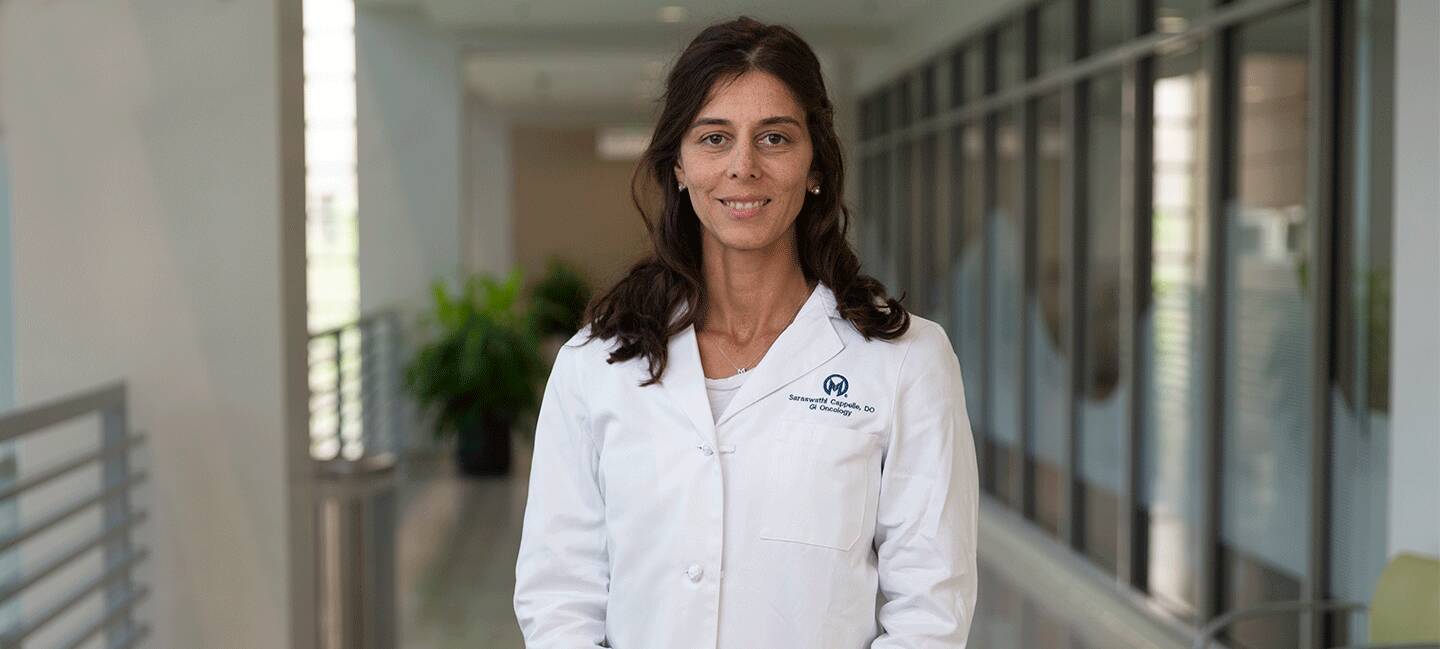
For Saras Cappelle, DO, tennis was her first love. As a little girl, she didn’t dream of being a doctor. She picked up her first tennis racket at age 6 and set her sights on going all the way.
“A lot of people have this vision when they’re younger that they want to be in the medical field, and I can’t say I fit in that mold,” she said.
A Tampa native, Cappelle played tennis at Saddlebrook Prep in middle school and then attended Tampa Prep for some of her high school years. She went on to compete for Duke University as an undergraduate. During and after college, she played semiprofessionally in International Tennis Federation Tournaments before deciding to pivot her career path to medicine.
Perhaps not surprisingly, Cappelle found her fit in a physically demanding specialty that requires intense training and drive: therapeutic endoscopy.
After earning her doctorate degree, Cappelle completed an internal medicine residency and a three-year gastroenterology fellowship at Temple University Hospital in Philadelphia. She then went on to a one-year advanced endoscopy fellowship at Fox Chase Cancer Center, where she focused on more complex procedures.
“I was always fascinated by medicine in the sense that, obviously we’re here to help people, but I also was very hands-on,” she explained. “I was always looking at things from a procedural standpoint, and that’s where gastroenterology blended well with hand-eye coordination, which was something that certainly I was very used to with tennis, and having the ability to utilize procedural aspects to ultimately help patients.”
A Steady Hand and a Sharp Eye
Endoscopists use endoscopes — long, thin tubes with lights and cameras on the end — to identify and alleviate problems in the gastrointestinal tract. The specialists guide the endoscopes gently with their hands while keeping their eyes on a screen that shows the feed from the camera inside the patient.
Traditional endoscopy focuses more on diagnostic procedures such as screening colonoscopies or upper endoscopies for acid reflux disease. Therapeutic endoscopists like Cappelle perform more complex procedures in the gastrointestinal tract aimed at alleviating pain for patients or providing an alternative to surgery.
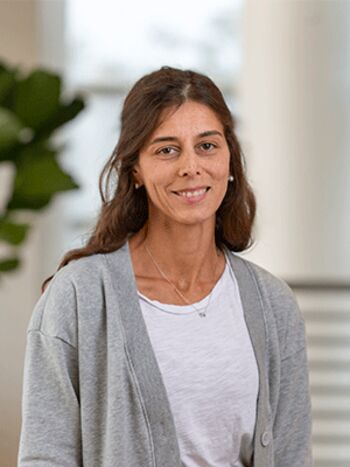
Cappelle is a therapeutic endoscopist, focused on performing complex procedures in the gastrointestinal tract aimed at alleviating pain for patients or providing an alternative to surgery.
Cappelle particularly notes the difference therapeutic endoscopists can make in the lives of cancer patients. In her role at Moffitt Cancer Center, she often works closely with colleagues from different disciplines in the Pancreas Interception Center to monitor and treat patients with pancreatic cysts that could turn cancerous.
One procedure used to help these patients is an endoscopic ultrasound, which uses the endoscope’s camera to capture an internal ultrasound.
“We can actually get information from the cyst by looking at it, but we can also obtain samples like fluid from the cyst and we can biopsy the cyst endoscopically,” Cappelle explained.
This allows the medical team to evaluate the risk posed by the cyst and determine the best path forward, whether that’s ongoing monitoring or surgical intervention.
For patients who are experiencing bile duct blockage from a pancreatic tumor, therapeutic endoscopists can perform endoscopic retrograde cholangiopancreatography procedures. During this nonsurgical procedure, the endoscopist is able to place a stent in the bile duct to alleviate the blockage and provide the patient with relief from symptoms.
Cappelle also treats patients who have large polyps in the colon that are in a challenging spot or too big for a community provider to safely remove.
“We’re finding more and more ways to alleviate issues for patients where we can endoscopically treat as opposed to requiring surgery,” Cappelle said. “It’s a less invasive approach because everything we do is via our camera, meaning we go in but there are no external incisions. You’re not going to the operating room. So this platform of therapeutic endoscopy is really continuing to push boundaries.”
Strength in Training
Therapeutic endoscopy is a physically taxing field with few women practitioners. In the broader field of gastroenterology, women account for 21% of practicing physicians, one study found. Only 16% of those in advanced fellowship programs, like the one Cappelle completed, are women. Compare that to the overall medical student population, which is 50% women.
There are many factors that play into this gap. But research shows that one major challenge is the physicality and ergonomics of endoscopy.
Some procedures require long hours of standing while maneuvering the endoscope and looking forward or slightly up at a screen. For procedures that involve exposure to X-rays, such as fluoroscopy, endoscopists wear heavy lead aprons and other equipment to protect themselves.
“There’s definitely more of a physical toll with therapeutic endoscopy,” Cappelle admitted. But she credits her medical mentors for helping her navigate this challenge.
Cappelle is careful about how she grips her instruments, how she positions her wrists, how her screen is angled and how she postures herself during procedures. She knows carpal tunnel and wrist strain are big risks in the field, especially for women.
Just like in tennis, though, good form can protect endoscopists from injuries.
“Technique is very important because there’s a lot of wear and tear on the body,” she said. “Sometimes, when you’re training, you just want to get the result, but you don’t care how you get the result. My mentors stressed that you have to have the technical foundation first because this is something that you are going to be doing for years and years.”
From the Clinic to the Court
Outside of treating patients, Cappelle still makes time for her first love. She plays doubles with her husband and is helping her 4-year-old son learn to play. Although she doesn’t have as much time for the sport as she used to, she credits those early life lessons for motivating her in her medical career.
“I do believe that playing a sport my whole life — from a very young age, competitively, especially a racket sport — that has helped me. It has helped me from a strength standpoint and from a mental standpoint of being through the wringer with my coaches, through tournaments, and through failures and successes.”