Study Aims To Improve Outcomes of Metastatic Colorectal Cancer
Key Takeaways:
- Researchers at Moffitt Cancer Center are testing a new colorectal cancer treatment that combines chemotherapy with a bispecific antibody targeting PD-L1 and VEGF
- The study is comparing this new therapy against the current standard treatment for this type of disease
- The research is also examining defects in DNA repair pathways, which may affect treatment response
Standard treatment for patients with previously untreated, unresectable, or metastatic colorectal cancer is typically a combination of a targeted therapy drug called bevacizumab and chemotherapy.
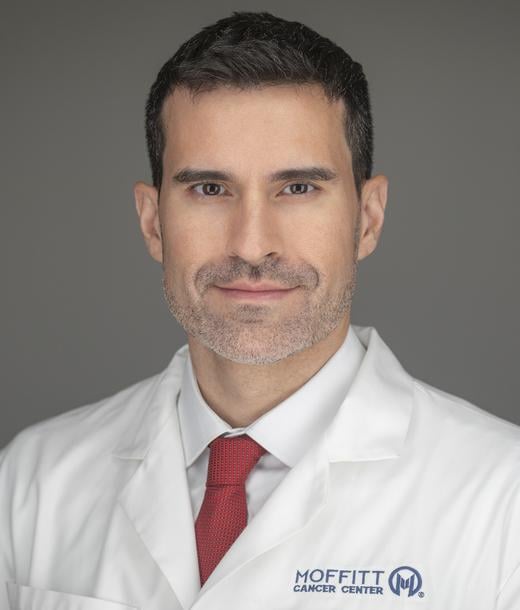
In a trial spearheaded by Tiago Biachi, MD, a gastrointestinal oncologist at Moffitt Cancer Center, researchers are comparing the standard treatment combination to pumitamig, a bispecific antibody that targets two proteins on the tumor cell surface, PD-L1 and VEGF, plus chemotherapy.
The goal of the study is to evaluate the safety and efficacy of this treatment, specifically in patients with microsatellite-stable disease — where the tumor’s DNA repair genes are fully functional — and the tumor cells have normal DNA mismatch repair proteins. This accounts for about 80% to 85% of colorectal cancer patients.
Improving Care
According to Biachi, there are several reasons why this trial is significant:
- Current first-line treatment outcomes for microsatellite-stable metastatic colorectal cancer with bevacizumab plus chemotherapy are good, but not curative for most patients. Many still progress within one to two years.
- Adding immunotherapy has historically underperformed in microsatellite-stable colorectal cancer due to reduced ability to trigger an immune response.
- Pumitamig’s dual PD-L1/VEGF blockade may simultaneously improve immune infiltration.
“The results from this trial could potentially lead to a new standard of treatment if it improves patient outcomes with manageable safety,” Biachi said.
The trial launched in December 2025, and patients are still actively being recruited. There are expected to be 990 patients enrolled, and the trial should be completed in 2034.