Precision Surgery and Its Role in Genitourinary Cancer Therapy
Genitourinary (GU) cancers, including bladder, kidney, and prostate cancers, often require surgical intervention as the primary treatment modality. The Genitourinary Oncology Program at Moffitt Cancer Center specializes in advanced surgical procedures, offering state-of-the-art techniques that range from minimally invasive operations to complex reconstructive surgeries for even the rarest GU cancer types.
On average, our experts successfully treat over 3,000 GU cancer patients annually. While surgery remains a cornerstone in treating these malignancies, we recognize the importance of a comprehensive approach. Our surgical expertise is complemented by advancements in immunotherapy and personalized medicine, expanding the therapeutic options available to patients, achieving better outcomes, and enhancing quality of life.
Expedited Surgical Consults - Newly diagnosed patients are seen within one week.
Virtual Care appointments are also available with our experts.
Genitourinary Cancer Surgical Interventions
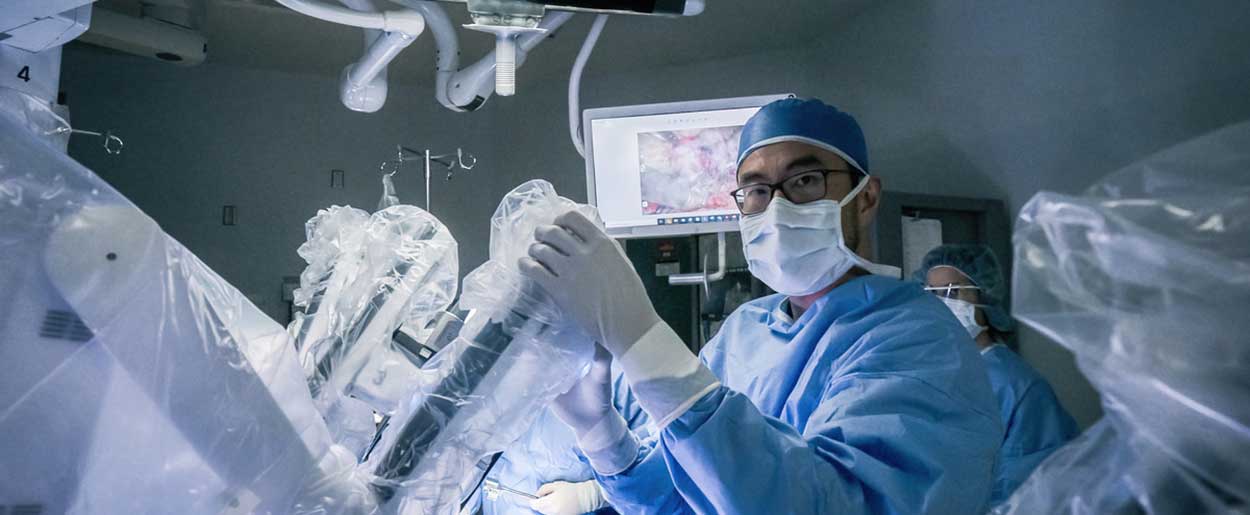
Innovative surgical interventions have advanced the field of genitourinary oncology. Many GU cancers can now be treated with minimally invasive (MIS), robotic-assisted surgeries. For many patients and some tumor types, MIS can result in shorter recovery times, lower wound-related complications, and smaller scars, as well as higher satisfaction rates. However, MIS is not the best nor the correct approach for every cancer patient who requires surgery as a component of their cancer treatment.
Bladder Cancer Surgeries
While the most common bladder cancer is urothelial carcinoma, different surgeries may be required. Some of these include:
- Transurethral Resection of Bladder Tumor (TURBT)
- Partial or radical cystectomies
Current results comparing traditional open surgery to robotic surgery for cystectomy reveal that robotic cystectomy could be associated with less blood loss, but a longer operative time. However, hospital length of stay, post-operative recovery, re-admissions and complications of open and minimally invasive procedures are essentially the same. Thus, specialty organizations do not favor one approach over the other. There are clinical and pathologic factors that would support a traditional open approach over a MIS. Still, such decisions require careful counseling and decision-making between the patient and their surgical team.
For example, while removal of the bladder is a common treatment, it’s not the only option. Our GU cancer experts also offer bladder preservation therapy on well-selected patients. The treatment includes surgical removal of the tumor followed by chemotherapy and radiation.
Kidney Cancer Surgeries
Our very strong preference is for kidney-sparing surgery when possible, and MIS techniques, such as transperitoneal and retroperitoneal robotic surgical approaches, have tremendously enhanced the patient experience compared to traditional open surgery. Data reveal excellent oncologic outcomes and comparable post-operative complications for partial nephrectomy, while significantly diminishing hospitalization and time to recovery. For patients with more advanced disease systemic immunotherapy or targeted therapy is recommended.
Robotic Nephroureterectomy - This minimally invasive procedure utilizes robotic surgery to remove both the kidney and the ureter. This is typically performed for urothelial cell carcinoma, cancer of the lining of the urinary tract. At Moffitt, it is our routine practice to deliver perioperative bladder chemotherapy at the time of nephroureterectomy which has been shown to decrease the recurrence rate.
Prostate Cancer Surgeries
Moffitt is recognized by U.S. News & World Report as High Performing for Prostate Cancer Surgery. We offer a range of treatment options for prostate cancer, including MIS. New developments in prostate cancer care are providing men with localized prostate cancer more targeted and less invasive treatment options. Such options as focal therapies, now offered at Moffitt Cancer Center, are gaining attention for their ability to treat cancer while minimizing side effects and preserving quality of life.
Focal therapies such as High-Intensity Ultrasound, Irreversible Electroporation, Radio-Frequency Ablation, Laparoscopic Radical or Robotic Prostatectomy, cryosurgery zero in on the affected areas of the prostate, leaving healthy tissue intact for a lower risk of side effects such as urinary incontinence and erectile dysfunction.
Therapies Unique to Moffitt
Some of the bladder cancer surgeries that are unique to Moffitt include segmental cystectomy for a patient with low-grade cancer; during this procedure, the cancerous part of the bladder is removed. If the cancer is more advanced, the surgeon may complete a radical cystectomy, in which the entire bladder and any cancerous lymph nodes/nearby organs are removed. When the bladder is removed, the surgeon may also perform a urinary diversion procedure to create a new way for the body to store and pass urine. A transurethral resection (TUR) with fulguration, in which the surgeon burns the tumor away with high-energy electricity, may be recommended as an alternative.
Our surgeons deliver a comprehensive spectrum of the latest surgical interventions and prioritize achieving complete tumor resection while minimizing surgical invasiveness aiming to enhance postoperative quality of life.
Moffitt’s Multidisciplinary Approach for Optimal Outcomes
While housing the entirety of a patient’s cancer treatment under one roof is ideal in some cases, we also partner with other cancer centers to care for our shared patients. A patient may opt to undergo surgery at Moffitt and work with their local oncologist for post-surgery treatment such as chemotherapy or radiation. We also offer specialized urologic services post-treatment for patients who cannot find these services locally.
Our experts collaborate to develop a plan that is best for the patients, using the combined expertise of our multispecialty tumor board. Each program, including the Genitourinary Oncology Program, has a unique tumor board comprising medical professionals from all areas of expertise—radiologists, surgeons, radiation oncologists, nurses, pathologists, medical oncologists and more—that meets weekly to review each patient’s case collaboratively. This approach ensures all specialties are represented in each case review, with all aspects of care taken into account and the latest treatment options considered.
Moffitt’s team of surgeons focuses exclusively on urologic cancers and regularly addresses complex and uncommon malignancies. This experience, combined with our advanced treatments and individualized services, leads directly to better outcomes and enhanced quality of life for our patients.
Our specialists collaborate with referring providers to develop individualized treatment plans, refining them as necessary to meet each patient’s unique and evolving needs.
Partner with Moffitt for The Best Cancer Care for Your Patients
As a high-volume National Cancer Institute-designated Comprehensive Cancer Center, our advantages directly impact patient outcomes. Our fellowship-trained specialists bring unparalleled expertise to every case, particularly in urologic sub-specialties, consistently delivering superior outcomes for even the rarest malignancies.
For referring healthcare providers, choosing Moffitt means partnering with world-class specialists using leading-edge care to shape the future of GU cancer treatment. Together, we can give your patients their best cancer outcomes and enhanced quality of life.
If you’d like to refer a patient to Moffitt for surgery, complete our online form or contact a physician liaison for assistance. As part of our efforts to shorten referral times as much as possible, online referrals are normally responded to within 24 - 48 hours.