
Streamlining Specialty Care: Direct Access to Moffitt's Transplant and Cellular Immunotherapy Expertise
Key Takeaways for Busy Providers
- Moffitt has completed over 10,000 blood and marrow transplants (and counting), the largest and most experienced program in the Southeast.
- Patients can be directly referred to Moffitt's BMT/CI clinic; specific diagnosis details are provided below.
- Direct referral access means faster evaluation with no intermediary approvals required.
- Early referral preserves curative options and eligibility for clinical trials.
- Moffitt now treats select treatment-resistant autoimmune diseases. Advanced cellular therapies with CAR T trials for lupus are coming in January 2026.
- Contact your physician liaison or fill out or online form for a BMT consult for your patient
When patients face challenging malignant or non-malignant hematologic diseases, timely referral to specialized care can make all the difference in treatment success. Moffitt's Blood and Marrow Transplant and Cellular Immunotherapy (BMT/CI) Program provides a direct pathway for referring physicians to connect patients with advanced transplant and cellular therapy options, eliminating unnecessary intermediate steps in the referral chain.
Which Patients Can Be Referred Directly to BMT/CI?
Community providers, including primary care physicians, advanced practice providers, medical oncologists, hematologists, internists, rheumatologists, and neurologists, can expedite access to care by referring appropriate patients directly to our BMT-CI specialists. Consider direct referral for patients with these conditions:
Hematologic Malignancies
Lymphoma
Relapsed or refractory Hodgkin and non-Hodgkin lymphoma cases benefit from multimodal approaches including autologous transplantation, cellular immunotherapy, and novel targeted agents. Early consultation, particularly before third-line therapy, maximizes treatment options and clinical trial eligibility.
Leukemia
Acute leukemias with high-risk cytogenetics, inadequate induction response, or early relapse, as well as chronic leukemias refractory to targeted or immunologic therapies, warrant specialized evaluation. Our program offers allogeneic transplantation, CAR T-cell therapy, and investigational protocols tailored to disease biology and patient-specific factors.
10,000th Transplant Milestone
Moffitt Cancer Center's Blood and Marrow Transplant and Cellular Immunotherapy Highlights
- 10,000 transplants completed since the program began
- 400+ transplants annually, one of the highest volumes nationwide
- 78% one-year survival rate for allogeneic transplants (above national average)
- Access for adults up to age 70 and older, expanding eligibility
Myelodysplastic Syndromes
Higher-risk MDS patients, particularly those with rising blast counts, transfusion dependence, or cytogenetic abnormalities, require early evaluation to assess eligibility for curative and disease-modifying treatments, including allogeneic transplantation when appropriate.
Myeloproliferative Neoplasms
Advanced myeloproliferative neoplasms can be potentially life-threatening, but with early referral and proper treatment, patients can live long and fulfilling lives. These rare blood cancers can be treated with bone marrow transplants, specialized medications, and targeted therapy such as JAK inhibitors. Patients with myelofibrosis, polycythemia vera, or essential thrombocythemia should be promptly referred for transplant consideration following any development of anemia, constitutional symptoms, or splenomegaly despite therapy.
Multiple Myeloma
Autologous transplantation has become integral to first-line myeloma management for appropriate candidates, demonstrating clear survival advantages in both disease control duration and overall outcomes. Newly diagnosed multiple myeloma patients should be evaluated soon after initial induction response to coordinate transplant timing and consolidation strategies, such as chemotherapy or immunotherapy.
Non-Malignant Hematologic Diseases (Autoimmune Disease)
Multiple Sclerosis and Systemic Sclerosis
Our BMT-CI program has expanded to serve patients struggling with treatment-resistant autoimmune diseases, including multiple sclerosis (MS) or systemic sclerosis (SSc). Autologous Hematopoietic Stem Cell Transplantation (AHSTC) is an opportunity for an immune system reset. Although this treatment is considered a standard of care and is typically covered by insurance, very few centers across the country offer this treatment, and Moffitt is only the second in Florida.
In addition, Moffitt is opening clinical trials studying the use of the same CAR-T cells for patients with lymphoma and myeloma in new indications for patients with lupus with or without nephritis, and more autoimmune conditions will be investigated. These trials represent a strong collaboration between Moffitt, as experts in cellular therapy (>2000 CAR-T therapies infused), and the broader academic and private specialists in the community.
The Referral Process
Our referral system prioritizes transparency and physician engagement at every stage of the process. Here's what happens when you connect a patient with our BMT/CI team:
- Initiating the Referral: Submit patient information through Moffitt's online referral system or send the standard referral form via secure email/fax. Florida Cancer Specialists physicians can use SAN nurse navigators to coordinate submissions seamlessly.
- Expert Case Evaluation: Within 24-48 hours, our intake specialists thoroughly review the referral. A transplant physician collaborates with a nurse coordinator to analyze diagnosis, prior treatments, and performance status to determine candidacy and identify the appropriate transplant type.
- Patient Outreach and Appointment Coordination: You'll receive prompt confirmation that we've received the referral. Within approximately two business days, our scheduling team reaches out to your patient directly to arrange their initial consultation with a BMT expert.
- Continuous Provider Partnership: We keep you informed throughout your patient's journey. Expect communications at critical junctures: following the initial consultation, after a comprehensive pre-transplant workup, upon completion of the transplant, and at significant follow-up milestones.
- Care Transition and Ongoing Collaboration: Following successful engraftment, patients return to your practice for continued monitoring and long-term health management. Our survivorship team remains available for consultation, and we stand ready to re-engage should disease recurrence or complications arise.
Why Timely Transplant Evaluation Matters
Advanced blood cancers and aggressive autoimmune diseases often progress rapidly, requiring urgent treatment. Transplantation and cellular immunotherapy success hinges on several time-sensitive factors:
- Maintaining performance status and organ function
- Conducting early genomic profiling to inform personalized treatment design
- Adequate lead time for donor identification and compatibility verification
Referral delays narrow the therapeutic window, potentially limiting access to curative options or excluding patients from promising clinical trials. Direct BMT/CI consultation initiates a comprehensive workup and treatment plan immediately, preserving every possible avenue for successful intervention.
Why Moffitt's BMT/CI Program Delivers Superior Outcomes
Moffitt recently reached a milestone that few cancer centers in the nation can claim: its 10,000th bone marrow transplant. This achievement, marked by the milestone patient Glenn Barich, reflects Moffitt's decades-long commitment to transforming lives through innovative therapies, groundbreaking research and compassionate care.
Glenn’s story also exemplifies why timely referral to the right cancer center is so crucial. Diagnosed with acute myeloid leukemia within days of symptom onset, he was transferred to Moffitt for induction therapy and enrolled in a transplant clinical trial that used a novel graft manipulation to reduce graft-versus-host disease. As Glenn transitions into retirement, he looks at his stem cell transplant as his “rebirth,” planning an upcoming celebration and a new sailboat purchase to fuel many adventures ahead.
Moffitt is the only National Cancer Institute-designated Comprehensive Cancer Center based in Florida and our BMT/CI Program is the largest and most active program of its kind in the Southeast. We consistently achieve results that surpass national benchmarks. Our program distinguishes itself through:
- Unmatched regional volume and experience, executing over 400 transplant procedures annually across Florida and the Southeast, with more than 10,000 BMT procedures completed to date
- Outstanding one-year survival outcomes following allogeneic transplantation: 78%, exceeding the national standard
- Expanded eligibility criteria welcoming patients through age 70 and beyond
- Full accreditation by the Foundation for the Accreditation of Cellular Therapy, validating adherence to rigorous quality standards governing cellular therapy practice
- Extensive clinical trial portfolio through core membership in the BMT Clinical Trials Network, alongside strategic partnerships with SWOG and industry partners
- Pioneering cellular immunotherapy program directed by Frederick Locke, MD, featuring CD19- and BCMA-directed CAR T-cell treatments complementing our full transplant service array: autologous, allogeneic, haploidentical, and reduced-intensity conditioning protocols
- Comprehensive survivorship services providing sustained guidance and support well beyond initial treatment completion
Choose the Direct Route to Advanced Care
Moffitt’s Blood and Marrow Transplant Program experts are deeply grateful for your continued collaboration. As we mark this 10,000-transplant milestone and over 2,000 CAR T cases, we remain committed to achieving exceptional patient outcomes and ensuring seamless coordination throughout the entire patient journey, from initial referral to long-term survivorship. Our collaborative approach prioritizes the patient’s experience, which includes maintaining the vital and trusted relationship they’ve cultivated with you, their community provider.
When you recognize a patient with advanced hematologic malignancies or refractory autoimmune disease who may benefit from transplantation or cellular therapy, please contact Moffitt's BMT/CI Program through your physician liaison, SAN nurse navigator, or our referral form. This direct connection ensures immediate access to world-class expertise, then returns your patient to your care for continued management when treatment is complete. Together, we can provide the best possible care for these patients.
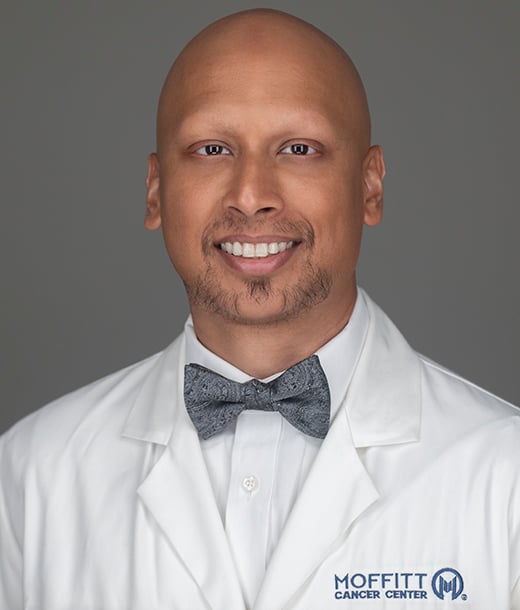
 Medically reviewed by Dr. Sayeef Mirza, Blood and Marrow Transplant and Cellular Immunotherapy Program.