
Proton Therapy
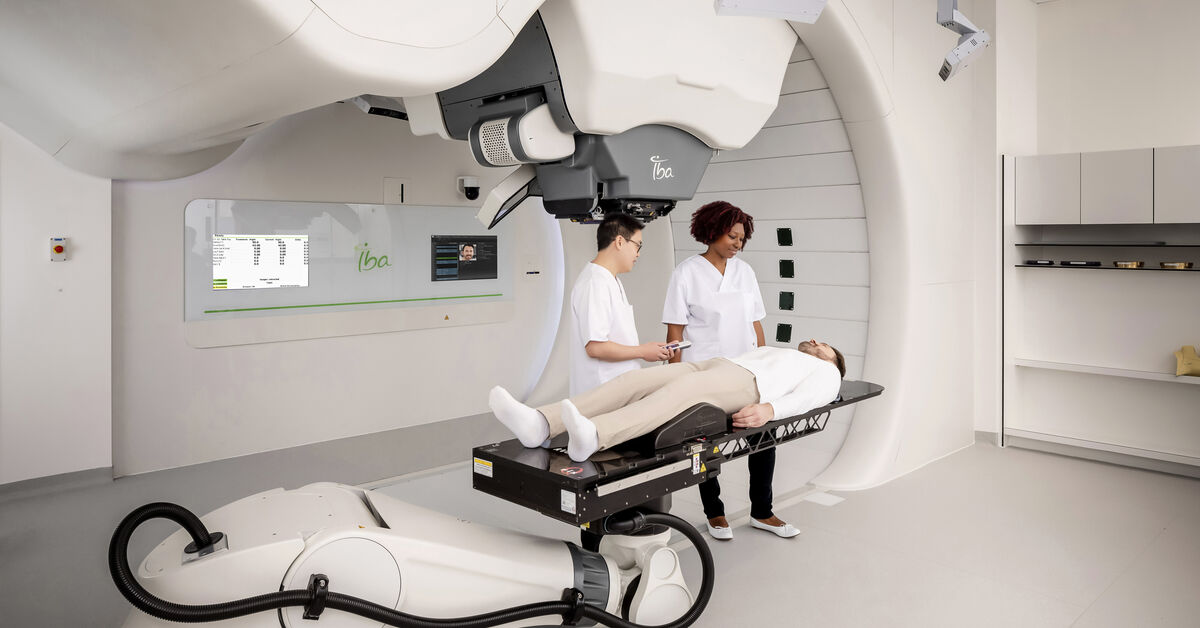
Photo from IBA
What is proton therapy?
Proton therapy, also known as proton radiation therapy or proton beam therapy, is a type of external beam radiation therapy (EBRT). It is a highly precise metho used to target and treat certain cancers. Unlike traditional radiation therapy, which uses high-energy X-rays (photons), proton therapy harnesses charged proton particles to deliver radiation directly to a tumor. This approach minimizes damage to surrounding healthy tissue, making it especially useful in certain cases.
While proton therapy for cancer has been available in the U.S. for many decades as an established treatment option, it hasn’t always been widely available. Now, Moffitt Cancer Center is introducing Proteus®ONE proton therapy machine, an important addition to our leading-edge treatment offerings.
Proton radiation vs. traditional radiation therapy
Both proton radiation therapy and traditional radiation therapy effectively destroy cancer cells by damaging their genetic material. However, they differ in how they interact with tissue:
- Traditional Radiation Therapy: Uses X-rays that deposit energy as they travel to, pass through, and exit the tumor. The ratio of dose to the tumor vs dose to nearby healthy cells is maximized by using optimized beam arrangements.
- Proton Beam Therapy: Uses proton particles that stop at the tumor, depositing most of their energy precisely at the target. This reduces exposure to surrounding tissue and can lower the risk of side effects.
While proton therapy offers advantages in some cases, it is not universally the best option for all cancers. The choice between proton radiation vs. radiation therapy depends on multiple factors, including tumor location, size, and type. Your multispecialty team at Moffitt can help you decide what treatment is right for you.
Who is a good candidate for proton therapy?
Proton therapy is most effective for solid tumors with well-defined borders, particularly when located near vital organs or structures. It is sometimes recommended when surgery is not an option.
Cancers that may be treated with proton therapy include:
- Brain tumors
- Breast cancer
- Eye melanoma
- Esophageal cancer
- Head and neck cancers
- Liver cancer
- Lung cancer
- Lymphoma
- Pancreatic cancer
- Pituitary gland tumors
- Prostate cancer
- Sarcoma
- Spinal cord tumors
What to expect during proton therapy
Treatment begins with a simulation session using advanced imaging (CT scans) to map the tumor and surrounding tissue. A personalized treatment plan is developed to ensure proton beams are delivered with precision. Some patients may receive small skin markings or custom immobilization devices, such as a mask or mold, to help maintain positioning during each session. Proton beam therapy delivers highly precise radiation in less time, and in some cases, patients can receive a full treatment in a single breath-hold.

"With its ability to precisely target tumors while sparing healthy tissue, this treatment will improve outcomes and quality of life for many patients."
- Kosj Yamoah, MD, PhD
How does proton therapy work?
- Positioning: The patient is carefully aligned for treatment using visual guides from the simulation session.
- Radiation Delivery: A radiation therapist administers the prescribed dose while monitoring the patient from a control room.
- Treatment Duration: The radiation itself is delivered in just a few minutes, but the whole session can last 30-45 minutes, including time for preparation and positioning.
- Post-Treatment: Proton therapy is painless, and most patients resume normal activities immediately. The radiation does not linger in the body, meaning there is no risk of exposure to others.
Most treatment plans involve daily sessions, Monday through Friday, for several weeks, depending on the cancer type and the patient’s needs.
Proton therapy at Moffitt: A new era in cancer care
While proton therapy may not be the right choice for every patient, it is an important option in certain cases. In summer 2026, Moffitt will become home to an FDA-cleared proton therapy machine, ensuring that patients in this area have access to a larger variety of treatment options.
How Does the Proteus®ONE Improve Proton Therapy for Patients?
At the Moffitt Proton Center at Speros, patients will benefit from one of the most precise cancer treatment technologies available. The system can deliver high-dose radiation with sub-millimeter accuracy — about the width of a human hair — allowing for fewer side effects and greater protection of healthy tissue. Its rotating gantry treats tumors from multiple angles, improving comfort and enabling a smoother experience during each session.
If you want to learn more about proton therapy, request an appointment with a specialist in Moffitt’s Radiation Oncology Program by calling 1-888-663-3488 or submitting a new patient registration form online. We do not require referrals.
Nationally Ranked. Florida's Best.
Choose Moffitt FirstRadiation Therapy
- 3D CRT (Three-Dimensional Conformal Radiation Therapy)
- Adaptive Radiotherapy
- APBI (Accelerated Partial Breast Irradiation)
- Brachytherapy
- Common Questions
- CT-Driven Virtual Simulations
- External Radiotherapy
- IGRT (Image Guided Radiation Therapy)
- IMRT (Intensity Modulated Radiation Therapy)
- Internal Radiotherapy
- INTRABEAM® Intraoperative Radiotherapy
- Linear Accelerator (LINAC)
- MRI-Linac
- On-Board Imaging (OBI)
- Proton Therapy
- Respiratory Gating
- SBRT (Stereotactic Body Radiation Therapy)
- Stereotactic Radiosurgery
- Total Body Irradiation (TBI)
- Total Skin Electron Therapy (TSET)
- Volumetric Modulated Arc Therapy (VMAT)