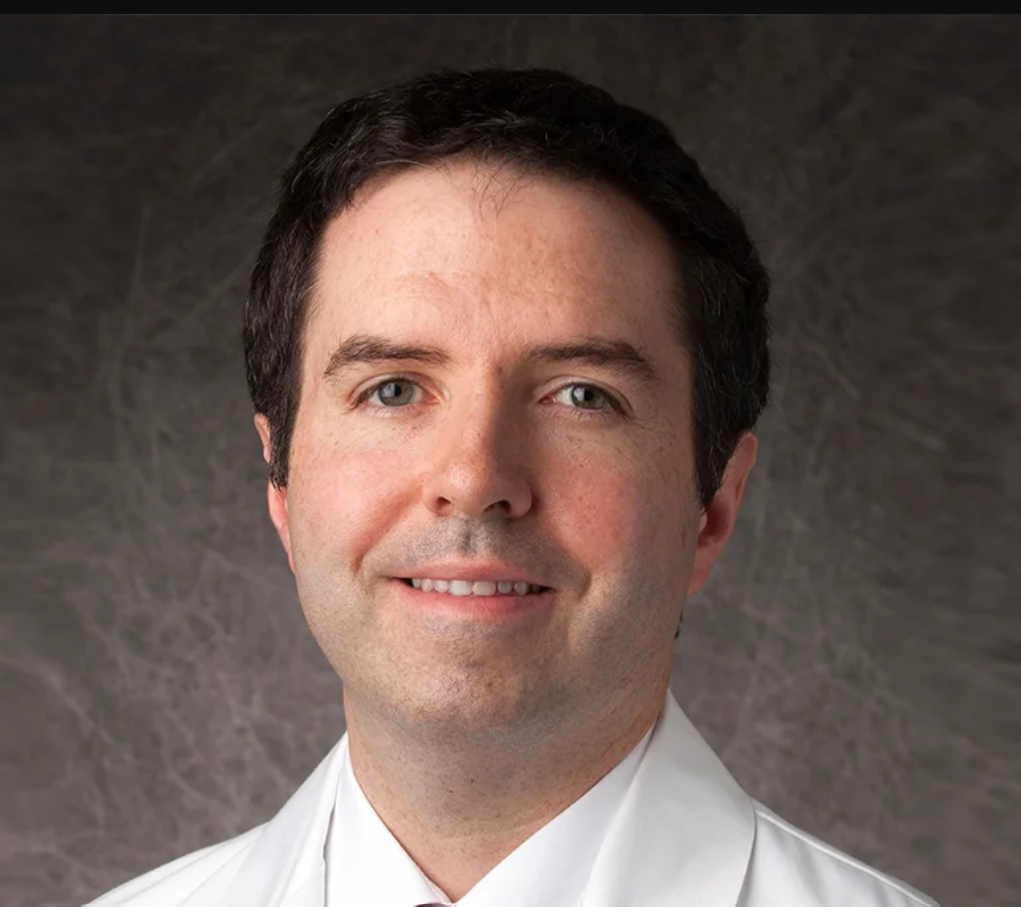
Changing the Course of Lung Cancer with Immunotherapy, ft. Dr. Patrick Forde
Dr. Patrick Hwu sits down with Dr. Patrick Forde, a leading expert in lung cancer immunotherapy, to explore how advances in immunotherapy are changing the way lung cancer is treated.
They discuss Dr. Forde’s pioneering research on using immunotherapy before surgery, an approach that has helped improve outcomes for patients with earlier-stage lung cancer. They also explore why some lung cancers respond better to immunotherapy than others, the importance of genetic testing in selecting the right treatment and the growing role of personalized medicine.
Dr. Forde also shares insights from his career, differences in cancer care between the U.S. and Ireland, and his approach to mentoring the next generation of researchers.
What You'll Learn from Dr. Patrick Forde
-
How the CheckMate 816 trial made neoadjuvant chemoimmunotherapy a standard of care for stage II and III lung cancer
-
Why immunotherapy before surgery may work better than after surgery
-
Which lung cancers respond to immunotherapy, and why never-smoker and EGFR-mutant tumors usually need targeted therapy
-
Why biomarker testing (EGFR, PD-L1) before treatment matters for every lung cancer patient
-
How U.S. and European cancer care differ in surgical expertise and drug access
Podcast Transcript
Dr. Hwu:
Welcome to The ImmunoVerse, a podcast that brings the ever-expanding universe of immunotherapy to life through the voices of those advancing this groundbreaking field. I'm Dr. Patrick Hwu, President and CEO of Moffitt Cancer Center and a career immunologist. In each episode, I sit down with pioneering experts who have shaped the past, present, and future of immunotherapy, uncovering breakthroughs, challenges, and the science driving this lifesaving innovation. Today, I'm honored to welcome Dr. Patrick Forde, the Prendergast Professor of Immuno-Oncology at Trinity College Dublin, a consultant medical oncologist at St. James’s Hospital in Dublin, and a professor at Johns Hopkins University. He has led the development of immunotherapy for surgically resectable lung cancer from early concept through global clinical adoption, helping redefine how we treat patients with earlier-stage disease. Professor Forde first explored the role of single-agent anti-PD-1 therapy before surgery and later served as principal investigator of the landmark CheckMate 816 trial, which led to the international approval of neoadjuvant chemoimmunotherapy for stage II and III lung cancer.
Today, he continues to lead innovative translational and clinical research efforts, including the global NeoCOAST-2 platform trial, exploring novel immunotherapy combinations before surgery for lung cancer. Welcome to The ImmunoVerse, Dr. Forde.
Dr. Forde:
Thanks, Patrick. It's great to be here with you, and it's great to get a chance to discuss some of the exciting data in lung cancer at the moment, particularly around immunotherapy.
Dr. Hwu:
Well, tell us how you got interested in immunotherapy and in lung cancer, because initially a lot of us started in the melanoma field where immunotherapy is working. We never thought it would really work in lung cancer. So how did you get interested in lung cancer and immunotherapy?
Dr. Forde:
Yeah, well, I think it was a mixture of a couple of things. I graduated from med school in 2004 and then did clinical training in Ireland, essentially, where I was born and grew up. And I finished that clinical training and I was looking to do a postdoc or a further fellowship. So at that time—it was about 2009, 2010—I came to Hopkins in Baltimore. And the phase 1 trial there of anti-PD-1 immunotherapy with nivolumab had been led by Julie Brahmer there at the time, who is a lung cancer physician. And so the two things came together. For the first time, we were seeing substantial activity of an immune-based treatment—so an immune checkpoint inhibitor—in lung cancer, and I happened to be there at the time. So that's, I think, the broad strokes, but obviously what really drew me to it, I think, was the potential for durable benefit.
And I think that's what we see with immunotherapy across solid tumors. With some other therapies—chemotherapy, some targeted therapies—we can get dramatic responses at the start, but unfortunately, the tumor can become resistant quite quickly. Whereas with immunotherapy, particularly in lung cancer, those patients who have an initial significant response, many of those patients will go on to have durability. And in some cases, we're starting to talk in lung cancer now about long-term cure for patients with advanced disease, which was unheard of when I was starting my training 10, 15, 20 years ago.
Dr. Hwu:
Well, it's very exciting. Well, tell us a little bit about lung cancer. There are many different types of lung cancer now, right?
Dr. Forde:
Yeah, so lung cancer is still the most common cause of cancer death worldwide. So in the U.S., you're talking about 200,000 people roughly per year. Historically, a lot of the excitement in terms of treating cancer or lung cancer was back in the 1970s and early '80s when chemotherapy could cause dramatic responses for small-cell lung cancer. But unfortunately, as I mentioned earlier, you see dramatic relapses as well, so a lack of benefit. And then if you fast-forward over about 30 years, for non-small-cell lung cancer, there were very modest improvements. So I would say there was a landmark trial maybe 24 years ago now, in 2002, which showed, for non-small-cell lung cancer, no difference between four or five different chemotherapy regimens. And that kind of, I think, drove a path for lung cancer towards more precision medicine and also eventually towards immunotherapy.
Dr. Hwu:
So the cause of lung cancer, of course, cigarette smoking causes some of it, right?
Dr. Forde:
Yeah.
Dr. Hwu:
But also we get some that are driven by specific mutations.
Dr. Forde:
Yes. Yeah. So about 80% of patients who develop non-small-cell lung cancer have a history of tobacco exposure, but 20% don't. And that number is actually growing over the years. So if you look over the last 20, 25 years, the number of non-smoking lung cancers is slowly increasing. The other interesting point we're starting to see very recently in lung cancer is an association between pollution in the environment and non-smoking lung cancers. And there's been some great work on that from Charlie Swanton's group in London where they've linked exposure to microparticles in the air to the development of non-smoking lung cancer. So it's a complex disease. It's not just tobacco, but historically tobacco has been the major driver of lung cancers.
Dr. Hwu:
All right. Well, tell us: Which forms of lung cancer respond to stimulation of the body's immune system?
Dr. Forde:
Yeah, so with immune checkpoint inhibitors, which are the most commonly used form of immunotherapy at the moment, those patients who have a history of tobacco exposure or smoking—their tumors are much more likely to respond to those treatments than the tumors of patients who are non-smokers with lung cancer. And so what that means really is that the neoantigens linked to those gene mutations are much more frequent in smoking-related lung cancers. So if you can provide an effective form of immunotherapy, your immune system is much more likely to recognize those high-TMB tumors, which have a high neoantigen burden. So that's the thought, but there are potential ways in the longer term for stimulating antitumor immunity, even for non-smoking cancers, I think.
Dr. Hwu:
So initially the immunotherapies were approved for late-stage lung cancer. It was already treated, had progressed on standard chemotherapies and had spread. But your study, which was so revolutionary, really took that upfront, right? The CheckMate study treated lung cancer in a much earlier stage. Why don't you talk about that?
Dr. Forde:
Yeah. So as I said, I was doing a postdoc at Hopkins. I was working with Julie Brahmer, who was kind of the PI for the first trial of immune checkpoint inhibitors or anti-PD-1 immunotherapy in solid tumors. And we were part of a large Stand Up To Cancer grant. Stand Up To Cancer is a big philanthropic organization, and that grant was led, actually, at the time by Jim Allison. But one of the components which had been proposed was this: We were finding difficulty in getting enough tissue to analyze the response from patients who had gotten immune checkpoint inhibitors for advanced cancer. So one idea was: These were relatively well-tolerated drugs on the whole. Could you treat patients who were going to go to surgery and give a short course—kind of a window of opportunity—of the immune checkpoint inhibitor? And then, in addition to perhaps having some benefit for the patient, you could also remove the cancer and see what had happened to the tumor, to the microenvironment around the tumor cells and to the normal lung tissue.
So we proposed what was essentially a 20-patient study where patients would get just two doses of immunotherapy prior to their surgery for stage I to III lung cancers. And we did that in collaboration with Memorial Sloan Kettering Cancer Center. And it was interesting. We weren't expecting to see tumor responses to such a short course of treatment, but we saw that almost half of the patients had little or no residual viable cancer at the time of surgery. And that then led to a lot of interest in the concept of giving neoadjuvant therapy. Historically, in lung cancer, colon cancer and other tumor types, we've always given adjuvant treatment, which is after the surgery. But it maybe sparked this interest in giving neoadjuvant treatment before the surgery for various reasons. So it's now probably the preferred approach across cancers, I would say.
We weren't expecting to see tumor responses to such a short course of treatment, but we saw that almost half of the patients had little or no residual viable cancer at the time of surgery.
Dr. Hwu:
Welcome to The ImmunoVerse, a podcast that brings the ever-expanding universe of immunotherapy to life through the voices of those advancing this groundbreaking field. I'm Dr. Patrick Hwu, President and CEO of Moffitt Cancer Center and a career immunologist. In each episode, I sit down with pioneering experts who have shaped the past, present, and future of immunotherapy, uncovering breakthroughs, challenges, and the science driving this lifesaving innovation. Today, I'm honored to welcome Dr. Patrick Forde, the Prendergast Professor of Immuno-Oncology at Trinity College Dublin, a consultant medical oncologist at St. James’s Hospital in Dublin, and a professor at Johns Hopkins University. He has led the development of immunotherapy for surgically resectable lung cancer from early concept through global clinical adoption, helping redefine how we treat patients with earlier-stage disease. Professor Forde first explored the role of single-agent anti-PD-1 therapy before surgery and later served as principal investigator of the landmark CheckMate 816 trial, which led to the international approval of neoadjuvant chemoimmunotherapy for stage II and III lung cancer.
Today, he continues to lead innovative translational and clinical research efforts, including the global NeoCOAST-2 platform trial, exploring novel immunotherapy combinations before surgery for lung cancer. Welcome to The ImmunoVerse, Dr. Forde.
Dr. Forde:
Thanks, Patrick. It's great to be here with you, and it's great to get a chance to discuss some of the exciting data in lung cancer at the moment, particularly around immunotherapy.
Dr. Hwu:
Well, tell us how you got interested in immunotherapy and in lung cancer, because initially a lot of us started in the melanoma field where immunotherapy is working. We never thought it would really work in lung cancer. So how did you get interested in lung cancer and immunotherapy?
Dr. Forde:
Yeah, well, I think it was a mixture of a couple of things. I graduated from med school in 2004 and then did clinical training in Ireland, essentially, where I was born and grew up. And I finished that clinical training and I was looking to do a postdoc or a further fellowship. So at that time—it was about 2009, 2010—I came to Hopkins in Baltimore. And the phase 1 trial there of anti-PD-1 immunotherapy with nivolumab had been led by Julie Brahmer there at the time, who is a lung cancer physician. And so the two things came together. For the first time, we were seeing substantial activity of an immune-based treatment—so an immune checkpoint inhibitor—in lung cancer, and I happened to be there at the time. So that's, I think, the broad strokes, but obviously what really drew me to it, I think, was the potential for durable benefit.
And I think that's what we see with immunotherapy across solid tumors. With some other therapies—chemotherapy, some targeted therapies—we can get dramatic responses at the start, but unfortunately, the tumor can become resistant quite quickly. Whereas with immunotherapy, particularly in lung cancer, those patients who have an initial significant response, many of those patients will go on to have durability. And in some cases, we're starting to talk in lung cancer now about long-term cure for patients with advanced disease, which was unheard of when I was starting my training 10, 15, 20 years ago.
Dr. Hwu:
Well, it's very exciting. Well, tell us a little bit about lung cancer. There are many different types of lung cancer now, right?
Dr. Forde:
Yeah, so lung cancer is still the most common cause of cancer death worldwide. So in the U.S., you're talking about 200,000 people roughly per year. Historically, a lot of the excitement in terms of treating cancer or lung cancer was back in the 1970s and early '80s when chemotherapy could cause dramatic responses for small-cell lung cancer. But unfortunately, as I mentioned earlier, you see dramatic relapses as well, so a lack of benefit. And then if you fast-forward over about 30 years, for non-small-cell lung cancer, there were very modest improvements. So I would say there was a landmark trial maybe 24 years ago now, in 2002, which showed, for non-small-cell lung cancer, no difference between four or five different chemotherapy regimens. And that kind of, I think, drove a path for lung cancer towards more precision medicine and also eventually towards immunotherapy.
Dr. Hwu:
So the cause of lung cancer, of course, cigarette smoking causes some of it, right?
Dr. Forde:
Yeah.
Dr. Hwu:
But also we get some that are driven by specific mutations.
Dr. Forde:
Yes. Yeah. So about 80% of patients who develop non-small-cell lung cancer have a history of tobacco exposure, but 20% don't. And that number is actually growing over the years. So if you look over the last 20, 25 years, the number of non-smoking lung cancers is slowly increasing. The other interesting point we're starting to see very recently in lung cancer is an association between pollution in the environment and non-smoking lung cancers. And there's been some great work on that from Charlie Swanton's group in London where they've linked exposure to microparticles in the air to the development of non-smoking lung cancer. So it's a complex disease. It's not just tobacco, but historically tobacco has been the major driver of lung cancers.
Dr. Hwu:
All right. Well, tell us: Which forms of lung cancer respond to stimulation of the body's immune system?
Dr. Forde:
Yeah, so with immune checkpoint inhibitors, which are the most commonly used form of immunotherapy at the moment, those patients who have a history of tobacco exposure or smoking—their tumors are much more likely to respond to those treatments than the tumors of patients who are non-smokers with lung cancer. And so what that means really is that the neoantigens linked to those gene mutations are much more frequent in smoking-related lung cancers. So if you can provide an effective form of immunotherapy, your immune system is much more likely to recognize those high-TMB tumors, which have a high neoantigen burden. So that's the thought, but there are potential ways in the longer term for stimulating antitumor immunity, even for non-smoking cancers, I think.
Dr. Hwu:
So initially the immunotherapies were approved for late-stage lung cancer. It was already treated, had progressed on standard chemotherapies and had spread. But your study, which was so revolutionary, really took that upfront, right? The CheckMate study treated lung cancer in a much earlier stage. Why don't you talk about that?
Dr. Forde:
Yeah. So as I said, I was doing a postdoc at Hopkins. I was working with Julie Brahmer, who was kind of the PI for the first trial of immune checkpoint inhibitors or anti-PD-1 immunotherapy in solid tumors. And we were part of a large Stand Up To Cancer grant. Stand Up To Cancer is a big philanthropic organization, and that grant was led, actually, at the time by Jim Allison. But one of the components which had been proposed was this: We were finding difficulty in getting enough tissue to analyze the response from patients who had gotten immune checkpoint inhibitors for advanced cancer. So one idea was: These were relatively well-tolerated drugs on the whole. Could you treat patients who were going to go to surgery and give a short course—kind of a window of opportunity—of the immune checkpoint inhibitor? And then, in addition to perhaps having some benefit for the patient, you could also remove the cancer and see what had happened to the tumor, to the microenvironment around the tumor cells and to the normal lung tissue.
So we proposed what was essentially a 20-patient study where patients would get just two doses of immunotherapy prior to their surgery for stage I to III lung cancers. And we did that in collaboration with Memorial Sloan Kettering Cancer Center. And it was interesting. We weren't expecting to see tumor responses to such a short course of treatment, but we saw that almost half of the patients had little or no residual viable cancer at the time of surgery. And that then led to a lot of interest in the concept of giving neoadjuvant therapy. Historically, in lung cancer, colon cancer and other tumor types, we've always given adjuvant treatment, which is after the surgery. But it maybe sparked this interest in giving neoadjuvant treatment before the surgery for various reasons. So it's now probably the preferred approach across cancers, I would say.
Dr. Hwu:
I see. So typically, someone would get lung cancer, they would see the surgeon, get that cut out, and then, to try to prevent a recurrence from happening, they would get the immunotherapy. But what you started doing was giving immunotherapy before the surgery. Even before the surgery, sometimes that would wipe out the tumor—just a couple of doses of early immunotherapy. So why do you think in the CheckMate study, which led to the approval of neoadjuvant therapy for lung cancer, why do you think that it seems to be working even better than adjuvant therapy?
Dr. Forde:
Yeah, it's really interesting. There's been some seminal work on this in melanoma as well where, as you know, neoadjuvant and adjuvant have been directly compared. And neoadjuvant, which is the before-surgery approach, seems better in that setting. The idea in lung cancer—there have been several put forward, but one is that you have a large bulk of tumor present. So when you're giving the immune checkpoint inhibitor, the immunotherapy, the whole tumor is there. The draining lymph nodes, which are where the immune response is happening, are also still present. Whereas if you do the surgery upfront, you're taking the tumor out, you're also taking all the lymph nodes, which is where the activation takes place. And there isn't as much of a target for your immune system in the adjuvant setting. So I think that was a concept and it's been borne out in lung cancer really.
We've had three fairly dramatically positive neoadjuvant or perioperative trials—perioperative is pre- and post-surgery. And we've had two clearly negative adjuvant trials of immunotherapy and one borderline positive trial. So I think the whole movement in lung cancer has been quite dramatic over the last five years towards recommending for patients with stage II and III lung cancer that, instead of going directly to the OR, they see a medical oncologist and discuss the idea of immunotherapy plus chemo.
Dr. Hwu:
I always call the lymph nodes the training ground for the immune soldiers. And so you take out all the training grounds, then it makes the immunotherapy harder. So if you do the surgery upfront, it may not be as good. The other thing is there are a lot of actual soldiers in the tumor, right? TILs, tumor-infiltrating lymphocytes. We know that some of these recognize the tumor. Do you think one of the challenges with that is that, if you do surgery upfront, you're taking out all those immune soldiers, all the T cells that are in the tumor?
Dr. Forde:
I think so, because essentially what you're relying on then in the adjuvant setting is just micrometastases, which are kind of single cells or a few cells clumped together floating in the circulation or sitting in a different organ. And that whole tumor microenvironment may be very different. Whereas when the primary tumor is there, as we see with some cellular therapy cells given to patients to treat cancer, those cells, treated in the correct way, can drive an effective antitumor response. So my personal opinion is neoadjuvant is going to be better, at least with immune checkpoint inhibitors. We don't know for other forms of immunotherapy yet whether it'll be the same story, but for immune checkpoint inhibitors, it's been pretty clear you want to get your treatment before your surgery.
Dr. Hwu:
So what about these other patients with oncogene-driven lung cancer who never smoked? A lot of these are young women that are getting this. Maybe it's pollution-driven. Number one, why do you think young women are the ones who get this kind of cancer predominantly? And number two, how do you treat it?
Dr. Forde:
Yeah. Well, it's an interesting one. It's obviously a shock to patients and they're not currently part of any screening guidelines, which is another important thing. This scenario is very common in East Asia. So countries like China, Korea, Japan, Taiwan, they have very high rates of non-smoking lung cancer, up to 50% of patients in some countries. And it's felt to be a mixture of environmental factors, as we mentioned with pollution, but also a polygenic kind of heritability, where you can have multiple alterations in your genes, which predispose you to lung cancer. EGFR-mutant lung cancer is one in particular. A very small proportion of those patients, maybe 2% of patients with that type of cancer, will have a real hereditary cancer where it runs in the family, but the vast majority of them don't have that clear inheritance and it's relatively sporadic, but probably has multiple causes.
Dr. Hwu:
What's the role of immunotherapy for these patients?
Dr. Forde:
So in non-smokers, it's complex. At the moment, the large majority of them won't have durable benefit from immune checkpoint inhibitors. There are some subgroups. There are a couple of mutations, one called BRAF V600 and one called MET exon 14, which together make up around 4%. And some of those patients, even without a smoking history, will respond to immune checkpoint inhibitors. But on the other hand, if we say 20% of lung cancers are in non-smokers, probably 17–18% of those patients won't get durable benefit from immune checkpoint inhibitors.
Dr. Hwu:
So for those patients with oncogene-driven lung cancers—the minority, but the ones that aren't smokers—understanding the personalization of the cancer type and then giving the right pill to block the circuitry is the answer. Have people tried the targeted agents plus immunotherapy in these patients?
Dr. Forde:
Yeah, it's been done and it's been done in EGFR-mutant lung cancer. And unfortunately, with the current generation of drugs, you get a lot of toxicity. So there's almost synergistic toxicity between, say, an EGFR TKI—a tyrosine kinase inhibitor—and an immune checkpoint inhibitor. So it's actually very important that we know upfront if a patient has an EGFR mutation so we don't give them an immunotherapy because if we do, and then you want to switch them to a targeted therapy later, there's a relatively high risk of pneumonitis, which is lung inflammation. So that's a message we kind of get out to oncologists and also patients: Make sure that you get tested for these mutations because if you start on the wrong therapy, it could influence your ability to receive targeted therapy later.
Make sure that you get tested for these mutations because if you start on the wrong therapy, it could influence your ability to receive targeted therapy later.
Dr. Hwu:
That's interesting. Well, maybe neoadjuvant is what they need.
Dr. Forde:
Yeah. Well, it's done in China a little bit. So my colleagues there are actually very interested in this because they have about 40 to 50% of patients with EGFR mutations, but it's multifactorial. Their exposures are probably different from Western patients as well. So it's an interesting area and because they have such high volumes of patients with EGFR mutations, they have the ability to do a lot of research in those areas as well. A lot of interesting agents are coming through.
Dr. Hwu:
With lung cancer, you really have to molecularly type it because the treatment depends on that typing, but yet a lot of people are still not getting typed, right?
Dr. Forde:
Yeah. Unfortunately, it's still a big issue. One of the large community networks in the U.S. has done a really good kind of study on this over the years. They looked, I think, in 2017, 2018, and they were only up to around 60% of patients being tested. And then they repeated that analysis at last year's ASCO and they were up to about 80%. But that means even in a well-organized community oncology network, you're still missing about 20% of patients having appropriate testing. And it makes a big difference because... So when I talk to patients, really, the important things in lung cancer nowadays are: What's your stage? And then, do you have a targetable mutation or not? And then your PD-L1, which is the marker we use for choosing the correct immunotherapy strategy. And those are kind of three key things that you should know about your lung cancer.
Dr. Hwu:
Wonderful. Hey, so after your work at Johns Hopkins, you really went to Ireland to continue your academic practice. Tell us about the differences you're seeing between American medicine and medicine in Ireland. What do we have to learn from each other?
Dr. Forde:
Yeah, so it's interesting. In Europe, in general, healthcare tends to be more centralized, I would say. Whereas in Baltimore, we had probably 10 hospitals in a city of 600,000 people doing lung cancer surgery. There's one hospital in Dublin that does the vast majority of lung cancer surgery for the country. So you have 350, 400 patients having surgery a year. So particularly for procedural specialties like that, I think it's beneficial to have a center of excellence where you have people who are doing high volumes of a particular treatment or surgery. The other thing, though—the downside, I would say, in Europe—is the lack of access to drug treatments, to medication treatments. It tends to be significantly delayed compared to the U.S. So for example, once you have FDA approval of a drug in the U.S., generally speaking, the drug is available for most patients through some mechanism.
In Europe, it tends to take one to two years, kind of the median, and sometimes much longer for patients to access drugs. So for treating advanced cancers and particularly some of these small molecular groups we were talking about—the 1% or 2%—where there isn't so much of an incentive for industry to apply for approval for the drug for each individual country, there can be a big difference in access there. And that's challenging for lung cancer in particular.
Dr. Hwu:
I see. And I think when we first met, it was years ago, you were a young assistant professor coming out of Hopkins. So you had some great mentors there at Johns Hopkins. Now you're in the position to bring on the next generation. What's your mentorship style?
Dr. Forde:
So I tend to try and work with people on how they process knowledge. I think that is very important because I have noticed, even from my time as a trainee and as a faculty member at Hopkins, which is the last 14, 15 years or so, people have changed. So people who are coming from medical school now, coming into faculty positions or postdocs, they've grown up differently. So I was born on the cusp between Gen X and millennials. So I was born in 1980. So I was part of the generation who first got the internet and this sort of thing, whereas people who are growing up now have been on the internet from the age of 10 or 11. So I think first of all, you have to meet people where they are and understand how they will actually thrive most with support. So mentorship style, I would say it's relaxed, but hopefully checking in with people frequently and trying to make sure that they're on the right path.
You have to meet people where they are and understand how they will actually thrive most with support.
And if they're having challenges, try and guide them back to what would be most productive for them during their protected time for research.
Dr. Hwu:
That's great advice because each generation does see things differently and trying to get inside their approach, their experiences and what they've learned through their upbringing does help with how you mentor them. It's great advice. Well, thank you so much. Thank you, Dr. Forde, for joining us today, and thank you for going on this journey with us through the ever-expanding universe of immunotherapy. To hear more episodes of The ImmunoVerse, make sure to subscribe on your favorite podcast platforms.
Dr. Hwu:
I see. So typically, someone would get lung cancer, they would see the surgeon, get that cut out, and then, to try to prevent a recurrence from happening, they would get the immunotherapy. But what you started doing was giving immunotherapy before the surgery. Even before the surgery, sometimes that would wipe out the tumor—just a couple of doses of early immunotherapy. So why do you think in the CheckMate study, which led to the approval of neoadjuvant therapy for lung cancer, why do you think that it seems to be working even better than adjuvant therapy?
Dr. Forde:
Yeah, it's really interesting. There's been some seminal work on this in melanoma as well where, as you know, neoadjuvant and adjuvant have been directly compared. And neoadjuvant, which is the before-surgery approach, seems better in that setting. The idea in lung cancer—there have been several put forward, but one is that you have a large bulk of tumor present. So when you're giving the immune checkpoint inhibitor, the immunotherapy, the whole tumor is there. The draining lymph nodes, which are where the immune response is happening, are also still present. Whereas if you do the surgery upfront, you're taking the tumor out, you're also taking all the lymph nodes, which is where the activation takes place. And there isn't as much of a target for your immune system in the adjuvant setting. So I think that was a concept and it's been borne out in lung cancer really.
We've had three fairly dramatically positive neoadjuvant or perioperative trials—perioperative is pre- and post-surgery. And we've had two clearly negative adjuvant trials of immunotherapy and one borderline positive trial. So I think the whole movement in lung cancer has been quite dramatic over the last five years towards recommending for patients with stage II and III lung cancer that, instead of going directly to the OR, they see a medical oncologist and discuss the idea of immunotherapy plus chemo.
The whole movement in lung cancer has been quite dramatic over the last five years towards recommending for patients with stage II and III lung cancer that, instead of going directly to the OR, they see a medical oncologist and discuss the idea of immunotherapy plus chemo.
Dr. Hwu:
I always call the lymph nodes the training ground for the immune soldiers. And so you take out all the training grounds, then it makes the immunotherapy harder. So if you do the surgery upfront, it may not be as good. The other thing is there are a lot of actual soldiers in the tumor, right? TILs, tumor-infiltrating lymphocytes. We know that some of these recognize the tumor. Do you think one of the challenges with that is that, if you do surgery upfront, you're taking out all those immune soldiers, all the T cells that are in the tumor?
Dr. Forde:
I think so, because essentially what you're relying on then in the adjuvant setting is just micrometastases, which are kind of single cells or a few cells clumped together floating in the circulation or sitting in a different organ. And that whole tumor microenvironment may be very different. Whereas when the primary tumor is there, as we see with some cellular therapy cells given to patients to treat cancer, those cells, treated in the correct way, can drive an effective antitumor response. So my personal opinion is neoadjuvant is going to be better, at least with immune checkpoint inhibitors. We don't know for other forms of immunotherapy yet whether it'll be the same story, but for immune checkpoint inhibitors, it's been pretty clear you want to get your treatment before your surgery.
Dr. Hwu:
So what about these other patients with oncogene-driven lung cancer who never smoked? A lot of these are young women that are getting this. Maybe it's pollution-driven. Number one, why do you think young women are the ones who get this kind of cancer predominantly? And number two, how do you treat it?
Dr. Forde:
Yeah. Well, it's an interesting one. It's obviously a shock to patients and they're not currently part of any screening guidelines, which is another important thing. This scenario is very common in East Asia. So countries like China, Korea, Japan, Taiwan, they have very high rates of non-smoking lung cancer, up to 50% of patients in some countries. And it's felt to be a mixture of environmental factors, as we mentioned with pollution, but also a polygenic kind of heritability, where you can have multiple alterations in your genes, which predispose you to lung cancer. EGFR-mutant lung cancer is one in particular. A very small proportion of those patients, maybe 2% of patients with that type of cancer, will have a real hereditary cancer where it runs in the family, but the vast majority of them don't have that clear inheritance and it's relatively sporadic, but probably has multiple causes.
Dr. Hwu:
What's the role of immunotherapy for these patients?
Dr. Forde:
So in non-smokers, it's complex. At the moment, the large majority of them won't have durable benefit from immune checkpoint inhibitors. There are some subgroups. There are a couple of mutations, one called BRAF V600 and one called MET exon 14, which together make up around 4%. And some of those patients, even without a smoking history, will respond to immune checkpoint inhibitors. But on the other hand, if we say 20% of lung cancers are in non-smokers, probably 17–18% of those patients won't get durable benefit from immune checkpoint inhibitors.
Dr. Hwu:
So for those patients with oncogene-driven lung cancers—the minority, but the ones that aren't smokers—understanding the personalization of the cancer type and then giving the right pill to block the circuitry is the answer. Have people tried the targeted agents plus immunotherapy in these patients?
Dr. Forde:
Yeah, it's been done and it's been done in EGFR-mutant lung cancer. And unfortunately, with the current generation of drugs, you get a lot of toxicity. So there's almost synergistic toxicity between, say, an EGFR TKI—a tyrosine kinase inhibitor—and an immune checkpoint inhibitor. So it's actually very important that we know upfront if a patient has an EGFR mutation so we don't give them an immunotherapy because if we do, and then you want to switch them to a targeted therapy later, there's a relatively high risk of pneumonitis, which is lung inflammation. So that's a message we kind of get out to oncologists and also patients: Make sure that you get tested for these mutations because if you start on the wrong therapy, it could influence your ability to receive targeted therapy later.
Dr. Hwu:
That's interesting. Well, maybe neoadjuvant is what they need.
Dr. Forde:
Yeah. Well, it's done in China a little bit. So my colleagues there are actually very interested in this because they have about 40 to 50% of patients with EGFR mutations, but it's multifactorial. Their exposures are probably different from Western patients as well. So it's an interesting area and because they have such high volumes of patients with EGFR mutations, they have the ability to do a lot of research in those areas as well. A lot of interesting agents are coming through.
Dr. Hwu:
With lung cancer, you really have to molecularly type it because the treatment depends on that typing, but yet a lot of people are still not getting typed, right?
Dr. Forde:
Yeah. Unfortunately, it's still a big issue. One of the large community networks in the U.S. has done a really good kind of study on this over the years. They looked, I think, in 2017, 2018, and they were only up to around 60% of patients being tested. And then they repeated that analysis at last year's ASCO and they were up to about 80%. But that means even in a well-organized community oncology network, you're still missing about 20% of patients having appropriate testing. And it makes a big difference because... So when I talk to patients, really, the important things in lung cancer nowadays are: What's your stage? And then, do you have a targetable mutation or not? And then your PD-L1, which is the marker we use for choosing the correct immunotherapy strategy. And those are kind of three key things that you should know about your lung cancer.
Dr. Hwu:
Wonderful. Hey, so after your work at Johns Hopkins, you really went to Ireland to continue your academic practice. Tell us about the differences you're seeing between American medicine and medicine in Ireland. What do we have to learn from each other?
Dr. Forde:
Yeah, so it's interesting. In Europe, in general, healthcare tends to be more centralized, I would say. Whereas in Baltimore, we had probably 10 hospitals in a city of 600,000 people doing lung cancer surgery. There's one hospital in Dublin that does the vast majority of lung cancer surgery for the country. So you have 350, 400 patients having surgery a year. So particularly for procedural specialties like that, I think it's beneficial to have a center of excellence where you have people who are doing high volumes of a particular treatment or surgery. The other thing, though—the downside, I would say, in Europe—is the lack of access to drug treatments, to medication treatments. It tends to be significantly delayed compared to the U.S. So for example, once you have FDA approval of a drug in the U.S., generally speaking, the drug is available for most patients through some mechanism.
In Europe, it tends to take one to two years, kind of the median, and sometimes much longer for patients to access drugs. So for treating advanced cancers and particularly some of these small molecular groups we were talking about—the 1% or 2%—where there isn't so much of an incentive for industry to apply for approval for the drug for each individual country, there can be a big difference in access there. And that's challenging for lung cancer in particular.
Dr. Hwu:
I see. And I think when we first met, it was years ago, you were a young assistant professor coming out of Hopkins. So you had some great mentors there at Johns Hopkins. Now you're in the position to bring on the next generation. What's your mentorship style?
Dr. Forde:
So I tend to try and work with people on how they process knowledge. I think that is very important because I have noticed, even from my time as a trainee and as a faculty member at Hopkins, which is the last 14, 15 years or so, people have changed. So people who are coming from medical school now, coming into faculty positions or postdocs, they've grown up differently. So I was born on the cusp between Gen X and millennials. So I was born in 1980. So I was part of the generation who first got the internet and this sort of thing, whereas people who are growing up now have been on the internet from the age of 10 or 11. So I think first of all, you have to meet people where they are and understand how they will actually thrive most with support. So mentorship style, I would say it's relaxed, but hopefully checking in with people frequently and trying to make sure that they're on the right path.
And if they're having challenges, try and guide them back to what would be most productive for them during their protected time for research.
Dr. Hwu:
That's great advice because each generation does see things differently and trying to get inside their approach, their experiences and what they've learned through their upbringing does help with how you mentor them. It's great advice. Well, thank you so much. Thank you, Dr. Forde, for joining us today, and thank you for going on this journey with us through the ever-expanding universe of immunotherapy. To hear more episodes of The ImmunoVerse, make sure to subscribe on your favorite podcast platforms.