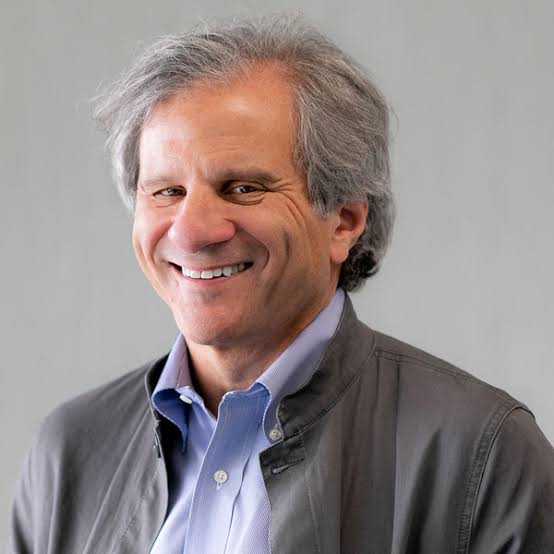
Completing the Cancer Immunity Cycle, ft. Dr. Ira Mellman
Dr. Patrick Hwu and Dr. Ira Mellman, president of research at the Parker Institute for Cancer Immunotherapy, explore the science behind immune activation and its application to cancer treatment.
Together, they discuss Dr. Mellman’s pioneering work on dendritic cells and endosomes, the cancer-immunity cycle, and why checkpoint inhibitors only work when enough tumor-fighting T cells are already present. Dr. Mellman explains how personalized cancer vaccines could generate stronger immune responses, the challenges of making these treatments scalable, and why ambitious science and thoughtful mentorship are essential to advancing immunotherapy.
What You’ll Learn From Dr. Ira Mellman
- How endosomes and dendritic cells shape antigen presentation and T-cell activation
- The role of the cancer-immunity cycle in understanding immune responses and treatment resistance
- Why rate-limiting steps in the cancer-immunity cycle matter for immunotherapy
- How cancer vaccines can generate antigen-specific T-cell responses
- The importance of innate immune signals in developing effective cancer vaccines
- Emerging approaches to personalized cancer vaccines and their scalability
Podcast Transcript
Dr. Patrick Hwu
Welcome to The ImmunoVerse, a podcast that brings the ever-expanding universe of immunotherapy to life through the voices of those advancing this groundbreaking field. I'm Dr. Patrick Hwu, president and CEO of Moffitt Cancer Center and a career immunologist. In each episode, I sit down with pioneering experts who have shaped the past, present, and future of immunotherapy, uncovering breakthroughs, challenges, and the science driving this lifesaving innovation. Today, I'm honored to welcome Dr. Ira Mellman, president of research at the Parker Institute for Cancer Immunotherapy, or PICI. Dr. Mellman is one of the true pioneers of modern cancer immunology, a scientist whose work has shaped both our fundamental understanding of the immune system and the development of many of today's leading immunotherapies. Before joining PICI, he served as vice president of cancer immunology at Genentech, where he helped lead the development of groundbreaking treatments, including atezolizumab, anti-TIGIT antibodies, and neoantigen cancer vaccines.
Earlier in his career, Dr. Mellman spent two decades at Yale University where his lab made landmark discoveries about dendritic cells, endosomes, and the cancer immunity cycle, work that continues to guide how we think about immune activation and tolerance. Now at PICI, he's leading one of the most ambitious collaborative research efforts in the world, working to translate deep science into curative treatments for patients. Welcome to The ImmunoVerse, Dr. Mellman.
Dr. Ira Mellman
Thank you, Patrick. Very glad to be here.
Dr. Patrick Hwu
Great. So tell us, how did you get interested in immunology in the first place?
Dr. Ira Mellman
I think actually I was not interested in immunology at the very beginning, and you have to factor back. This is like ancient history. We didn't even know anything about what a T cell receptor was or whatever. So I always thought it was too complicated, and that people were much more concerned about their theories than about doing precise experiments. So I just found it bothersome. But then things started happening. The T cell receptor was discovered, and so it then became clear that the immune system was capable of recognizing very specific things. But what really piqued my interest was that the immune system works at a level of sensitivity that you can't measure very easily biochemically. So when a pathogen infects a cell and a portion of that pathogen is presented to T cells by the immune system, that happens at such an incredibly high level of sensitivity that what was being explained didn't make any sense.
And so I thought, well, either these guys are completely out to lunch or there's really something there. So we started studying it and indeed it turned out that there was really something there. It was one of those examples of why you should always take nature seriously: things don't happen by accident. There is an explanation for everything—even for things that, based on what you know as a scientist, should not occur. And so hunting for those explanations has been a lifelong joy and I think a highly productive enterprise.
Dr. Patrick Hwu
So some of your work at Yale University, which has such an outstanding immunology program, was on endosomes at the very basic level. So what did you learn from those endosome studies?
Dr. Ira Mellman
Yeah, I mean those specifically started actually when I was a postdoc with Ralph Steinman at Rockefeller University and we were of course trying to come up with criteria to identify and characterize dendritic cells. But one of the early products of that research was to discover these things called endosomes. Now, endosomes are little pockets of membrane that exist inside of cells that capture the stuff, the antigens, pathogens, or whatever else is coming in from the outside and do not simply exist to degrade those things, which is what we normally associate with what happens after a dendritic cell or any other cell takes stuff up from the outside world, but really provide a kind of safe harbor for them so that the dendritic cell can pick them apart slowly, removing the peptides it wants and putting only those peptides back on the surface. And the specificity and care and precision of that process was really amazing and it was made possible almost entirely by the fact that there are these safe harbor locations, which we came to call endosomes, that exist in dendritic cells and in fact in all cells.
So that was a very cool interface between taking a cell biological approach to an immunological problem and coming up with a really cool and general explanation for understanding both ends of that dichotomy.
Dr. Patrick Hwu
Wow. So a dendritic cell, which really educates the immune soldiers, the T cells, the endosome is really how they take those antigens and show them to T cells to really tell them that's where the danger is. Go recognize these peptides and go save the body from viruses.
Dr. Ira Mellman
Correct. And they activate two completely different pathways. In one of those pathways, all of the events take place inside the endosome and then those complexes go to the surface. In the other event, there's a specific mechanism which we still don't really understand that these antigens have to get outside of the endosome into the rest of the dendritic cell where all of that activity is completed. When I say we don't understand it, I mean that we've been looking for 30 years or so for a specific channel or something that allows all of this stuff to leak into the cytoplasm and we haven't found it. And I'm coming to the conclusion it doesn't exist, that these structures—it's not that they do it magically—may break and reseal and break and reseal periodically, which, if true, would explain a lot of other things. For example, how viruses enter into cells, which also pass through endosomes.
We've been looking for 30 years or so for a specific channel or something that allows all of this stuff to leak into the cytoplasm and we haven't found it. And I'm coming to the conclusion it doesn't exist, that these structures—it's not that they do it magically—may break and reseal and break and reseal periodically, which, if true, would explain a lot of other things.
And also even in the case of vaccines such as the mRNA vaccines we all know about now because of the COVID-19 vaccines, the mRNA gets into the endosome, but then has to get out of the endosome so that it can be translated to generate the active portion of the vaccine. So somehow that happens too. So there seems to be a general phenomenon or a general principle at work there that we still can't really define very carefully in biochemical terms, but it is clearly there. These things shouldn't happen, but they do.
Dr. Patrick Hwu
Well, it also speaks to an important point that the immune system really evolved to fight pathogens, viruses, bacteria, and by understanding the mechanisms of how the immune system can fight viruses, that's actually how we can get the immune system to fight cancer.
Dr. Ira Mellman
Correct. I think one of the challenges in this field, as you know at least as well as me, is that for years, most immunologists were not interested at all in cancer. The reason was exactly what you said, from an evolutionary perspective, the immune system evolved to protect us against pathogens, not really against cancer. And so a real immunologist wouldn't be interested in cancer because it was just an artifact of some pathological state that was therefore uninteresting. But the fact that the immune system can recognize cancer created, I think, for those of us who had more open minds at the time, the opportunity to think, well, maybe we can activate the immune system in appropriate ways to treat cancer the way it would treat a pathogen of some kind. And I think that's what we've been seeing over the last decade or two, that there have been some real advances really initiated in the clinic.
The opportunity to think, well, maybe we can activate the immune system in appropriate ways to treat cancer, the way it would treat a pathogen of some kind. And I think that's what we've been seeing over the last decade or two, that there have been some real advances really initiated in the clinic.
The basic science in this case, I would say, has lagged behind and has received its inspiration and support from just what has been achieved by so many people around the world in terms of activating the immune system to combat cancer. The results are spectacular, and this is just the tip of the iceberg. So now the basic scientists are having to scurry about and catch up, which is fine. It's just a little bit backwards from the way this usually happens.
Dr. Patrick Hwu
Well, I know you started working and helping us apply basic immunology to cancer immunology, and that's in fact how I met you over two decades ago when you, Ralph Steinman and others would come down to Houston, MD Anderson and advise our immunology program with Yong-Jun Liu, and we really appreciated that. We had a lot of fun. I remember you made a dish at our cook-off at Yong-Jun's house one year. You remember that?
Dr. Ira Mellman
Yeah. I don't remember whether it was edible, but it was—
Dr. Patrick Hwu
Very good, quite frankly. So you really started getting into the translational realm. You created a conceptual diagram that everyone still uses, the cancer-immunity cycle, connecting the science of the immune system to cancer care. Talk a little about that diagram—which I've probably seen 10,000 times in presentations—how you think that's influenced the field and where that's led and where we have to work and what steps we really have to work on.
Dr. Ira Mellman
Yeah, the cancer immunity cycle, I think like all ideas, it emerged—as good ideas often do— after you have the idea, you realize this is ridiculously simple. Why didn't I or anybody else think of this before? Or everyone is just going to find this completely obvious. But the fact of the matter is that it's not. So we always knew that a certain series of events had to occur in order for the immune system to recognize cancer. Again, beginning with our friends, the dendritic cells which recognize what is different about cancer cells and then inform the T cells of that fact.
But these events are not linear in the sense that if you're really going to generate a long-lasting immune response to anything, including pathogens or cancer, what that means is the immune system has to be self-educating and capable of amplifying that response, otherwise the response will fade away. So by twisting these events around so that they are in a cyclic form, what that means is now each event that occurs is dependent on the previous event that occurs and on the subsequent event that occurs. So if something goes wrong with a subsequent event, the cycle stops and you have to do something about it. So I think to me where the utility has been is showing where those stopping points are, what we would call rate-limiting steps in a cycle. We need to understand more about when rate-limiting steps occur. So when a patient becomes resistant to a particular immunotherapy, why, where in the cycle did that happen?
If you're really going to generate a long-lasting immune response to anything, including pathogens or cancer, what that means is the immune system has to be self-educating and capable of amplifying that response, otherwise the response will fade away.
And then address that specifically. So I think many people ourselves certainly are finding it very, very useful in terms of focusing the effort. Now, there's a funny aside to that: Was it a great insight to present it as a cycle? I did this together with my ex-Genentech colleague, Dan Chen, and we routinely would meet at a wine bar in San Francisco that was convenient to the Genentech campus where they had little square napkins and you'd put your wine glass down on a napkin and you would have a circle. And typically you try and draw out your ideas on a napkin, but usually you hope that the napkins are going to be bigger than these. But this forced us to think in terms of a cycle because we didn't have room to actually just draw a line.
Dr. Patrick Hwu
Well, I'm glad you had round wine glasses so you could get a cycle going. So if you think about the blockbuster drugs, anti-PD-1 and anti-PD-L1, whose development you helped lead at Genentech, those really act at a later stage when the immune cells are already there, they're in the tumor, but they are blocked. And so the drugs that are blockbuster drugs today are the ones that are just working at that step. But the step you originally started studying with the dendritic cells, that's often a rate-limiting step. In my opinion, that's where a lot of the low tumor mutation burden cancers, I think that's where we're blocked, but you started working on that step as well with some personalized vaccines.
Dr. Ira Mellman
Yeah. I mean, that idea goes back many years because you're absolutely right. These checkpoint inhibitors, they only work on T cells that have already been generated. The reason for that, just to sum that up, is that they get into a tumor and they're kind of overwhelmed by the amount of antigen that's there. The number of tumor cells outnumbers the number of T cells by quite a bit. So they kind of give up. They don't necessarily die, but they become dysfunctional—almost as if they're saying, "Well, I can't deal with this. I'll take a nap." So the checkpoint inhibitors act to prevent that from happening and try to keep the T cells awake against their better judgment. But really a big problem is that often there are simply not enough T cells. So it doesn't matter how well your checkpoint inhibitors work if there are not enough T cells to do the job. So that's where vaccines come in.
It doesn't matter how well your checkpoint inhibitors work if there are not enough T cells to do the job. So that's where vaccines come in. The sole purpose of a vaccine is to increase the number of antigen-specific T cells.
The sole purpose of a vaccine is to increase the number of antigen-specific T cells. So if that's a rate-limiting step, then that's one way to counteract that rate-limiting step. In cancer, the idea of using vaccines also has been around for some time, and there have been thousands of patients over the last couple of decades who have been treated with peptides from tumor cells in the same way that a dendritic cell would present them: by taking these peptides and injecting them into patients and hoping that more T cells would be generated. These approaches did not work, because the peptides need a signal associated with them. And that signal is what we call an innate stimulus. An innate stimulus is simply something that mimics the presence of some pathogen. So if you just inject an antigen without injecting something that tells the immune system that something potentially dangerous has been introduced and that it should respond, nothing will happen.
So that realization, which in retrospect again now seems like just so pitifully simple, was not really understood and the importance of that innate signal was not really appreciated. But now that it is, cancer vaccines are starting to turn the corner and we're seeing that they're capable in cancer patients of generating just absolutely spectacular T cell responses. And that in the right setting, we are seeing that these vaccines are starting to exhibit some very promising and exciting therapeutic benefit as well. In addition, these vaccines are now intended therapeutically to prevent the tumor from regrowing. So it's almost like prophylaxis. It's almost like preventing disease. You start in the so-called minimal residual disease setting and then you prevent a larger tumor from growing. So somehow it's kind of pleasing that the vaccines are finding their initial place in cancer in a setting that is somehow similar to what we use vaccines for routinely to prevent infectious disease.
So we'll see. But hopefully we'll be able to expand out of that role perhaps by combining with other types of therapies like cell therapies. And also, I would have to say that there is the possibility that the current trials will not work. And that's of course, if that's what happens, that's disappointing, but I don't think that it would be a death knell for vaccines because frankly, we all went into the clinic with the army we had, not the army we wished we had. So despite the fact that COVID-19 vaccines have been given to billions of people safely and effectively, immunizing against COVID is not like immunizing against cancer. So there's a lot of work going on now in academic laboratories around the world and hopefully some industrial laboratories as well to understand how these vaccines work and what modifications need to be made in order to optimize them for use as cancer therapeutics.
What we initially took into the clinic could therefore be suboptimal. So yes, I will be disappointed if these trials turn out to be negative, but I'm not going to come to the conclusion that vaccines don't work. It'll just be like, well, we don't understand them well enough because we've seen this time and time again in the development of immunotherapy.
I will be disappointed if these trials turn out to be negative, but I'm not going to come to the conclusion that vaccines don't work.
Dr. Patrick Hwu
So what I've always appreciated about you, you came from basic science, basic immunology. You went to industry for a more applied role, but you've always thought about things from a basic scientific standpoint. I've always appreciated that about you. And with these vaccines in the clinic now, actually it's a full cycle coming back to what you studied originally in your postdoc dendritic cells. How do you give danger signals to activate those cells? And what you're saying is that it will be important to show not only that they're effective, but also that they're scalable because right now we are taking the DNA information from the tumor, making a personalized vaccine in many of these cases, and then coming back with a personalized vaccine just for that patient. And that is challenging to scale, but I think not impossible.
Dr. Ira Mellman
Correct. I think one thing that we have demonstrated in our studies and also in the Merck Moderna studies is that it is possible to do. So you can obtain a sample from a patient's tumor biopsy, understand the mutational burden in that tumor, and then use machine learning methods to tell you which of those mutations are likely to prime an immune response. You can then make an RNA vaccine and administer it to the patient. The process may take a month to do, but it's possible. And hundreds of patients have been treated with these vaccines. Now, I think the main problem is it's expensive and it's expensive not so much because of the biopsy, which all patients get. Nor is it expensive because of the sequencing, which many patients now receive. It's expensive due to the RNA synthesis because the methods that are currently used are optimized for making large quantities of RNA for application as prophylactic vaccines.
With a prophylactic vaccine, you make one product for billions of people. Now we're asking for one vaccine to be made for one person. So I think what's needed is an approach that rethinks how you make RNA so that you can turn it around faster and at a lower cost. And I think we're seeing some really exciting progress on that part of it, which will change everything in terms of how we think about personalized vaccines, which scare off a lot of companies now because it's expensive and difficult to do.
Dr. Patrick Hwu
I appreciate you always bringing it back to the science because I think that is how we will have long-term success. We're not going to solve all the issues. The next generation we really need to fuel. And you've trained a lot of people both at Yale, at Genentech, and currently you've mentored a lot of people. What's your mentorship style?
Dr. Ira Mellman
It's as much work to do something mediocre and uninteresting as it is to do something that's truly spectacular. So why not at least try to do something spectacular? And I will discuss with people before they even pick up their first test tube or pipette or tissue culture plate or whatever. We can discuss for months what your project is going to be. They can work on something else just so they can learn where stuff is in the lab. But mostly that initial choice of what the project will look like, and thinking through its implications, is the most critical step, I think, in setting a new trainee on a new path. Because if I can get these folks thinking critically, creatively, ambitiously on their own, they'll benefit the lab and me because the work that they do, the way our system is set up, as you know, the students and the postdocs and the fellows do all the work and we sit in our offices and get all the credit in some ways.
It's as much work to do something mediocre and uninteresting as it is to do something that's truly spectacular. So why not at least try to do something spectacular?
We write the papers, we write the grants. Of course they get credit too, but this is how our careers are fed. You always just set a high bar, as I said, for creativity and impact, but then you can do two things with the bar. Some people will use the bar to hit others over the head. That works, but it creates not a super fun lab environment. Or you can help people over the bar, give them a leg up so that they can scale it on their own. I prefer that. It's maybe a little bit less efficient than hitting them over the head, but so many people who have left the lab have gone on to their own spectacular careers. Looking back, that's the thing I feel best about—although I don't do that too often.
Dr. Patrick Hwu
Well, you've created such a legacy and from your early work with dendritic cells to your efforts now to get personalized cancer vaccines out there to hit all the rate-limiting steps in the cancer-immunity cycle to help our patients. We really appreciate you, Ira.
So we want to thank Dr. Mellman for joining us today, and thank you for going on this journey with us through the ever-expanding universe of immunotherapy. To hear more episodes of The ImmunoVerse, make sure to subscribe on your favorite podcast platforms.