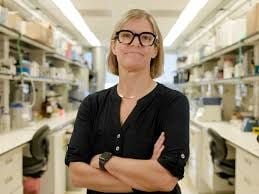
Inside the Microbiome: Fiber, Gut Health and Immunotherapy, ft. Dr. Jennifer Wargo
Dr. Patrick Hwu sits down with Dr. Jennifer Wargo, Professor of Surgical Oncology and Genomic Medicine, leader of the platform for innovative microbiome and translational research at The University of Texas MD Anderson Cancer Center, to discuss how the tumor microbiome and host factors shape cancer development and response to immunotherapy.
Together, they explore the growing evidence that cancer is influenced not only by tumor genetics and the immune system but also by the communities of bacteria that live within and around tumors. Dr. Wargo explains how differences in the gut and tumor microbiome can affect immune activation, potentially altering how well patients respond to treatments such as immune checkpoint inhibitors. The conversation highlights how diet, antibiotics, and other environmental exposures may shift microbial composition, which in turn can influence systemic immunity and tumor behavior. They also discuss how this emerging field is opening new possibilities for predicting treatment response and designing strategies to improve immunotherapy effectiveness.
What You’ll Learn with Dr. Jennifer Wargo
- How the gut microbiome affects immunotherapy response.
- Why some bacteria help the immune system fight cancer.
- How microbes can contribute to treatment resistance.
- Why dietary fiber may improve cancer outcomes.
- How microbiome-based therapies could shape future treatment
Podcast Transcript
Patrick Hwu, MD:
Welcome to The Immunoverse, a podcast that brings the ever-expanding universe of immunotherapy to life through the voices of those advancing this groundbreaking field. I'm Dr. Patrick Hwu, president and CEO of Moffitt Cancer Center and a career immunologist. In each episode, I sit down with pioneering experts who have shaped the past, present, and future of immunotherapy, uncovering breakthroughs, challenges, and the science driving this life-saving innovation. Today, we have with us Dr. Jennifer Wargo, Professor of Surgical Oncology and Genomic Medicine, leader of the platform for innovative microbiome and translational research at MD Anderson, and a leading physician-scientist in the field of cancer immunotherapy. Dr. Wargo's work has transformed our understanding of how the tumor microenvironment, and the microbiome influenced responses to immunotherapy. Her research has opened new pathways for improving outcomes in patients with melanoma and other cancers, helping to explain why treatments work for some patients and not others.
Through her pioneering efforts, Dr. Wargo is helping to redefine how we think about the interplay between cancer, the immune system, and the broader biological environment, and how these insights can be translated into more effective personalized therapies. Welcome to The Immunoverse, Dr. Wargo.
Jennifer Wargo, M.D.:
Dr. Hwu, it's a pleasure to be here. Thank you so much for the invitation.
Hwu:
Well, you're such a well-known scientist. Jen, tell us how you got into science in the first place. Did you always know you were going to be a scientist?
Wargo:
That's a great question, Patrick. Actually, no. I grew up in Philadelphia and I was the youngest of five children. My dad taught math, my mom was a nurse. When I was growing up, I actually thought I wanted to be a veterinarian. And so after finishing high school, I actually worked for a vet for a year and really enjoyed it. Did surgery, did a number of different things, but the vet that I worked with was like, "You know, Jen, you're really good with people. You ought to think about going into medicine." But I wasn't quite ready. And so I actually followed in my mother's footsteps. I had gone around with her to see patients when I was a little kid. And so went to nursing school. So I got a two-year nursing degree and started in my nursing career. Totally loved it, but wanted to go back and do more studies and originally went back for a bachelor's in nursing, but it was all business focused, which was not necessarily my interest.
But I really loved the science and so I pursued a degree in biology and then really kind of fell in love with medicine and went to the Medical College of Pennsylvania. And that's where I started my research career, started to study immunology with a famous immunologist there as well as studied surgery and actually studied the immune effects of surgery and then went to the Massachusetts General Hospital where I did my surgical training, which was fantastic.
Hwu:
And where did you get interested in immunotherapy?
Wargo:
Yeah, so I think it was really during medical school when I was studying the immune effects of surgery, which I really became interested in the immune system and how different things can impact it. And then while I was at Mass General Hospital doing my surgical training, one of my first rotations, I was actually on a GYN oncology service where I was taking care of patients with cervical cancer, endometrial cancer and other cancers and actually had really met with patients and was inspired by patients who were going through cancer treatment. At the time, I was actually offered a position out at UCLA with Tony Ribas and Jim Economou to study cancer immunotherapy and went and worked with them for a few years and learned about dendritic cell-based therapy. And then after completing my residency was invited to go work with Steve Rosenberg, who was one of your first guests, if not the first guest, I think on the immunoverse and studied under the tutelage of Steve Rosenberg and really kind of learned all I could about cancer immunotherapy.
Hwu:
Wow. So you've worked with the best in the business to get here now. Tell us, how did you get interested in the microbiome? What made you think that that was going to be a thing?
Wargo:
We actually kind of backed into it, if you will. So we were studying how different components in the tumor could actually influence response to treatment. And one of the first things we studied was in patients with melanoma, half of those patients have something, a BRAF mutation or in this gene and it can actually drive how cancers develop, spread and respond to treatment. And so we basically developed this model to study different cells and how they could influence response to BRAF targeted therapy. And so we developed this 3D culture system where we co-cultured cancer cell lines, in this case melanoma, along with stromal cell lines and along with drugs, in this case, BRAF inhibitors. And we found that there were certain stromal cells that were actually able to confer resistance to treatment with BRAF inhibitors and found that they were secreting a factor called hepatocyte growth factor.
And we then looked in patients' tumors and found that if they had hepatocyte growth factor within the tumor, they were actually resistant to the treatment. So then came the aha moment in science and some of the most interesting things in science are the ones that are unexpected. And at the time when I was starting my research career and career as a surgeon at Mass General, I was treating patients with melanoma, but also treating patients with pancreatic cancer. I always say I was doing wide excisions and whipples. And so in addition to studying resistance to BRAF targeted therapy, we also wanted to study resistance to chemotherapy in things like pancreatic cancer. And so we took that same 3D culture system and we co-cultured this time either pancreatic cancer cell lines along with stromal cell lines and along with drugs, in this case chemotherapy. And when we did that, we actually found that there was one stromal cell line, this human dermal fibroblast line, which was actually derived from skin reduction surgery that was actually consistently able to confer therapeutic resistance to treatment with chemotherapy across multiple colon cancer, pancreatic cancer cell lines.
Some of the most interesting things in science are the ones that are unexpected.
It was incredibly reproducible. We got super excited. We thought this has got to be a secreted factor. And so we scoured human tissues for enzymes, which we thought it was and totally came up dry. And then on routine testing of the cell line in the laboratory, we found that it was contaminated with mycoplasma, which for any scientist out there, you think, ugh, shucks, there goes five years worth of work. But the researcher with whom we were working on this, Ravid Strausman, was brilliant because he said, "Well, wait a second, what if the mycoplasma is actually contributing to the therapeutic resistance?" He found that bacteria within these tumors were actually breaking down chemotherapy into its inactive form. That's actually how we started to study the microbiome. So it was kind of cool, right? We kind of backed into it, if you will. Again, one of those things where it was a surprise result that turned into a gold mine, if you will.
And so we started to study the tumor microbiome and then moved to MD Anderson, went to an annual meeting for the Society for the Immunotherapy of Cancer where Tom Gayefsky was presenting his data on the gut microbiome. And I was floored by that presentation. He showed how the bugs in the gut, at least in mice, could dictate whether or not those mice responded to treatment with immunotherapy and he could actually change the microbiome and make those mice respond better. And so after the presentation, I actually got up to the microphone and I was like, "This is amazing. Have you guys studied this in patients?" And they hadn't. And so saw it as a unique opportunity to do just that. And so Patrick, with your help and the help of others at MD Anderson at the time, we were actually able to study this in patients and showed that in patients with melanoma that had spread who were going on to immunotherapy depending on what the bugs look like in their gut actually dictated whether or not they responded to treatment.
And furthermore, at least in preclinical models, we showed that you could actually change the microbiome to make them respond better. So really exciting work. And interestingly, when we looked back at those bugs, we found that a lot of the bugs that were associated with better outcomes were fermenting fiber. So I'll leave that little nugget right there.
Hwu:
Well, that's great. And I think as a surgeon scientist, you've always had access to tissues and throughout your career it seems that you've always put the clinical with the science, taken the tissues, observed in human cancer patients, different ways that patients respond or not respond, whether it's molecular pathways that you're looking at, cells that you're looking at neoadjuvant treatments, but you've always been able to take human specimens with hard science together. And maybe that's because you have both a surgical as well as scientific background.
Wargo:
Yeah, definitely. Well, there's a brilliant physician scientist who once told me, "Jen, the tissue is the issue." You know who that was? That was our own Patrick Hwu.
Hwu:
Well, I can tell you it was wonderful to see your career soar the way it did. And I remember when you came back and you were saying, "Well, I want to now do the microbiome." And I said, "Well, Jen, you sure you want to do that? You're doing all this other great stuff. You sure you want to also do the microbiome?" You go, "Yeah, I think I do. " So I'm glad you didn't listen to me and you bolt ahead with the microbiome because it's been quite the story and there are a lot of ways you can influence the microbiome by you can give the right kinds of bacteria and you've done some fecal transplant work where you give the bacteria from donors and you can change that. You can also change it with prebiotics, which is foods. And so why don't you talk about those ways you can influence the microbiome and what you found by those different methods and why the probiotic that everyone talks about, why you may not want to take the one from the grocery store shelf.
Wargo:
Right, exactly, exactly. And great points. And I think it's always one of those things in science where you want to follow your passion, you also need to focus, but you kind of have to have a portfolio of things that you're looking at. And because some of those irons are going to be hot, but some of them are going to be cold, but listen to your mentors, but also be innovative and follow your passion, I think is a definite key. So with regard to how can we influence the microbiome? And so one thing that people have noticed is that in patients with cancer who are going onto immunotherapy, if they get broad spectrum antibiotics before going on to treatment with immunotherapy, they actually do much worse. They have lower response rates to treatment, they don't survive as long. And so that is striking. And that's clear evidence that these little bugs in our gut are actually doing something to influence our immune system and immunotherapy response.
They've actually seen the same thing in CAR T. And so if patients receive broad spectrum antibiotics before going on to treatment with chimeric antigen receptor transduced T cells or immune cells, they actually have lower response rates. They don't do as well to therapy and they actually have much higher rates of toxicity. And so I think try to avoid broad spectrum antibiotics. Patients sometimes need antibiotics, but can we actually use more targeted approaches informed kind of treatment and not necessarily reach for those broad spectrum antibiotics? That's one take home message. And we and others are working on antibiotic stewardship efforts to really... And patients can be their own advocates if they have immunotherapy and they have some inflammation maybe and they go to the emergency room or an urgent care, kind of mention that they're on immunotherapy. So that's one thing. Another thing is, can you actually change the microbiome as far as the bugs that are in there and an extreme way is a fecal transplant.
And people have shown that if in patients with melanoma, that if you take someone who take a group of patients who have melanoma that's spread throughout the body that were treated with immunotherapy, their cancer did not respond. If you wipe out their inherent microbiome, gut microbiome and then give them back a whole new microbiome from a patient who had a brilliant response to the treatment, you can actually really help a lot of those people not only improve the response rate, but actually reduce toxicity to therapy. And so that's really important and it proves. But a poop transplant is not a small thing and I think can we use different strategies? And so as I alluded to previously, a lot of the bugs that were associated with better outcomes in our patients in their gut fermented fiber. And so we said, well, gosh, that's interesting. And so in addition to collecting poop samples on all our patients, we also asked them what they were eating.
And we found that if patients reported taking sufficient dietary fiber of at least 20 grams per day, and this is whole foods-based fiber not something you can buy in a pill, they were actually five times more likely to respond to the treatment and we published those findings in science. And so fiber matters. It's not only who the bugs are that are sitting in your gut, it's what you're feeding them that matters. And if you're feeding them a fiber-rich diet, they're going to perform like gangbusters and help your immune system and promote immunotherapy response. But if you're eating fast food and highly processed food, they're not going to do as well and your immune system is not going to be as robust. So I think we really need to think about you are what you eat part of the podcast if you will. And so now can we actually engineer different communities of bugs?
It's not only who the bugs are that are sitting in your gut, it's what you're feeding them that matters. And if you're feeding them a fiber-rich diet, they're going to perform like gangbusters and help your immune system and promote immunotherapy response. But if you're eating fast food and highly processed food, they're not going to do as well and your immune system is not going to be as robust.
And I think people have tried this either giving a single bug back to people that hasn't necessarily been very successful, but can we actually engineer a community of bugs that we could put either into a pill or give someone by colonoscopy and people are trying to do that, our group is trying to do that. And I think ultimately that will be successful, but I think it's going to take a little while to get there. Now people often ask me, "How about probiotics? Can I go to CVS or Walgreens and buy something off the shelf?" And we were wondering about that because one unintended consequence of publishing all this literature on the gut microbiome is that people think, "Gosh, I can just go out and buy a pill and fix my gut." And some probiotics might even tell you that you can fix your gut with a pill, but I would say buyer beware.
So we asked our patients and we found that about 30% of our patients were taking over the counter probiotics and if they reported taking over the counter probiotics, they actually did numerically worse. So they didn't do as well with regard to either their survival, but it wasn't statistically significant so it wasn't really powered as we couldn't really say whether or not it impacted it. So we took it back to a preclinical model where we took germ-free mice so they didn't have a microbiome. We actually gave them a perfect microbiome from a patient who had responded to immunotherapy. And then we gave them either one of two probiotics we bought off the shelf versus sterile water as a control implanted melanoma tumors treated with checkpoint blockade. And we found that if we gave them either of the probiotics, the tumors grew rapidly and failed to respond to treatment with immune checkpoint blockade, whereas if we gave them the sterile water as a control, they responded beautifully.
And when we looked at the tumors, they actually had fewer immune cells and it was a clear night and day like buyer beware, these probiotics may actually not be helping.
Hwu:
Because they're probably the wrong bacteria and they crowd out all the good
Wargo:
Bacteria. Right. Yeah. And if you think about it, a lot of people have looked at the microbiome, including in stem cell transplant for leukemia and things like that where investigators at Memorial Sloan Kettering said, "Well, what's a good microbiome as a diverse microbiome?" Because you have a lot of different bugs that are really kind of chipping in and really promoting the function of the microbiome. And if you have a lower diversity of bugs in your gut, you actually don't do as well on immunotherapy or to stem cell transplant or some of these other types of therapy. And so if you think about it, if a highly diverse microbiome is good with a lot of different bugs and a lot of the good fiber fermenting bugs, what if you go out to CVS and buy a pill that has one bug and it's got billions of these bugs in the one pill and you dump it into your gut.
Well, you think you might just dilute out a nice diverse microbiome and make it much less diverse. And potentially if it even in grafts, A, those billions of bacteria might just go right through your body, but if some of them stick around, they may actually crowd out all the good bugs and make your microbiome worse. Wow,
Hwu:
What a interesting thought and important recommendation. And so while one day we may have a probiotic pill that works, it's probably going to be a diverse set of bacteria and probably hard to grow bacteria so that's why we haven't found it yet, but one day we might have one. But in the meantime, what do you recommend for people? Is it really the diet and the fiber to try to grow the right kind of bacteria in our gut?
Wargo:
Yeah, exactly. And I think the probiotic industry has tried to do the right thing, but I think they didn't know all this before about how diversity of the microbiome is really good and which bugs matter. So I think it's an opportunity for us as a field to make better probiotics that include a lot of different bugs. But current day, what we recommend for people is, especially people who have cancer undergoing immunotherapy treatment is avoid the use of over-the-counter or commercially available probiotics, feed your gut, have a highly diverse fiber-rich diet that's actually going to promote function of your healthy bugs in your gut.
Hwu:
So what kind of fiber do we need? There's always soluble insoluble fibers, fiber in a pill. What's the best kind of fiber according to your studies?
Wargo:
Right. Yeah. And so after we did those studies asking patients what they ate, we actually ran a study in patients feeding them all their meals. So we took patients with melanoma who had been treated and we gave them up to 50 grams of fiber per day. Now, how do we get to 50? We didn't give them pills. We actually gave them whole food-based really good meals that we cooked in our BioNutrition Research Corps, our kitchen at MD Anderson, where we basically made all their meals, packaged them. They could either pick them up or we could ship them to them and it's basically like a food service. They get all their meals from us. So after showing that the meals, the patients love them, they tasted good, they were able to tolerate them with not many side effects. Then we said, okay, what if we treat patients who are going onto immunotherapy with these food as medicine, if you will.
And so what we did is we actually took 45 patients who had melanoma that had spread and were going on to immunotherapy and we enlisted their help and enrolled them on a protocol to treat them with diet as an adjunct to their current treatment. So we took two thirds of patients, got a high fiber diet of up to 50 grams per day. Everyone got healthy meals and one third got 20 grams per day and we found dramatic differences in outcomes. And so we found that patients who had the higher fiber actually did better than if they had 20 grams, which was candidly sufficient dietary fiber with regard to how their cancer responded to the treatment.
Hwu:
That's amazing that you had such a difference in response rate to immunotherapy and melanoma patients just based on the diet. So that's just incredible finding and that you don't need preauthorization for anything. It’s just food, right?
Wargo:
Exactly.
Hwu:
So how wonderful now, but it's hard to get 35 to 50 grams of fiber a day. Tell us about what it would take the average person to get. How do they get to 35 to 50 grams of fiber a day?
Wargo:
And it's not intuitive. And people think, "Well, gosh, can I go get a Fiber One bar, Metamucil, or something?" And you can't buy it in a pill or a bar yet, I'll say. I think a lot of us are trying to say, "Okay, how can we make this so that it could be easier for people? " But I think whole food-based is important, but it's not intuitive because people think, "Well, I'll eat a salad once a day and I'll get all the fiber." You won't. I'll eat an apple. One apple has four grams of fiber with the skin. So it's like you’ve got to eat a whole lot of apples to get to 50 grams a day. And plus, you need diversity, but chia seeds, chickpeas, lentils, limas, peas, raspberries.
One apple has four grams of fiber with the skin. So it's like you’ve got to eat a whole lot of apples to get to 50 grams a day. And plus, you need diversity, but chia seeds, chickpeas, lentils, limas, peas, raspberries.
We're actually trying to put together a cookbook for our patients to help them reach 30, 40, 50 grams a day, but it takes intention. And I think you do need variety. You can't just stick with one thing and expect to feed your gut well and really make it happy. So I think it definitely takes intention. I have a fiber chart on our fridge at home where I try and at least get 20, 30 grams a day myself and try and sneak it into the meals for the kids too. I think that's important because you look at what kids are getting every day and a lot of people are under 20, even under 10 grams of fiber a day. It's really quite shocking. And so can we actually teach our kids? Could we improve school lunches? Wouldn't that be a great opportunity for us from a policy standpoint, like get really good high fiber meals into our kids at school lunches? I think that would be a great opportunity.
Hwu:
Wow. What an important and applicable finding you guys have had. Something that every cancer patient, every person can do to improve their health and improve their gut microbiome.
Wargo:
And people say they feel better too. So we've had physicians who have had developed cancer, been treated with immunotherapy, go on to these trials who feel much better and really attest to the fact and virtually everyone who's been treated with these meals, they actually report feeling better, more energy. They feel less tired. And so I think there's a lot of benefits to this.
Hwu:
In our final couple of minutes, tell us about your mentorship style. You've mentored a lot of wonderfully successful scientists. In fact, we're recruiting one here. She's starting in a month here at Moffitt Cancer Center from your lab. And so, tell us what your recommendations for people out there are? You also had a roundabout way into science. What do you recommend to people pursuing their own careers and passions and also what's your mentorship style?
Wargo:
My mentorship style is kind of lead by example but also give people opportunities to grow as individuals. Sure, give them a project, but let them explore their own passion and find their way – with support and guardrails – if you will. I think this is our legacy, this is our impact, and that's why we're here.
Let them explore their own passion and find their way – with support and guardrails – if you will. I think this is our legacy, this is our impact, and that's why we're here.
Hwu:
Wonderful. You've contributed so much to science and so much to the next generation as well. So, we really want to thank our guest, Dr. Wargo, for joining us today, and thank you for going on this journey with us through the ever-expanding universe of immunotherapy.