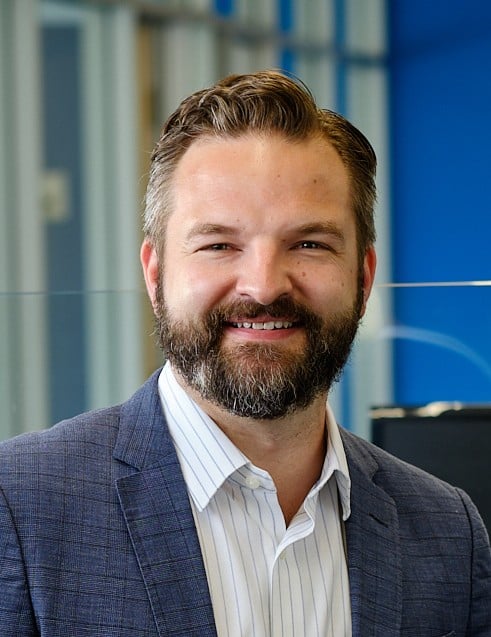
Reprogramming Metabolism to Power Immunotherapy, ft. Dr. Greg Delgoffe
Dr. Patrick Hwu sits down with Dr. Greg Delgoffe, professor of immunology at the University of Pittsburgh and director of the Tumor Microenvironment Center at UPMC Hillman Cancer Center, to explore how the tumor microenvironment functions as a complex, dynamic ecosystem that shapes the success or failure of cancer immunotherapy.
Together, they unpack how tumors are far more than just cancer cells—consisting instead of diverse populations of immune cells, stromal cells, and cancer cells all interacting within a shared and often hostile environment. Dr. Delgoffe explains how cancer cells actively reshape that environment by competing for and consuming key nutrients, effectively starving immune cells and limiting their ability to mount an effective response. The conversation dives into the emerging field of immunometabolism, revealing how metabolic competition within tumors can determine immune cell function and ultimately influence whether immunotherapy works.
What You’ll Learn with Dr. Delgoffe
- What the tumor microenvironment is and why it’s more than just cancer cells.
- How immune cells and tumor cells compete for space, nutrients and control.
- How metabolism shapes immune function and cancer’s ability to evade attack.
- Why understanding these cellular “interactions” is key to improving immunotherapy.
Podcast Transcript
Key Takeaways
- Tumors are complex ecosystems made up of many interacting cell types, not just cancer cells.
- Immune cells must function inside a hostile tumor environment that actively suppresses them.
- Cancer cells reshape nutrient availability, effectively starving or weakening immune responses.
- Metabolism is a critical battleground that can determine whether immunotherapy succeeds or fails.
Patrick Hwu, MD:
Welcome to The Immunoverse, a podcast that brings the ever-expanding universe of immunotherapy to life through the voices of those advancing this groundbreaking field. I'm Dr. Patrick Hwu, president and CEO of Moffitt Cancer Center and a career immunologist. In each episode, I sit down with pioneering experts who have shaped the past, present and future of immunotherapy, uncovering breakthroughs, challenges and the science driving this lifesaving innovation. Today, I'm joined by Dr. Greg Delgoffe, professor of immunology at the University of Pittsburgh and director of the Tumor Microenvironment Center at UPMC Hillman Cancer Center. He's also associate director for basic research. Dr. Delgoffe is one of the leading voices in immunometabolism, studying how nutrient availability and cellular metabolism shape the fate and function of T cells within the tumor microenvironment. His lab has been instrumental in uncovering how metabolic stress and nutrient depletion in tumors contribute to immune evasion and how reprogramming metabolism could unlock stronger, more durable immunotherapy responses.
Dr. Delgoffe, it's great to have you on The Immunoverse.
Greg Delgoffe, PhD:
It's great to be here, Pat. Thank you so much.
Hwu:
Well, really appreciate all the work that you've been doing. Tell me about what is the tumor microenvironment and why is it important?
Delgoffe:
Yeah, this is a great question because it's something that I think can be a misconception, is that a solid tumor is not just tumor cells. I think we have this vision of just a bag of cancer cells that's just dividing, but a lot of the tumor is you. It's the normal stromal cells. It's the immune cells that are coming in to figure out what's going on. And so there's been this kind of newer appreciation, understanding that a tumor is a constellation of different cell types that are all interacting with one another, and that even if we get a look at it under the microscope, that's still just a snapshot of the dynamic interactions that are occurring constantly day in and day out. And so what we are trying to understand, and what many, many investigators are trying to understand, is how is that landscape different from an immune perspective?
A solid tumor is not just tumor cells. I think we have this vision of just a bag of cancer cells that's just dividing, but a lot of the tumor is you. It's the normal stromal cells. It's the immune cells that are coming in to figure out what's going on. And so there's been this kind of newer appreciation, understanding that a tumor is a constellation of different cell types that are all interacting with one another,
Because your immune cells, as you know, are very good at going and finding infected cells. That's why we can have sterilizing immunity to a viral infection. But the stage on which they're playing inside cancer is set up and stacked up against them. So that's what we're trying to understand.
Hwu:
I see. So the immune microenvironment — that you're saying that cancer is just some of the people in the complex city of the cancer. In this neighborhood, there are many, many different players. We have to understand what all the different players are doing in order to treat the cancer.
Delgoffe:
Exactly. And I think it's the heterogeneity, the differences in all of the population of all those different people. It's not just identifying one cell or another cell or another type of bad actor or good actor. It's also about trying to understand the interactions between all of those things. That sometimes is beyond human comprehension, and we have to really start thinking about how to think of it as a system interacting with one another. But this is an incredibly important part of trying to think about how immunotherapy is working or not working because, at the end of the day, your immune system has to act in the tumor if it's going to be effective at removing those malignant cells. So we have to be cognizant that no matter what we do to boost the immune response in the blood or in the lymph system, it still has to act within the tumor.
Hwu:
So as the immune soldiers try to come into the cancer to kill the cancer cells, there are many other actors within that cancer that might be trying to block their effects. So you really have to understand that complex nature.
Delgoffe:
Exactly. And so I think for when the tumor microenvironment started to be officially kind of appreciated, we were really focused on the field — that is, the cells in the tumor microenvironment. There might be cells that might suppress those incoming soldiers and turn them off. There may be physical barriers that make collagen and tough walls that T cells would not be able to climb through. But now what we're understanding is that the tumor cell itself has created a completely different nutrient environment for that tumor. And that's something that we've been studying very, very deeply within the laboratory.
But now what we're understanding is that the tumor cell itself has created a completely different nutrient environment for that tumor. And that's something that we've been studying very, very deeply within the laboratory.
Hwu:
I see. So the nutrients, the food that's there for the cancers, but also that the immune cells need, is also what you've been really focused on. That's what you consider studying the metabolism of the tumor microenvironment. So what do you mean by metabolism?
Delgoffe:
Yeah. So metabolism is a word that we all use, right? Whether or not it's we are thinking about how many calories we should eat every day or what type of food we should eat. But that same thing applies at the nanoscale, that our T cells or all of our cells need to get access to food for fuel, but also for building blocks to grow. And cancer cells are different than our normal cells in that they don't stop growing. It's the one thing that I think we all know about cancer, is that it never stops growing. And so there's been that appreciation of the fact that tumor cells are metabolically deregulated — goes back a long time, a couple hundred years — of understanding how metabolically active tumors are. But the immune effects of the metabolically active tumor, that's a little bit more newer to the scene.
Metabolism is a word that we all use, right? Whether or not it's we are thinking about how many calories we should eat every day or what type of food we should eat. But that same thing applies at the nanoscale, that our T cells or all of our cells need to get access to food for fuel, but also for building blocks to grow. And cancer cells are different than our normal cells in that they don't stop growing.
And so what I mean by that is, if you get an infection, you're looking at a few virally infected cells in a typically normal tissue. But in a tumor, this is a tissue that is fighting back, metabolically speaking. It is an active tissue, right? That's what we see on a PET scan, is the glucose uptake — the sugar uptake — into the tumor. And we've been thinking about tumor metabolism for a long time as oncologists. However, how that's going to change the environment for other cells, that's a little bit more of a newer appreciation. And so what my lab has been trying to understand are the metabolic kind of tug of wars. What nutrients are shared? What nutrient kind of requirements are shared between cancer cells and immune cells? And then how can we understand the cancer is just like a bully just taking the lunch money, if you will, of the immune cells that are coming in? And so how do we change that dynamic so that now the T cells have a metabolic advantage?
Hwu:
Absolutely. That's what we see at Moffitt. The magic happens when you bring different kinds of scientists together with clinicians. That's when incredible leaps are made. So, well, thank you, Dr. Greg Delgoffe, for explaining metabolism, the tumor microenvironment, what to eat, and when to eat, and it's been lovely seeing your career soar through the years.
Delgoffe:
Thank you, Patrick. We appreciate you being here.