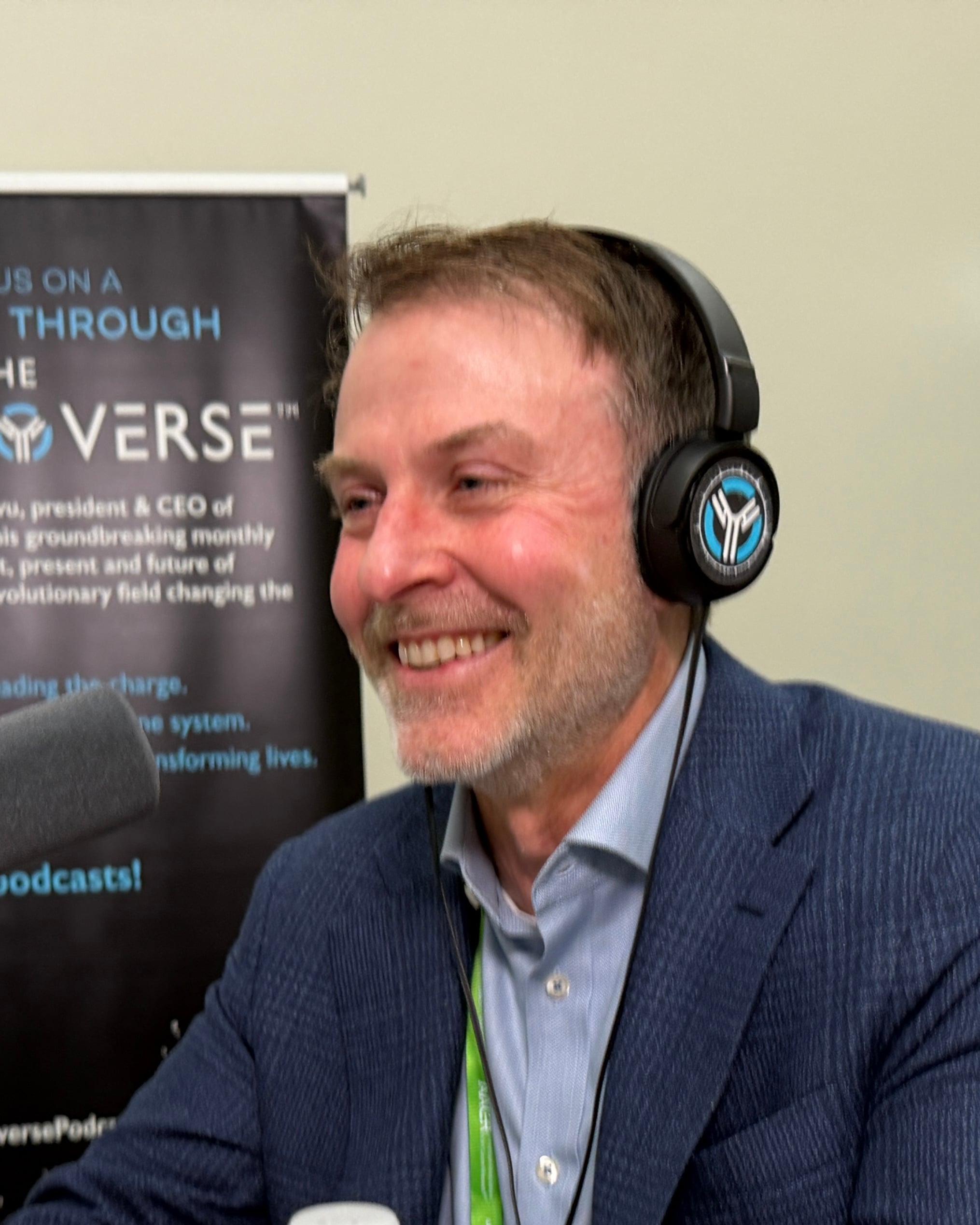
T-Cell Exhaustion: From Biological Adaptation to Cancer Therapy, ft. Dr. John Wherry
Dr. Patrick Hwu speaks with Dr. John Wherry, a world-renowned expert in T-cell biology and director of the Institute for Immunology and Immune Health at the University of Pennsylvania. Dr. Wherry reflects on his early interest in science and explains how chronic stimulation can cause T cells to become exhausted, limiting their ability to fight cancer and persistent infections. The conversation explores how immunotherapies such as PD-1 blockade can reinvigorate exhausted T cells, why some patients do not respond, and how the tumor microenvironment and epigenetic scarring shape immune function. Dr. Wherry also discusses the future of personalized immunotherapy, the importance of mentorship and collaboration, and how music inspires creativity in both science and life.
What You’ll Learn with Dr. John Wherry
- Why T cells "burn out" and what that means for cancer treatment
- How today's most successful immunotherapies work to release the immune system's brakes
- Why immunotherapy doesn't work for every patient—and how researchers are working to change that
- How a tumor's "neighborhood" can influence the immune system's ability to fight cancer
- The promise of reprogramming exhausted immune cells to create more effective cancer treatments
- Where cancer immunotherapy is headed next, from personalized approaches to new vaccine strategies
Podcast Transcript
Dr. Hwu:
Welcome to The Immunoverse, a podcast that brings the ever-expanding universe of immunotherapy to life through the voices of those advancing this groundbreaking field.
I’m Dr. Patrick Hwu, president and CEO of Moffitt Cancer Center and a career immunologist. In each episode, I sit down with pioneering experts who have shaped the past, present and future of immunotherapy. Together, we explore breakthroughs, challenges and the science driving these lifesaving innovations.
Today, we’re joined by Dr. John Wherry, director of the Institute for Immunology and Immune Health at the University of Pennsylvania and a world-renowned leader in T-cell biology.
Dr. Wherry is best known for his groundbreaking work on T-cell exhaustion, a concept that has fundamentally reshaped how we understand immune responses in cancer and chronic disease. His research has provided critical insights into how T cells become dysfunctional over time and how those pathways may be reversed to improve the effectiveness of immunotherapy.
Through his pioneering work, Dr. Wherry has helped lay the scientific foundation for many of today’s most impactful cancer immunotherapies. He continues to drive innovation at the intersection of basic immunology and clinical translation.
Welcome to The Immunoverse, Dr. Wherry.
Dr. Wherry:
Patrick, thanks for having me. It’s great to be here, and thank you for doing this. I think it’s a great time to have a podcast like this.
Dr. Hwu:
To begin, John, where did you grow up, and how did you become interested in science?
Dr. Wherry:
I grew up outside Philadelphia. As early as I can remember, I was interested in science. I would literally go to bed reading encyclopedias. As a child, I was fascinated by archaeology, chemistry, microscopes and similar things.
I think that interest was always embedded in me, but much of it came down to problem-solving. I grew up helping my grandfather, who had been raised on a farm, build things, take things apart and fix them. There was a lot of problem-solving involved.
When I got to college, I was interested in biology. During my final year, I took an immunology class, and it just clicked. I didn’t understand why other people were struggling with it because it all made sense to me. I ended up going to graduate school for immunology and continued from there.
Dr. Hwu:
Wonderful. Your work focuses on exhaustion. Can you explain what T-cell exhaustion is?
Dr. Wherry:
The concept of immune exhaustion is interesting. It’s similar to other forms of physiological exhaustion. When something is overstimulated, it eventually reaches a point where, in this case, the cell is still present and performing the minimum functions it needs to survive in that setting.
It’s like a new parent who has been awake all night feeding a baby. You’re functioning, but not very well.
In the immune system, when T cells are chronically battling an infection, a tumor or perhaps even self-antigens in the context of autoimmunity, they can become overstimulated. They reduce their function and have less capacity to do what we might want them to do in infectious disease and cancer, such as eliminating a virus or destroying a tumor.
Instead, they establish a type of stalemate. We observe that stalemate as T cells that are no longer doing their jobs effectively, and that is what we call exhaustion.
Dr. Hwu:
Earlier on The Immunoverse, we spoke with Dr. Steven Rosenberg about tumor-infiltrating lymphocytes, or TILs. These are immune cells that are already inside the tumor, but they aren’t doing their job effectively.
With TIL therapy, those cells are removed from the body, expanded to large numbers in the laboratory and then given back to the patient in a more activated state. The fact that the cells are inside the tumor and can recognize it, but are not effectively attacking it, can be considered a form of exhaustion, correct?
Dr. Wherry:
Yes, absolutely. Exhaustion is often misunderstood.
T-cell exhaustion probably evolved for some very useful reasons. Evolutionarily, the immune system’s job isn’t necessarily to cure us of every disease. Its role is to monitor tissues for disruption and then return those tissues to homeostasis so the organism can survive and reproduce.
One situation in which this occurs is when we become infected with a virus or an intracellular pathogen that causes tissue damage. At some point, the immune response itself may begin causing more damage than the pathogen.
Evolutionarily, there is a choice to make: Do you allow the immune system to cause so much damage that the organism dies, or do you reduce the immune response, tolerate the virus and allow the organism to survive?
In those settings, there is probably an evolutionary benefit to establishing a low-level containment system. That is essentially what happens with viruses such as herpes simplex virus, Epstein-Barr virus and cytomegalovirus.
That low-level containment system requires some immune function, but not necessarily the degree of function we would need to eliminate a tumor or create a vaccine that protects against a virus such as HIV.
This evolutionary stalemate may be where exhaustion has a natural and useful role. The problem occurs when a response that may be helpful for controlling a persistent virus also develops inside a tumor, where it is not useful.
Exhaustion is therefore neither inherently good nor bad. It is an adaptation of the immune system to chronic stimulation. In cancer, however, that adaptation can allow the disease to progress.
Dr. Hwu:
If we think of T cells as soldiers battling a virus, sometimes those soldiers can cause more harm than good. T-cell exhaustion may have developed as a way to calm the soldiers down so they don’t severely damage normal tissues.
Dr. Wherry:
Yes, that’s exactly right.
We can see this in certain experiments. When we remove pathways involved in exhaustion and prevent T cells from becoming exhausted, the cells can cause significantly more tissue damage. That damage can be very detrimental.
Dr. Hwu:
You’ve studied cancer models and immune responses against cancer extensively. In those settings, we want to reduce exhaustion so we can enhance the immune cells’ ability to kill cancer.
What are you doing to help T cells overcome exhaustion and fight cancer more effectively?
Dr. Wherry:
This connects to what I mentioned about how I grew up. When we see something like this happening in the immune system, we need to understand the cell’s wiring diagram.
If we want to take something apart and make it work better, we need the blueprint. That allows us to reconnect pathways that aren’t being used properly or remove pathways that are contributing to exhaustion.
A major part of what we have done over the past several decades is try to understand that wiring diagram. We ask which plugs we can disconnect early so the cells don’t become exhausted, or which pathways we can turn back on later to reinvigorate them.
That is what we have spent a great deal of time studying.
In fact, it’s how some of our most successful immunotherapies work. They release the brakes on the immune system and allow exhausted T cells to respond again. That has been hugely beneficial across a variety of cancer types.
If we want to take something apart and make it work better, we need the blueprint. That allows us to reconnect pathways that aren’t being used properly or remove pathways that are contributing to exhaustion.
Dr. Hwu:
For example, therapies that target the PD-1 pathway and are effective in some patients essentially remove one of the inhibitory signals acting on those T cells.
Dr. Wherry:
Yes, that’s exactly right.
Many years ago, when we first began dissecting these cellular wiring diagrams, one of the first things we noticed was high expression of PD-1 on exhausted T cells.
PD-1 and its ligand, PD-L1, are targets of several immunotherapy drugs that people may recognize from television, including Keytruda, Opdivo and Tecentriq. Keytruda and Opdivo target PD-1, while Tecentriq targets PD-L1.
These are very impressive immunotherapies that are now used to treat many cancers.
The PD-1 pathway evolved to place brakes on T cells so they don’t cause too much damage. Over time, however, chronically stimulated T cells can become deeply exhausted, with PD-1 signaling helping to hold their activity in check.
By blocking PD-1 or PD-L1, we can release part of that brake, reengage useful pathways in exhausted T cells and help them begin targeting the tumor again. In many cases, this can lead to substantial control of the tumor and, for some patients, long-lasting remissions or even cures.
Dr. Hwu:
These treatments can work incredibly well in some patients. I have patients who have experienced long-term cures following anti-PD-1 therapy.
At the same time, some patients don’t respond at all. In those patients, are there other braking molecules or pathways you’re studying that could potentially be released?
Dr. Wherry:
That is obviously a very important question. We’re doing a lot of good, but the job isn’t finished.
The opening line of Anna Karenina says, “All happy families are alike; each unhappy family is unhappy in its own way.” The point is that when PD-1 blockade works, the biological response often looks fairly similar. When it fails, however, it can fail for many different reasons.
It can fail because the tumor mutates and can no longer be recognized by T cells. It can also fail because the tumor mutates in a way that makes it resistant to being killed. Those are two different mechanisms through which tumors can escape.
Treatment can also fail because there aren’t enough tumor-specific T cells present. In that situation, PD-1 has very little to regulate. We may need to vaccinate the patient or otherwise induce new T-cell responses.
In other settings, the T cells may not be regulated by PD-1 alone. Additional molecules, which we call immune checkpoints, may also be involved.
One important example is the checkpoint LAG-3. A therapy targeting LAG-3 has received FDA approval in combination with a PD-1 inhibitor, and additional agents targeting this pathway are being studied clinically. LAG-3 blockade may therefore complement PD-1 blockade.
We’re also very interested in orthogonal pathways, meaning approaches that work differently from PD-1.
One area involves cytokines, which are growth factors and soluble molecules that regulate the immune system. They act as communication signals between T cells and other cells, or among T cells themselves. These molecules can be incredibly powerful when used in combination with PD-1 blockade, so we’re very excited about that area.
We’re also interested in the ability to rewire what is happening inside the nucleus of the T cell. We know that exhaustion becomes deeply imprinted in how the cell’s DNA is organized and regulated.
We want to understand whether we can erase some of those changes in the nucleus and rewrite the cell’s programming. There are several different approaches we’re exploring to accomplish that.
Dr. Hwu:
That’s exciting.
As you work to identify the best approaches, you’ve conducted important studies using patient samples to understand why some tumors are resistant to treatment while others are sensitive. You’ve also performed spatial analyses as part of those studies.
Can you describe some of that work?
Dr. Wherry:
One thing we always have to remember about the immune system is that, although we can observe immune cells in a person’s blood, the immune system really functions across time and space within tissues.
In those settings, it matters tremendously who a cell’s neighbors are.
We’re very interested in understanding the neighborhoods in which T cells operate and how different neighborhoods may activate different regulatory pathways, even within cells that otherwise appear similar.
What we think is particularly important—and the entire field has moved in this direction—is understanding how those neighborhoods change shortly after a new therapy begins.
As you know, Patrick, we study this through neoadjuvant trials. In these studies, a patient receives a drug before surgery. The tumor is then removed shortly afterward, allowing researchers to learn a tremendous amount about what changed inside the tumor in response to the treatment.
We and many others in the field are very interested in understanding those dynamics.
We’re beginning to learn that T cells that appear similar in the blood may behave very differently depending on their neighbors and the structure of the microenvironment surrounding them.
One of the most exciting areas in the field involves understanding where a key subpopulation of exhausted T cells lives and which other cells it communicates with. These cells are sometimes called stem-like or progenitor exhausted T cells, although the specific name is less important than their function.
They reside in small microenvironments where they exchange information with other key immune cells.
Once we understand that microenvironment, it may become possible to target it therapeutically. We can begin thinking about new ways to strengthen the environments that support effective treatment responses and provoke better responses from the important T cells residing within them.
One thing we always have to remember about the immune system is that, although we can observe immune cells in a person’s blood, the immune system really functions across time and space within tissues.
Dr. Hwu:
It’s important to understand not only the soldiers, including the exhausted soldiers, but also their neighborhoods: where they live, who they communicate with and how the entire environment might be modified to help them attack the cancer.
Dr. Wherry:
That’s right.
You can think about it in a couple of different ways. One is that T cells are social beings. They need a supportive social environment, and the exchange of information among cells helps them function.
Another way to think about it is to consider birds that flock and move together in complex and interesting patterns. One individual bird may not appear very different from the bird next to it, yet the behavior of the entire group can be remarkable.
We’re thinking about the immune system in a similar way. It works as a system, and the patterns created by that system may only be partially predicted by studying its individual components.
We need to determine how to evaluate those system-level patterns and then how to target them therapeutically.
Dr. Hwu:
As we consider how to target these cells, we’re essentially trying to reverse exhaustion.
Your work has also shown that T cells have a form of memory and can develop what you describe as epigenetic scarring. Can you explain that?
Dr. Wherry:
One of the most interesting aspects of T-cell exhaustion involves epigenetics.
To step back for a moment, you can think of the genome as a large book made up of letters. But for that book to make sense, it also needs punctuation and grammar.
Cells use a layer of regulation on top of the DNA called epigenetics to determine which genes should be expressed and when.
DNA is tightly packaged inside the nucleus. For a gene to be used, a particular section of DNA often needs to become accessible rather than remaining tightly wrapped around proteins called histones.
Cells also place chemical marks on the DNA or on the proteins surrounding it. You can think of those marks like clothespins carrying flags that say, “Come here and turn this gene on,” or, “Stay away and keep this gene off.”
These epigenetic marks help determine how a cell behaves. They can be quite durable and persist for long periods. Some can also be maintained as cells divide.
Epigenetic regulation is therefore critical in determining which genes a cell expresses.
As exhausted T cells begin to develop during the first week or two of an immune response, they establish an epigenetic landscape that is very different from the landscape of the functional T cells we might want to generate through a vaccine.
That epigenetic landscape affects nearly every gene the cells express.
What is especially interesting is that the epigenetic landscape of an exhausted T cell is remarkably durable. Even when we give immunotherapies that make T cells function better for a period of time, we may not fundamentally change their epigenetic programming. Their underlying identity remains that of an exhausted T cell.
It’s as though we turn up the volume for a while. When the effect of PD-1 blockade wears off, the volume may go back down, but the cells remain the same instrument they were before.
We want to understand both how that epigenetic programming is initially established and, perhaps more importantly, how we might erase or rewrite it when necessary.
We have conducted a series of studies in which we essentially eliminate the disease and allow exhausted T cells to rest. After resting, the cells often appear significantly healthier.
If you removed those cells and compared them with memory T cells generated by a vaccine, you might not be able to tell them apart simply by looking at them.
But when you ask the cells to perform—when you put them back into the game—they don’t behave like normal memory T cells. They quickly return to their previous exhausted behavior.
We call this epigenetic scarring. Even when the cells appear to have recovered, their underlying grammar remains that of an exhausted T cell.
Even when the cells appear to have recovered, their underlying grammar remains that of an exhausted T cell.
Dr. Hwu:
In some ways, their past experiences have left them traumatized.
Are there therapeutic approaches that could reverse that process and reduce the effects of that history?
Dr. Wherry:
That’s a great analogy. I hadn’t thought about it that way before.
Yes, we’re trying very hard. There are several drugs that affect epigenetic pathways. We have tested some of them, and the results have been somewhat disappointing, to be fair.
However, we have found that certain cytokines—the communication molecules used by immune cells—may be able to influence this process.
One particular group of cytokine pathways appears to perform quite well in this setting. It is one of the few approaches we have identified that may allow us to reprogram part of the epigenetic landscape.
Interestingly, one of the cytokines involved is interleukin-2, or IL-2, a pathway that Dr. Steven Rosenberg helped pioneer therapeutically.
IL-2 may work partly through downstream proteins that it induces. These proteins may have a unique ability to influence the epigenetic landscape of exhausted T cells.
Dr. Hwu:
That’s exciting. It may be one of the mechanisms through which IL-2 works.
Dr. Wherry:
Absolutely.
Dr. Hwu:
Let’s look a few years into the future.
Do you think we will be able to reverse T-cell exhaustion in patients with cancer? Or will we need to start over by generating new T cells—for example, by differentiating stem cells into T cells—and then giving those fresh cells to patients?
What do you think the next generation of cancer therapies will look like?
Dr. Wherry:
I think about this a lot, and I believe the answer is yes—we will need both approaches.
One major advance, which I hope happens sooner rather than later, will be our ability to determine which approach an individual patient needs when they first come to the clinic.
I think we can probably double or perhaps even triple the effectiveness with which we reinvigorate exhausted T cells. There is still considerable room for improvement.
However, I also think many patients will need new T-cell priming. They will need other types of therapies because they may not already have exhausted tumor-specific T cells available to reinvigorate.
Some patients may not have an effective tumor-specific response at all, or their tumors may have mutated to escape the immune responses that were previously present.
We will need therapies that work through different mechanisms.
One possibility is epitope spreading. For example, we might administer a CAR T-cell therapy that attacks one target but also provokes the patient’s own immune system to develop additional responses against other tumor targets.
We may also become better at generating cancer vaccines and identifying shared targets for those vaccines. Alternatively, we may learn how to provoke curative responses from other types of immune cells.
When you look at most of the therapies we currently have, nearly all of them ultimately require a T cell at the point of the spear.
Other mechanisms may contribute, but the cell that ultimately eliminates the tumor is often a T cell.
We therefore either need to take the T cells that are already present and make them work better—which I think we can improve substantially—or generate new ones.
The key will be determining which patients need each approach.
Dr. Hwu:
You’ve trained many outstanding scientists in your laboratory. How would you describe your mentorship style?
Dr. Wherry:
I believe our greatest legacy is the people we train.
We get to do this work for a relatively short period of time. I view it as both an honor and a privilege to conduct science, but especially to work with amazing people.
It’s incredibly important to cultivate a collaborative, supportive and collegial environment. Everything in the laboratory is open. Everyone is expected to share, and everyone is expected to work together.
It’s essential that we support one another. This work is difficult, and we need to think about the collective benefit of doing science.
We view science as both a societal responsibility and an opportunity. We’re using society’s resources. It isn’t our science alone; it belongs to everyone.
We have been given a gift and entrusted with the responsibility of conducting science. We therefore need to share what we learn. When we know something is correct, we should share it as soon as possible.
It’s also incredibly important to support people through every stage of their careers and meet them where they are.
We should mentor the person in front of us, not the person we wish they were. We need to help people move through their career trajectories in ways that are appropriate for their individual goals and circumstances.
That individualized approach is extremely important.
I believe our greatest legacy is the people we train.
Dr. Hwu:
That’s a wonderful philosophy.
Finally, one of the messages we’re trying to share is that science is both fun and inspiring. Science is fun, but scientists are fun, too.
You’re a fun person, and you have a great interest in music and a collection of guitars. Tell us about your love of music.
Dr. Wherry:
For as long as I can remember, I’ve been a huge music fan.
It may surprise people, but I’m a big fan of heavy metal. I grew up listening to Metallica, Black Sabbath and Ozzy Osbourne.
I find listening to that kind of music incredibly relaxing. People sometimes find that funny, but it’s my Zen moment. When I get in the car to drive home from work, I turn on music and relax. My heart rate goes down.
I also love music because it gives us a way to think about complexity differently. I’m a huge admirer of creativity in music.
You can hear a song or a piece of music and think, “Wow, who would have thought to do it that way?”
That is inspiring. I often find that it helps me think differently about my own work.
There are musicians and bands I love because their work makes me wonder, “How did they come up with that?” Something may be completely unusual or have no obvious precedent, and yet there it is.
Dr. Hwu:
That’s wonderful.
We want to thank our guest, Dr. John Wherry, for joining us today. And thank you to our listeners for joining us on this journey through the ever-expanding universe of immunotherapy.