
Oral Cavity and Throat Cancer Treatment
Oral cavity (mouth) and throat cancers are part of a broader category known as head and neck cancers. Specifically, these tumors can form in the tissues of the lips, tongue, gums, mouth floor, hard or soft palate, tonsils, throat (pharynx) or voice box (larynx). Most oral cavity and throat cancers are squamous cell carcinomas, which originate in the thin, flat cells lining the mouth and oropharyngeal structures. Less common types include salivary gland tumors, lymphomas and melanomas.
Scientists believe mouth and throat cancers develop when genetic mutations cause cells to grow uncontrollably. Risk factors include tobacco use, heavy alcohol consumption, human papillomavirus (HPV) infection, prolonged sun exposure to the lips and poor oral hygiene. Symptoms can vary depending on the location of the tumor, but may include a persistent mouth sore, difficulty swallowing, vocal hoarseness, a lump in the neck, unexplained weight loss or ear pain.
Oral cavity and throat cancers are relatively common in the United States. According to national cancer data, more than 54,000 new cases are diagnosed each year, with a higher incidence in men and individuals 50 or older. However, HPV-related cancers are increasingly being diagnosed in younger populations.
At Moffitt Cancer Center, patients with oral cavity or throat cancer can receive individualized care through our comprehensive Head and Neck Oncology Program, which is home to a multispecialty team of surgical oncologists, radiation oncologists, medical oncologists, reconstructive surgeons and rehabilitation specialists. Because these complex cancers develop in areas critical to speaking, swallowing and breathing, we carefully plan treatment with a focus on both tumor control and functional preservation, and many of our patients benefit from a customized combination of therapies.
ACS Surgical Quality Partner for 30+ Years
Continuously Accredited by the American College of Surgeons Commission on Cancer since 1989 for our commitment to providing comprehensive, high-quality and multispecialty patient-centered care.
Surgery for oral cavity and throat cancer
Surgery is often the primary treatment for oral cavity cancer and many throat cancers. The objective is to remove the entire tumor with a clear margin of healthy tissue, helping to reduce the likelihood of recurrence. Equally important are the goals to preserve essential functions and maintain the patient’s appearance and quality of life.
When is surgery a treatment option for oral cavity or throat cancer?
Surgery is commonly recommended for early-stage, localized tumors, although it remains a valuable treatment option for many patients with more advanced cancer. In some cases, surgery is combined with other treatments, such as radiation therapy and chemotherapy, for enhanced effectiveness. To determine whether surgical treatment is appropriate, the healthcare team will evaluate the size and location of the tumor, its depth of invasion and whether any nearby lymph nodes are affected, as well as the potential effect of surgery on vital functions.
What are the different types of oral cavity and throat cancer surgery?
Performed with curative intent, therapeutic surgery focuses on removing the cancer and any potentially affected surrounding tissues. Depending on the size, location and stage of the tumor, this may involve removing nearby lymph nodes and other structures at risk for microscopic cancer spread. Additionally, reconstructive surgery is often an essential part of oral cavity and throat cancer care, particularly when the tumor removal affects critical structures involved in speaking, swallowing or facial appearance. The goal is not only to restore physical form but also to optimize function and help the patient return to daily activities with confidence.

Moffitt offers the latest surgical treatment options for oral cavity and throat cancer, including:
Tumor resection for oral cavity and throat cancer
Tumor resection is the most common type of surgical treatment for oral cavity and throat cancers. During this procedure, the surgeon will remove the primary tumor along with a margin of surrounding healthy tissue, which will be microscopically examined by a pathologist to ensure that no cancer cells remain at the edges (known as “clear margins”). The extent of the resection can vary based on the location of the tumor and the depth of its invasion. In some cases, partial removal of nearby structures, such as the tongue, jaw or soft palate, may be necessary, with careful planning to preserve as much function as possible.
Neck dissection for oral cavity and throat cancer
A neck dissection may be considered if oral cavity or throat cancer has spread, or is likely to spread, to lymph nodes in the neck. This procedure involves removing some or all of the lymph nodes in specific regions of the neck to eliminate the cancerous cells and obtain important staging information, which will be used to guide further treatment if necessary. There are several types of neck dissection, which range from selective approaches that remove only high-risk nodes to more comprehensive procedures that address extensive cancer.
Minimally invasive surgery for oral cavity and throat cancer
Minimally invasive surgical techniques are increasingly being used for select oral cavity and throat cancers, particularly those located in hard-to-reach areas, such as the middle part of the throat (oropharynx). Transoral robotic surgery (TORS) and transoral laser microsurgery (TLM) allow the surgeon to access and remove certain tumors through the mouth, eliminating the need for an external incision. Compared to traditional open surgery, TORS and TLM can reduce operative trauma, shorten the hospital stay and promote a faster recovery while preserving surrounding healthy tissues and critical functions.
ACS Surgical Quality Partner for 30+ Years
Continuously Accredited by the American College of Surgeons Commission on Cancer since 1989 for our commitment to providing comprehensive, high-quality and multispecialty patient-centered care.
Skull base surgery for oral cavity and throat cancer
To address tumors that originate near or extend to the skull base, highly specialized surgical expertise is required. Skull base surgery involves operating in a complex anatomical region that houses critical nerves and blood vessels. To maximize safety and precision, the surgeon may use advanced image-guided surgical techniques and real-time nerve function monitoring throughout the procedure.
Advanced endoscopic sinus and skull base surgery using Brainlab software and hardware devices enables the surgeon to navigate intricate structures with exceptional accuracy. This state-of-the-art technology integrates detailed imaging with surgical navigation, allowing for targeted tumor removal while minimizing disruption to surrounding healthy tissues and reducing the risk of complications.
Reconstructive surgery for oral cavity and throat cancer
Careful planning and coordination within a multispecialty team may allow the reconstruction procedure to be performed at the same time as the tumor removal, streamlining the recovery process and reducing the need for additional surgery. By combining surgical precision with advanced reconstructive techniques, the surgical team can significantly improve both the functional outcome and the patient’s quality of life.
One of the most frequently used reconstructive techniques for oral cavity and throat cancer is microvascular free flap reconstruction. This approach involves transferring healthy tissue—such as skin, muscle and/or bone—from another part of the patient’s body to the surgical site. Common donor sites include the forearm, thigh and outer calf bone (fibula). Using advanced microsurgical techniques, the surgeon will reconnect the transplanted tissue to tiny blood vessels to help ensure it remains viable in its new location. This method allows for a highly customized reconstruction tailored to the patient’s specific needs.
Depending on the extent of the surgery, reconstruction may address areas of the tongue, palate, throat or jaw (mandible). Soft tissue reconstruction can help preserve mobility and sensation, which are critical for speech and swallowing. In cases involving the jawbone, bone grafts can help restore structural support and enable dental rehabilitation.
What are the side effects and risks of surgery for oral cavity and throat cancer?
Side effects of surgery can vary depending on the type and extent of the procedure and the surgical site, but may include:
- Altered facial appearance
- Changes in speech or voice
- Difficulty swallowing
- Nerve-related effects, such as numbness or weakness
- Swelling or stiffness in the neck or jaw
The multispecialty team at Moffitt can help manage these risks through early intervention and coordinated care. Typically, the patient will begin rehabilitation as soon as possible, and reconstructive techniques may be used to support recovery and maintain function.
What is the recovery process like after surgery for oral cavity and throat cancer?
Recovery can vary based on the complexity of the procedure. Some patients may spend a few days in the hospital, while those who undergo more extensive surgery—particularly those involving reconstruction—may require a longer stay.
Following discharge, the patient may participate in speech and swallowing therapy, as well as nutritional counseling. The healing process will continue over several weeks to months, leading to gradual improvements in strength, mobility and daily function.

Radiation therapy for oral cavity and throat cancer
Radiation therapy is a well-established, noninvasive treatment that uses high-energy beams to destroy cancerous cells or prevent them from growing. When addressing oral cavity or throat cancer, radiation therapy must be delivered with exceptional precision due to the complex anatomy of the head and neck and the proximity of critical structures involved in speech, swallowing, taste and breathing.
Typically, radiation treatment is administered over several sessions, allowing healthy tissues time to recover while maximizing the therapeutic effect on cancer cells. Ongoing advances in radiation delivery techniques continue to improve patient outcomes by increasing treatment accuracy and reducing side effects.
How does radiation therapy treat oral cavity and throat cancer?
Radiation therapy works by damaging the DNA within cancer cells, disrupting their ability to divide and repair themselves. Because cancer cells are generally less capable of repairing DNA damage than normal cells, they are more vulnerable to the effects of radiation therapy. Over time, this can gradually destroy the tumor.
Radiation therapy can be used in several ways depending on the clinical situation. It may be used before surgery to shrink the tumor and make it easier to remove, or after surgery to target any remaining cancer cells and reduce the likelihood of recurrence. The radiation beams may be directed at the primary tumor site, nearby lymph nodes or other areas at risk for microscopic cancer spread that cannot be seen on imaging.
Radiation therapy can also play a role in managing the symptoms of advanced cancer, helping to relieve pain, improve swallowing or enhance breathing. Treatment is highly individualized to achieve the best possible outcome with the least impact on normal function.
What radiation technologies are available for oral cavity and throat cancer?
Moffitt offers a full spectrum of radiation delivery techniques, including:
External beam radiation therapy (EBRT) for oral cavity and throat cancer
EBRT is the most widely used form of radiation treatment for oral cavity and throat cancers. This technique uses an external machine (linear accelerator) to deliver powerful energy beams from outside the patient’s body, targeting the tumor and, in some cases, nearby lymph nodes. External beam radiation therapy is usually given daily over several weeks, following a carefully planned schedule.
Before treatment begins, advanced imaging and simulation will be used to map the tumor and design a highly customized treatment plan. EBRT may be administered as a standalone treatment for an early-stage tumor or in combination with surgery and/or chemotherapy for more advanced cancer. Its versatility and effectiveness make it a mainstay of head and neck cancer care.
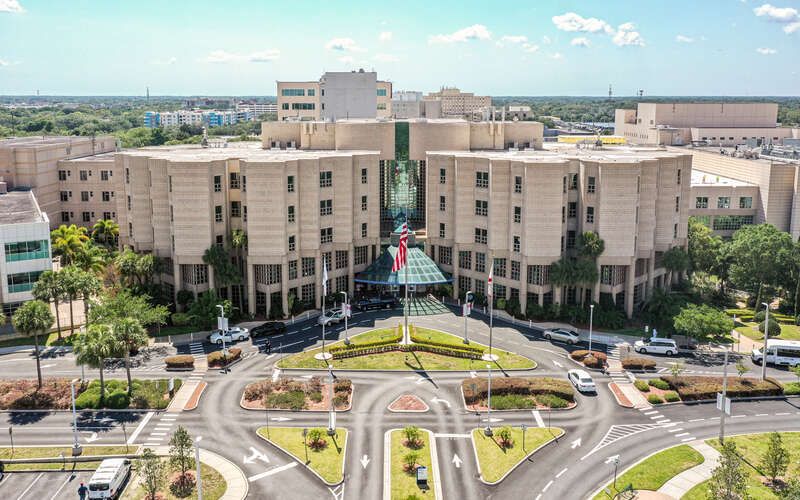
#1 Cancer Hospital in Tampa
Moffitt is the top-ranked cancer hospital in Tampa and central Florida and ranked No. 16 in the nation in Newsweek’s “America’s Best Cancer Hospitals."
Intensity modulated radiation therapy (IMR) for oral cavity and throat cancer
IMRT is an advanced form of external beam radiation therapy that enables clinicians to precisely shape and modulate the radiation beams to match the three-dimensional contours of the tumor. By varying the intensity of the radiation within each beam, IMRT delivers higher doses directly to cancer cells while minimizing exposure to nearby healthy tissues.
This high level of precision is particularly important when treating cancer in the head or neck region, which houses vital structures, such as the salivary glands, jawbone and spinal cord. Intensity modulated radiation therapy has been shown to reduce treatment side effects, such as dry mouth (xerostomia), difficulty swallowing and damage to surrounding tissues, improving both short-term tolerance and long-term quality of life.
Brachytherapy for oral cavity and throat cancer
Brachytherapy is a form of internal radiation therapy in which a small source of radioactive material is placed directly inside or very close to a tumor. This approach allows a high dose of radiation to be delivered to a localized area while limiting exposure to surrounding healthy tissues.
Although used less frequently than external beam techniques, brachytherapy can be an effective option for a small, well-defined tumor or as a boost following EBRT. Depending on the treatment plan, the radioactive source may be temporarily placed using an applicator or, in some cases, implanted for a specified period under close medical supervision.
Proton therapy for oral cavity and throat cancer
Proton therapy represents one of the most advanced forms of radiation treatment available for oral cavity and throat cancers. Unlike traditional radiation therapy, which uses X-rays that pass through the body, proton therapy uses positively charged particles (protons) that can be precisely controlled to deposit their energy at a specific depth within the body. This unique property allows the proton beams to stop directly at the tumor site, significantly reducing radiation exposure to surrounding healthy tissues and critical structures. As a result, proton therapy can lower the risk of side effects, such as damage to the oral tissues, salivary glands and spinal cord.
Proton therapy can be especially beneficial for tumors located near sensitive or complex anatomical areas, where protecting nearby healthy tissue is particularly important. By limiting radiation exposure to surrounding structures, this approach may help reduce the risk of certain long-term side effects and support a better functional outcome and quality of life both during and after treatment.
Chemotherapy for oral cavity and throat cancer
Chemotherapy uses systemic medications to destroy cancer cells or inhibit their ability to grow and divide. Because these powerful drugs circulate throughout the body via the bloodstream, they can target cancer cells that may have spread beyond the primary tumor site.
When is chemotherapy used for oral cavity and throat cancer?
For locally advanced oral cavity and throat cancers, chemotherapy is most commonly used in combination with radiation therapy (chemoradiation), enhancing the effectiveness of the radiation by making the cancer cells more sensitive to it.
In some cases, chemotherapy may be administered before surgery or radiation therapy to shrink the tumor and increase the likelihood of successful treatment. It may also be used after surgery to help reduce the risk of cancer recurrence, particularly when there are high-risk features, such as lymph node involvement or positive margins.
For a patient with recurrent or metastatic oral cavity or throat cancer, chemotherapy can help control tumor growth, relieve symptoms and improve quality of life if surgery is not feasible. The drug regimen will be carefully tailored to balance treatment effectiveness with side effect management.
Which chemotherapy drugs are most effective for oral cavity and throat cancer?
At Moffitt, each chemotherapy plan is customized based on the tumor’s characteristics and how it responds to treatment. Commonly used agents include:
- 5-fluorouracil (5-FU)
- Cisplatin
- Carboplatin
- Taxanes, such as docetaxel
These drugs are often used in combination to enhance treatment effectiveness.
What side effects are common with chemotherapy for oral cavity and throat cancer?
Chemotherapy targets rapidly dividing cells throughout the body. While this treatment approach can be highly effective against fast-growing cancer cells, it can also affect healthy cells that naturally grow and divide quickly, such as those in the digestive tract, mouth, hair follicles and bone marrow. As a result, many patients experience a range of temporary side effects during treatment.
Common side effects of chemotherapy include:
- Changes in taste sensation
- Fatigue
- Increased risk of infection
- Mouth sores
- Nausea or vomiting
At Moffitt, supportive care is an essential part of oral cavity and throat cancer treatment. The healthcare team can provide guidance on oral care to reduce mouth irritation, medications to help control nausea, nutritional support to maintain strength and hydration therapy as needed. By proactively managing these side effects, the patient will be better able to tolerate treatment and maintain quality of life throughout the process.
How will chemotherapy for oral cavity and throat cancer affect my daily life and recovery?
Chemotherapy is typically delivered in cycles, either through an intravenous (IV) infusion—sometimes using a port for easier access—or, in select cases, as an oral medication. Each cycle includes an active treatment period followed by a recovery period, allowing the body time to heal before the next dose.
During treatment, the patient may notice changes in their energy levels, appetite and overall stamina. Fatigue is one of the most common effects, and it can vary from mild to more noticeable depending on the treatment plan. Some patients can continue to work and maintain other aspects of their daily routine, while others may need to adjust their schedule to allow time for additional rest.
Daily life can also be affected by temporary side effects, such as changes in taste sensation, mouth sensitivity and increased susceptibility to infections. The healthcare team can recommend practical strategies—such as maintaining good hydration, eating nutrient-dense foods and avoiding exposure to illness—to help manage these challenges.
After chemotherapy is completed, most side effects gradually improve as the body recovers. Energy levels typically return over several weeks, although the exact timeline can vary based on the intensity of treatment and the individual’s overall health. Ongoing follow-up care can help ensure that recovery is progressing as expected and that any lingering effects are addressed promptly.
 Florida's First NCI-designated Comprehensive Cancer Center
Recognized for its scientific excellence, Moffitt is the state's longest-established National Cancer Institute-designated Comprehensive Cancer Center.
Immunotherapy and targeted therapy for oral cavity and throat cancer
Immunotherapy and targeted therapy are advanced, highly personalized approaches to cancer treatment. Unlike traditional treatments that broadly affect cancer and healthy cells alike, these therapies are designed based on the unique biological characteristics of the tumor. At Moffitt, precision medicine plays a key role in determining whether these options are appropriate, often involving detailed testing of the tumor’s genetic and molecular profile. Immunotherapy and targeted therapy are most commonly used for advanced, recurrent or metastatic oral cavity and throat cancers, but ongoing research continues to expand their role in the earlier stages of care.
How does immunotherapy work for oral cavity and throat cancer?
In recent years, immunotherapy has become an increasingly important treatment option for head and neck cancers. It works by harnessing the natural power of the body’s immune system to identify and attack cancer cells. Certain oral cavity and throat cancers can evade detection by the immune system, but immunotherapy can help to overcome this by reactivating the immune response against the tumor.
The most commonly used immunotherapies for oral cavity and throat cancers are immune checkpoint inhibitors, which target specific proteins, such as PD-1 or PD-L1. By blocking these pathways, the treatment can help immune cells recognize and destroy cancer cells more effectively. Immunotherapy is typically used for advanced, recurrent or metastatic cancers, particularly when other treatments have not been successful.
In some patients, immunotherapy can lead to a durable response and better outcome, with a different side effect profile than traditional treatments. Through ongoing research, scientists continue to explore how these therapies can be used earlier in treatment and in combination with other modalities.
Which biomarkers are tested for oral cavity and throat cancer targeted therapy?
Targeted therapy is designed to interfere with the specific molecular pathways that drive cancer growth and progression. Unlike chemotherapy, which affects rapidly dividing cells more broadly, targeted therapies act on defined abnormalities within cancer cells, allowing for a more focused approach.
One well-established target in head and neck cancers is the epidermal growth factor receptor (EGFR), which is often overexpressed in tumor cells. Medications that block EGFR can slow or stop tumor growth and may enhance the effectiveness of radiation therapy. For this reason, targeted therapy is frequently used in combination with radiation therapy and chemotherapy, particularly for patients who may not tolerate more intensive treatment regimens.
As research advances, additional targeted agents are being studied to address other molecular drivers of oral cavity and throat cancers, expanding the range of individualized treatment options.
What are the side effects of immunotherapy for oral cavity and throat cancer?
Immunotherapy works differently from chemotherapy by stimulating the body’s own immune system to recognize and attack cancer cells. Because of this, side effects are often related to increased immune activity rather than direct damage to healthy cells.
Common side effects of immunotherapy include:
- Fatigue
- Skin changes, such as rash or itching
- Inflammation in certain organs, such as the lungs (pneumonitis), thyroid (thyroiditis) or intestines (colitis)
These side effects can range from mild to more noticeable, but they are often manageable when identified early. The patient will be closely monitored throughout treatment, and the healthcare team will provide clear guidance on what symptoms to watch for and when to report changes.
At Moffitt, proactive management is a key part of immunotherapy care. The treatment plan may include medications to reduce inflammation, temporary pauses in therapy or adjustments to dosing if needed. With careful oversight and early intervention, most patients are able to continue treatment safely while minimizing any disruptions to their daily life.
Oral cavity and throat cancer clinical trials at Moffitt Cancer Center
Clinical trials play a critical role in refining the treatment of oral cavity and throat cancers. At the same time, these important research studies offer certain patients access to promising new therapies before those options are made widely available. Participation may be appropriate at any stage of treatment, from newly diagnosed cancer to recurrent or metastatic disease.
Through clinical trials, researchers are continually evaluating the effectiveness of innovative cancer treatment approaches, such as novel drug combinations, next-generation immunotherapies, targeted agents and refinements in surgical and radiation delivery techniques. These ongoing advancements are helping transform the landscape of cancer care by expanding treatment options and improving outcomes for patients with oral cavity and throat cancers.
Why should a patient consider a clinical trial for oral cavity or throat cancer?
The multispecialty team at Moffitt can determine whether a clinical trial is a suitable option for the patient based on their unique diagnosis, treatment history and overall health. If the patient chooses to enroll, they will be closely monitored by a specialized healthcare team. In addition to gaining a unique opportunity to be among the first to benefit from an emerging therapy, the patient will have a chance to contribute to groundbreaking research that may improve the future standard of care.
Post-surgical supportive care for oral cavity and throat cancer
Supportive care is a vital component of recovery following treatment for oral cavity and throat cancer, with a strong focus on restoring function, independence and quality of life. After cancer-directed therapies are completed, the patient may experience changes that affect their speech, swallowing, breathing or appearance, all of which can be addressed through comprehensive rehabilitation services.
Speech-language pathologists can work closely with the patient to improve their communication and swallowing function, using an individualized therapy plan to help them adapt to physical changes in the mouth and throat. Nutritional support may also be provided to help ensure the patient maintains adequate dietary intake during recovery.
Additionally, a maxillofacial prosthodontist can play an important role in restoring both form and function by designing a custom prosthetic device for the jaw, palate, teeth or another facial structure. This prosthesis can help the patient regain the ability to eat, speak and maintain facial symmetry. When appropriate, a specialized swallowing prosthesis may be created to support safe and effective swallowing.
With rehabilitative care integrated into the cancer treatment plan, the patient will be better equipped to regain confidence, improve daily functioning and return to a more active, fulfilling life.
Frequently asked questions (FAQs) about oral cavity and throat cancer treatment
The following FAQs-related article provides additional information about oral cavity and throat cancer treatment:
Benefit from world-class care at Moffitt Cancer Center
Moffitt takes a comprehensive, multispecialty approach to treating oral cavity and throat cancers. Our patients benefit from the expertise of a team of specialists in head and neck oncology, as well as advanced diagnostic tools and access to innovative therapies, including proton therapy and a robust portfolio of clinical trials. Treatment is highly individualized, with a strong emphasis on preserving function and quality of life.
If you would like to explore your treatment options for oral cavity or throat cancer with a specialist in our Head and Neck Oncology Program, you can request an appointment by calling 1-888-663-3488 or submitting a new patient registration form online. We do not require referrals.
Helpful Links: