
SPARK
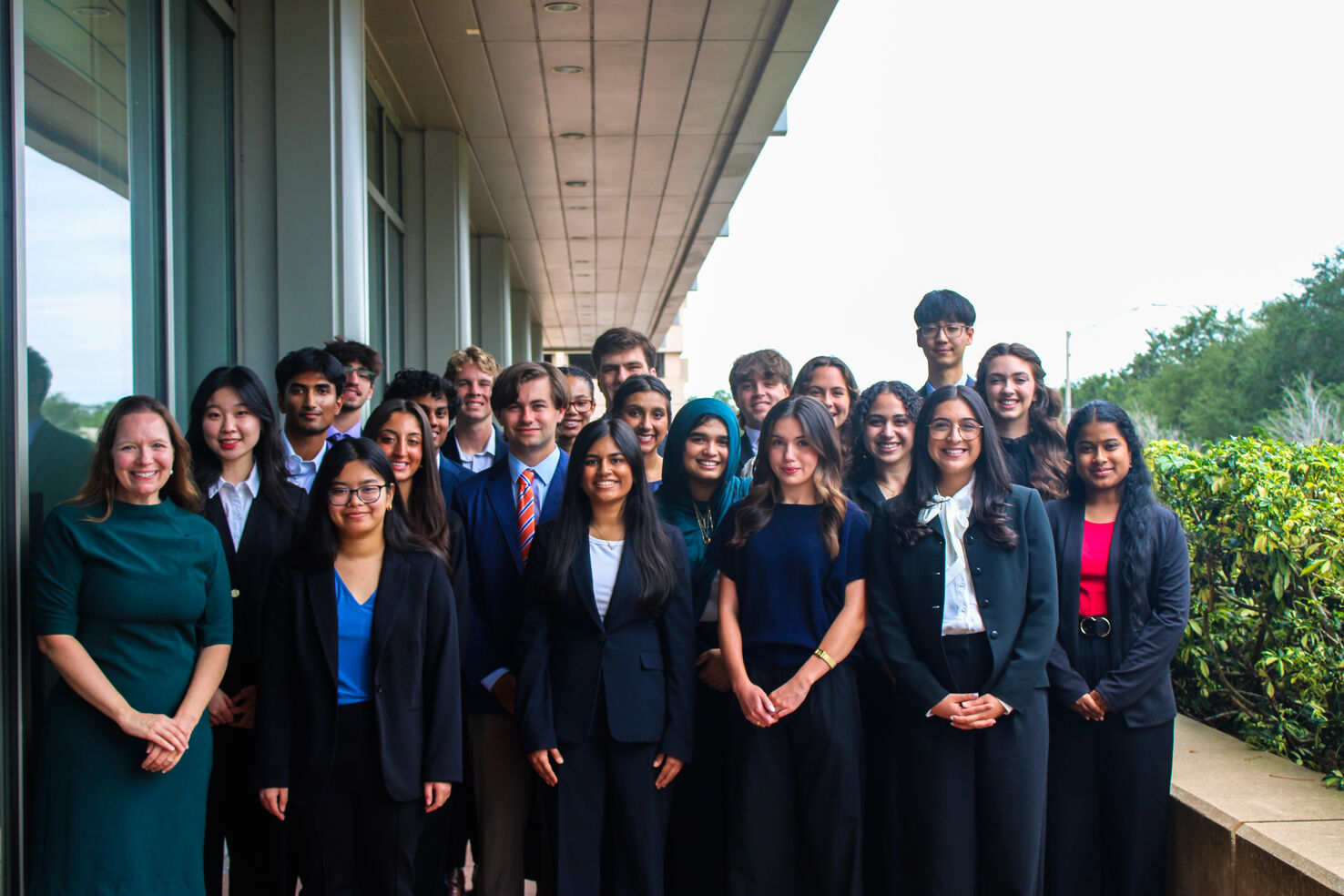
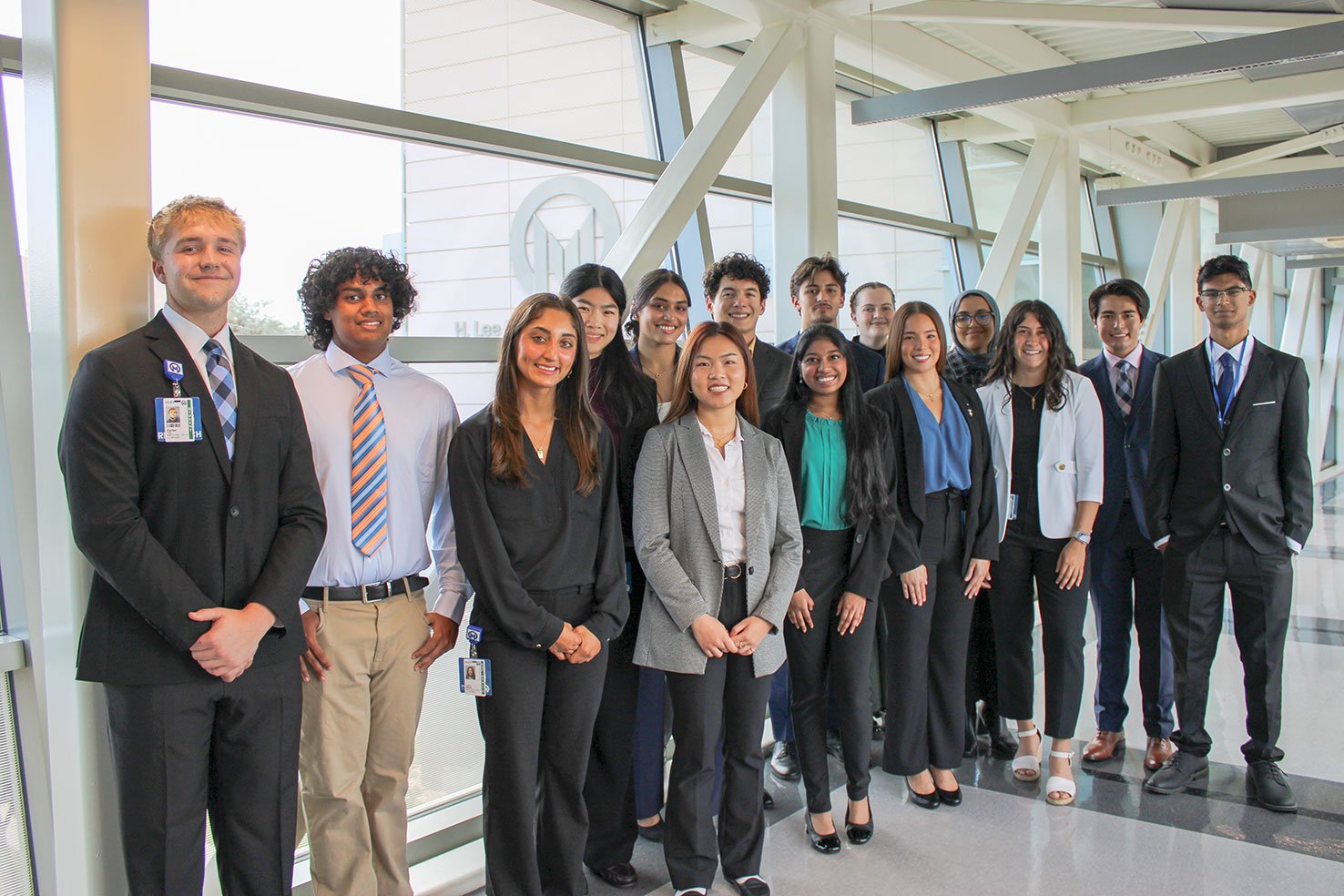
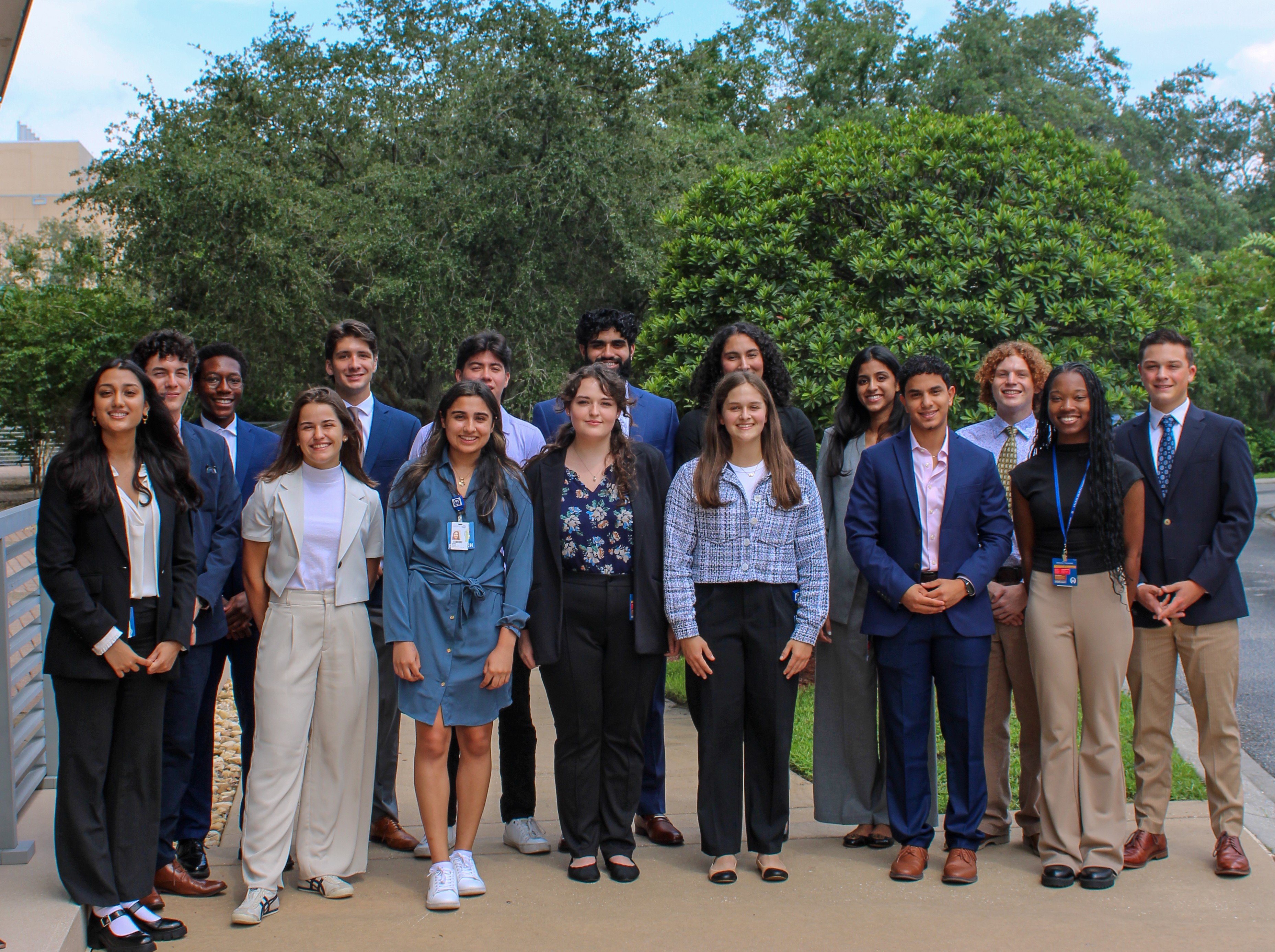
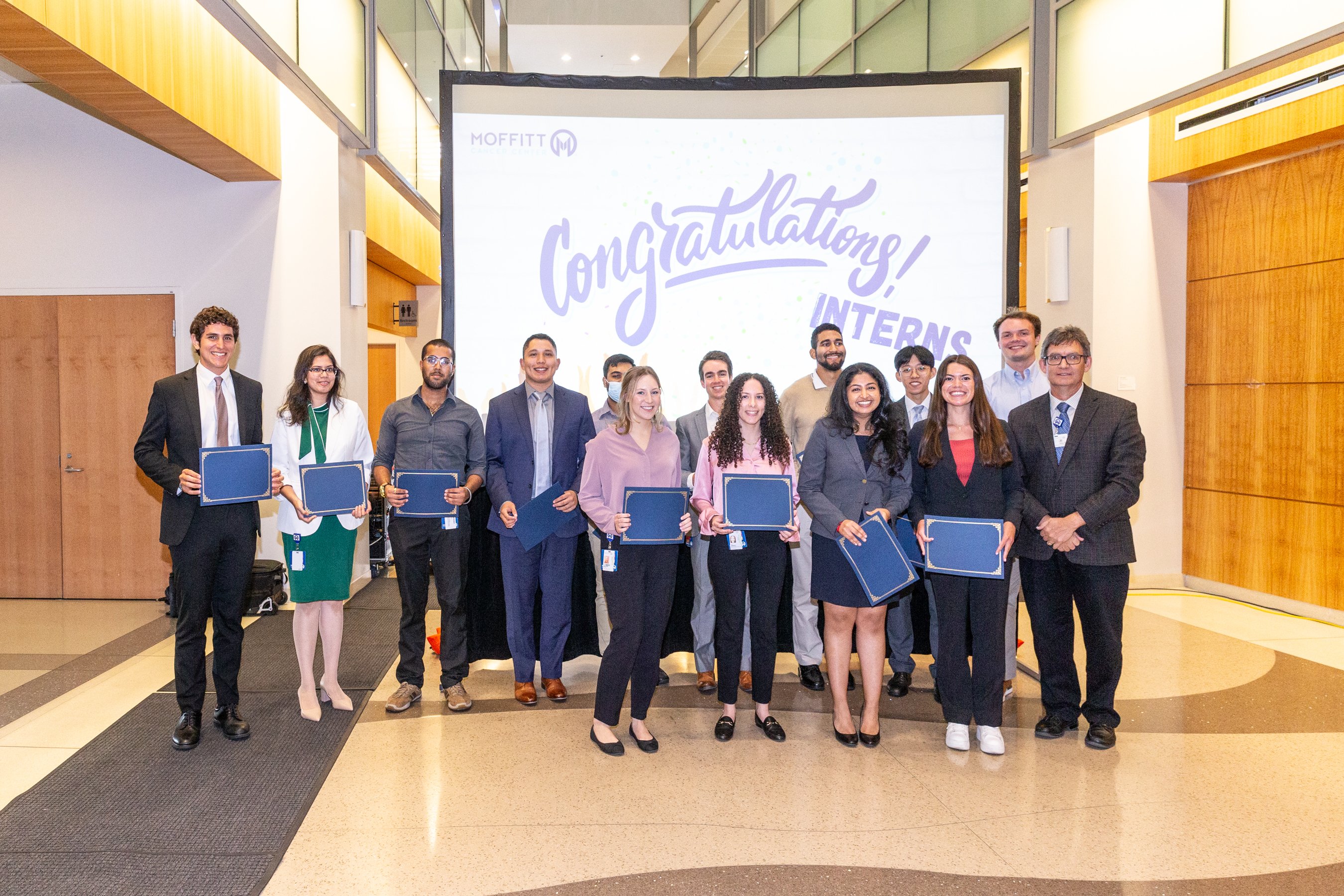
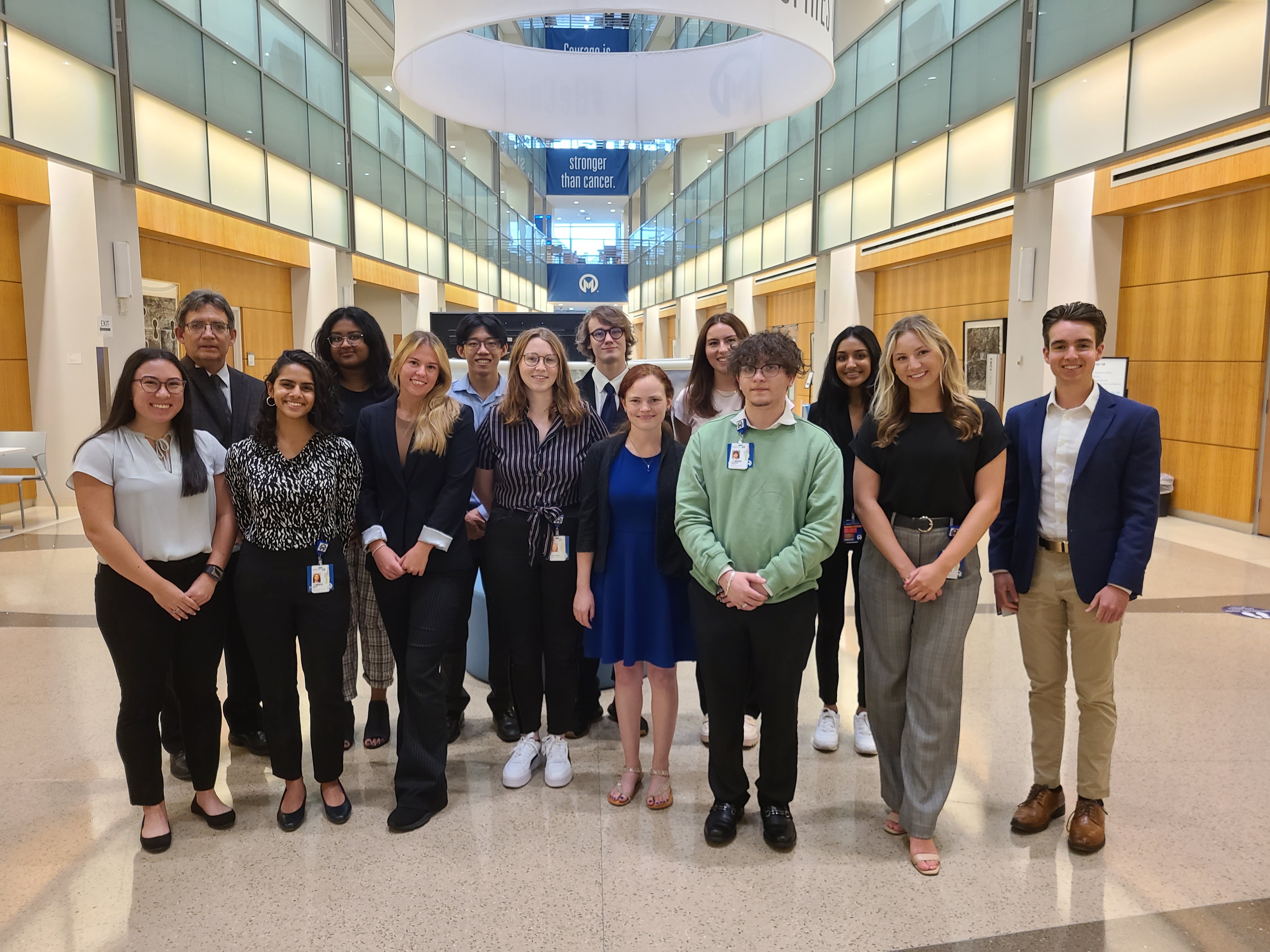
SPARK, the Summer Program for the Advancement of Research Knowledge, is a donor-funded internship program available to undergraduates interested in participating in cancer research at the H. Lee Moffitt Cancer Center and Research Institute located in Tampa, FL.
Please note: the SPARK application will be available from November 9, 2026, to January 6, 2027.
For more information, browse the tabs below, explore the application, or email the SPARK team with specific questions at SPARK@Moffitt.org.
-
How SPARK Works
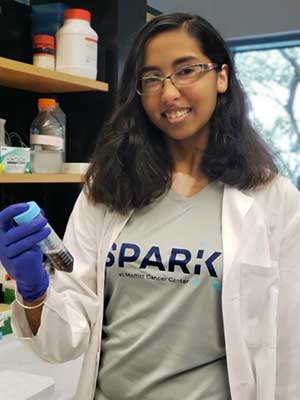
SPARK provides a research experience unlike any other—SPARK trainees are immersed in a project in the lab of some of the nation's leading cancer researchers. Two program start dates are offered to accommodate every accepted intern.
Applicants should note that participation represents a 10-week commitment. Accepted trainees are expected to train 40 hours per week for 10 weeks on a research-based project while attending programming. Due to the intensity of the program, applicants are prohibited from taking summer classes or maintaining employment. Given the time-limited and intensive nature of the SPARK program, vacations, breaks and significant outside commitments are not permitted. Please plan to be present throughout the 10-week, full-time program.
Please note that the SPARK program does not provide housing or housing allowance for interns. Students are responsible for securing their own housing and transportation.
Students will have the opportunity to join labs in diverse fields, including but not limited to:
BioEngineering
Biostatistics and Bioinformatics
Cancer Epidemiology
Drug Discovery
Health Outcomes and Behavior
Immunology
Integrated Mathematical Oncology
Machine Learning
Metabolism and Physiology
Molecular Oncology
Tumor Microenvironment and MetastasisApplicants are encouraged to outline their research interests or provide insight to potential mentors in their application. The committee will use that information to match accepted interns with a faculty mentor, space permitting.
Per Moffitt Cancer Center policy, all SPARK interns will be expected to complete the clearance process with Human Resources (HR), which includes a drug screen, background check, vaccination records and more. The center covers the cost of the drug screen and background check. A positive or inconclusive drug test will result in a dismissal from the program. A full list of the required documentation will be provided to each intern by HR.
SPARK interns will receive a $6,000 taxable stipend to cover their personal expenses.
Given the time-limited and intensive nature of the SPARK program, vacations, breaks and significant outside commitments are not permitted. Please plan to be present throughout the 10-week, full-time program.
Scientific Communication Course
Nervous about presenting scientific information in front of a crowd? SPARK has you covered.
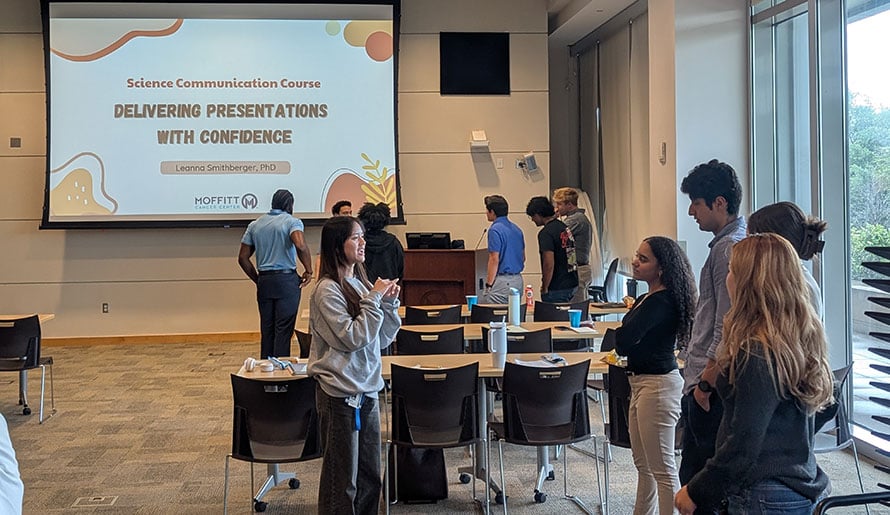
Over the course of the summer, SPARK interns attend a weekly scientific communication course that not only teaches interns how to build scientific presentations, but also how to deliver them. The course teaches interns how to best visually present their research, effectively deliver their main points to the audience, manage their anxiety and so much more. An added benefit is that through repeated practice, interns gain confidence in their material and delivery.
Since our interns come from many different backgrounds and complete research in various fields, observing these presentations by fellow interns will increases their knowledge on other cancer research areas.
Research Day
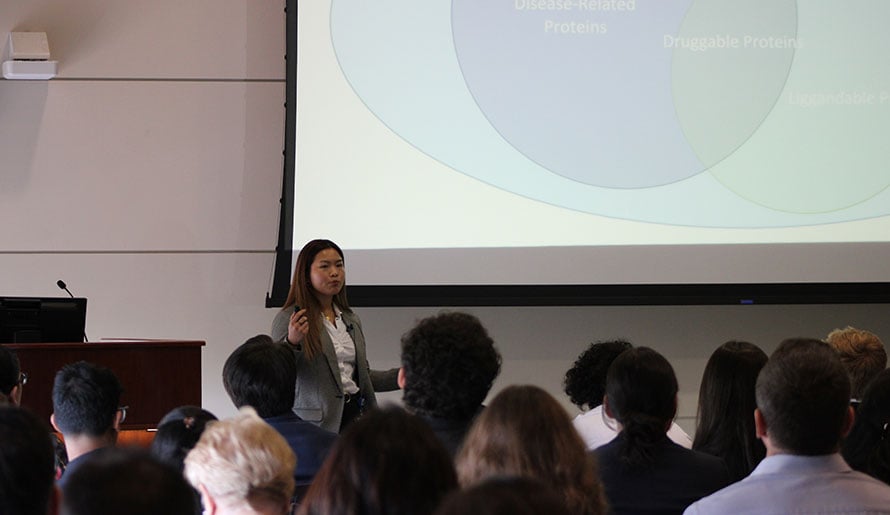
The culmination of the internship takes place at the annual Undergraduate Research Day, where interns present their summer research to an audience of their peers, funding organization representatives, mentors, friends and family.
Each intern is given five minutes to deliver a PowerPoint presentation to the audience. This is an opportunity for each intern to showcase everything they have achieved and learned during their time at the cancer center. It also allows each intern to gain valuable public speaking experience, which they may report on future resumes.
Upon conclusion of all the presentations, Moffitt hosts a dinner reception to celebrate the intern's achievements.
-
How to Apply
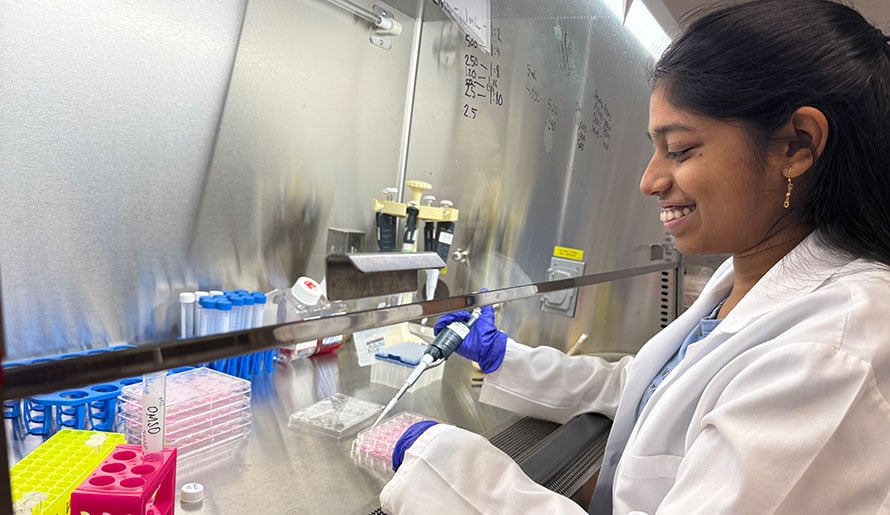
Fill out an electronic application.
The completed application packet will contain:
1. A completed application submitted by the deadline.
2. Letter(s) of recommendation: At least one letter (up to three) of recommendation from a person with whom you share an academic or professional relationship. Letters of recommendation from family members or close friends are not permitted. Applicants will provide the email address of their letter authors in the application. Applicants are responsible for ensuring their letters are received before the deadline. Admission decisions will not be discussed with parents or other family members.
3. Academic transcripts: SPARK accepts unofficial transcripts directly uploaded into their application.
Applicants who have not yet completed a full year in their bachelor's program must also provide a copy of their high school transcripts. This includes first-year students who participated in dual enrollment courses while in high school. Applicants who have completed at least a year of a bachelor's program only need to have their undergraduate transcripts submitted.
Electronic copies of your transcripts are preferred, as mailed transcripts could experience delays in our campus mail system and potentially put your application in jeopardy. Electronic transcripts should be sent to SPARK@moffitt.org if they cannot be directly uploaded into your application.
Attn: SPARK Application Materials/Research Education & Training (RET)
13131 USF Magnolia Drive, MRC 4E Mailstop
Tampa FL, 33612Only accepted interns will be asked to submit a copy of their official transcripts to the program by their university or college.
Partially completed applications or applications with missing supporting materials will not be sent to the selection committee for review. Applicants can reach out to SPARK@moffitt.org at any time before the deadline to confirm their applications are complete.
The selection of candidates will be based on aptitude, interest in research demonstrated through relevant experiences, application essay content, letter(s) of recommendation and academic performance.
Due to the volume of applications, it is not possible to provide feedback to those individuals who are not selected. Admission decisions will not be discussed with parents or other family members.
-
Eligibility
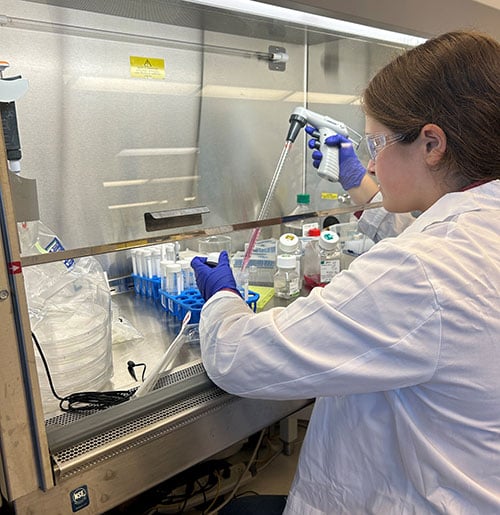
In order to qualify for SPARK, applicants must be:
- At least 18 years of age and a U.S. citizen or permanent resident. International students with F-type visas are not eligible. We recommend they pursue other volunteer opportunities at Moffitt.
- Currently enrolled in an undergraduate degree program. College graduates with a bachelor’s degree or above, are not eligible.
Students do not need to have a specific major to apply, but most of the successful applicants come from majors in STEM fields (science, technology, engineering and mathematics).
There is no minimum GPA to apply, however, our program is extremely competitive. Most have a minimum of a "B" average, but it is not required to apply.
SPARK program does not arrange housing or provide a housing allowance for the selected participants. For this reason, most of our successful applicants are local. You do not have to indicate the local address at the time of the application if you are still in the process of arranging it, but it must be provided in the case of acceptance.
Timeline for the 2027 cycle
Application opens: November 9, 2026
Application deadline: January 6, 2027
Applicants are notified of their program decision in March 2027. -
Frequently Asked Questions
How long does the program run?
The program runs for 10 weeks during the summer, from May to August. SPARK offers two start dates (late May and early June) to accommodate students from different universities across the country. Because the program expects a commitment of 40 hours per week, summer classes or employment are prohibited. Given the time-limited and intensive nature of the SPARK program, vacations, breaks and significant outside commitments are not permitted. Please plan to be present throughout the 10-week, full-time program.
Is there a stipend?
Yes. The stipend totals $6,000 and is distributed in two parts. The first half is distributed in July and the second is disbursed upon conclusion of the program in August.
Is there a dress code?
Business casual or research laboratory standard when applicable. We are committed to fostering a positive image appropriate for a healthcare and research institute environment, conveying confidence and respect for the center, and maintaining the health and safety of patients, visitors, faculty and staff. All employees and members of the cancer center will dress in a manner that is appropriate for their position and type of responsibilities.
Does the SPARK program assign mentors?
Yes. The committee reviews each student’s application for their interests and tries to match them as best we can. Placement with the applicants’ specified mentor choice is not guaranteed. Therefore, it is important that each applicant outlines their research interests clearly in the application. Mentors are assigned once each intern accepts their spot.
Do interns have to undergo safety training?
Interns training in a wet lab setting are required to complete a research wet lab orientation. Interns who will be training only in a dry lab setting are exempt from this training.
How involved does the intern get with the lab?
Interns are expected to attend scheduled lab meetings. In addition, interns are eligible to attend any campus-wide event or seminar, as long as it does not interfere with their research responsibilities. The Office of Research Education and Training also puts on social and networking events for the interns to get to know the other undergraduate trainees, graduate students and postdoctoral fellows who are also training at the cancer center.
What type of training will I complete?
SPARK interns come from many different backgrounds and are placed in a wide variety of lab types, so the amount and type of training will vary. Every intern will have the opportunity to gain familiarity with standard methodologies and research techniques in a safe lab environment. They will learn about available core resources necessary for their individual projects. This can include but is not limited to the medical library; flow cytometry; molecular biology pathology and molecular imaging; functional genomics; and biostatistics.
What will my summer as a SPARK intern look like?
All interns will acquire their project data through experimentation, computation, surveys, or other means and learn to document them in an appropriate format. Students will review and discuss the implications of their data with their mentors, draw conclusions and make new plans for further experimentation.
SPARK aims to teach interns to become effective student researchers and utilize these skills to progress in their future careers. Additionally, interns will participate in the Scientific Communication Course, which will enhance their professional and social development (See How SPARK Works tab). Upon conclusion of the program, interns will present their summer research at our annual Undergraduate Research Day to an audience of their peers, lab team and external guests.
Office of Undergraduate and Visiting Scholar Affairs