
From Bench to Strategy: Dr. Joseph Combs’ Journey Beyond the Lab
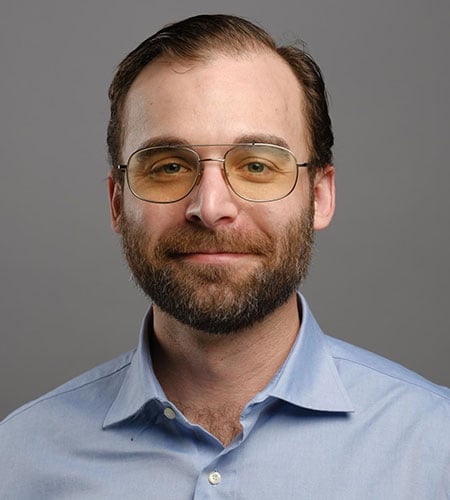 In October 2018, Dr. Joseph Combs began his postdoctoral fellowship at Moffitt Cancer Center in Dr. Gina DeNicola’s lab, diving deep into the complexities of cysteine metabolism and the transsulfuration pathway in tumor and normal tissues. His time at Moffitt was marked by curiosity, collaboration, and a commitment to understanding the “why” behind the science.
Today, Dr. Combs has transitioned from hands-on research to a dynamic role in scientific consulting, where he focuses on project and program management. His work bridges the gap between scientific innovation and operational execution, connecting technical experts with business teams to bring ideas to life. From vivarium design to preclinical workflows leading up to IND submissions, he plays a pivotal role in shaping strategies that move discoveries forward. While I’m no longer in the lab, Dr. Combs stays deeply involved in scientific strategy and innovation.
Reflecting on his journey, Dr. Combs credits his Moffitt experience for teaching him how to manage complex projects and to communicate across disciplines. He shared, “learning to translate technical findings for broader audiences and understanding how research connects to the bigger picture were key skills that helped me pivot into this role.”
What does he enjoy most about his current position? Variety. “Every project brings new challenges and new people to collaborate with. It’s rewarding to see scientific ideas evolve into real-world programs or partnerships.” The biggest challenge? Balancing scientific curiosity with practical constraints like budgets and timelines.
One of his proudest accomplishments has been helping his organization build and prototype a preclinical drug development program from the ground up. “Seeing it come to life and knowing I played a key role in shaping something foundational was incredibly rewarding.”
Dr. Combs’ advice for current trainees:
“Seek out leadership opportunities, stay curious, and, most importantly, build genuine relationships. Be open to new directions and don’t let your area of expertise hold you back from exploring what interests you. The connections I made outside my main research focus opened more doors than any single experimental skill ever could, and they’ve made my career a lot more fulfilling along the way.”
Lastly, Dr. Combs says, “Please feel free to connect with me on LinkedIn or drop me a line. I’m always happy to meet fellow scientists and to pay forward the support and mentorship that others generously offered or continue to offer me.”
Q&A with Dr. Combs
When did you start at Moffitt, what lab were you in, and what project/s were you working on?
I started my postdoc at Moffitt in October 2018 in Dr. Gina DeNicola’s lab. I worked on several projects, but my focus was on studying cysteine metabolism and the transsulfuration pathway in both tumor and normal tissues.
What are you doing now and what is your current research focus (if currently in research)?
I’ve transitioned from bench research into scientific consulting, focusing on project and program management. My work centers on connecting scientific and technical experts with business and operational teams. I help clients with everything from vivarium design to managing their preclinical workflows leading up to IND submissions. While I’m no longer in the lab, I stay deeply involved in scientific strategy and innovation.
What were the key things you did while at Moffitt that enabled you to land in your current position?
My time at Moffitt taught me how to manage complex, collaborative projects and communicate effectively across different teams. Working in Dr. DeNicola’s lab helped me learn to focus on the “why” behind the science, improve my time management, and translate technical findings for broader audiences. Those skills, combined with a solid understanding of how research connects to the bigger picture, were key in moving into roles that bridge science, management, and business development.
How do you continue learning or staying current in your field?
I stay current by keeping up with developments in biomedical research and biotech/pharma. I read business journals, attend webinars and conferences when I can, and stay in touch with colleagues from both academia and industry. I also try to learn from each new project, whether that’s exposure to regulatory processes, market analysis, or new technologies.
What do you really enjoy about your new position? What challenges you?
What I enjoy most is the variety. Every project brings new challenges and new people to collaborate with. It’s rewarding to see scientific ideas evolve into real-world programs or partnerships.
The biggest challenge is balancing scientific curiosity with practical constraints like budgets and timelines. For biotechs, it’s usually better to go with a tried-and-true, cost-effective experiment rather than the exciting new technique that generates tons of data but might not move the project forward efficiently. That restraint can be tough for someone with a research background, but it’s an important mindset shift.
What’s one professional accomplishment you’re especially proud of? Was there a moment when you realized you were on the right path?
I’m especially proud of helping my organization build its preclinical drug development program from scratch and then prototyping it. It was a huge effort that involved designing the framework, aligning stakeholders, and taking an idea from concept to execution. Seeing it come to life and knowing I played a key role in shaping something foundational was incredibly rewarding.
As for being on the “right” path, I don’t think there’s just one. For me, it’s been about making the most of each step, learning from every experience, and being willing to pivot when something new sparks my interest. Growth often comes from following your curiosity, not from sticking rigidly to a single plan.
Any words of advice for current trainees?
Be open to where your skills can take you. Scientific training gives you so much more than technical expertise. It builds critical thinking, problem-solving, and communication skills that are valuable in countless settings. Learn to recognize those strengths and apply them broadly.
Seek out leadership opportunities, stay curious, and, most importantly, build genuine relationships. My background is in virology, metabolism, and oncology, but since my postdoc, I’ve had the chance to work in comparative medicine, neuroscience, and rare diseases. Be open to new directions and don’t let your area of expertise hold you back from exploring what interests you. The connections I made outside my main research focus opened more doors than any single experimental skill ever could and they’ve made my career a lot more fulfilling along the way.