
Moffitt PhD Training Inspires Dr. Fan He’s Cancer Research Career
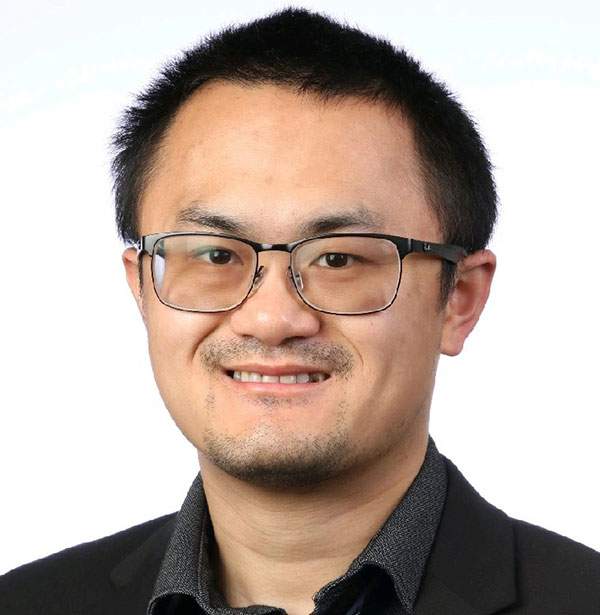
Dr. Fan He began his journey at Moffitt Cancer Center in 2015 as a PhD student in the Cancer PhD Program. Training in the laboratory of Dr. Jiandong Chen, Dr. He focused on uncovering the molecular mechanisms that regulate p53, one of the body's most important tumor suppressor proteins. His dissertation research examined how intramolecular interactions within p53 influence its DNA-binding activity and tumor suppressor function, laying the groundwork for a career dedicated to understanding the biological mechanisms that drive cancer.
Today, Dr. He serves as an instructor in the Division of Hematology at Washington University School of Medicine in St. Louis, where he leads research focused on the role of inflammation in myeloid malignancies, particularly myeloproliferative neoplasms (MPNs). His laboratory investigates how Galectin-1–mediated immune dysregulation contributes to disease development and progression while also exploring innovative therapeutic strategies aimed at targeting inflammatory pathways in these disorders.
Reflecting on his time at Moffitt, Dr. He credits his graduate training with shaping the scientific mindset that continues to guide his work today. "My PhD training in Dr. Jiandong Chen’s lab taught me the rigor of scientific research and how to logically approach and answer important biological questions."
Through his studies of p53, Dr. He learned how to formulate hypotheses, design mechanistic experiments and follow scientific evidence to meaningful conclusions. Dr. He also developed expertise in biochemistry and molecular biology, skills that remain fundamental to his current research in hematologic malignancies.
Dr. He has developed a practical approach to staying informed. Rather than attempting to read every newly published paper, he focuses on the work being conducted by leaders in his field and actively participates in major scientific conferences. Dr. He said, "I try to follow the leading scientists in my field and pay attention to the questions they are working on."
Dr. He emphasizes that relationships built through mentors, collaborators and scientific meetings are equally important for identifying emerging trends and discovering new opportunities for collaboration.
When asked what one of his most rewarding aspects of his current role was, he stated, "What I enjoy most about my new position is the increased freedom to shape my own research direction and manage my time. During PhD training, I was more like a trainee learning to walk with close guidance; now, I am expected to lead my own path.”