
A Better Day for Brachytherapy
Key Takeaways:
- Moffitt Cancer Center’s new brachytherapy suite lets patients complete specialized radiation treatment in less time with fewer complications
- Patient Jeff Stulz experienced the procedure two ways — the second time in the new suite
- The Richard Gonzmart Brachytherapy Suite expands access to precision brachytherapy for prostate, gynecologic and gastrointestinal cancers
By late morning, Jeff Stulz is awake and talking with his wife after finishing his second prostate cancer treatment. That alone was noticeable.
Weeks earlier, the same procedure kept him in the hospital for nearly 14 hours. He drifted in and out of anesthesia while his wife, Kellie, waited for updates to determine where he would be taken next.
This time around, everything happened in one place.
Jeff was one of the first patients treated in Moffitt Cancer Center’s new Richard Gonzmart Brachytherapy Suite. The radiation-shielded operating room allows imaging, treatment planning and precision radiation delivery without moving the patient.
“I went to sleep once and woke up once,” Jeff said. “That was it.”
He was admitted around 5:30 a.m. By noon, he was discharged.
Few patients undergo the same procedure in two very different ways. Jeff did. The contrast changed how he and Kellie not only saw the procedure but also their experience in cancer care.
“It felt like a true outpatient procedure,” Kellie said. “That first time felt like we went through a battle.”
A Different Kind of Planning
Jeff keeps a small brown book for a bucket-list project. The goal is to visit all 30 Major League Baseball stadiums and collect a stamp in the book from each team store. He and Kellie have checked off eight so far.
“We plan a vacation around which stadium we want to visit,” Jeff said with a smile. “It’s our thing.”

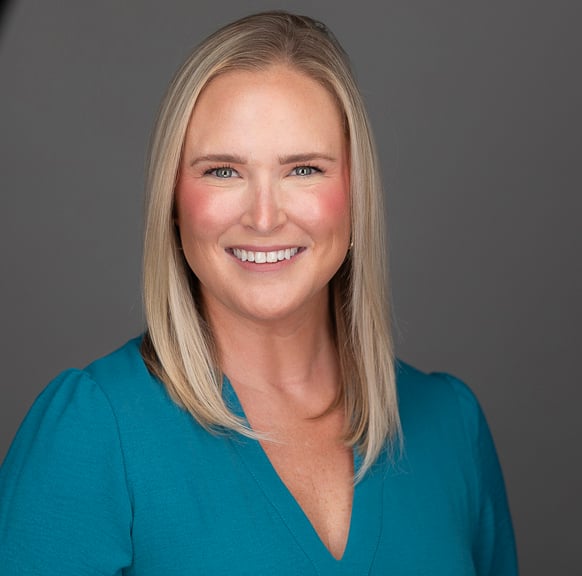
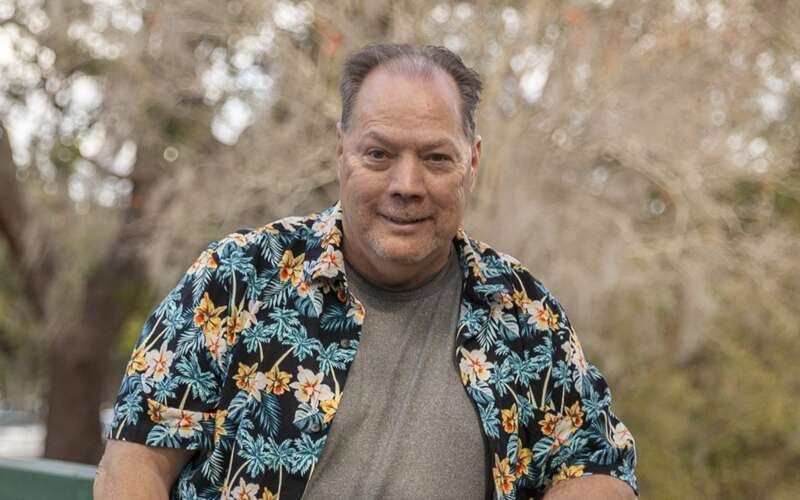
Jeff and his wife, Kellie, have a bucket-list goal of visiting all 30 Major League Baseball stadiums and collecting a stamp from each team store. When he was diagnosed with prostate cancer, they wanted a treatment plan that got him back on track quickly.
Before cancer, that kind of planning defined their lives. Jeff ran his own recruiting business from home in DeBary, a suburb of Orlando. The couple traveled often, and he had begun to seriously think about retirement.
“Everything was great,” Jeff said. “I hate to say boring, but we were just doing our thing — planning on retiring, nothing special.”
That routine shifted in early 2024 at age 58 when Jeff went from collecting baseball stats to tracking medical test results.
He went to his family doctor feeling tired and asked for a testosterone test. That visit led to a referral to a urologist and a prostate-specific antigen (PSA) test, which measures a protein made by the prostate. His result fell within the normal range, but his provider recommended further testing because of his age.
An MRI followed. The results revealed a lesion. A biopsy determined Jeff had low-grade prostate cancer, known as Gleason 6. It is the slowest-growing form of the disease, and many men choose to monitor it rather than treat it.
Jeff spent more than a year on active surveillance, returning regularly for blood tests and imaging. But then in March 2025, his PSA nearly doubled.
Further testing showed the lesion had grown, and a second area raised new concern. A follow-up biopsy confirmed the progression. It was still early, but something Jeff no longer felt comfortable just watching.
“That was my trigger,” he said. “We went into full research mode.”
Choosing a Path
The Stulzes began comparing treatment paths, including surgery, proton therapy and other different forms of radiation. They wanted to focus on three things: cancer control, long-term side effects and how each approach would fit into daily life.
Brachytherapy stood out. The treatment delivers radiation directly into the prostate, limiting exposure to surrounding tissue and requiring fewer sessions than traditional radiation.
Brachytherapy treats cancer from the inside out. Instead of directing radiation from outside the body over many sessions, doctors place radiation sources directly into or near the tumor.
It is most often used for cancers in areas that are accessible by needle or catheter, including prostate, gynecologic and certain skin cancers.

Daniel Fernandez, MD, PhD, says that the new brachytherapy suite both improves the patient experience and enables physicians to be more precise in the treatment.
“Brachytherapy was actually the first type of radiation therapy,” said Daniel Fernandez, MD, PhD, section head of brachytherapy at Moffitt. “Some of the earliest positive effects of radiation on cancer were seen by putting radioactive material near tumors.”
For prostate cancer, brachytherapy is delivered in two main ways. Low-dose-rate brachytherapy uses radioactive seeds that are implanted permanently and release radiation slowly over weeks or months. High-dose-rate brachytherapy uses temporary implants to deliver radiation over a short period of time, often 10 to 20 minutes per treatment.
High-dose-rate brachytherapy can be completed under anesthesia in one or two sessions rather than weeks of daily appointments as is often the case with more common external beam radiotherapy treatments. For many patients, like Jeff, the shorter timeline is a major advantage.
“We wanted to get it done and get back to baseline,” Jeff said.
But the procedure itself requires careful coordination of imaging, treatment planning and radiation delivery.
“That coordination is where the new suite really changes everything,” Fernandez said.
The Stulzes researched cancer centers across Florida when considering treatment. They met with multiple physicians and focused on those who specialized in prostate brachytherapy.
Moffitt rose to the top of their list.
“We probably considered a half-dozen options,” Jeff said. “But we left Moffitt feeling very confident that we were going to make the right decision.”
That confidence was boosted when they met Fernandez.
“Patients often come in with a lot of information,” Fernandez said. “Our job is to sort through that and help them understand what really applies to their situation.”
Why Delivery Matters
Traditionally, the steps involved in high-dose-rate brachytherapy are performed at multiple locations within a hospital. Patients may move between imaging rooms, operating areas and radiation treatment spaces during a single procedure. Often, they are taken in and out of anesthesia multiple times.
“That would turn into a 10-to-12-hour day here for some patients,” Fernandez said. “Much of that day was spent with a lot of anxiety for patients trying to hold still in an uncomfortable position, worried that if they move too much, they could affect the quality of their treatment.”
At Moffitt, the newly opened brachytherapy suite was designed to change that.
The radiation-shielded room brings advanced ultrasound, diagnostic quality CT imaging and high-dose-rate brachytherapy treatment planning and delivery technology into one space. Doctors can plan and deliver radiation without moving the patient or waking them up between steps.
“From a patient’s perspective, the treatment is vastly different where they go to sleep and 3½ to four hours later, they wake up, the needles have already been removed, the treatment has been delivered,” he said. “From our perspective, it allows us to be more precise and consistent.”
The suite also removes many of the variables that once complicated the treatment. Previously, moving patients between rooms sometimes caused implanted needles to shift, requiring additional adjustments.
“With this setup, we eliminate a lot of that uncertainty,” Fernandez said. “That benefits both the patient experience and the quality of care.”
A Tale of Two Treatments
Jeff’s care coincided with the opening of the new suite. He underwent his first high-dose-rate brachytherapy procedure just before the suite opened in October 2025. Weeks later, he returned for his second treatment in the new space.
He said the difference was significant.
The first procedure was completed over the course of a long and fragmented day. Imaging, planning and radiation took place in separate areas of the hospital, and Jeff was moved several times. Each transition meant waking him up and putting him back under anesthesia.
Jeff also had a reaction to the anesthesia on that first day. He woke up nauseated, and that sickness extended his stay even longer.
The second time around was a different experience.
In the new suite, Jeff stayed in one place. He underwent anesthesia once and remained asleep while imaging, planning and radiation were completed. When he woke up, the procedure was over.
He spent about six hours at Moffitt. There was no nausea. He ate later that day and joked with hospital staff.
“It was easier on him,” Kellie said. “And it was easier on us.”
Better Experience, Broader Impact
While Jeff’s story highlights the patient experience, Fernandez says the new suite’s impact extends beyond it.
“This is not just about convenience,” he said. “It’s about expanding who we can help.”
The suite is named after Richard Gonzmart, fourth-generation owner of the Columbia Restaurant, Moffitt Foundation board member and a prostate cancer survivor who was treated with brachytherapy. He contributed $1 million toward the project located on Moffitt’s Magnolia campus.
With the expansion, the suite also increases the cancer center’s treatment capacity. The team can treat more patients and expand to other cancer sites, including certain gynecologic, gastrointestinal and rectal cancers.
“Now we can treat more patients, including those with different anesthesia needs or medical conditions,” Fernandez explained. “There are only a handful of centers in the country that are up to these standards.”
For prostate cancer patients like Jeff, that access can make a difference.
In earlier-stage disease, brachytherapy offers cancer control comparable to traditional external beam radiation but often with fewer long-term side effects, particularly when it comes to sexual function.
In higher-risk cases, combining brachytherapy with external beam radiation can significantly improve cure rates.
“For the right patients, adding brachytherapy can increase the chance of being cured nine years after treatment by about 20%,” Fernandez said. “That is a major advantage.”
The suite is part of a broader effort at Moffitt to improve how radiation is delivered across different cancers. That work includes targeted radiosurgery, radiotherapy planning that can be adapted to each patient and the expansion of proton therapy.
Life After Treatment
Jeff now has a simple follow-up plan that consists of regular PSA tests and check-ins with his care team. When treatment ended, the shift was abrupt. Months of appointments, decisions and research stopped.
“It’s 100 miles an hour, and then it’s over,” Jeff said. “There’s nothing else to do.”
For care teams, that quiet is a sign of success.
“Years after treatment, our goal is that patients are cured and living their life normally, not constantly thinking about their cancer,” Fernandez said.
For Jeff, that life looks familiar again. The small brown book for baseball trips is back on the counter, ready to be filled. Yankee Stadium is next.
“That’s a celebration trip,” Jeff said.
Before cancer, the Stulz family enjoyed traveling. After cancer, it’s something they don’t postpone.
“It’s kind of a wakeup call when something like this happens,” Kellie said. “So, you stop waiting.”
The new brachytherapy suite is more than just the technical jargon to Jeff. What stays with him is much simpler. One long day of treatment was reduced to just hours, and cancer no longer sets the pace.
“It let me get back to living,” Jeff said. “And that’s what I wanted all along.”