

Building Hope Through Early Therapeutics
Key Takeaways:
-
Moffitt Cancer Center has launched a new Early Therapeutics Department led by medical oncologist Ignacio Garrido-Laguna
-
The department will expand access to early phase clinical trials, giving patients with advanced cancers access to promising treatments
-
Its long-term vision includes developing breakthrough therapies, advancing research into treatment resistance and training the next generation of clinical trial leaders
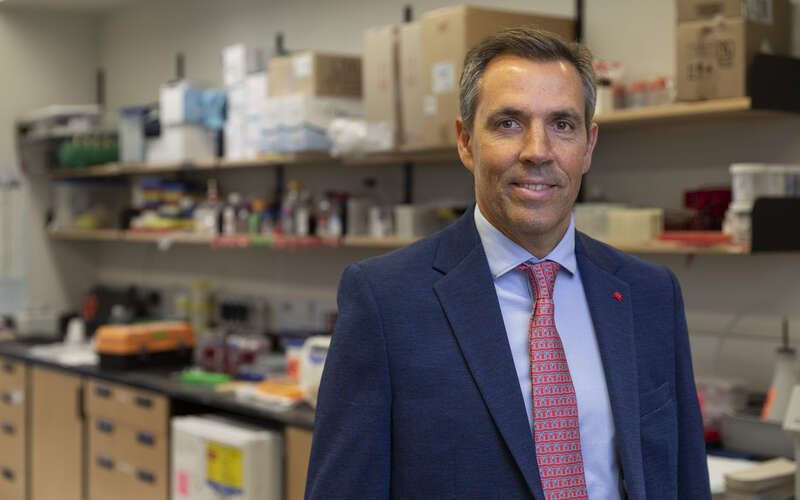
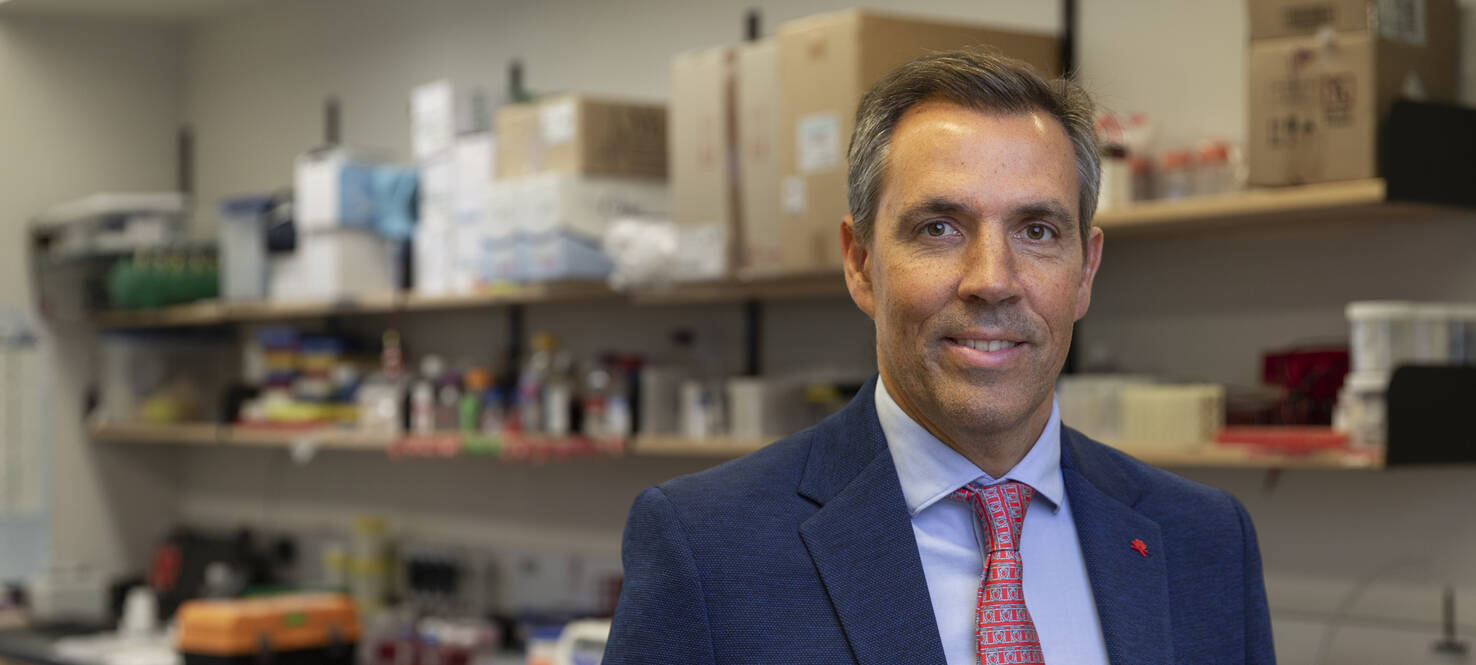
The blockbuster cancer treatments of tomorrow will all get their start in the early phase clinical trials of today. To get these groundbreaking trials up and running, Moffitt Cancer Center has launched its Early Therapeutics Department, a major step in expanding access to innovative clinical trials and accelerating the development of new cancer treatments. Leading the effort is internationally recognized medical oncologist Ignacio Garrido-Laguna, MD, PhD, whose career has focused on bringing promising therapies to patients with advanced cancers.
The new department will use early phase clinical trials as engines for discovery, connecting patients with novel treatments while partnering with scientists across Moffitt to better understand why therapies succeed, why they fail and how they can be improved. Garrido-Laguna, who joined Moffitt in February 2026, lays out his vision for the department, why he came to Moffitt and what he hopes it will mean for patients around the world.
What inspired you to join Moffitt and lead its new Early Therapeutics Department?
Vision. That’s what attracted me most. Moffitt has leadership that believes we can fundamentally change how cancer is treated. We’re not here simply to extend life by a few months. We’re here because we believe we can develop better therapies that will ultimately change outcomes for patients, and we believe we can work together to eradicate cancer in the future.
Moffitt also has an outstanding international reputation. Even when I was training in Spain more than 20 years ago, Moffitt was one of the cancer centers everyone knew. That reputation helps us attract patients, researchers and industry partners, all of which are essential for bringing new treatments to patients faster.
What is early therapeutics?
At its core, early therapeutics is about creating options when patients have run out of standard treatments.
The most important thing we do as a cancer center is care for patients with advanced cancer. When someone is referred to Moffitt, our goal is to ensure we still have something meaningful to offer them. Early phase clinical trials often provide access to promising therapies years before they become widely available.
These studies also allow us to understand how new drugs work, identify why cancers develop resistance and design better combinations that can help future patients. Ultimately, our goal isn’t simply to help patients live longer. Our goal is to cure cancer.
Why is creating a dedicated department so important now?
A dedicated department allows us to build expertise in drug development, strengthen partnerships with pharmaceutical companies and integrate laboratory science with patient care.
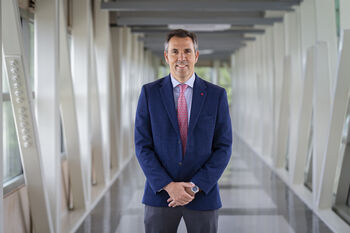
Ignacio Garrido-Laguna, MD, PhD, leads Moffitt's new Early Therapeutics Department, a major step in accelerating the development of new cancer treatments.
When we’re among the first centers testing a new therapy, our physicians gain valuable experience that helps position Moffitt to lead larger national and international studies. At the same time, our laboratory scientists can study why those therapies succeed or fail and use that knowledge to develop the next generation of treatments. Everything comes back to improving care for patients.
What is your vision for the department over the next five to 10 years?
I want Moffitt to become internationally recognized as the destination of choice for patients and innovators in the field of oncology.
That means building one of the country’s premier early therapeutics programs, creating a fellowship to train the next generation of physician-scientists and developing therapies that make a lasting impact on patients around the world.
Success means being able to look back years from now and say Moffitt played a meaningful role in developing treatments that changed how specific cancers are treated.
Our shared vision is that Moffitt’s Early Therapeutics Department will be the chosen destination for patients seeking access to the most promising novel cancer therapies, as well as for pharmaceutical and biotechnology sponsors seeking a partner with deep expertise across malignancies and seamless translation from preclinical science to early phase clinical development. We will also secure this legacy by training the next generation of Phase 1 investigators through an international fellowship program, extending Moffitt’s scientific footprint and influence to institutions around the world.
By the end of this decade, our goal is simple. When a patient or sponsor asks: “Where in the world should I go?” Moffitt should be the first name mentioned.
What advances in cancer research are you most excited about today?
Several areas stand out as key priorities for us. Moffitt has established itself as a leader in radioligand therapy, and with the recent opening of Speros, we are positioned to become a true development and delivery hub for this therapeutic class, not simply administering approved agents, but running the early phase trials that define dosimetry, sequencing with systemic therapy and combination strategies. This represents a unique opportunity for us to help shape the field.
In parallel, we have led the development of KRAS inhibitors, building, through close collaboration with our scientists here, research platforms designed to deepen our understanding of resistance mechanisms and inform the next generation of rational combination strategies.
How will the new department work with other teams across Moffitt?
Collaboration is essential. We’re partnering closely with disease-specific teams across gastrointestinal, thoracic, breast, melanoma, sarcoma, genitourinary, head and neck, and many other programs to understand what therapies their patients need most. We’ll also work alongside basic scientists to study resistance mechanisms and identify new treatment opportunities.
Technology will also play an important role. We’re implementing tools that can streamline clinical trial operations, improve data accuracy and help patients gain access to studies more efficiently.
You’ve spoken about bringing hope to patients. What does that mean to you personally?
Hope is everything.
Recently, a member of my own family was diagnosed with metastatic lung cancer. That experience reminded me how devastating it is to hear there are no options left.
Every day I receive emails from patients and physicians searching for clinical trials. That’s why we’re building this department. We want patients to know there are people working tirelessly to find new treatment opportunities for them.
Our mission is simple: We’re here to help, and we’re here to bring hope through innovation.
Finally, what would you like patients to know about Moffitt’s new Early Therapeutics Department?
I want patients to know that we’re building something ambitious. Our goal is to develop one of the nation’s leading early therapeutics programs and give patients access to the newest treatments as quickly as possible. We want every patient who comes to Moffitt to know we’re constantly working to create new options, and that hope is at the center of everything we do.
