
Can AI Help Multidisciplinary Teams Make Complex Treatment Decisions?
Key Takeaways:
- Moffitt researchers are developing TIDES, an AI tool designed specifically to capture and summarize fast-moving, complex tumor board discussion
- Accuracy is the priority. Researchers are working to capture key clinical details without adding information that was not discussed or introducing AI “hallucinations”
- The goal is to ease documentation burden while creating a more complete, concise record of patient-specific treatment recommendations. TIDES remains in research and development and is not currently used clinically
Tumor board isn’t your typical medical meeting at Moffitt Cancer Center.
In a single session, surgeons, medical oncologists, radiologists, pathologists and other specialists may discuss multiple complex cancer cases, reviewing everything from scans and pathology to treatment options. The conversations happen quickly, but the recommendations can help shape a patient’s care.
Capturing all that information accurately is another challenge.
Researchers at Moffitt are developing an artificial intelligence tool specifically for that job. TIDES, Tumor board Insight via Discussion, Extraction and Summarization, uses AI to turn complex tumor board discussions into comprehensive, patient-specific summaries.
“Tumor board is something that’s been around for a long time in the management of complex oncological patients,” said Brandon Manley, MD, a surgeon in the Genitourinary Oncology Department. “It’s a very valuable resource that allows patients to have their cases evaluated by multiple experts without requiring the patient to physically go and see every different provider.”
Capturing a Fast-Moving Conversation
The same qualities that make tumor boards valuable also make them difficult to document.
“You tend to have these very productive, but very fast-moving conversations where a lot of people are spitting out a lot of detailed clinical information, obviously providing their opinions, and then discussing those all in real time,” Manley said. “And capturing that information on a human level can be difficult.”
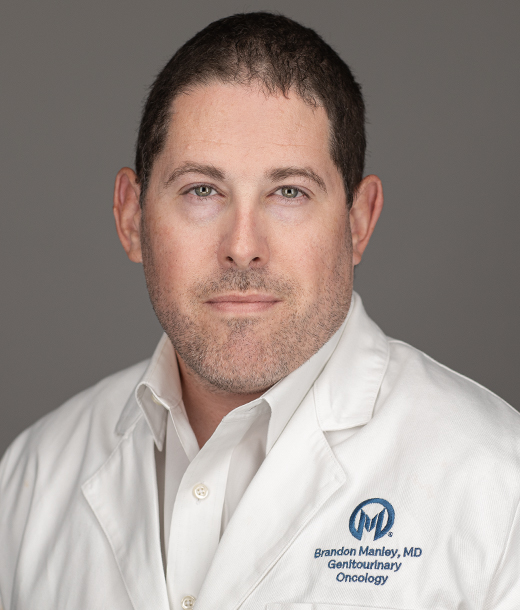
Brandon Manley, MD
Existing transcription and AI tools can capture what was said, but they are not designed to understand the structure of a tumor board. That’s the problem the Moffitt team set out to solve.
Work on TIDES began roughly 2 1/2 years ago with Moffitt’s genitourinary oncology tumor board. The research has since expanded to other tumor boards, including gastrointestinal, thoracic and gynecologic oncology.
TIDES is still a research and development project and is not currently being used clinically. Representatives from participating tumor boards review the summaries and provide feedback, helping to improve the model.
AI Designed for Tumor Board
Thanh Thieu, PhD, a researcher in the Machine Learning Department at Moffitt, says while tumor board is a valuable source of clinical information, it is a difficult setting for AI.
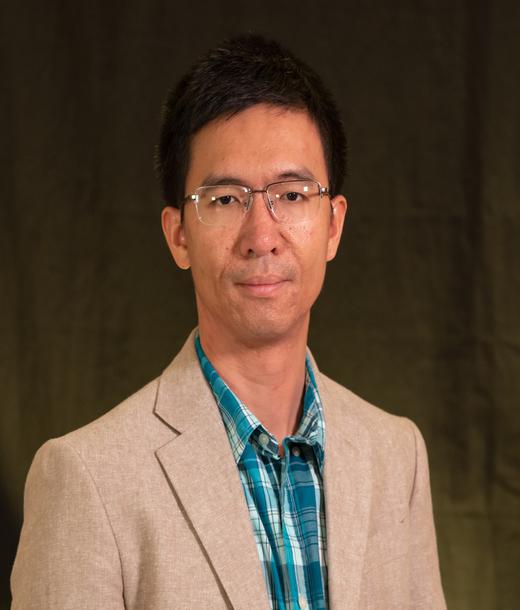
Thanh Thieu, PhD
“Most people don’t realize that tumor board is the moment when the information is more condensed and most valuable and most prevalent to the patient. And surprisingly, there is no current tool to capture that information accurately,” Thieu said.
Rather than using an existing large language model to summarize a transcript, the team is building TIDES specifically for tumor boards. A major focus is making sure the tool captures important details without adding information that was not discussed, a problem with generative AI known as “hallucination.”
“We’re not just taking, in essence, ChatGPT or Gemini or something off the shelf and repurposing it,” Manley said. “We’re really adding a lot of things to meet that clinical threshold, which is much higher than somebody just pulling up the internet and asking an interesting medical question. Because of the seriousness, we need to have extremely high sensitivity and accuracy.”
Researchers have also compared TIDES-generated summaries with those produced manually during tumor boards. Early evaluations have favored TIDES for accuracy, usefulness, comprehensibility, succinctness and internal consistency.
Thieu says it can be difficult to document a fast-moving discussion while also keeping up with the conversation. The goal is not to replace the expertise in the room, but to make it easier to capture the information that comes out of the discussion.
“We want to make sure that all the summary and all the detail that we capture have 100% accuracy because this is a very condensed piece of information and a very high-stakes piece of information,” Thieu said.
What’s Next?
As researchers continue to improve TIDES, feedback from different tumor boards will help the model adapt to the needs of individual specialties.
The team is also exploring how the technology could eventually move beyond the research setting. Members of the TIDES team were selected to participate in the American Urological Association’s Nexus program, where they can receive clinical and business feedback as they consider next steps.
Overall, Manley sees TIDES as a way to reduce the documentation burden on clinicians while creating a more complete record of an important moment in a patient’s care.
“Anything we can do to streamline that process by providing comprehensive, succinct summaries that are available to clinicians in a usable fashion will obviously help with the burnout,” Manley said. “It’ll better characterize the patient’s treatment recommendations in a more comprehensive manner.”
 Medically reviewed by Brandon Manley, MD, Genitourinary Oncology Program, and Thanh Thieu, PhD, Machine Learning Department