FDA Approves Immunotherapy Drug for Muscle-Invasive Bladder Cancer
Key Takeaways:
- Muscle-invasive bladder cancer occurs when cancer spreads into the bladder’s muscle wall and makes up about 25% of bladder cancer cases
- In a study, patients with detectable circulating tumor DNA were randomly assigned to receive either intravenous atezolizumab or a placebo every four weeks for up to one year
- Researchers found important results regarding treatment effectiveness for patients with muscle-invasive bladder cancer
The U.S. Food and Drug Administration has approved adjuvant atezolizumab (Tecentriq) and atezolizumab and hyaluronidase-tqjs (Tecentriq Hybreza) for adults with muscle-invasive bladder cancer after bladder removal surgery.
-
25%
Percentage of bladder cancer cases that are classified as muscle-invasive
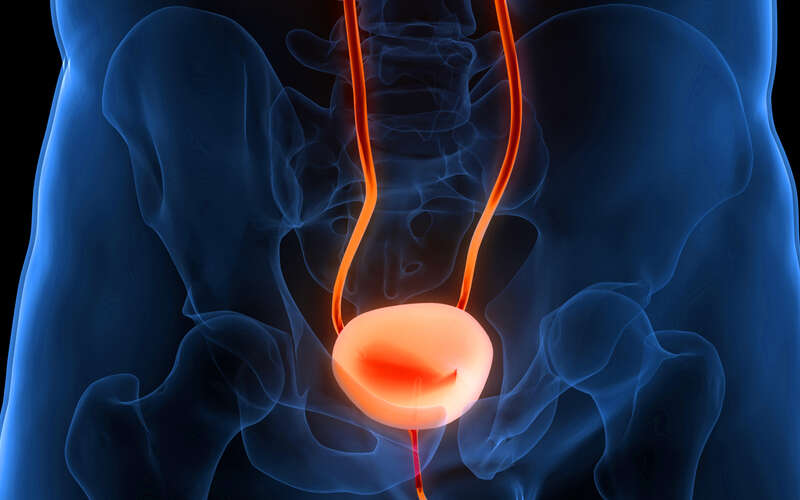
Muscle-invasive bladder cancer occurs when a patient’s cancer penetrates the bladder’s muscle wall, accounting for around 25% of bladder cancer cases.
The approved treatment is specifically for patients who test positive for circulating tumor DNA following surgery to remove the bladder. Circulating tumor DNA is a commonly used biomarker for detecting small amounts of cancer that remain in the body after treatment.
Approval came after the FDA reviewed results from a phase 3 multicenter study with muscle-invasive bladder cancer patients who tested positive for circulating tumor DNA after undergoing bladder removal surgery.
New Approach for High-Risk Patients
In the study, patients with detectable circulating tumor DNA were randomly assigned to receive intravenous atezolizumab or a placebo every four weeks for up to 12 treatment cycles or one year. Results showed that patients treated with adjuvant atezolizumab had a higher disease-free survival rate than those given a placebo.
According to Jon Chatzkel, MD, a genitourinary oncologist at Moffitt Cancer Center, when the study was initially developed, many muscle-invasive bladder cancer patients received chemotherapy before surgery, and the post-surgery treatment plan was determined later.
“This newly approved approach can definitely be considered for some patients with high-risk disease after surgery,” Chatzkel said. “But for patients who are on a regimen that is already combining systemic therapy before and after surgery, they should continue that regimen after surgery.”
Additionally, the FDA approved a diagnostic tool called Signatera CDx to help identify patients with muscle-invasive bladder cancer who may benefit from treatment with atezolizumab or subcutaneous atezolizumab.
“This idea of using biomarker-directed therapy or personalized therapy as a whole is something that we aim for in cancer care,” Chatzkel said. “This is a case where we are seeing an approval based on a biomarker-directed therapy. It’s important to note that with this approval, patients would only start the immunotherapy when minimal residual disease is detected.”