FDA Approves Rusfertide, Offering a New Option for Polycythemia Vera
Key Takeaways:
- Polycythemia vera is a rare blood cancer in which the bone marrow makes too many red blood cells, causing the blood to thicken and raising the risk of clots
- FDA-approved rusfertide is a first-in-class therapy designed to slow red blood cell production and help regulate blood counts
- Clinical trials show rusfertide can help patients maintain safer blood counts and reduce or eliminate the need for frequent phlebotomy
A newly approved drug is giving people with polycythemia vera a way to control their disease without relying so heavily on repeated therapeutic large-volume removal of blood. The Food and Drug Administration has approved rusfertide, known commercially as MIMRYLO, a first-in-class therapy that slows the body’s production of red blood cells and maintains the red blood cell count at a safe level.
The drug is a synthetic version of a natural hormone that regulates iron. Clinical trials have shown it can help keep blood levels in a safer range and reduce the need for frequent phlebotomy, a procedure that removes blood to quickly lower high counts.
-

2
People per 100,000 are diagnosed with polycythemia vera each year in the U.S.
Polycythemia vera is a rare blood cancer that causes the bone marrow to make too many red blood cells, which thickens the blood and raises the risk of clots, strokes and heart attacks. About two people per 100,000 are diagnosed each year in the United States, and most are older adults. While some patients have few symptoms, others experience headaches, debilitating fatigue, inattentiveness, decreased concentration and itching after warm showers.

Andrew Kuykendall, MD
Current treatments focus on controlling blood counts and reducing risk for thrombosis. These include regular phlebotomy, low-dose aspirin and medications such as hydroxyurea, interferon or JAK inhibitors for people who need additional control.
“Management of polycythemia vera can be burdensome for patients. Phlebotomies are often needed repeatedly, and the process can be time consuming and poorly tolerlated,” said Andrew Kuykendall, MD, a medical oncologist in the Malignant Hematology Department who led the clinical trial evaluating rusfertide. “Many patients plan their schedules around these appointments, and some continue to struggle with symptoms even when their counts are controlled. Having a new therapy that can reduce the need for frequent blood removal may make day-to-day life easier for a lot of people and provide increased autonomy.”
‘A Less-Than-Ideal Treatment’
Danielle Sweet, diagnosed with polycythemia vera in 2020, used to get phlebotomies every three to four weeks, leaving her exhausted for days.

Danielle Sweet knows the burden firsthand.
She learned she had the condition through routine blood tests. She wasn’t feeling sick, but her platelet levels had started rising in 2019. Her first diagnosis was essential thrombocythemia, a related disorder that causes the body to make too many platelets. Additional testing later found a JAK2 mutation, a genetic change present in most people with polycythemia vera that can cause the bone marrow to produce blood cells without the usual controls. By December 2020, doctors confirmed that her condition had progressed to polycythemia vera.
Once her treatment began, life quickly started revolving around phlebotomy. Sweet went to Moffitt every three to four weeks to have blood removed. The procedure helped lower her red blood cell count, but it also took a significant toll.
“I’d pass out,” Sweet said. “When I came to, my body was spent.”
She often needed two or three days to recover. Because she could not safely drive after treatment, her husband, mother or daughter had to rearrange their schedules to take her home and help care for her.
“It wasn’t just upending my schedule,” Sweet said. “It was upending my family members’ schedules, too.”
The appointments were difficult to manage alongside her work. Sweet owned a yoga studio and a pet-care business, both of which required energy and physical activity. She had to schedule around treatment days, find coverage and use much of her paid time off.
“It really affected my whole quality of life,” she said.
Finding a Possible Alternative

Sweet loves going on walks with her puppy, Donnie, but at times, phlebotomy treatment made that difficult.
Sweet found out about the rusfertide trial through a Facebook group for people with polycythemia vera. The group gave her a place to compare experiences, ask questions and learn about an option she might not otherwise have known about.
After researching the trial, she brought it up during an appointment with Kuykendall. She said she was ready for a different approach.
“I was not happy with the treatment as it was,” Sweet said. “I knew it was what I had to do to stay healthy, but I was looking for better options.”
Sweet joined the trial in February 2024. For the first six months, she was in the control group and received a placebo. Her symptoms did not disappear, but they were less noticeable, and she came close to needing a phlebotomy as her blood counts rose.
After she began receiving rusfertide, that changed.
“Once I got on the real drug, my symptoms were at a zero,” she said.
A Weekly Shot and a More Normal Routine
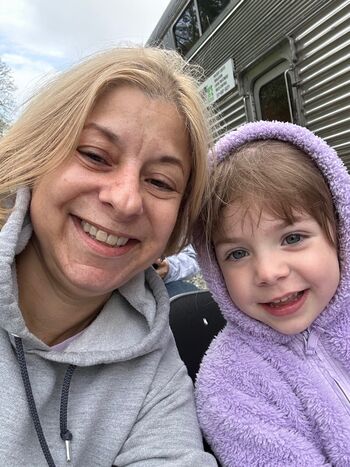
Now Sweet can spend time with her niece Faye without the side effects of routine phlebotomies.
Today, Sweet gives herself a rusfertide injection at home once a week, usually on Friday morning. She says the shot is easy to fit into her day.
“It’s really easy. It doesn’t take a lot of time,” she said. Sweet describes the injection as feeling like “a little booster” for a short while. The brief sensation at the injection site is the only side effect she has experienced.
Most importantly, she has not needed a phlebotomy since starting the trial. The change means she no longer has to arrange a ride home, plan several days of recovery or ask her family to shift their schedules.
For Sweet, the difference goes far beyond fewer appointments. It means being able to work and plan her life without constantly thinking about her next treatment.
“Rusfertide gave you your life back,” Sweet said. “Absolutely. A hundred percent.”
 Medically reviewed by Andrew Kuykendall, MD, Malignant Hematology Department