Finding Strength After Cancer, One Mile at a Time
Key Takeaways:
- Kristin Bublitz was diagnosed with triple-negative breast cancer at 33, shortly after giving birth to her son
- Previously, genetic testing had revealed that Bublitz and her mother carry a BRCA1 mutation, which increases the risk of several types of cancer
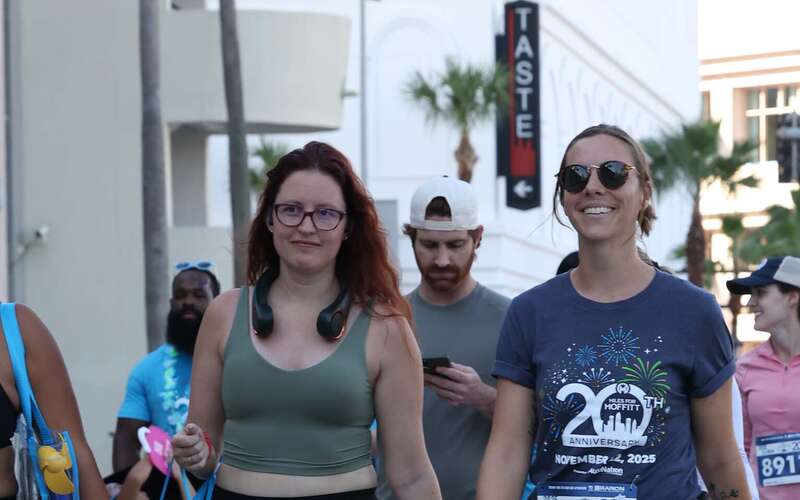
- Bublitz is returning to Miles for Moffitt to run the 10K, challenging herself while celebrating her journey as a cancer survivor and connecting with other survivors
At 38, Kristin Bublitz vividly remembers the day she was diagnosed with triple-negative breast cancer. She was 33 and had recently given birth to her son.
Bublitz first came to Moffitt Cancer Center years earlier after learning she carried an inherited gene mutation.
“About 10 years ago, I underwent genetic testing because of my family history of cancer, and both my mom and I tested positive for the BRCA1 mutation,” Bublitz said. “At the time, I wasn’t ready to undergo preventive surgery. I had just gotten married, and we were trying to have kids. Then I got pregnant with my son.”
After giving birth, one of her annual screenings led to her breast cancer diagnosis.
“I think because I knew about my genetic risk, I wouldn’t say I was shocked by the news, but I was disappointed because I knew about the risk and didn’t act on it sooner,” she said. “At the same time, having kids was my main focus at the time.”
After her diagnosis, she underwent chemotherapy followed by a bilateral mastectomy, a procedure in which both breasts are removed.
Understanding Inherited Risk Factors
Mutations in BRCA1 and BRCA2 genes can increase the risk of breast cancer as well as melanoma and ovarian, peritoneal, fallopian tube, prostate, pancreatic cancers.
-
58%
Lifetime ovarian cancer risk for women with a BRCA1 mutation
-
72%
Lifetime breast cancer risk for women with a BRCA1 mutation
According to Carolyn Haskins, a genetic counselor at Moffitt, women with a BRCA1 mutation have an estimated lifetime risk of up to 58% for ovarian cancer, compared with 1% to 2% for women in the general population. Women with a BRCA1 mutation also have an estimated lifetime breast cancer risk of up to 72%.
“It can be scary to think about having a gene mutation that increases the lifetime risk for certain cancers, but the reality is that cancer does not discriminate against anyone,” Haskins said. “In other words, we all have a risk of developing cancer.”
A Race With Meaning
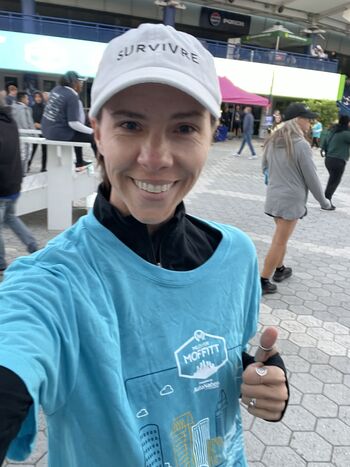
Kristin Bublitz will run with the Wild Runners team at the 2026 Miles for Moffitt event.Because of her increased risk, Bublitz has also decided to undergo a total hysterectomy, a procedure in which the uterus and cervix are removed. The preventive surgery is scheduled for the week after this year’s Miles for Moffitt event.
“The first year I participated in Miles for Moffitt was pretty emotional because it was my first year in survivorship as well,” Bublitz said.
This year, she will run the 10K alongside another cancer survivor and friend.
“I wanted to challenge myself this year. I told myself, I beat cancer, I can run six miles,” she said.
Participating in the race holds special meaning for Bublitz after everything she has overcome.
“As a survivor, there can often be guilt that comes with surviving,” Bublitz said. “But at events like this, everyone rallies together and supports one another, and it is just such a great thing to be a part of.”