
Food for Thought
Key Takeaways:
- Moffitt Cancer Center’s PEARL Kitchen prepares medically tailored meals for studies exploring how nutrition may influence cancer treatment outcomes, recovery and survivorship
- Researchers are investigating whether specific diets can improve cognitive symptoms in breast cancer survivors, support a healthier gut microbiome and help patients prepare for cancer treatments
- Growing demand for nutrition research is driving an expansion of the PEARL Kitchen, allowing Moffitt to explore how dietary interventions could become a more active part of cancer care
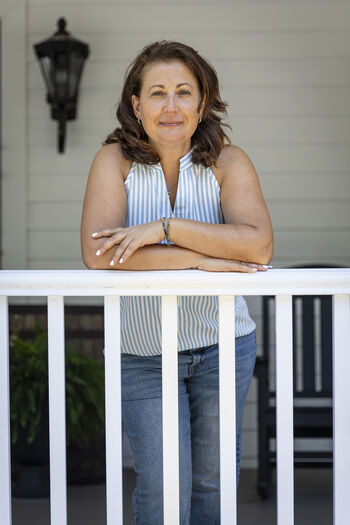
Stewart was diagnosed with stage 2B triple-negative breast cancer in 2023.
“What are you going to do for you today to move your life forward?”
The question is written on a dry-erase board in Fabiana Stewart’s kitchen.
She changes the message every few days, but that’s the one she finds herself returning to most.
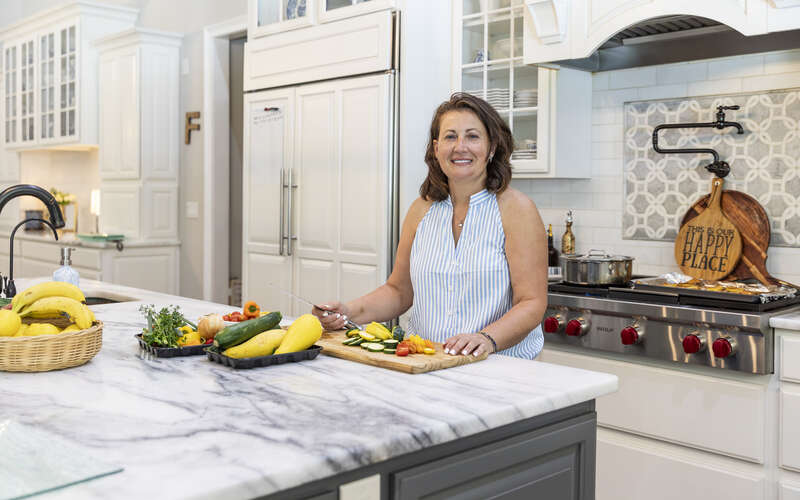
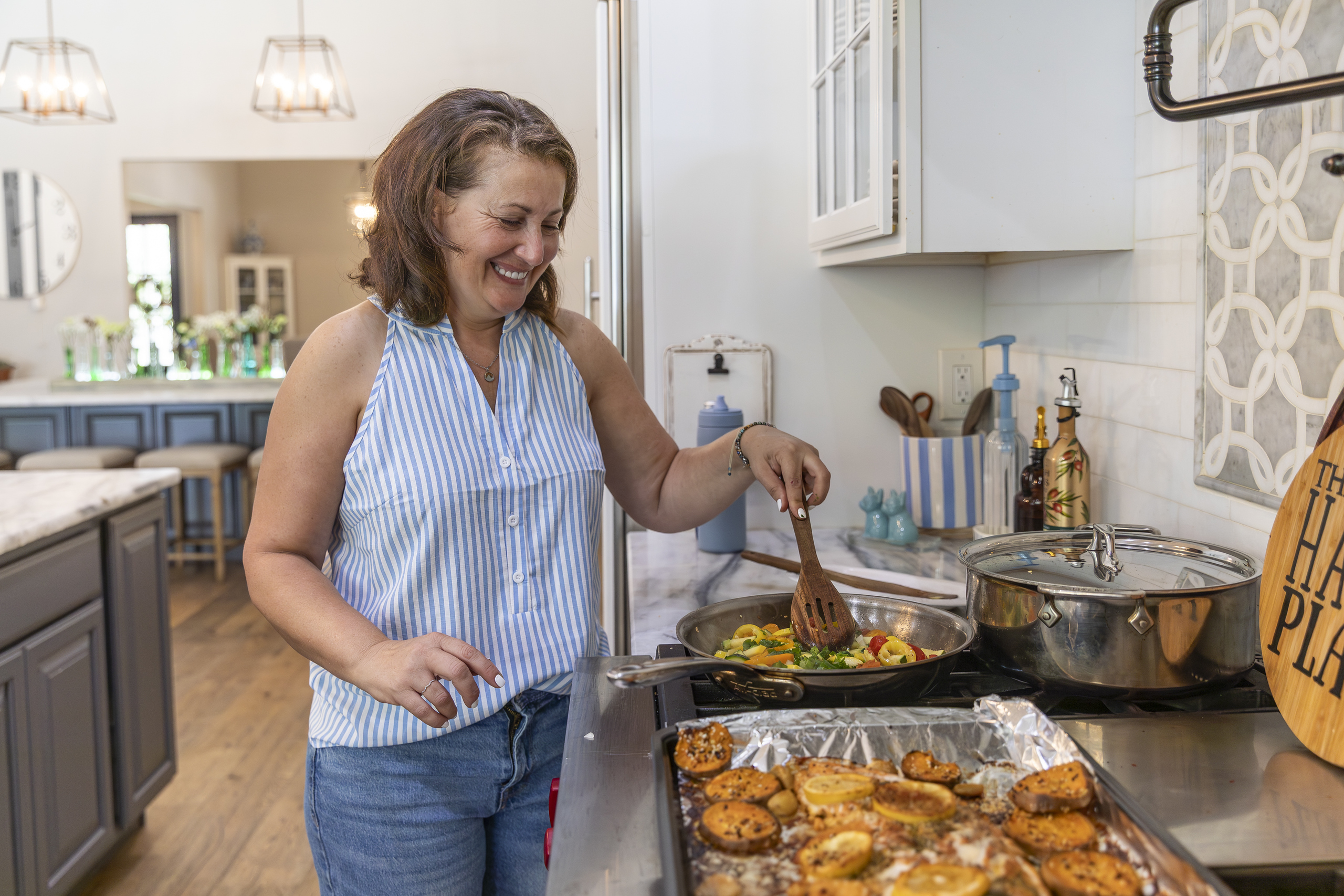
On a sunny summer afternoon, Stewart stands at the kitchen counter preparing baked salmon garnished with lemon and sweet potatoes. She chops fresh tomatoes, zucchini and peppers while a pot of quinoa cooks nearby.
The quinoa isn’t her favorite side dish, but it has become a staple in her diet.
Just a few years ago, Stewart’s meals, and life, looked very different.
The 49-year-old mother of three was born in Brazil. She moved to the United States as a teenager to be closer to her sister. She spent years working in banking before later working with students in local schools and teaching Spanish.
In March 2023, she noticed a lump in her breast.
At first, she wondered if it was a cyst or a symptom of menopause. A mammogram didn’t raise concerns, but the lump continued to grow. Months later, she received a diagnosis that would change her life: stage 2B triple-negative breast cancer.
The months that followed were filled with chemotherapy, a double mastectomy, radiation treatments, immunotherapy and clinical trials. Through it all, clinicians at Moffitt Cancer Center guided her every step of the way.
Today, she has no evidence of disease.
“For over two years, I had everybody telling me, ‘Follow this, do this, take this,’” Stewart said. “I felt safe because I knew somebody was protecting me. But when everything was over, I was like, ‘What do I do now?’”
The answer arrived in an unexpected form: a box of meals delivered to her front door.
Stewart became a participant in MIND-BC, one of several nutrition studies conducted through Moffitt’s Population Engagement and Research Laboratory, or PEARL. The study examines whether a dietary pattern known as the MIND diet, a combination of the Mediterranean and DASH diets, can help improve cognitive symptoms often reported by breast cancer survivors.
For Stewart, the study offered more than food.
It offered direction.
A Kitchen Built for Discovery
Stewart’s meals didn’t come from a meal delivery company. They came from Moffitt’s PEARL research kitchen.
The facility looks much like a professional kitchen. Chefs prepare meals, ingredients are carefully measured and menus are planned weeks in advance.
But every recipe serves a scientific purpose.
The PEARL Kitchen is one of only a handful of facilities in the nation designed specifically to support nutrition research in cancer. Here, researchers, dietitians and chefs work together to create medically tailored meals that allow scientists to study how dietary patterns may influence cancer risk, treatment outcomes, quality of life and survivorship.
For years, nutrition has occupied a complicated space in cancer care. Patients often ask what they should eat during treatment, after treatment or to lower their risk of cancer in the future. Yet compared with other areas of medicine, researchers still have relatively few definitive answers.
“Where we are with nutrition research in oncology, we’re far behind where we are in other fields like diabetes and kidney disease,” said Sylvia Crowder, PhD, a dietary and nutrition expert in Moffitt’s Department of Health Outcomes and Behavior. “We have a lot of progress that still needs to be made.”
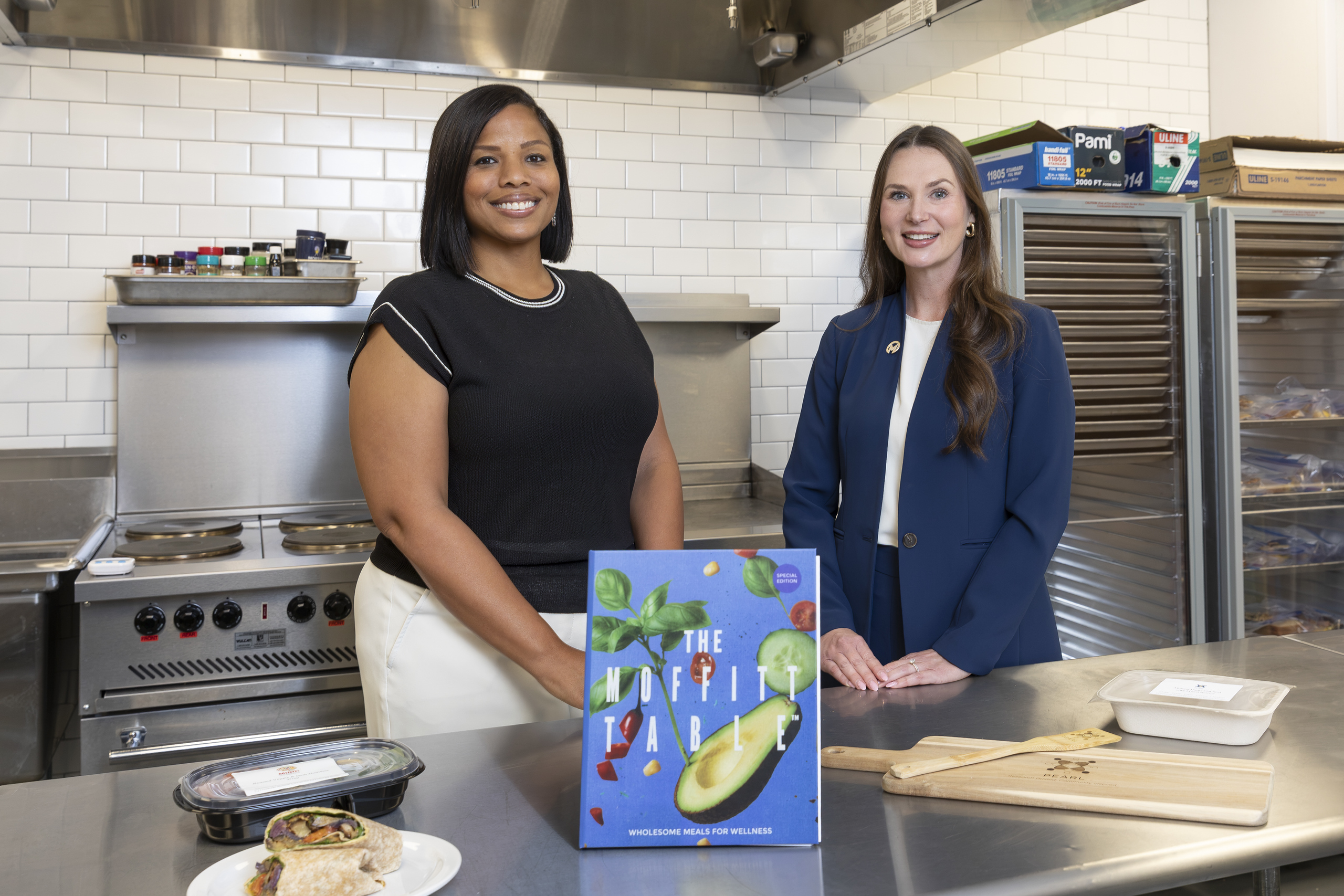
Tiffany Carson, PhD, left, and Sylvia Crowder, PhD, lead many of the studies coming out of Moffitt’s PEARL kitchen.
Crowder knows that frustration firsthand. Her interest in nutrition research began in high school after her grandmother, who helped raise her, was diagnosed with cancer. She wanted to play a role in helping her grandmother. That led Crowder to study dietetics, work in clinical nutrition and eventually pursue a career focused on cancer research.
Today, she is among a growing group of Moffitt investigators using the PEARL Kitchen to explore a deceptively simple question: Can food improve cancer outcomes?
The answers are being pursued through a wide range of studies. Some focus on helping breast cancer survivors manage cognitive symptoms after treatment. Others are examining whether specific dietary patterns can influence the gut microbiome, improve surgical recovery or even help prepare patients for advanced cellular therapies such as chimeric antigen receptor T-cell (CAR T) treatment.
“We’re able to really be world leaders in how we think about nutrition and oncology outcomes and survivorship,” Crowder said.
The growing demand for that research is reshaping the kitchen itself. Moffitt is expanding the PEARL Kitchen into additional space to accommodate more studies, more meal preparation and more investigators interested in incorporating nutrition into cancer research.
For patients like Stewart, however, the impact of the kitchen is measured less in square footage than in something far more personal.
It begins with a meal.
Food for the MIND
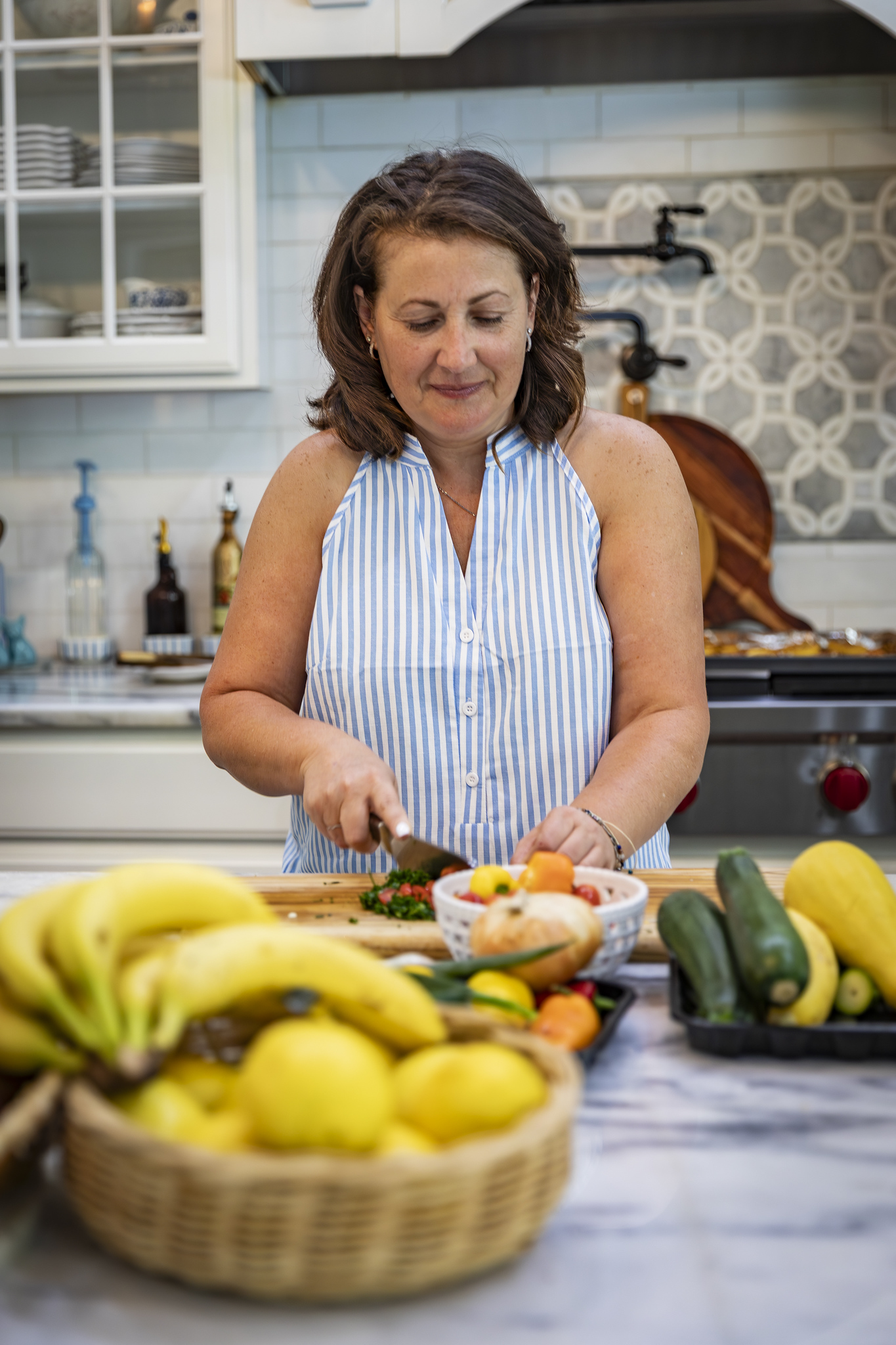
For Stewart, rice has largely been replaced by quinoa while fish, vegetables and healthier oils now appear regularly in her day to day meals.When Stewart enrolled in the MIND-BC study, she wasn’t thinking about study design or statistical analysis.
She was thinking about brain fog.
Like many cancer survivors, she found herself struggling with memory lapses and difficulty concentrating after treatment. Simple tasks required more effort. Conversations sometimes slipped away moments after they happened.
“I’m 49 years old, and I’m a very active person,” Stewart said. “Everything I have to write down. If I don’t write it, I don’t remember.”
Researchers refer to the phenomenon as cancer-related cognitive impairment, though many patients know it simply as “chemo brain.”
The MIND-BC study is testing whether a dietary pattern known as the MIND diet may help address those symptoms. Developed from elements of the Mediterranean and DASH diets, the eating plan emphasizes fruits, vegetables, whole grains, fish, nuts, seeds and healthy fats such as olive oil.
The idea emerged from research showing the MIND diet may help reduce the risk of cognitive decline and dementia. Crowder and her colleagues wondered whether those same benefits might extend to breast cancer survivors experiencing cognitive challenges after treatment.
Participants receive three months of medically tailored meals prepared in the PEARL Kitchen and delivered directly to their homes. They also work with diet coaches who help them learn how to maintain the dietary pattern after meal delivery ends.
For Stewart, the impact extended beyond nutrition.
“I felt like somebody came and hugged me again,” she said.
The weekly check-ins, meal deliveries and support provided a sense of structure at a time when she felt adrift after treatment.
That reaction is one Crowder hears often.
“For someone who doesn’t have any control on the fact that they were diagnosed with cancer, for them to have this sense of control over one aspect of their cancer journey, I think it’s really empowering,” she said.
Researchers are still analyzing data from the study, but participant feedback has been encouraging. Some survivors have even asked whether they could continue receiving the meals after the study ended.
For Stewart, the lessons have remained long after the last delivery arrived.
Rice has largely been replaced by quinoa. Processed foods have become less common. Fish, vegetables and healthier oils now appear regularly on the family’s dinner table.
Most importantly, she feels equipped to continue making choices that support her health.
Feeding the Microbiome
While MIND-BC focuses on the brain, other PEARL Kitchen studies are exploring another rapidly evolving area of cancer research: the gut microbiome.
The human digestive tract is home to trillions of bacteria, fungi and other microorganisms that help regulate digestion, metabolism, immunity and inflammation. Researchers increasingly believe those microbial communities may also influence cancer risk and treatment outcomes.
Tiffany Carson, PhD, a research program lead in the Department of Health Outcomes and Behavior, is leading the DINING study, which examines how the DASH dietary pattern affects the gut microbiome.
The study enrolled approximately 110 participants who were randomly assigned to receive either DASH-based meals or meals reflecting a more typical American dietary pattern. For five weeks, every meal was prepared through the PEARL Kitchen, allowing researchers to closely monitor dietary intake and study how those differences influenced participants’ gut bacteria.
One key focus is dietary fiber.
“We think it helps cultivate a healthier gut microbiome,” Carson said.
Although the full analysis is still underway, early findings have been promising. Researchers have observed reductions in certain bacteria that originate in the mouth but can migrate to the gut and have been associated with an increased risk of colorectal cancer.
The findings add to a growing body of evidence suggesting food may influence health in ways that extend far beyond calories or weight.
“People truly believe that what we put in our body and what we eat can impact our health and our outcomes,” Crowder said.
Another ongoing effort, the FEED-FF study led by Armen Byrd, PhD, is examining whether fermented foods can influence the gut microbiome and potentially affect treatment responses in patients with colorectal and lung cancers.
Together, the studies reflect a broader shift in how researchers think about nutrition.
Food is no longer viewed simply as fuel. It is increasingly being studied as a complex biological signal that may interact with the immune system, inflammation pathways and the microbiome itself.
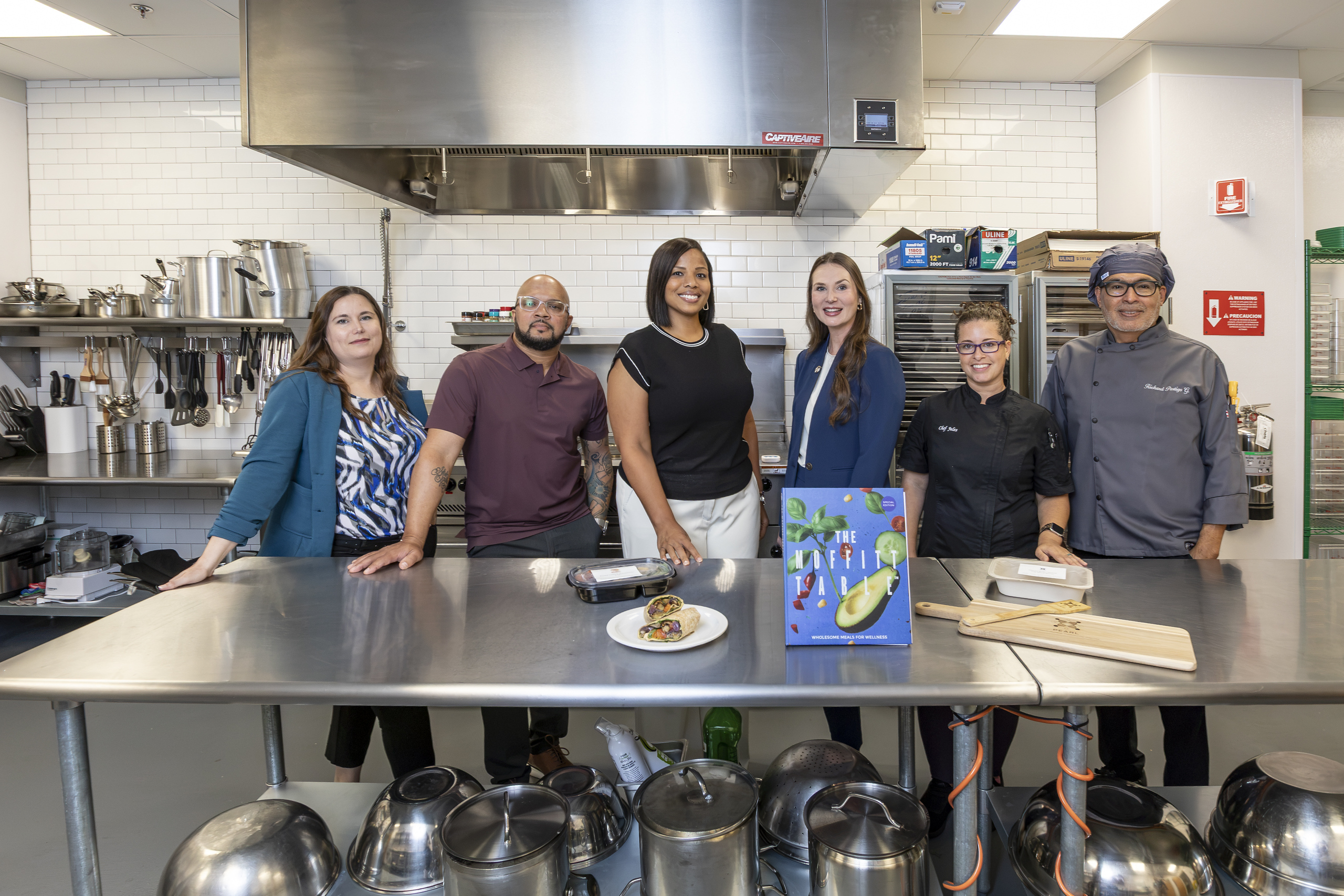
The PEARL kitchen — which includes PEARL manager Natasha Francis, left; research chef Russell Clarke; Tiffany Carson, PhD; Sylvia Crowder, PhD; research chef Julissa Graziano; and research chef Richard Postigo — is one of only a handful of facilities in the nation designed specifically to support nutrition research in cancer.
Preparing Patients for Treatment
Researchers are also asking whether nutrition can help patients before treatment even begins.
Carson’s PRIME study focuses on women newly diagnosed with breast cancer. Participants receive Mediterranean diet meals during the weeks leading up to surgery, allowing researchers to evaluate whether dietary changes may improve surgical recovery and longer term outcomes.
“We are providing them with a Mediterranean diet for four weeks,” Carson said. “We know from the literature that it leads to lower inflammation and has been associated with better survivorship outcomes.”
The concept is known as prehabilitation, helping patients prepare physically before undergoing treatment.
A similar philosophy guided STRONG-PCS, led by Amir Alishahi Tabriz, MD, PhD, which focused on nutritional support for patients undergoing pancreatic cancer surgery. Through personalized guidance and ongoing support, researchers hope to reduce complications and improve recovery for a group of patients particularly vulnerable to malnutrition.
Meanwhile, Crowder is leading another study that combines nutrition with one of the most advanced forms of cancer treatment available today.
The Keto Diet in CAR T study explores whether short-term dietary interventions can improve the fitness of T cells before they are collected and engineered for CAR T-cell therapy.
The idea emerged from laboratory research suggesting ketogenic and fasting-based approaches may strengthen immune cells. Moffitt researchers are now testing whether those findings can translate to patients.
“If Moffitt is one of the world leaders in CAR T, it makes perfect sense for us to be at the forefront of developing not only treatment therapies, but also diet and exercise regimens that might improve outcomes,” Crowder said.
Although still in the pilot stage, the study illustrates the breadth of questions researchers can investigate when nutrition science and cancer care intersect.
A Growing Appetite for Discovery
The success of these studies has created a challenge few researchers would complain about.
Demand.
As more investigators seek to incorporate nutrition into their research, the PEARL Kitchen has reached capacity. Moffitt is expanding the facility, adding preparation space, storage and staffing to support future studies.
The growth reflects a larger transformation underway across cancer research.
For decades, nutrition was often viewed as supportive care, important for overall health but separate from treatment itself. Today, researchers are beginning to ask whether food can become a more active part of the cancer care continuum.
The goal is not to find a miracle food or a universal cancer diet.
“There is not one magic food or one magic dietary pattern that works for everyone,” Carson said.
Instead, researchers hope to generate evidence that can help patients and clinicians make more informed decisions about nutrition at every stage of the cancer journey.
For Stewart, that future feels deeply personal.
Back in her kitchen, the salmon is nearly finished. The vegetables are ready. The quinoa is done cooking.
The recipes aren’t complicated. But they represent something far bigger than a meal. They represent knowledge. Confidence. Control.
And every time she glances at the message on the dry-erase board, it serves as a reminder of the question she asks herself each day:
What are you going to do for you today to move your life forward?
For now, the answer is waiting on her plate.
 Scientifically reviewed by Sylvia Crowder, PhD, and Tiffany Carson, PhD, Department of Health Outcomes and Behavior