


Know Your Blood Type: Essential Information and Guidelines for Blood Donation
Key Takeaways
• Every two seconds someone in the U.S. needs blood for treatment or emergencies
• Most healthy people 17 or older can donate, though some conditions require deferral
• Knowing your blood type helps determine the most effective donation for patients in need
Did you know that every two seconds someone in the U.S. needs blood, including patients at Moffitt Cancer Center? Blood donations are critical for surgeries, cancer treatments and managing chronic illnesses.
When it comes to donating, there are always questions on who’s eligible and what the requirements are. By understanding the eligibility criteria and what type of donation to give, you can make an informed decision to donate and help those in need.
Are You Eligible To Donate?
To give blood you must be in good health, 17 years old or older (or 16 years old with signed parental permission) and weigh at least 110 pounds. According to LifeSouth Community Blood Centers, in addition to age, potential donors should know the following criteria, as it could prevent you from donating.
Tattoos or Piercings
There is no deferral period if you received tattoos or piercings from a state regulated or licensed parlor in Florida.
Pregnancy
Pregnant women are not eligible to donate blood. After childbirth, you should wait six weeks before donating.
Diabetes
Diabetics can donate blood if their condition is well-controlled and they are healthy. It’s essential to maintain regular blood sugar levels and be in good health at the time of donation.
Medications
The Association for the Advancement of Blood and Biotherapies has a Medication Deferral List. You need to be off these medications for the stated period of time as donating while taking could lead to harm to you or the transfusion recipient. The blood center may have additional medications that they will discuss with you at the time of donation.
Donors with a history of cancer are generally eligible to donate if they have completed treatment and recovered with no signs of active cancer remaining. The blood center will have specific criteria that they will discuss with you at the time of donation.
Anemia/Low Iron
Most blood banks require a hemoglobin level of 12.5 g/dL for females and 13.0 g/dL for males, per the US Food and Drug Administration regulations.
What Type of Donation Should You Give?
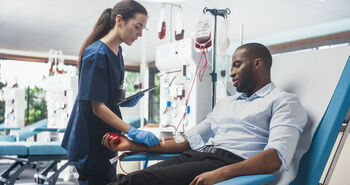
Every 2 seconds someone in the U.S. needs blood.
It’s important to know your blood type when donating, as different blood types are best suited for specific donations based on how they interact with other blood types and patient needs, according to the American Red Cross.
These blood type facts will help you when donating:
O-negative: The best donation to give is whole blood and double red cells.
- O-negative is uncommon, only 7% of Americans have it.
- Every blood type can use O-negative red blood cells in an emergency.
- You are the universal donor, and O-negative is the blood type hospitals always want on stand-by for emergencies.
O-positive: The best donation to give is platelets, whole blood and double red cells.
- You have the most common blood type in the U.S.
- You can help anyone with a positive blood type – that’s 85% of people who might need blood.
A-negative: The best donation to give is platelets, whole blood and double red cells.
- Only about 6% of Americans have your blood type.
- Your red blood cells can also be used by patients who have A-positive, AB-positive and AB-negative blood types.
A-positive: The best donation to give is platelets.
- You can receive blood from 85% of the population.
- Your blood type is the second-most common in the U.S.
- The O-positive, O-negative and A-negative donors can also help you.
B-negative: The best donation to give is platelets, whole blood and double red cells.
- Negative blood types are less common than positive types.
- B-negative is the second least common of all types with only 2% of the population sharing your blood type.
- You can only receive blood from B-negative or O-negative donors, but your blood can help patients with B-positive, B-negative, AB-positive and AB-negative blood types.
B-positive: The best donation to give is platelets.
- Only 9% of Americans have your blood type.
- You can help your fellow B-positive donors, and those with AB-positive blood.
AB-negative: The best donation to give is platelets and plasma.
- You have the rarest of all blood types in the U.S.
- Only 1% of Americans have your type.
- You are the universal donor for plasma.
AB-positive: The best donation to give is platelets and plasma.
- Only 3% of Americans have your blood type.
- In an emergency you can receive red blood cells from any other blood donor, no matter what their type.
- You are the universal receiver.
Blood donations are a lifeline for patients at Moffitt. Your contribution, whether through donating blood or spreading awareness, is invaluable. To donate blood in your local community visit www.lifesouth.org or www.scbb.org.
