Longtime Moffitt Team Members Reflect on Past 40 Years
Key Takeaways:
- Moffitt Cancer Center celebrates its 40th anniversary with longtime employees reflecting on four decades of change and growth
- Five team members featured in a podcast have between 25 and 40 years of service at the cancer center
- Moffitt has grown from about 1,200 employees to more than 10,000 while advancing research, technology and patient care
Do you want to know what it was like walking into a clinic at Moffitt Cancer Center 40 years ago? Or what it was like to sift through paper patient charts in the 1990s?
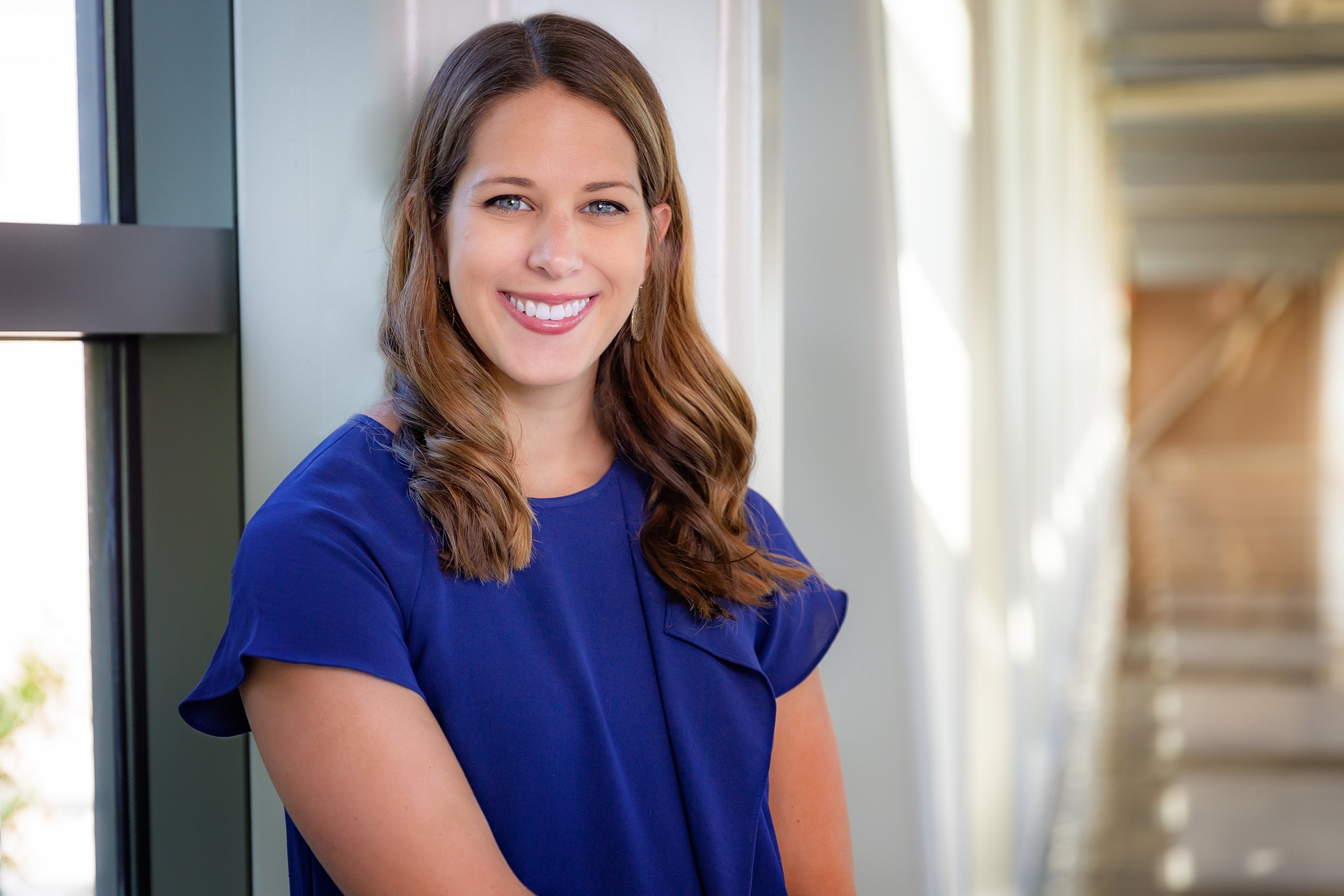
To celebrate Moffitt’s 40th anniversary, Cristina Perez, director of Patient Experience, sat down with four Moffitt team members who have worked at the cancer center for decades in the most recent episode of the PEP Talks podcast.
Combined, the five team members have spent almost 200 years working at Moffitt and have witnessed important milestones and big changes and collaborated in plans for the future.
The episode features:
- Cristina Perez, senior director of Patient Experience: 29 years of service
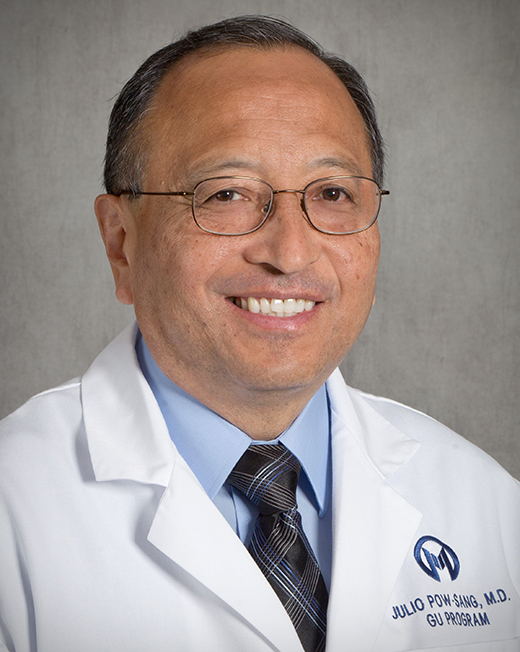
- Julio Pow-Sang, MD, chair of the Genitourinary Oncology Department: 39 years of service
- Ed Seijo, senior director of Translational Science and Biorepository Shared Resources: 27 years of service
- Lynn Moscinski, MD, vice chair of Hematopathology: 38 years of service
- Jason Kawa, associate chief nursing officer: 25 years of service
- Sheila Ferrall, senior director of Nursing Practice, Education and Clinical Effectiveness: 40 years of service
What was your first day at Moffitt like?
Pow-Sang: I remember there were only two clinics, SurgMed one and SurgMed two, and that was it. And there were probably about 50 doctors at the most, if I recall. And I met everyone that worked at Moffitt the first day. That was impressive.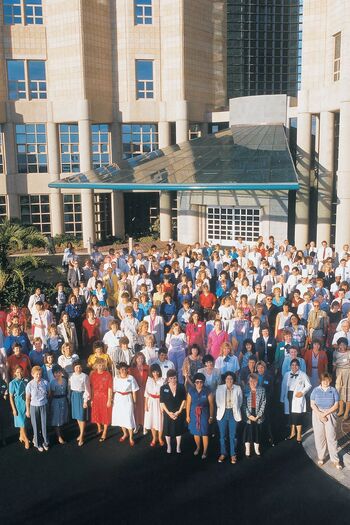
The original Moffitt team gathered to celebrate the first day the cancer center’s doors opened to patients in 1986.
Kawa: Well, I kind of cheated. My first day at Moffitt, I wasn’t an employee. In 2001 when I was looking for a new nursing gig, a friend of mine who was a medical student working at Moffitt had said, ‘I know you’re thinking about coming to Tampa, Jason. I don’t know where you’re thinking about working, but there’s this really cool place Moffitt that I’m at. You should come take a look.’ So, my first day, I showed up randomly, hit a button on the elevator, went to the fifth floor, walked to the nurses station and I just started asking the nurses, ‘Do you like working here at Moffitt?’ And every nurse at the desk was like, ‘I love it. It’s so great. It’s the best.’ That was an anomaly in the healthcare world where everybody really enjoyed working in their positions. It was the next day that I called Human Resources and said, ‘Hey, if you have any nursing positions, I’d be super interested.’
Moscinski: I remember walking into Moffitt through the back door and not really knowing where I was going and walking down the hallway and everything echoed. It was wooden floors and you could just hear the echoing. And then I heard parents and kids and there was a pediatrics wing right next to where I was coming in, which was to me really amazing. I made my way upstairs to find the other three people who were the Department of Pathology at the time. There was no office, there was no desk. Virtually nothing was set up to do anything. So, my beginning time at Moffitt was trying to find the furniture and making sure that the room was open, and eventually I started to work on a research lab. It was a very interesting experience.
What are the biggest changes you have seen over the years?
Pow-Sang: I think every day is a change. Every day I come to Moffitt, I feel like it’s the first day of the job for many, many years. I can tell you that when I came here, there were no cell phones, there was no internet, everything was fax machines and old telephone lines. And then technology started coming about, including in the laboratory with molecular techniques that weren’t available when I came. And then almost every year there was a new thing and a new thing and a new thing. So, I think it’s been a constant change. And I never stopped being amazed. When you think you’ve seen it all, they come up with something new.
Ferrall: Thinking about a big change was we had paper records. If we were having 20 patients come to clinic every morning, we received 20 charts. And then we got smart and we requested them the day before so that we could have them to look at a little bit ahead of time. We worked with paper records for several years and they all went back to medical records at the end of the day, which I think was a challenge. And as we continued to grow, obviously it became more challenging with respect to those records. We have made great improvements in keeping track of our patients.
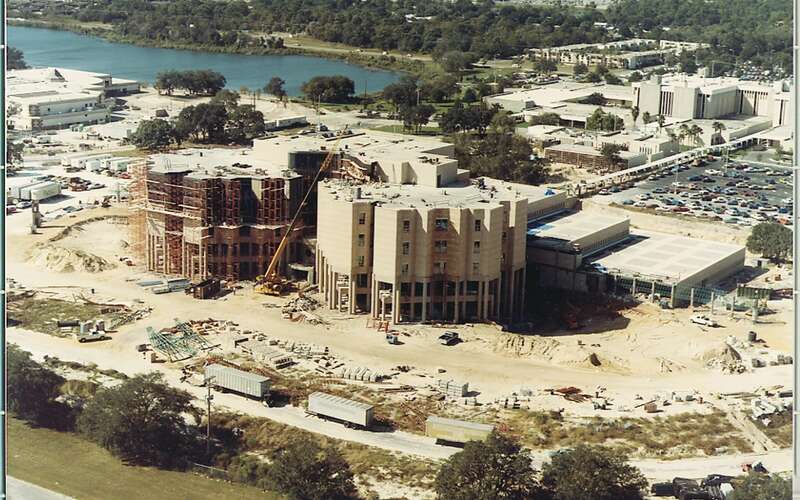
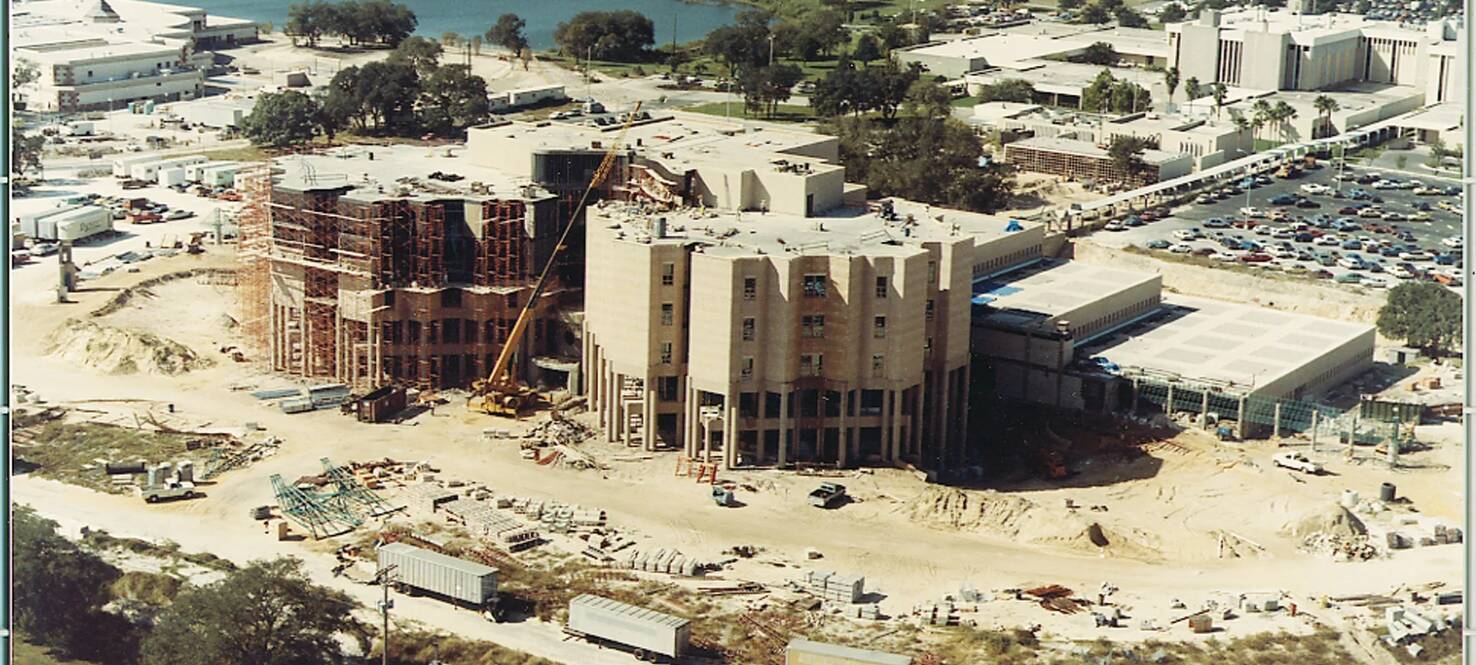
Seijo: I think the first thing you appreciate is just the physical changes, right? We have all these buildings. Our first building really was the hospital, and we based our research there and then the blood bank that was down the street that is no longer there. When we got our research building across the street, that’s where research really started opening up. I think when I first started, we had maybe 1,200 people, maybe 300 were actually research. Now we’re well past 10,000.
What makes Moffitt special?
Kawa: You ask what constitutes that secret sauce? What’s the main ingredient? I think the main ingredient is our patients. The oncology patient is a very special type of patient. By and large, they are very engaged in their care. They often show up with folders and files and web searches, and they are starting on a journey to conquer their cancer. I would suggest that our team members feed off that kind of energy and partner with them to be able to provide this experience. We’re on the journey with them to beat this cancer that they’ve got.
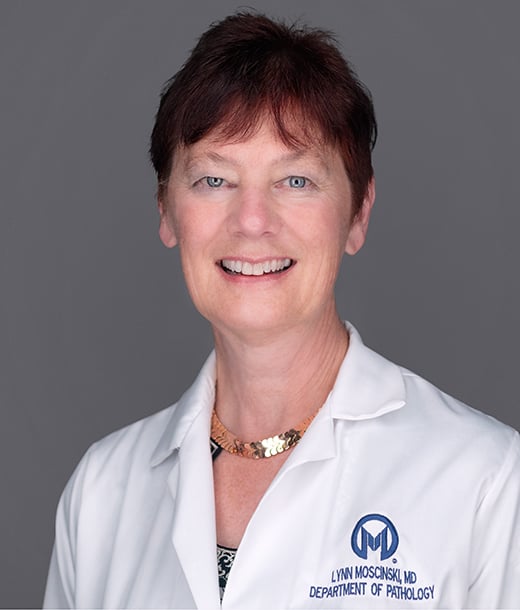
Lynn Moscinski, MD
Moscinski: People feel that they’re part of a team here. I tell that to everyone who’s interviewing, that this is a place where people like each other and they like the patients and they enjoy interacting with them. They feel that they’re accomplishing something important and patients’ interactions become something that is fulfilling to both parties. You sense that from the patient, the patients sense that from you. You feel like you’re someone who can offer a little bit of stability in people’s lives, whether that be the employees you work with or whether that be the patients you interact with. And that has a tendency to build. It builds on itself, it feeds on itself, people see that and they want to be a part of it as well.
Pow-Sang: It can’t be defined. You just feel it. You notice that when you go to other places, you don’t have that feeling that you belong. I walk through the hallways and I see a transportation person having a conversation with a patient about their things. You don’t have that feeling that you have at Moffitt at other places. It’s in the air. That’s the way I try to describe it. I think we are different and we have always been.
What is one of your proudest moments?
Ferrall: I think probably one of my proudest moments at Moffitt has been when we achieved Magnet designation. We’re a Magnet credentialed hospital, which is about 10% of the hospitals in the nation. We’ve been recredentialed three times and we’re in the midst of our fourth application. That just reflects not only the nursing care here, but really the interprofessional care and the way that we all care for our patients.
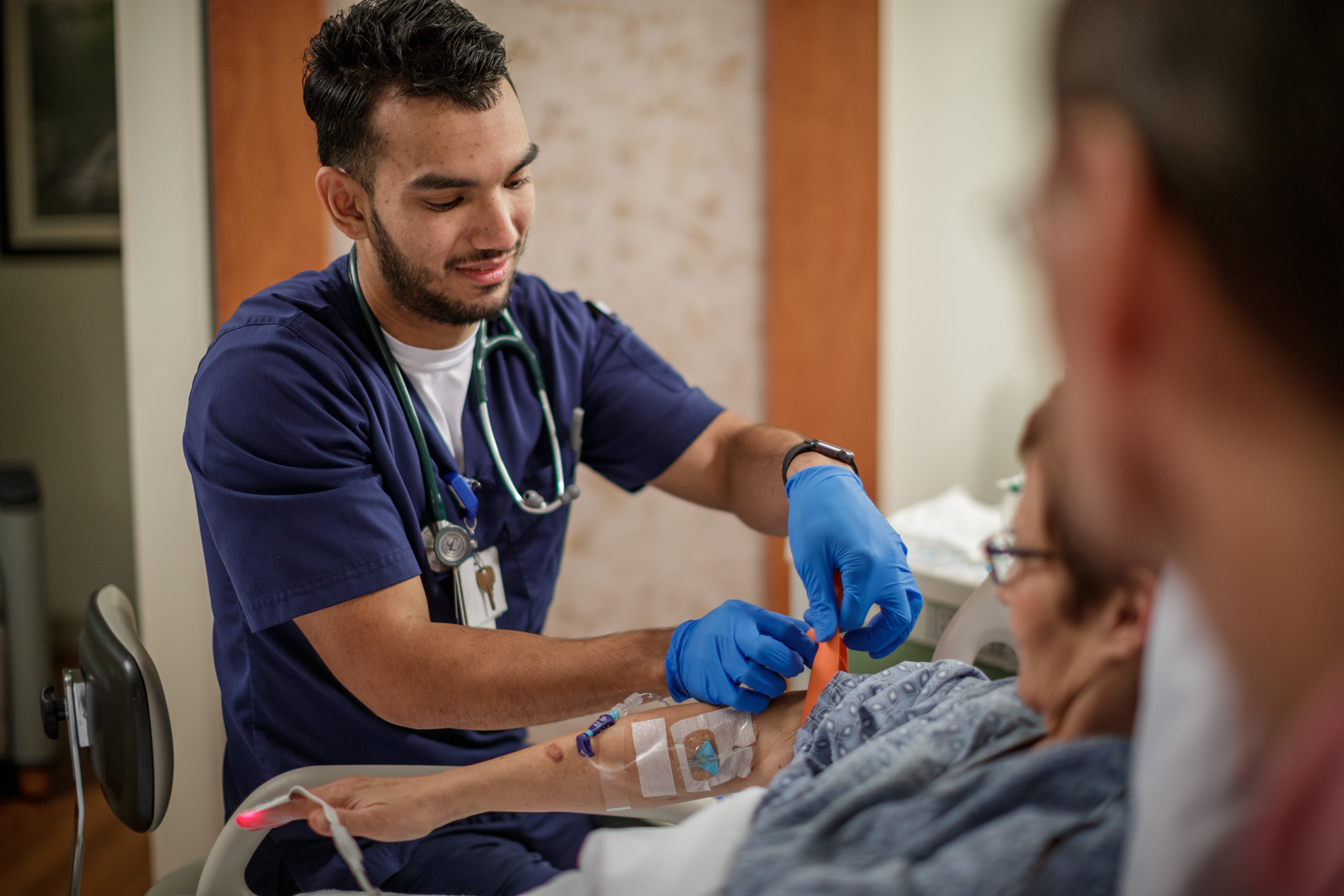
Moffitt has received Magnet designation three times and is currently applying for a fourth.
Kawa: The thing that I think of when you ask me what is my proudest moment is this idea that every time Moffitt has expanded, every time we’ve added a campus, the level of care that our team members, providers, nursing and so forth have been able to give has been top tier. And it’s top tier because Moffitt sacrifices nothing to make sure that we are able to provide that care. We are so blessed to have the amount of staff, not just the amazing staff themselves, but the volume of staff that we have to take care of these patients and provide that level of care is huge and unprecedented. And if you compare us to people regionally, globally, we’re top tier when it comes to the amount of staff we have and how they handle themselves.
Moscinski: I’ve just seen continuous change. Every year that I’ve been here, there’s been something new that’s happened. In pathology, we’ve seen a lot of changes in technology. Here, people are willing to pioneer and bring it on, and they embrace it and they find ways to get beyond the problems. Well, it’s not going to get paid for. Well, we’ll figure that out. Oh, well, it’s too expensive. Well, we’re going to figure that out. Well, who’s going to train someone to do that? Well, we figured it out. Now we’re in the middle of the digital era and how AI is going to help with our ability to be able to do things faster.
What do you think the future holds for Moffitt?
Seijo: The bridge for the future is how we challenge ourselves now. So, we set the goal: We want to treat more patients, we want to put them more into clinical trials. That’s hard work, trying to figure out the capacity or the people or diseases we’re trying to target. That’s the challenge now. Sometimes you say, wow, we’re going to put that many patients on trials? It’s never going to happen if you don’t try. And we saw what happened last year with clinical trials. We more than met our goals. Now we’re adding an incremental goal. And that’s really, I think the legacy we’re going to leave and the challenge of the baton, the next people we’re going to have to take until we go out of business and do something else.
Kawa: Forty years from now, I hope we just don’t exist. Cancer’s been cured and we’re done. We’ve moved on to other stuff. But let’s say that 40 years from now we’re still fighting the good fight. The technology that we have today versus what we had in 1986 is insane. So, 40 years from now, that exponential growth curve of innovations and technologies added in with all this AI technology, the ability to treat huge swaths of patients with the same amazing care, I think is a possibility. Having all this technology, the ability to focus all the technology and innovation on prevention 40 years from now to stop it from getting to the point where they have to be treated, I think would be key.
Perez: I hope in 40 years they will remember how patient-focused we are and that that continues. So, no matter what the technology and the advances are, we don’t lose that side of how patient-centered we are, how compassionate we are. I think that connection of what we see every day, I don’t want to lose that. And I think hopefully they’ll see that, wow, you guys did so much around patient centeredness and patient experience and all these things. Because we know at the end of the day, the patients tell us that that does make an impact. It’s not just about the amazing quality of care that we give, which we know we give, but it’s also about how we made them feel.