Moffitt Enrolls Record Number of Patients in Breast Cancer Trials
Key Takeaways:
- Moffitt Cancer Center’s Breast Oncology Department enrolled a record 151 clinical trial patients between June 2025 and August 2026
- A Phase 1 trial put Tracy Hollis’ metastatic breast cancer into remission and led to FDA approval
- Moffitt aims to enroll 300 breast cancer patients annually in clinical trials by 2030
Over the past few years, Tracy Hollis has seen her nephew graduate college and her two nieces get married. She is now focused on her next big adventure: moving to Colombia. All things, she says, that would have been “unthinkable” three or four years ago.
“The fact that I have another adventure in me, and that God has given me, life has given me, the universe has given me another chance. I just want to take it,” Hollis said.
Hollis owes that chance to a clinical trial, which has put her metastatic breast cancer into remission. Not only did she find success on the trial, but the trial results led to the U.S. Food and Drug Administration approval of a new treatment option for advanced breast cancer this summer.
Hollis is just one of more than 150 patients who enrolled in a breast cancer clinical trial at Moffitt Cancer Center over the last year, the highest-enrolling year the Breast Oncology Department has ever had.
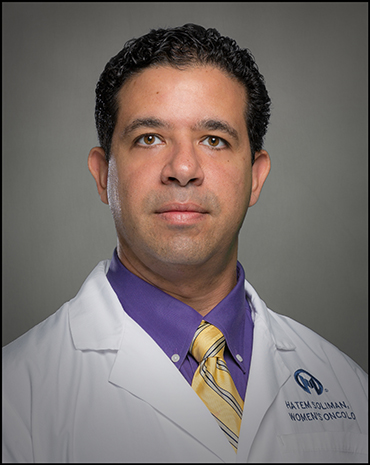
“That is our mission: to try and offer people novel and potentially lifesaving treatments that aren’t routinely available to get the best outcomes for them,” said Hatem Soliman, MD, medical director of Moffitt’s Clinical Trials Office and chair of the Breast Medical Oncology Program. “These trials are a real lynchpin in our mission to do that.”
Increasing Trial Enrollment
As more trials started to become available over the last two decades, Moffitt’s Breast Oncology Department was working to steadily increase enrollment. Between 2011 and 2019, the program was starting to see some results, enrolling a record 141 patients in 2019.
Then COVID-19 hit. The pandemic brought challenges with pharmaceutical companies and funding.
Enrollment dropped to 103 patients in 2020 and 64 patients in 2023. If the team was going to increase enrollment, they knew they had to expand the clinical trial coordinator team, increase diversity within that team and build up the trial referral infrastructure.
“We started by giving coordinators a really solid foundation and helping them understand the importance of what they do,” said Dawn Goodridge, a nurse who manages clinical trials operations for the Breast Oncology Department. “We brought on a group of people who are passionate about patients and clinical trials, and it shows when they interact with patients and other ancillary teams. They put Moffitt’s mission first.”
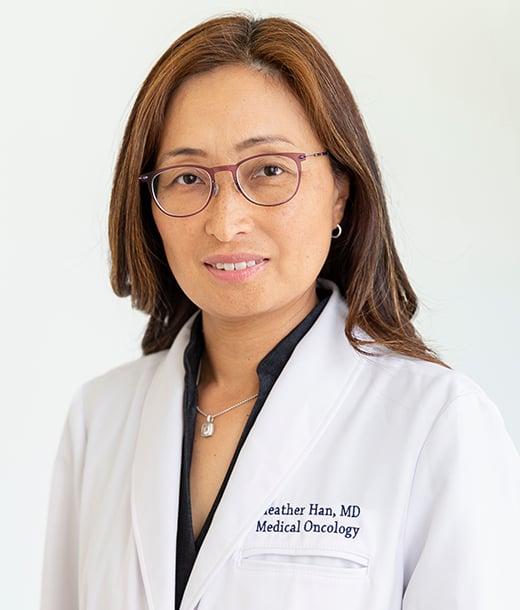
Heather Han, MD
Physicians, who often serve as trial principal investigators, also focused on expanding research collaborations to enhance their clinical trial portfolios and improve patient access to innovative therapies.
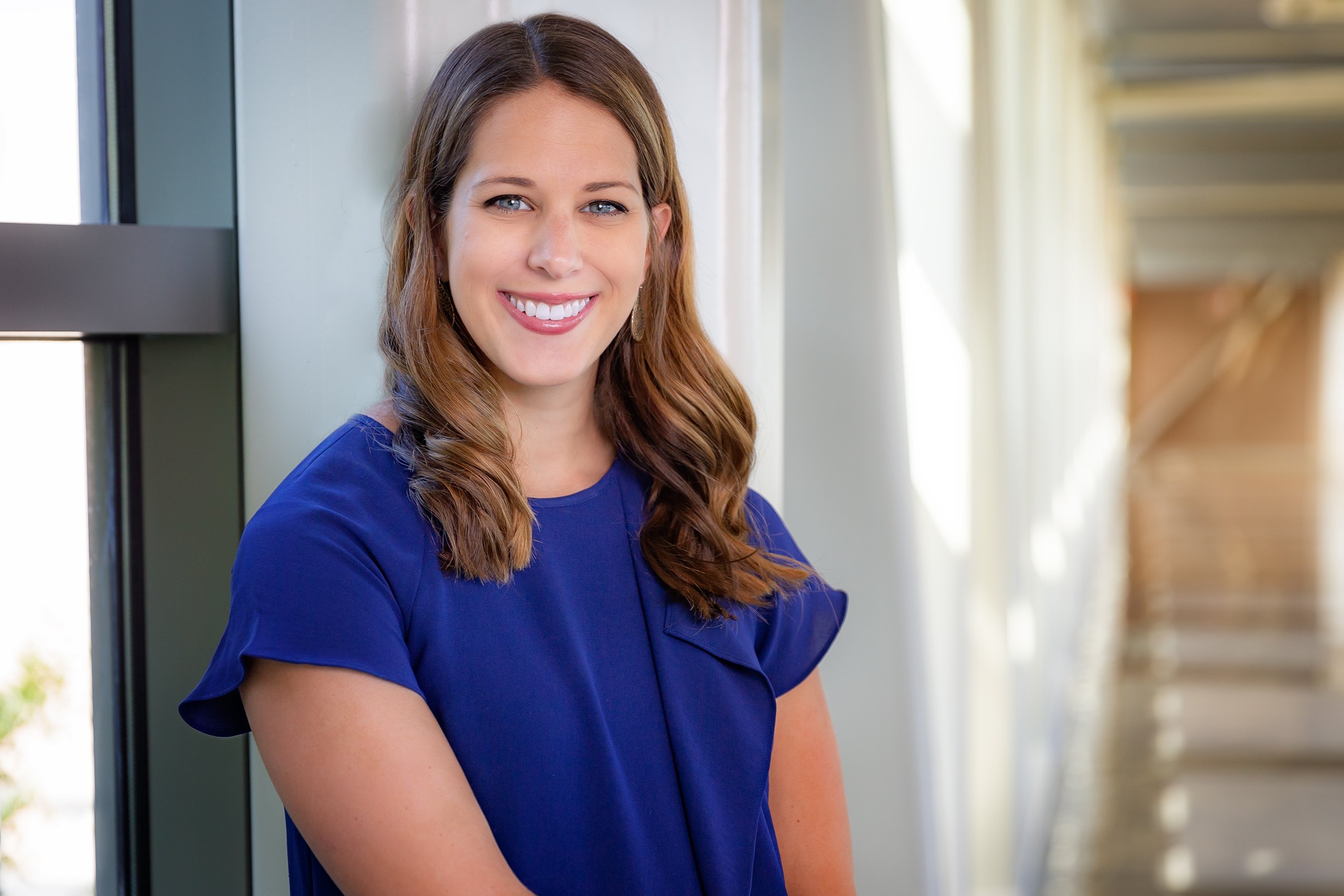
“While Phase 1 clinical trials have been considered an option only after standard treatments stop working, advances in drug development have changed their role in cancer care. These trials can give patients access to new treatment options earlier in their cancer journey and may help improve outcomes,” said Heather Han, MD, director of clinical research for the Breast Oncology Department. “Patient risk for participating in the trial is not the same as the past. We really want patients to benefit beyond just the trial, and we want to help others.”
-

141
Patients enrolled in 2019
-
103
Patients enrolled in 2020
-
64
Patients enrolled in 2023
-
151
Patients enrolled in 2026
The commitment to rebuilding the trial program paid off. Between June 2025 and August 2026, the program enrolled a record-high 151 patients onto trials.
Double Victory
Tracy Hollis is no stranger to clinical trials. When she was first diagnosed with aggressive breast cancer in 2000 at the age of 42, she was treated with an experimental medication combined with surgery, radiation and chemotherapy. When her cancer returned in 2016, she joined a trial where she lived in Washington, D.C. When the cancer spread to her lungs, doctors gave her a two-to-five-year life expectancy, and she decided to retire and move to Florida.
Hollis transferred her care to Moffitt and met with Han about her options. She was happy to hear she was eligible for a Phase 1 trial, this time for a drug called gedatolisib, a targeted therapy for patients with hormone receptor-positive, HER2-negative locally advanced or metastatic breast cancer. She enrolled in 2019.
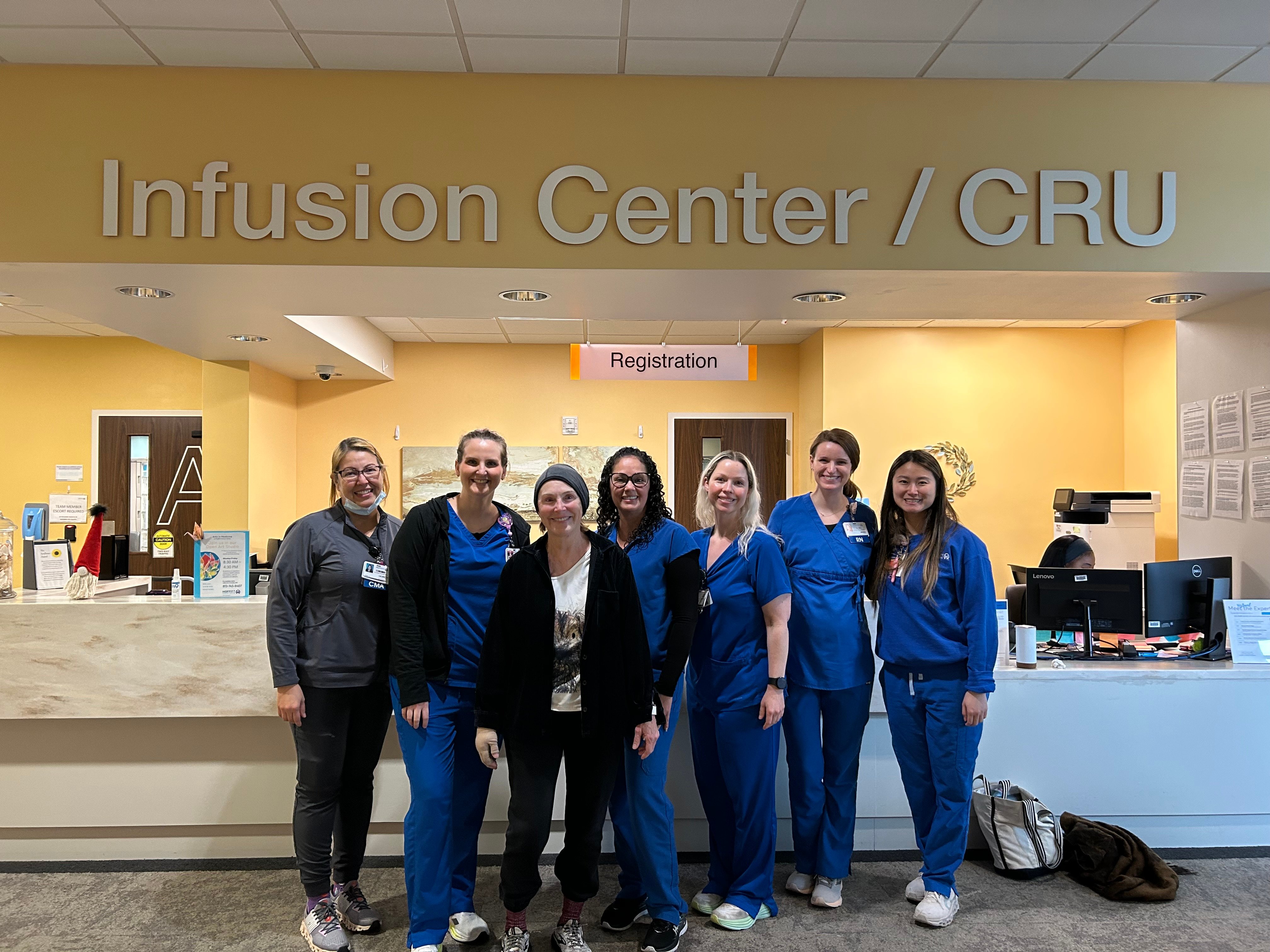
Tracy Hollis bonded with her care team during her treatment at Moffitt for a clincial trial. Her involvement helped lead to the FDA approval of a new therapy for metastatic breast cancer.
“I would strongly recommend that anyone do a trial,” Hollis said. “Of course, you want to see if the drugs have an impact on what’s happening in your own body, but it benefits so many people even if you don’t.”
Hollis says she was lucky she was able to do both: the treatment put her cancer into remission, and it was approved by the FDA in July 2026. The treatment also brought her few side effects, especially compared to the intense symptoms she experienced during her previous chemotherapy treatments.
Hollis is still on hormonal therapy but has not had any other treatment since she completed the trial. She feels healthy enough to begin her move to South America and says she will return to Moffitt for as-needed follow-ups.
“Clinical trials give you hope,” she said.
Hope for the Future
The past decade has been one of the most productive periods in FDA history for new breast cancer treatments, especially targeted therapies. Clinical trials have led to the approval of almost 20 new targeted therapies, including Enhertu and Revtorpyk, the drug Hollis was on.
Looking forward, Moffitt hopes to enroll 10% of new patients onto clinical trials. For the breast clinic, that would mean enrolling 300 patients a year by 2030.
It’s a goal the breast team has their sights on achieving.
“Trials are an opportunity for these patients to get treatments they wouldn’t necessarily have received before. I personally have had patients who were dying at the time of enrollment who now have no evidence of disease. Others have had their lives extended by many years, and without those clinical trials, who knows what the outcome might have been,” Goodridge said.
 Medically reviewed by Hatem Soliman, MD, and Heather Han, MD, Breast Oncology Department