Moffitt Mole Patrol Screens More Than 25,000 in 30 Years
Key takeaways:
- Over three decades, the Mole Patrol has screened more than 25,000 people
- Screenings identified more than 17,000 significant findings
- More than 80 cases of melanoma were identified through the screenings
Moffitt Cancer Center recently returned to Clearwater Beach to provide free cancer screenings, marking 30 years of the efforts and helping detect thousands of suspicious lesions.
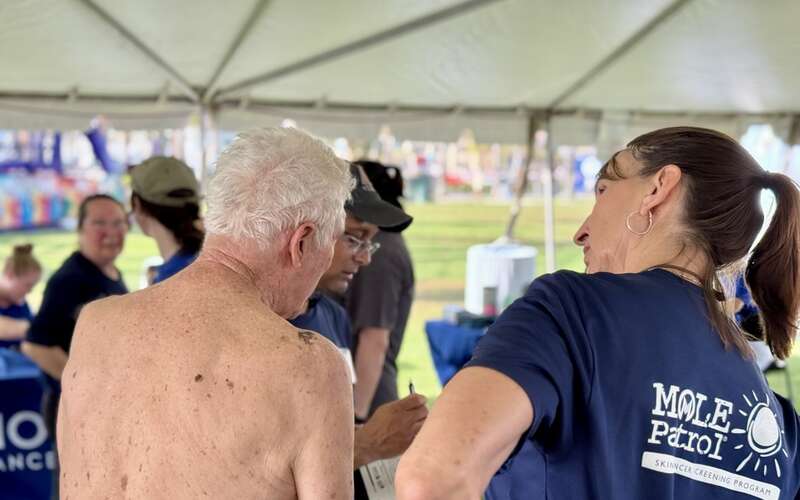
Team members provided free skin, head, neck and oral cancer screenings to 152 people at Pier 60 Park on July 25. Of those screened, team members found 39 suspicious findings with at least one melanoma case.
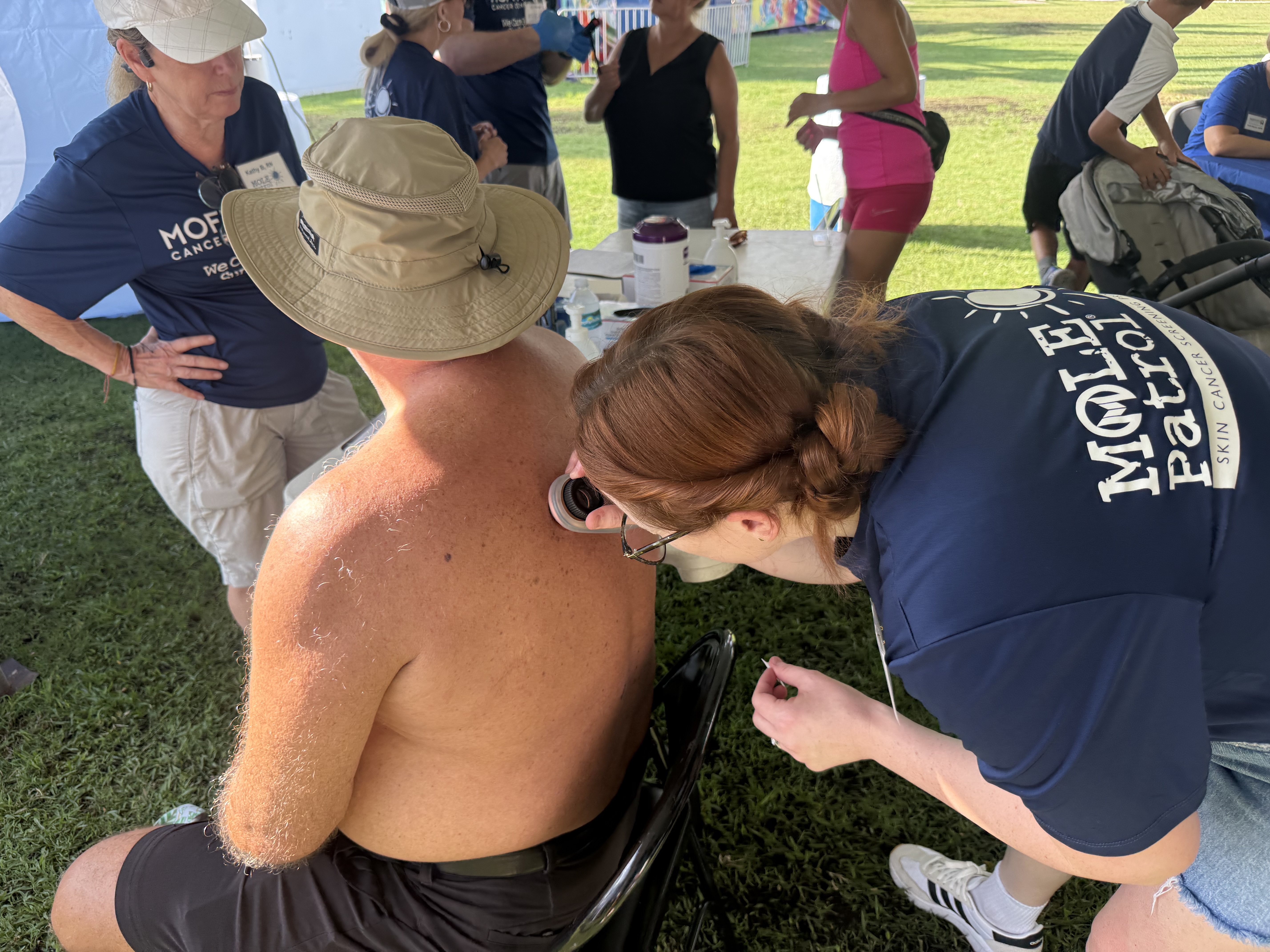
Moffitt Cancer Center team members screen for any suspicious lesions.
Since its founding, the Mole Patrol® program has been a vital force in helping spread awareness and helping save lives through early detection.
Over the past three decades, team members have screened more than 25,000 individuals, identifying more than 17,000 significant findings, including more than 80 cases of melanoma.
An event to commemorate 30 years of impact was also held to honor founding members of Mole Patrol, as well as the effect it has had on the community.
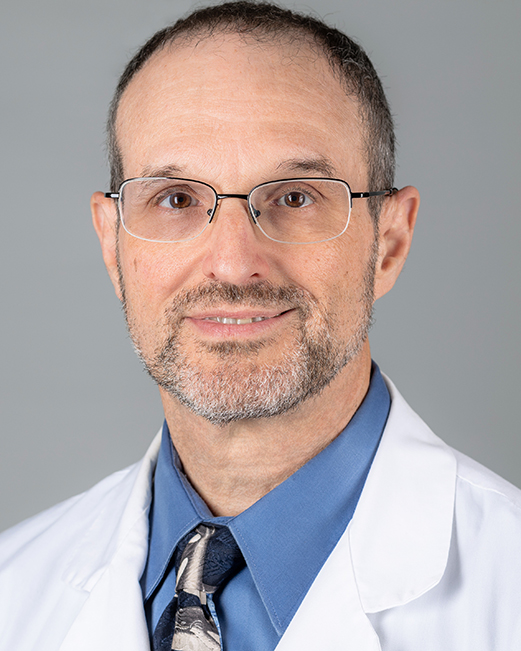
"Through these efforts, we’ve been engaging communities that traditionally have limited access to cancer screening services. This unified approach ensures we’re meeting patients where they are and reducing barriers to care," said Vernon Sondak, MD, Moffitt's Cutaneous Oncology Department chair, said at the event.
A Screening That Saved a Life
Fifteen-year-old Carlos Tirado-Estronza’s connection to Mole Patrol began 10 years ago when his mother brought him to one of the Pier 60 screening events to have a spot on his foot examined.
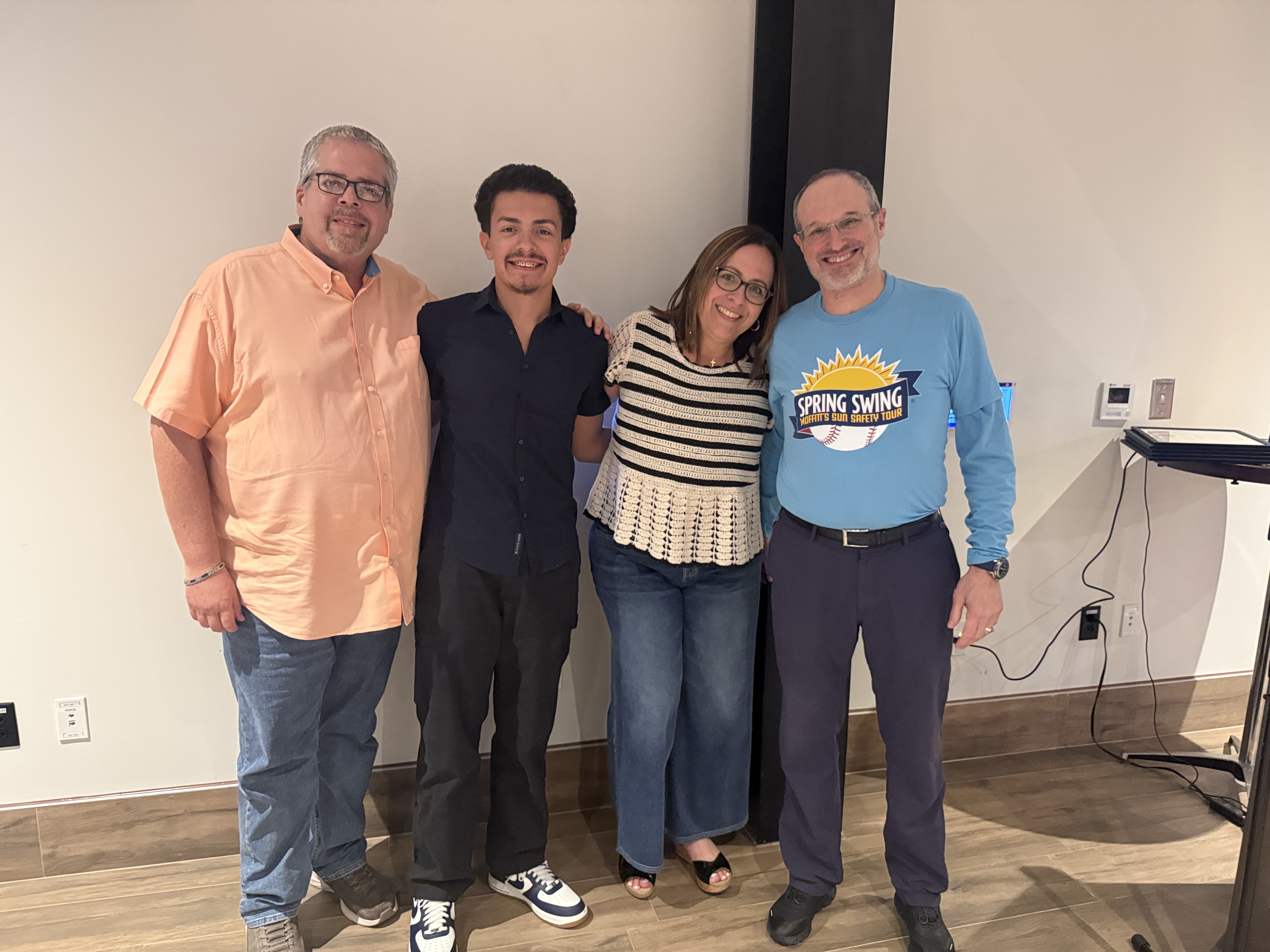
Carlos Tirado-Estronza, pictured in black, poses with family and Vernon Sondak, MD.At stage 0, abnormal cells remain confined to the epidermis, the outermost layer of the skin.
Sondak says that in his nearly 40-year career, Tirado-Estronza remains the youngest patient with melanoma in situ he has treated and the only case he personally diagnosed.
Carlos attended the anniversary event alongside his parents Carlos R. Tirado and Geo Estronza, who was a team member at the time at Moffitt’s research institute during the time of his diagnosis.
“I’ll always be grateful to the Moffitt team members who were there that day. Their expertise and quick action helped save my son’s life,” Estronza said.
Building on 30 Years of Impact
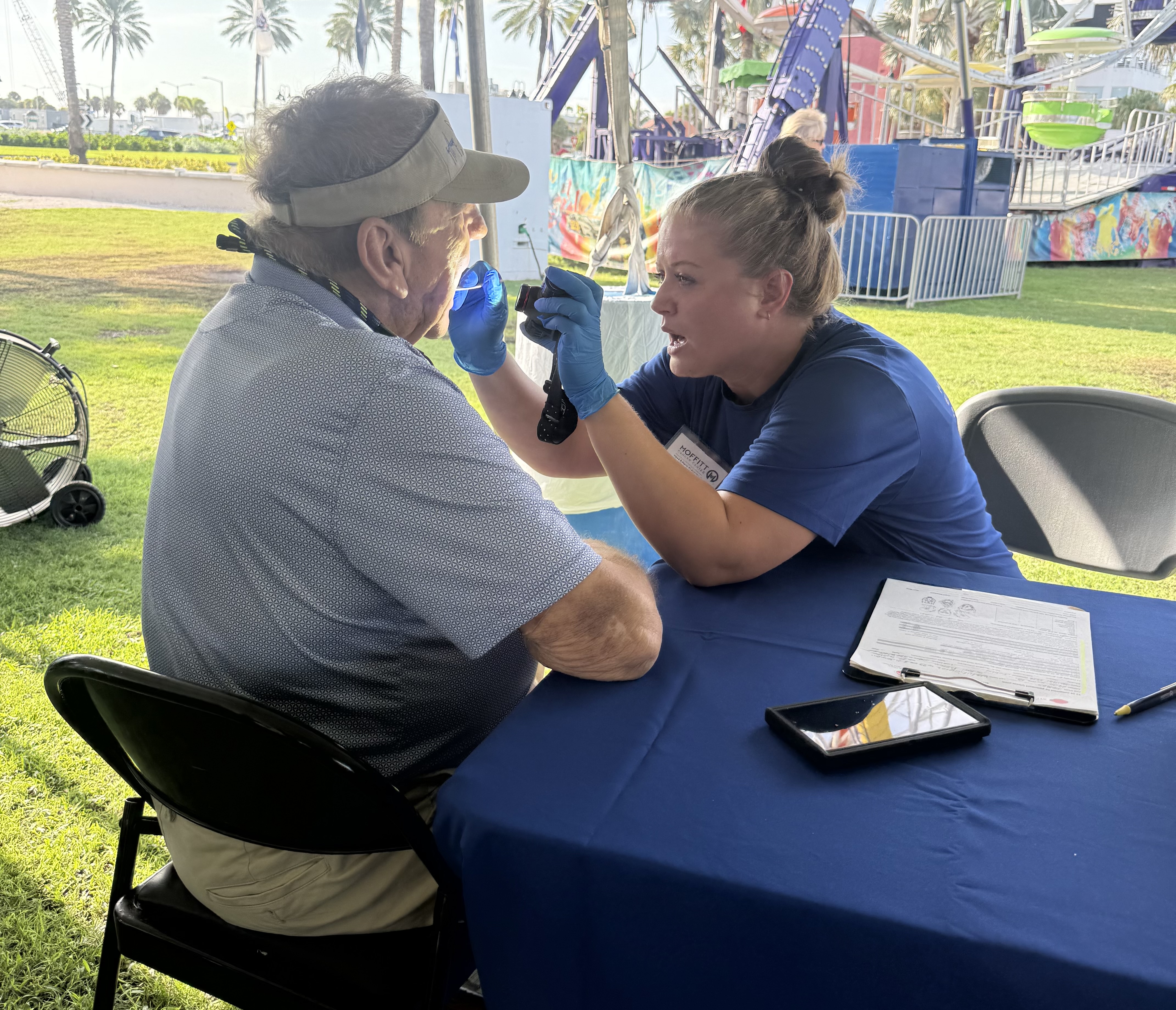
Interested visitors stopped for just a few minutes to be screened for potential cancers.
Experts estimate that more than 5.5 million people are diagnosed with a form of skin cancer each year.
Head and neck cancers are less common, but experts say 55,000 Americans are diagnosed with head, neck and oral cancers each year.
Most of the cases are caused by tobacco use, excessive alcohol consumption or ultraviolet light exposure.