

Moffitt Trial Reports Higher Survival for HER2-Positive Breast Cancer Patients With Leptomeningeal Metastases
Key Takeaways:
- A phase 2 trial found median overall survival of 36.2 months for patients with HER2-positive breast cancer and leptomeningeal metastases
- The 30 patients received radiation therapy followed by trastuzumab and pertuzumab delivered directly into cerebrospinal fluid
- Researchers plan to seek inclusion in national cancer treatment guidelines to help expand access to the treatment
A trial led by Moffitt Cancer Center is showing promising results for several patients with leptomeningeal metastases after surviving longer than previously reported.
Patients with HER2-positive breast cancer that had spread to the leptomeninges — the inner layer of the protective membranes that cover the brain and spinal cord — had a median survival of 36.2 months after receiving radiation therapy, followed by trastuzumab and pertuzumab, both antibodies administered directly into the cerebrospinal fluid.

“Historically, patients with leptomeningeal metastases survived only a few months. It’s incredible to see these results and the potential to help improve outcomes,” said Kamran Ahmed, MD, a radiation oncologist at Moffitt and principal investigator of the trial.
At #ESMO26, Kamran Ahmed, MD, shares promising findings for HER2-positive breast cancer with leptomeningeal metastases. The trial of radiation followed by intrathecal trastuzumab and pertuzumab met its survival endpoint, with a median overall survival of 36.2 months. 📅 Monday, Oct. 26 | 10:15-11:45 a.m. CEST 📍 Alicante Auditorium, Hall 6 #MoffittESMO26
— Moffitt Cancer Center (@MoffittNews) October 26, 2026
A Challenging Diagnosis
Leptomeningeal metastases occur when cancer spreads to the delicate layers of tissue surrounding the brain and spinal cord. It can develop from several types of cancer, including breast and lung cancers, melanoma and leukemia.
Despite recent advancements in diagnosis and therapeutic strategies, leptomeningeal metastases remain difficult to treat and patients have historically faced poor outcomes.
“This is a practice-changing finding that doesn’t happen very often. The findings reveal that treatments were well tolerated with improved overall survival,” said Peter Forysth, MD, chair of Moffitt’s Neuro-Oncology Department.
A total of 30 patients were enrolled between November 2022 and May 2026.
After completing radiation therapy, patients were given the antibodies twice a week during the first month, once a week during the second month and then every two weeks thereafter.
Researchers believe the findings could change how leptomeningeal metastases are treated. A plan to seek inclusion in the National Comprehensive Cancer Network (NCCN) clinical practice guidelines is underway, which could help expand access to the treatment.

Importance of Collaboration
The trial grew out of a conversation nearly a decade ago between Ahmed and Forsyth about using trastuzumab to treat leptomeningeal metastases. That talk led to the idea of combining pertuzumab with treatment.
“That early conversation we had really shows how ideas come to fruition and it shows the value of a team,” Forsyth said.
While Moffitt led the trial, it also included patients from Northwestern University and the University of Utah. Results were recently presented at the European Society for Medical Oncology 2026 Congress in Madrid.
In the meantime, more research is being conducted to better understand which patients are most likely to benefit from the treatments and further improve upon these outcomes.
Fighting on Multiple Fronts
The findings are part of broader efforts to develop new treatment strategies for leptomeningeal metastases.
At #ESMO26 Peter Forsyth, MD (@PeterForsyth27) shares promising results from new research on leptomeningeal disease in women with breast cancer. Phase 1 results show intrathecal dendritic cell therapy was well tolerated, with encouraging immune activity, paving the way for further study. #MoffittESMO26
— Moffitt Cancer Center (@MoffittNews) October 25, 2026
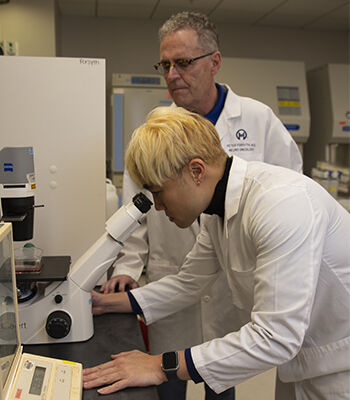
Moffitt researchers are advancing treatments for leptomeningeal disease.
In separate research, Forsyth is studying dendritic cell therapy, an experimental approach that uses a patient’s own cells to help the immune system recognize and attack cancer.
A separate phase 2 trial is currently investigating whether combining dendritic cell therapy with other treatments can improve outcomes.
“If you’re going to win a war, you can’t fight one battle at a time. You have to fight on multiple fronts,” Forsyth said.
As more work continues, researchers are working to build on these findings and develop new options for patients and families affected by leptomeningeal metastases.
“We owe it to our patients to keep pushing for better treatments. We can’t give up and we must keep working toward a cure,” Forsyth said.
 Medically reviewed by Kamran Ahmed, MD, Radiation Oncology Department