New KRAS-Targeted Drugs Show Early Signals in Advanced Lung Cancer
For people with advanced lung cancer, treatment often becomes more difficult over time as therapies lose their effectiveness. This is especially true for tumors driven by KRAS mutations, a group of genetic changes that for decades were considered nearly impossible to target with drugs.
New research presented at the American Association for Cancer Research Annual Meeting highlights how scientists are beginning to tackle that challenge. In two early stage studies, the investigational drugs elisrasib and zoldonrasib were shown to shrink tumors or slow cancer growth in patients whose disease had already progressed after chemotherapy, immunotherapy and in some cases earlier targeted treatments.

“These are the types of patients we worry about the most because their options are limited once standard therapies no longer work,” said Eric Haura, MD, medical oncologist in the Thoracic Oncology Department and associate center director of Clinical Science at Moffitt Cancer Center. “Seeing activity in this setting is encouraging from a research standpoint, even though the data are still early.”
The studies are small and the drugs are not yet approved, but experts say the findings reflect continued progress in a field that until recently had few answers for KRAS driven lung cancer.
Why KRAS-Driven Lung Cancer Is Hard To Treat
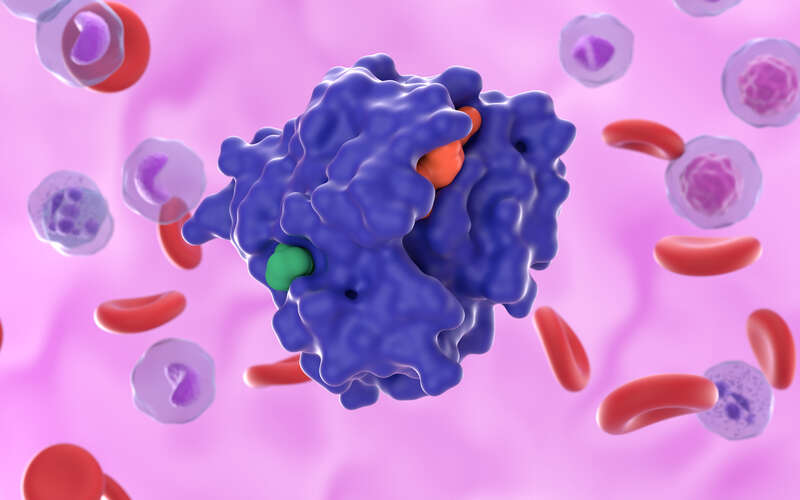
KRAS mutations act like a stuck accelerator pedal in cancer cells, constantly sending signals that promote growth and survival. For many years, those signals were extremely difficult to block without affecting healthy cells.
Even with recent advances, treatment remains challenging. Some KRAS targeted drugs work only for specific mutations. Others stop working as cancer cells adapt and develop resistance. Cancer spread to the brain is also common and adds another layer of complexity.
“KRAS is not just one mutation but a whole family of mutations, and each one behaves a little differently,” Haura said. “That makes drug development far more complex than in cancers driven by a single target.”
Because of these challenges, researchers are testing newer KRAS inhibitors designed to work in different ways, overcome resistance and reach cancer throughout the body.
After G12C Drugs Stop Working
One study focused on patients with the KRAS G12C mutation, one of the most common KRAS changes in lung cancer. Targeted drugs for G12C are already available, but they do not help everyone and often stop working over time.
In the trial, elisrasib was tested in patients with advanced disease. More than half of those who had not previously received a KRAS targeted therapy experienced tumor shrinkage.
Nearly all saw their cancer either shrink or stop growing.
The drug also showed activity in patients whose cancer had already progressed on older KRAS inhibitors. About 1 in 3 of those patients experienced tumor shrinkage during treatment.
-

1 in 3
Patients experienced tumor shrinkage during treatment with elisrasib
“That is an important group to study,” Haura said. “Once patients progress on an existing KRAS drug, we do not have a clear next step, so data like this help guide where research should go next.”
Side effects were generally manageable, which is a key consideration for patients who have already gone through multiple rounds of therapy.
A Step Forward for a Tougher KRAS Mutation
The second study focused on KRAS G12D, a mutation found in about 4% of lung cancer cases. Until now, there have been no approved targeted treatments for this mutation.
In this early trial, the investigational drug zoldonrasib showed measurable activity. Among patients evaluated, 52% had tumors that shrank and 93% experienced either tumor shrinkage or disease stability.
-

52%
Of patients evaluated had tumors that shrank from zoldonrasib
-

93%
Of patients experienced tumor shrinkage or disease stability from zoldonrasib
Patients remained on treatment for a median of more than 11 months before their cancer began to grow again. In a larger group studied for safety, researchers reported no severe treatment related side effects.
“G12D has been especially challenging to drug, so seeing responses at this stage is notable,” Haura said. “The key question now is how to advance this drug as a single agent and in combinations with other agents in patients with lung cancer.”
What Patients Should Take Away
KRAS mutations have long limited treatment options for people with advanced lung cancer. Recent advances in targeted therapy are changing how researchers approach these tumors, with drugs tailored to specific genetic changes.
Still, Haura emphasizes caution. These findings come from early phase studies that included relatively small numbers of patients. The trials did not compare the investigational drugs with standard treatments, so their full benefits and risks are not yet known.
“For patients reading about these results, it is important to remember that this is research in progress,” Haura said. “Clinical trials are how we learn whether these therapies truly change outcomes.”
Larger studies are now underway to determine whether these drugs can move closer to routine use in the future.