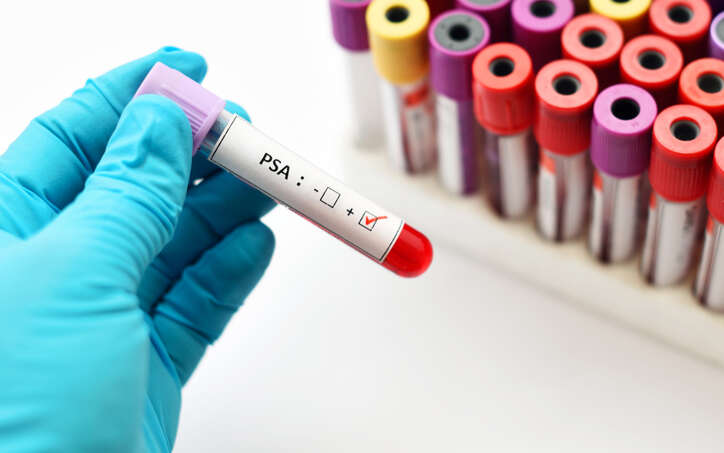

New Prostate Cancer Screening Guidelines Shift Toward Routine Testing
Key Takeaways:
- The American Cancer Society guidelines recommend routine PSA screening every two years for most men ages 50 to 69
- Black men and those with strong family histories of prostate cancer should begin annual screening at age 45
- Prostate cancer is the second leading cause of cancer death among American men, with 36,320 deaths estimated in 2026
The American Cancer Society (ACS) has updated its prostate cancer screening guidelines for the first time in more than a decade, recommending routine blood tests for most men beginning at age 50, a shift from previous guidance that encouraged individual decisions about screening.
The new guidelines recommend prostate-specific antigen (PSA) testing every two years for men ages 50 to 69 at average risk. Black men and those with strong family histories of prostate cancer should begin annual PSA testing at age 45.
-

333,830
Estimated new prostate cancer cases in 2026
-

36,320
Estimated prostate cancer deaths in 2026
Prostate cancer is the second leading cause of cancer death among men in the United States. The ACS estimates 333,830 men will be diagnosed with the disease in 2026, with an estimated 36,320 deaths.

Julio Pow-Sang, MD
“This is welcome news for men seeking advice regarding prostate cancer screening,” said Julio Pow-Sang, MD, chair of the Genitourinary Oncology Department at Moffitt Cancer Center. “This update has the potential of decreasing prostate cancer mortality.”
Why the Change?
For years, PSA screening has been controversial because of concerns about overdiagnosis and unnecessary treatment. While the blood test can help detect prostate cancer early, it can also identify slow-growing cancers that may never cause symptoms or require treatment.
According to Pow-Sang, longer-term research has provided a clearer understanding of how screening can reduce prostate cancer deaths. Advances in imaging and diagnostic tools have also made it easier to identify clinically significant cancers, or those more likely to grow and spread.
An elevated PSA level does not necessarily mean a man has prostate cancer, which is why additional testing may be needed.
Under the updated guidelines, men with elevated PSA levels should undergo repeat testing before additional evaluation. If levels remain elevated, physicians may use MRI or other tests to determine whether a biopsy is necessary. These steps can help reduce unnecessary procedures while identifying cancers that may require treatment.
Physicians are also better equipped to manage low-risk prostate cancers through active surveillance, which involves closely monitoring the disease rather than immediately beginning treatment.
“A better understanding of low-risk cancer and the adoption of active surveillance will decrease over-treatment,” Pow-Sang said.
Who Should Get Screened?
The updated ACS guidelines recommend:
- Men ages 50 to 69 at average risk: PSA screening every two years
- Black men and men with strong family histories: annual PSA screening from ages 45 to 69. A strong family history includes a first-degree relative diagnosis before age 65 or multiple first-degree relatives at any age
- Non-Black men with one first-degree relative diagnosis at age 65 or older: PSA screening every two years from ages 45 to 69
- Men ages 70 to 74: discuss the potential benefits and risks of continued screening with their physician
- Men 75 to 79: routine screening is generally not recommended, although exceptionally healthy men may consider continued testing after talking with their doctor
- Men 80 and older: screening is not recommended
Screening is also not recommended for men with a life expectancy of less than 10 years.
Pow-Sang says the updated recommendations clarify the value of screening and how it can be tailored to individual patients.
 Medically reviewed by Julio Pow-Sang, MD, Genitourinary Oncology Department