Patient Meets Donor on Three-Year Anniversary of Transplant
Key Takeaways:
• A German stem cell donor traveled nearly 5,000 miles to meet the Florida man whose life he saved.
• Lloyd Hyatt was diagnosed in 2022 with aggressive acute myeloid leukemia and needed a transplant to survive.
• After failed treatments, an intensive chemotherapy put Hyatt in remission and he received donor cells on April 10, 2023.
The Springing the Blues Music Festival in Jacksonville Beach is one of the area’s largest events. It showcases national, regional and local blues artists and brings in tens of thousands of people.
No one traveled farther for the festival than Jonas Kuschel from Wiesbaden, Germany. But he wasn’t there to just hear the music. He traveled all that way to meet the man who says Kuschel saved his life.
A Surprise Diagnosis
In May 2022, Lloyd Hyatt was feeling uncomfortable. Just shy of 70, the Navy veteran considered himself healthy and fit, so he knew something wasn’t right. A trip to the emergency room and a blood test later, he was hit with shocking news.
“The doctor said, ‘I hate to tell you this,’ and when they say that I know nothing good is going to come out of his mouth. ‘You have a rare and aggressive cancer and there is a lot of it, and we don’t know if we can stop it.’ It took the air out of me,” Hyatt said.
It was acute myeloid leukemia, a fast-growing cancer of the blood and bone marrow that prevents the production of healthy blood cells. Hyatt would need chemotherapy, with the ultimate goal of a stem cell transplant. Without one, Hyatt was told he would live only a little more than a year.
After his first round of chemotherapy, Hyatt’s doctor came back with another “I hate to tell you this.” The cancer had gotten worse. He tried a second round with the same result. His local oncologist said his next option was to try a more aggressive chemotherapy usually not offered to older patients.
“It knocked me out, it put me out,” Hyatt said. “I talked to my wife and my two daughters and just told them I couldn’t take it anymore. But when I met with the doctor he told me he had fantastic news: My cancer was in remission. He looked me in the eye and said, ‘Now is not the time to stop.’”
Hyatt was ready for his transplant. He just needed a match.
Perfect Match
In 2017, a then 18-year-old Jonas Kuschel registered to be a stem cell donor in his hometown in Germany with the National Marrow Donor Program. His girlfriend at the time was a childhood cancer survivor, and his father, also a registered donor, had previously been matched with a recipient.
“I saw the excitement in his eyes that he could help,” Kuschel said.
Five years later, Kuschel felt that same excitement. He had been matched.
Almost 5,000 miles away, Hyatt had been waiting. He had transferred his care to Moffitt Cancer Center and was receiving less intense chemotherapy while waiting for a donor. On April 10, 2023, Hyatt received Kuschel’s cells.
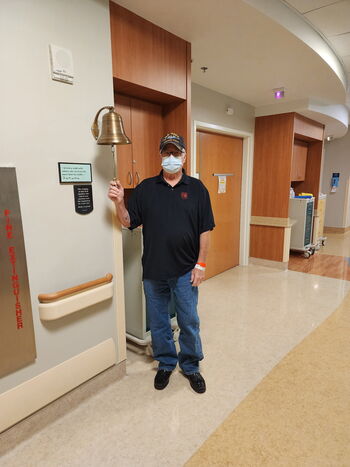
Lloyd Hyatt rings the bell at Moffitt Cancer Center after finishing his treatment.
Typically, there is a mandatory one-year waiting period in the U.S. for transplant recipients to be able to contact donors. Since Kuschel is an international donor, Hyatt had to wait two years to reach out.
When it was time, Hyatt was able to obtain Kuschel’s contact information. He sent the first email.
“I was shocked when I found out he was in Germany,” Hyatt said. “Every now and then the emotions just hit me. How do you tell a guy thank you?”
Kuschel was equally as happy to be connected.
“I always hoped the donor would get in touch. The first thing I did when I made my donation was ask when I would be able to know who it is,” Kuschel said.
After talking via email and phone, Hyatt had an idea: an upcoming music festival he was helping plan fell on the three-year anniversary of his transplant.
“I told Jonas, ‘I can’t thank you enough, but I would sure like to see you. Is there any possibility that you could come over here?’”
To Hyatt’s delight, Kuschel said yes. He and his girlfriend planned their first big trip to the United States, centered around meeting Hyatt at the music festival.
One Swab + One Donor = One Life
Hyatt says Springing the Blues brings about 75,000 to Jacksonville Beach. But there was only one person he was looking for the night of April 10.
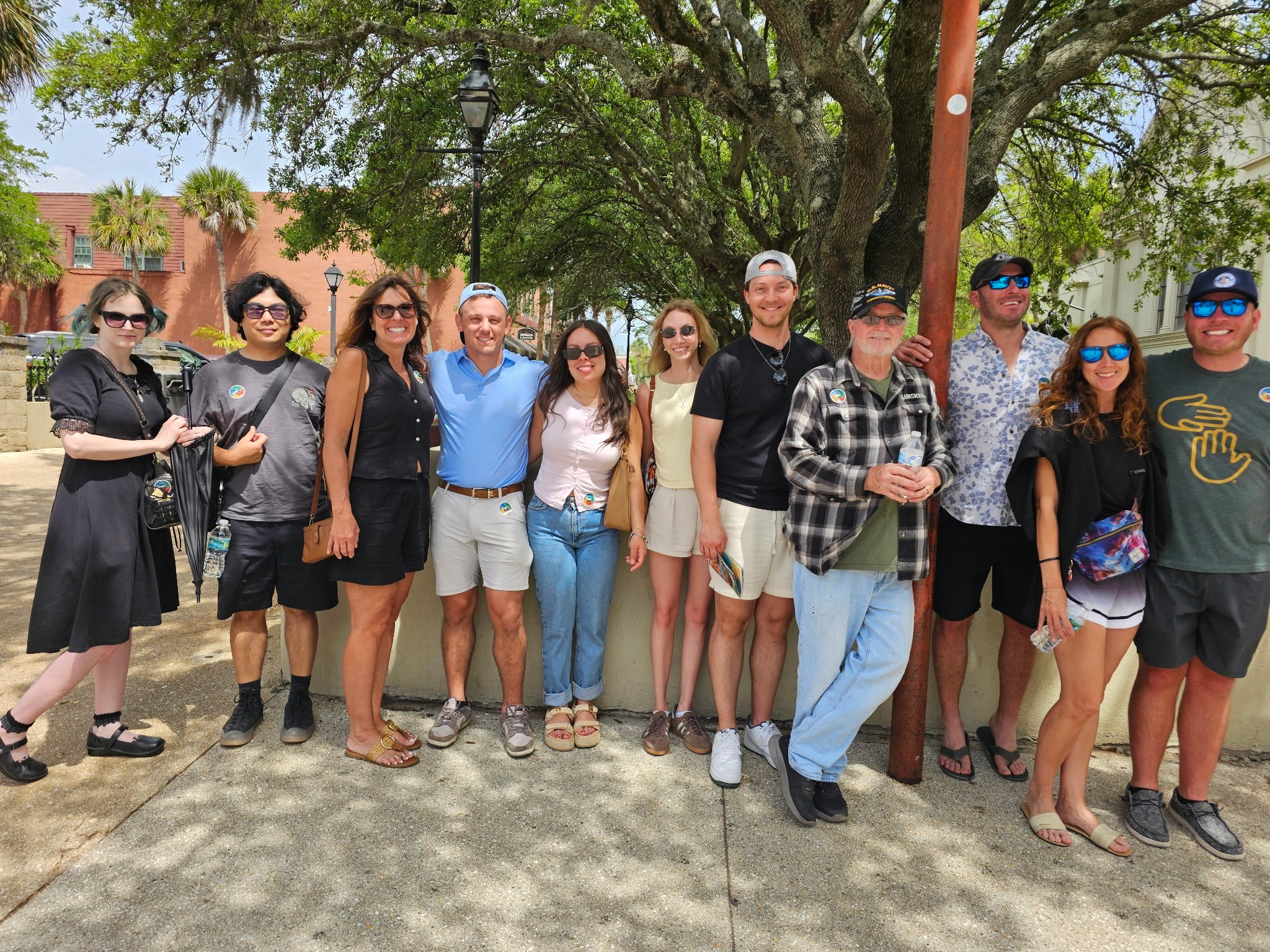
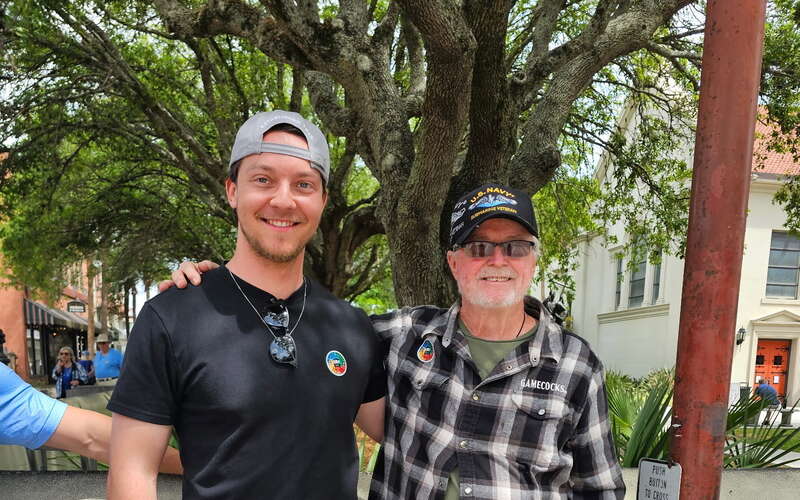
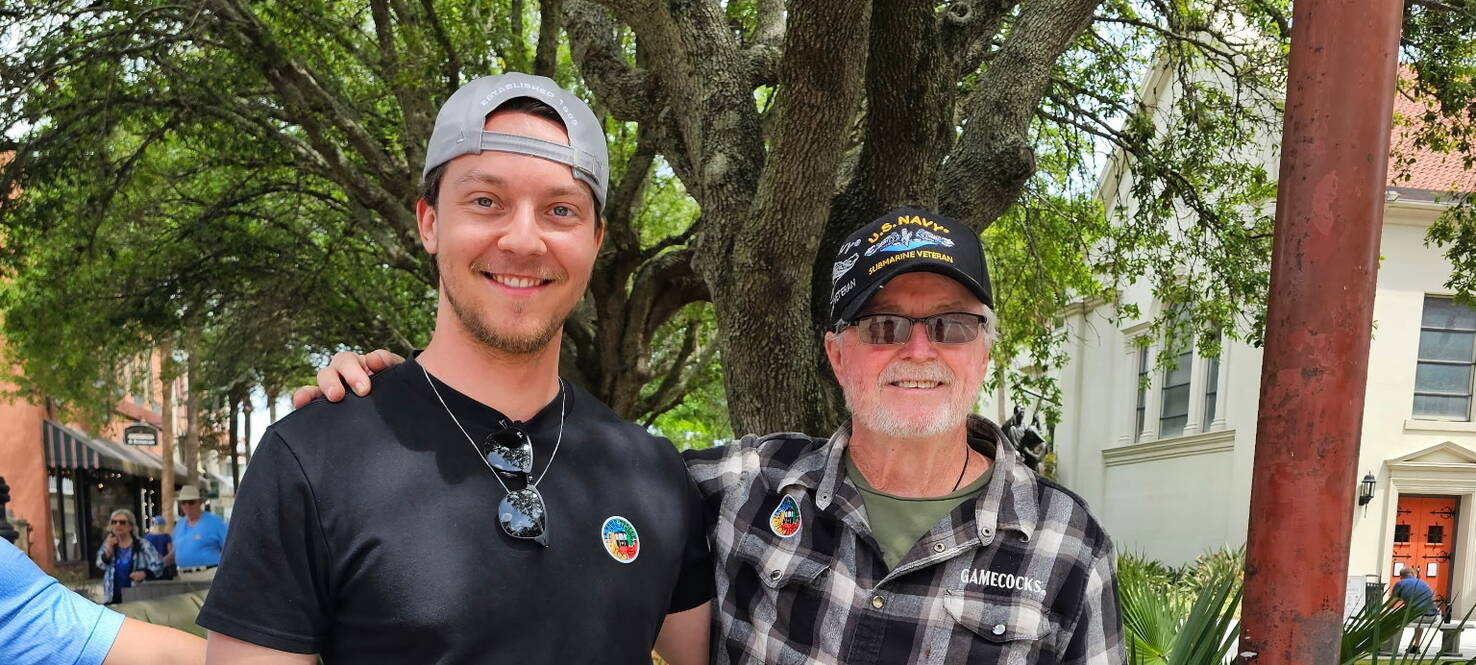
Hyatt and Kuschel spend time together with family and friends during Kuschel’s trip to the United States.
“When I saw Jonas, I instantly recognized him. He had a big smile on his face, and it has just been a treasure to have him here,” Hyatt said.
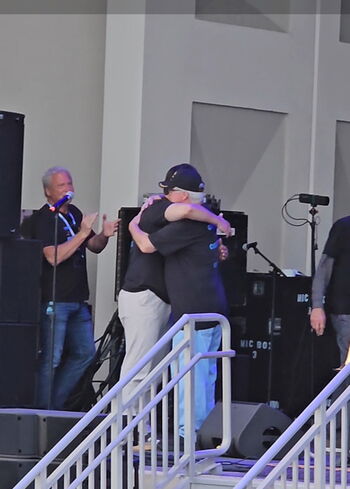
Kuschel and Hyatt spoke to the crowd from the stage to stress the importance of registering to beome a donor.
The night was about more than just the pair meeting — it was about raising awareness. The National Marrow Donor Program was on-site registering donors, and both men put aside their fear of being in the spotlight to speak to the crowd on stage about the importance of registering. They wore matching T-shirts that said “The Jonas Project” on the front and “one swab + one donor = one life” on the back.
“What we are praying for is for someone to get their cheek swabbed and then down the road they become the donor that saves someone’s life,” Hyatt said.
After the music festival, Hyatt and Kuschel were able to spend more time together with their families, including taking a road trip to St. Augustine. They have all developed a very special bond and say they feel like they have known each other for a long time.
Hyatt says the entire experience, from beating his aggressive disease to meeting the stranger from Germany who saved his life, is nothing short of a miracle.
“I would prefer not to be part of a story like this, but this is me. I know how fortunate I am,” Hyatt said.