Program Provides Spanish-Language Resources for Families Affected by Cancer
Key takeaways:
- Moffitt Cancer Center’s Families First program added Spanish-language materials to help children cope with a loved one’s diagnosis
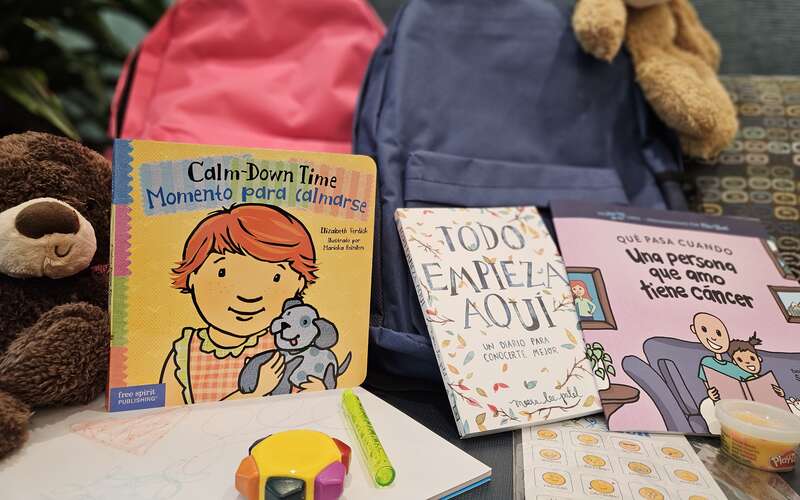
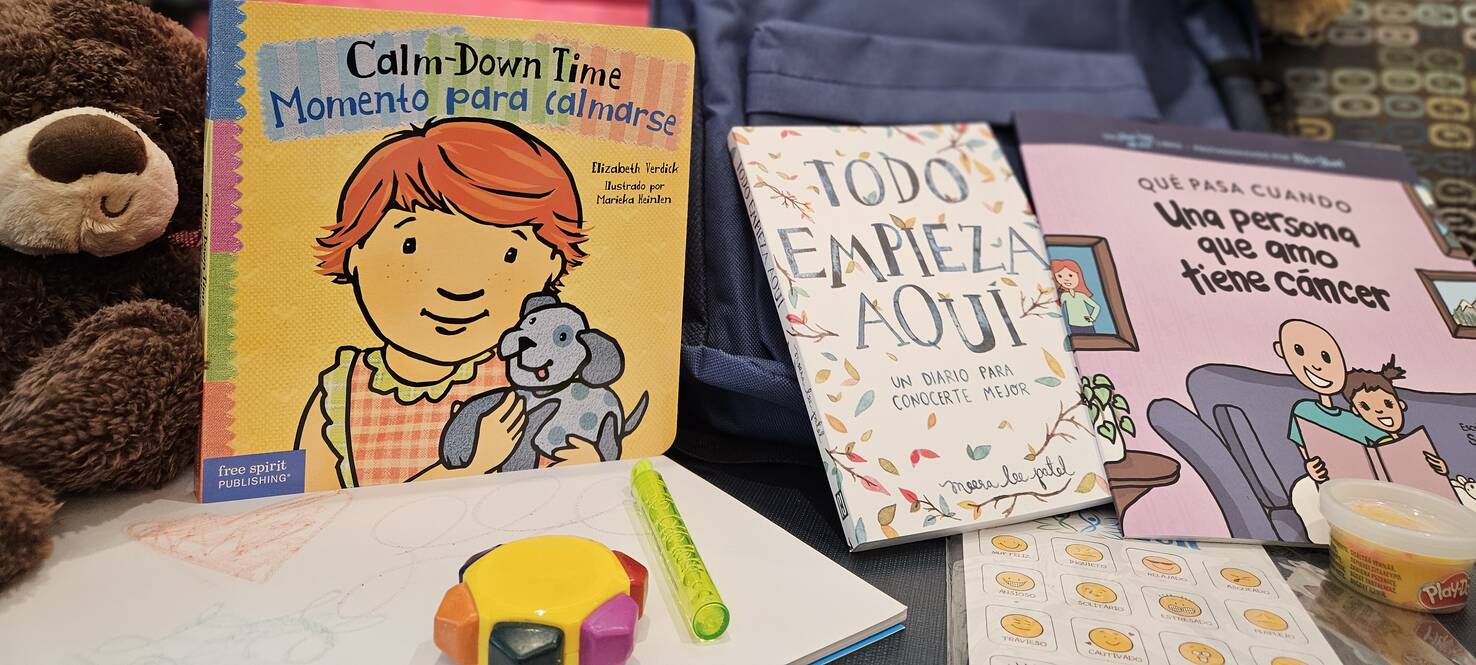
- The backpacks include books, therapeutic tools and educational materials to help children understand cancer and process emotions
- The expansion helps address communication barriers for families navigating a parent’s cancer diagnosis
Navigating a cancer diagnosis is challenging at any age but gaps in access to language-appropriate resources can make an already difficult experience more overwhelming.
Moffitt Cancer Center’s Families First program recently expanded its initiative to offer backpacks filled with educational and therapeutic resources by adding Spanish-language materials to help more families access support as they navigate a cancer diagnosis together.
“For Spanish-speaking families, having these materials in their preferred language means better understanding and communication, greater confidence in having these tough conversations, as well as greater trust and connection with their social worker and improved access to resources,” said Yenisel Suarez, a licensed clinical social worker at Moffitt.
Expanding Access
The backpacks include books, therapeutic tools and other educational materials designed to help children understand cancer, express their feelings and cope with uncertainty that can accompany a family member’s diagnosis.
The materials offer age-appropriate materials for parents or guardians to explain cancer to their children while providing tools to help children process their emotions and difficult circumstances, Suarez said.
Families have expressed appreciation for information that feels understandable and relevant to their needs.
Suarez hopes the backpacks help patients and their families feel supported, informed and empowered during what can be an incredibly stressful time.
“Our hope is that providing resources in their preferred language will make important information more accessible, reduce barriers and help families feel more comfortable asking questions and having more open communication,” Suarez said.
Helping Families Cope
Just as importantly, Suarez hopes families recognize they do not have to navigate the cancer journey alone. Connecting families with meaningful resources in a language they understand can help foster a greater sense of support.

Since its launch, the Families First program has helped families navigate difficult conversations about cancer more openly. Parents have shared how the program’s resources have helped their families discuss the challenges of cancer.
With the addition of materials in Spanish, families have expressed appreciation for information that feels understandable and relevant to their needs.
“It has been meaningful to see how something as seemingly simple as receiving information in a familiar language can help families feel more comfortable,” Suarez said.
Patients can contact the Social Work Department directly or ask their care team to connect them with a social worker.