

Virtual Nursing Program Extends Careers While Expanding Care
Key Takeaways:
-
Moffitt’s virtual nursing program allows experienced nurses to support patients and bedside teams across two hospitals and an acute cancer care center
-
Virtual nurses monitor patient conditions, assist with clinical assessments and help identify potential complications before they escalate
-
The program offers veteran nurses a way to extend their careers by sharing clinical expertise without the physical demands of bedside care
For nearly two decades at Moffitt Cancer Center, Candi Beuer has cared for patients during some of the most difficult moments of their lives. She has comforted families at the bedside, guided new nurses through challenging situations and spent countless hours in intensive care units helping patients navigate serious illness.
Today, she still does all those things. The difference is that much of it now happens through a screen.
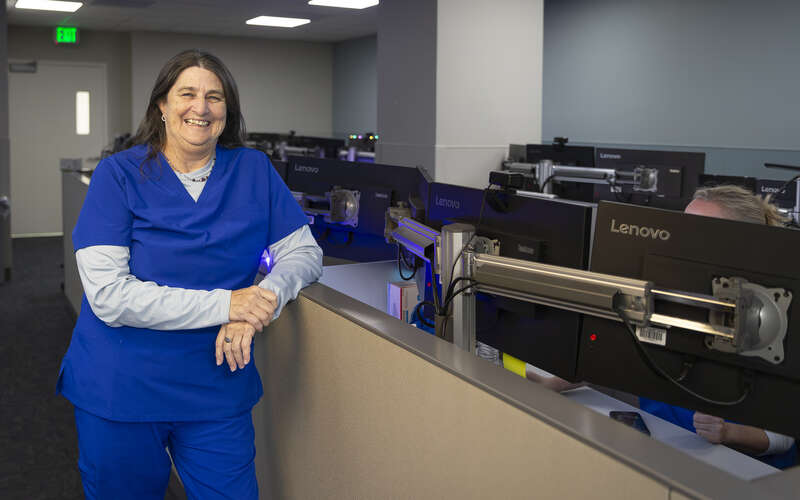
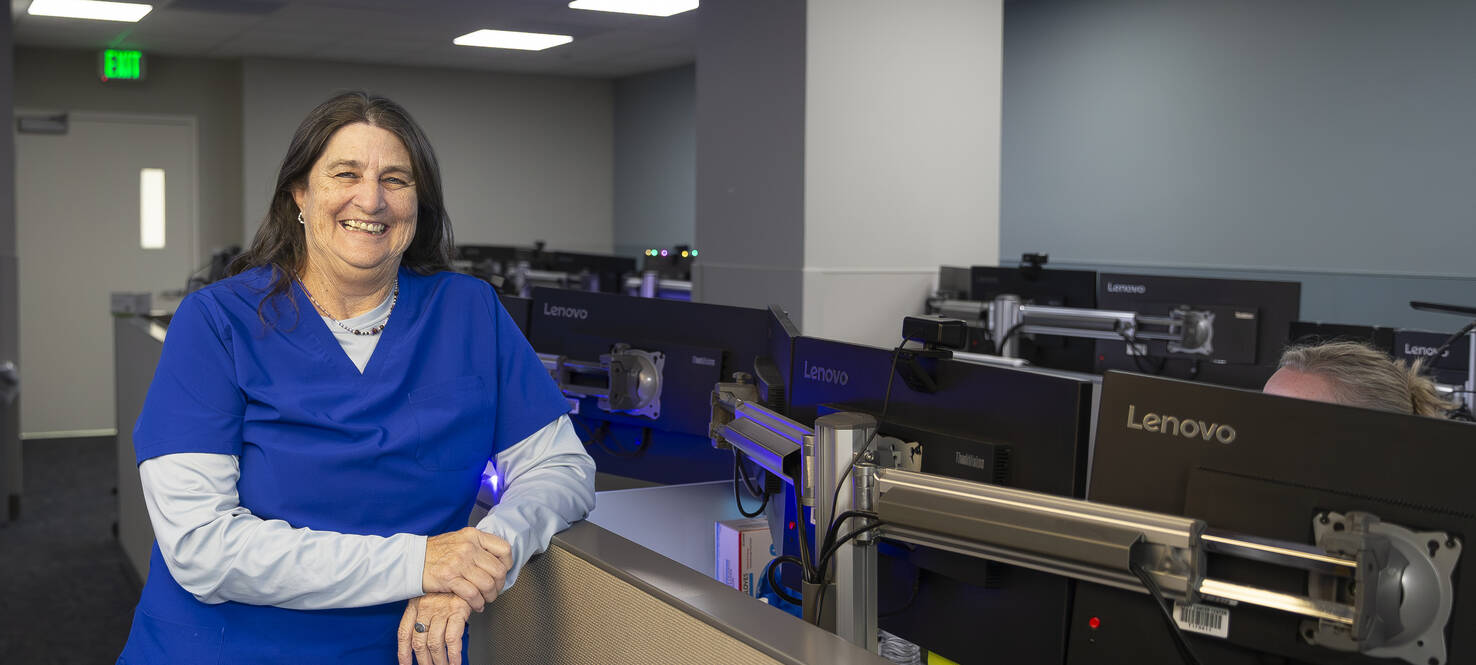
From her workstation inside Moffitt’s Mission Control, Beuer serves as one of the experienced virtual nurses helping support patients and care teams across the organization. While she may no longer spend 12-hour shifts on her feet in the ICU, her impact reaches further than ever before.
For Beuer, this role represents the culmination of a nursing journey that has been anything but traditional. “This role takes my entire career and bundles it into one,” she said. “Everything I’ve done has led me here.”
The Eyes in the Sky
Inside Mission Control, virtual nurses such as Beuer serve as what many teams call the “eyes in the sky.”
Using advanced technology and clinical expertise, they monitor patient conditions across Moffitt’s two hospitals and the acute cancer care center, support bedside nurses and identify potential concerns before they escalate.
Virtual nurses assist with admissions and discharges, conduct assessments, support chemotherapy safety checks, monitor patients for signs of sepsis, answer clinical questions, assist with suicide risk screenings and provide guidance to bedside teams.
This role allows experienced nurses like Beuer to extend their reach far beyond a single patient assignment. For example, one instance occurred during an admission assessment when Beuer noticed a patient experiencing severe pain.
Because she was connected virtually, she was able to immediately contact the bedside nurse and alert the care team. Pain medication was delivered quickly, allowing the patient to find relief while the assessment continued.
This example demonstrates the power of having another experienced clinician watching, listening and responding in real time.
“We’re there when they need us,” she said.
An Unexpected Path to Nursing
Ask Beuer when she knew she wanted to become a nurse, and she’ll laugh before answering. “It’s a long story,” she said. In fact, nursing wasn’t her first career.
Before entering healthcare, Beuer coached swimming for a decade. Then she spent another 10 years traveling across the country installing wallpaper in hotels.
“One day I thought, ‘My body hurts. I don’t want to do this anymore. I’m going to nursing school,’” she recalled. The decision wasn’t as sudden as it sounds. Throughout her life, she had always been the person others turned to for help. As a lifeguard and swim coach, caring for people came naturally.
“Nursing just made sense,” she said.
She earned her licensed practical nurse credential at a vocational school in Tampa and began working in long-term care. After becoming a registered nurse, she moved into nursing leadership roles and eventually worked in intensive care.
Finding a Home at Moffitt
When Beuer joined Moffitt in 2008, she knew she had found a place where she could focus on what mattered most. She spent the next 17 years working in critical care, caring for some of the organization’s most complex patients.
Along the way, she continued investing in her education, earning both her Bachelor of Science in nursing and a master’s degree in nursing education while working full time.
“I’ve always believed in learning,” she said.
Her colleagues knew her as an experienced nurse who willingly shared knowledge and offered support whenever it was needed. But as the years passed, the physical demands of bedside nursing became increasingly difficult.
“I noticed I was slowing down,” she said. “My body was aching. I was tired. It took longer to recover from working those 12-hour shifts.”
Like many veteran nurses, she began wondering what came next. Around that time, Moffitt was expanding its virtual nursing program, creating a new pathway for experienced nurses to continue contributing their expertise in a different way. Mission Control launched in the summer of 2025.
For Beuer, the role offered the perfect blend of patient care, mentorship and clinical problem-solving without the physical demands of bedside nursing. Today, she says it was one of the best decisions she could have made.
“I love it,” she said. “My body loves it even more.”
The Human Side of Virtual Nursing
For some patients, the idea of a virtual nurse can sound impersonal.
Beuer understands that reaction. Many patients assume they are speaking with an automated system or artificial intelligence when an iPad appears in their room. That misunderstanding usually disappears within moments.
“I always introduce myself and tell them, ‘Hi, I’m Candi. I’m a real person. I’m actually downstairs in the building,” she said. Then the conversation begins. Sometimes it starts with admission questions. Other times it turns into stories, jokes and laughter.
One of her favorite examples comes during a standard safety screening question. “We ask if anyone hurts, hits or threatens them at home,” she said. “I’ve had patients tell me, ‘Yeah, my dog does.’”
The exchanges create opportunities for connection. Despite the technology between them, Beuer has discovered that compassion translates remarkably well through a screen.
“You just talk to people,” she said. “You make them comfortable.”
Redefining What Nursing Can Be
When Beuer reflects on the future of nursing, she sees virtual care not as a replacement for bedside nursing but as an extension of it. “I think we’re augmenting nursing,” she said.
It also offers a pathway for nurses whose physical abilities may change over time, but whose expertise remains invaluable. For Beuer, that opportunity has been transformative.
In Mission Control, behind the screens and technology, Beuer continues doing what she has always done best: caring for people.
