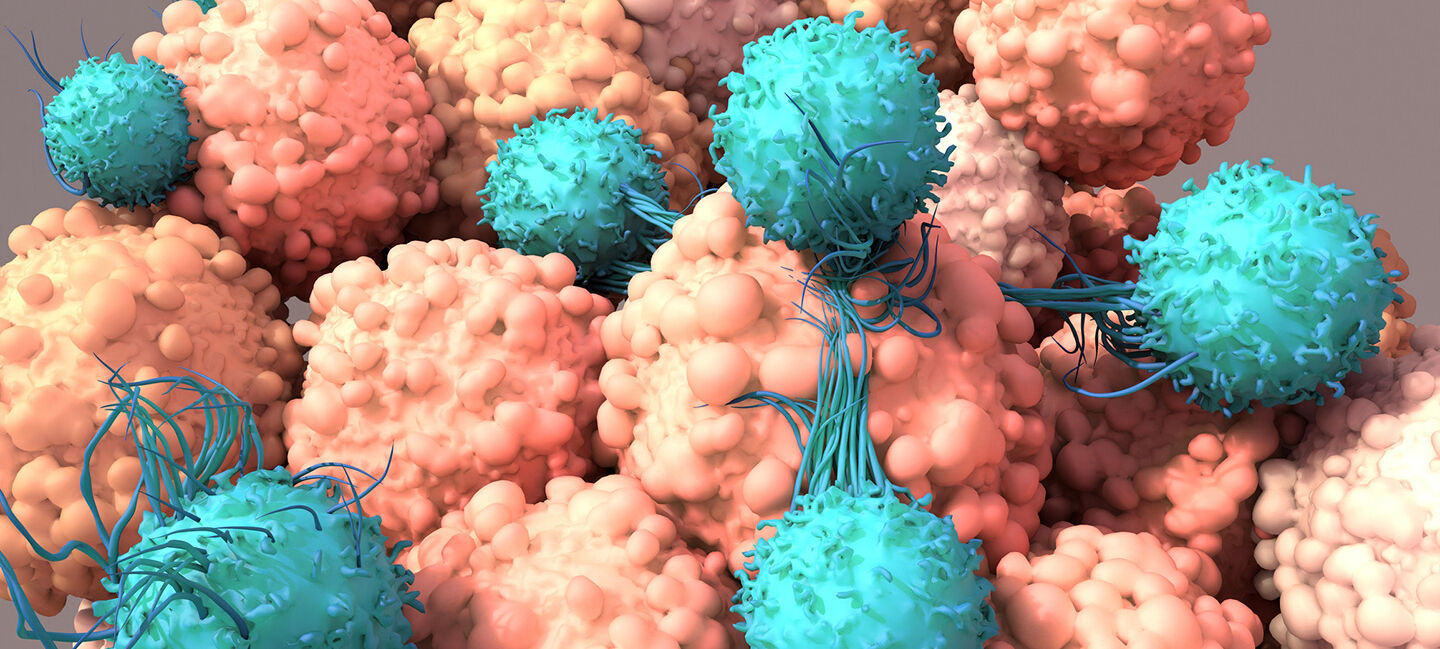
Moffitt Researchers Find Ways to Improve How a T Cell Fights Cancer
Key Highlights
- Two types of T cells, alpha-beta and gamma-delta, can kill cancer cells when used in CAR T immunotherapy. But a study conducted at Moffitt Cancer Center showed that they differ in key areas, such as how they use energy and how they respond to signals that activate them.
- Moffitt researchers identified ways that improved gamma-delta cells' ability to use energy and increase their persistence in bone metastases.
- The findings provide tools to tailor CAR T therapies to the specific type of T cell being used rather than treating all T cells the same way.
- Better-functioning and longer-lasting gamma-delta CAR T cells could contribute to new treatments for solid tumors in the future, including cancers that spread to bone.
TAMPA, Fla. — By turning a patient's own immune cells into stronger cancer-fighting cells, CAR T-cell therapy has transformed how some blood cancers are treated. But it’s been harder to extend this approach to solid tumors, including cancer that has spread to the bone.
Daniel Abate-Daga, Ph.D., associate member at the Department of Immunology and scientific director of the Cell Therapies and Gene Engineering Facility at Moffitt Cancer Center, leads a research team whose mission is to uncover the biological processes that prevent CAR T cells from achieving their full potential in solid tumors, and to engineer new and more efficacious treatments. As part of that effort, the team developed a CAR T-cell treatment designed specifically to treat bone metastatic prostate cancer. This treatment takes advantage of the unique biological properties of one specific type of T lymphocyte: gamma-delta T cells. Unlike the conventional alpha-beta T cells used in all the FDA-approved CAR T treatments, gamma-delta T cells can interact with other medications administered to patients with bone metastatic cancers, leading to increased potency without compromising safety.
Now, the team has investigated new ways to improve upon that CAR T therapy, and they did so by carefully studying the biology of both types of white blood cells: alpha-beta and gamma-delta T cells. The study, published in Cellular and Molecular Immunology, used human T cells and cancer cells and mouse models, including prostate cancer that had spread to bone to test how well these genetically engineered cells would do in a patient.
The researchers prepared both types of T cells with the same chimeric antigen receptor, or CAR. A CAR is a genetically engineered protein placed on the surface of a T cell that helps the cell recognize a target molecule on a cancer cell and activate the T cell to attack it.
While the researchers found no significant difference in how effective the two types of cells were at killing cancer cells, the cells differed in several important ways.
One involved immune signaling. Gamma-delta CAR T cells produced fewer signaling molecules, including interferon-gamma, tumor necrosis factor-alpha, granzyme B, and interleukin-2, which help carry out immune responses. Lower levels might mean fewer inflammatory side effects associated with CAR T therapy. However, that prospect would have to be examined in future studies.
Second, the researchers found differences in how the two types of cells use energy (metabolism). Gamma-delta CAR T cells produced and used energy more slowly than alpha-beta cells, which may help explain their lower production of some immune-signaling molecules. Based on this finding, the researchers modified the cells’ metabolism to see if it could enhance their performance.
Enhancing how gamma-delta T cells do their job
To start, the team examined TXNIP, a protein that helps regulate how cells use glucose. TXNIP levels were higher in gamma-delta T cells than in alpha-beta T cells. The researchers hypothesized that these higher levels might contribute to lower metabolic activity in the cells. They then reduced TXNIP, either via treatment with a drug or by removing the relevant gene with CRISPR gene editing. Both approaches improved the capacity of gamma-delta cells to produce energy, express CAR, and generate substances that stimulate the immune system.
The researchers also sought to increase the cells’ ability to remain in the bone marrow, which would be crucial in fighting cancers that have spread to bone. They did this by engineering the gamma-delta T cells with a receptor that recognizes RANKL, a molecule found in bone and in the tumor microenvironment.
In mice with prostate cancer that had spread to bone, both conventional gamma-delta CAR T cells and the modified cells controlled tumor growth. But more of the modified gamma-delta T cells stayed in the bone marrow, indicating that the added signal helped the cells remain there longer. A similar trend appeared in a separate mouse model of multiple myeloma.
If researchers can make gamma-delta CAR T cells work better and stay in the body longer, they might be able to develop effective therapies for cancers that are hard to treat with conventional CAR T approaches.
Q&A with Daniel Abate-Daga, PhD
You developed a receptor that gives T cells an additional signal when they encounter RANKL in the bone and tumor environment. How does that help against cancers that spread to bone?
With this approach, we aim to “train” gamma-delta CAR T cells to go an extra mile once they arrive at the bones where the tumors are located. With this new instruction to stay active, we aim to prolong their ability to kill tumor cells. The importance of delivering this boost specifically in the bones where the tumors are located (and where the levels of RANKL are the highest) is to prevent the CAR T cells from going rogue and damaging healthy tissues.
What else would you have to learn from additional lab and animal studies before the approaches you identified could someday be tested in patients?
In order to start testing this concept in patients, we need to provide additional preclinical evidence to the FDA indicating that the therapy is active and, most importantly, safe for the patients. The good news is that we have already completed those studies. Our goal is to start treating patients with the new product in the spring of 2027, as part of a clinical trial led by Jingsong Zhang, M.D., Ph.D., here at Moffitt Cancer Center.
This work was supported by the National Cancer Institute (P30-CA076292, R01CA241169, R01 CA301640), Bankhead-Coley Award 25B03 and the Todd and Karen Wanek Family Foundation.
About Moffitt Cancer Center
Moffitt is dedicated to one lifesaving mission: to contribute to the prevention and cure of cancer. The Tampa-based facility is one of only 58 National Cancer Institute-designated Comprehensive Cancer Centers, a distinction that recognizes Moffitt’s scientific excellence, multidisciplinary research, and robust training and education. Moffitt’s expert nursing staff is recognized by the American Nurses Credentialing Center with Magnet status, its highest distinction. For more information, call 1-888-MOFFITT, visit MOFFITT.org, and follow the momentum on Facebook, X, Instagram and YouTube.
###