

A Chance to Finally Go Home
Key Takeaways:
-
After aggressive non-Hodgkin lymphoma treatments failed, a 79-year-old patient received bispecific T-cell engager therapy
-
The immunotherapy offered an option for him, who was too medically fragile for additional aggressive treatments
-
In May 2026, he reached complete remission and can continue treatment monitoring close to home in Florida
The Russos just want to go home.
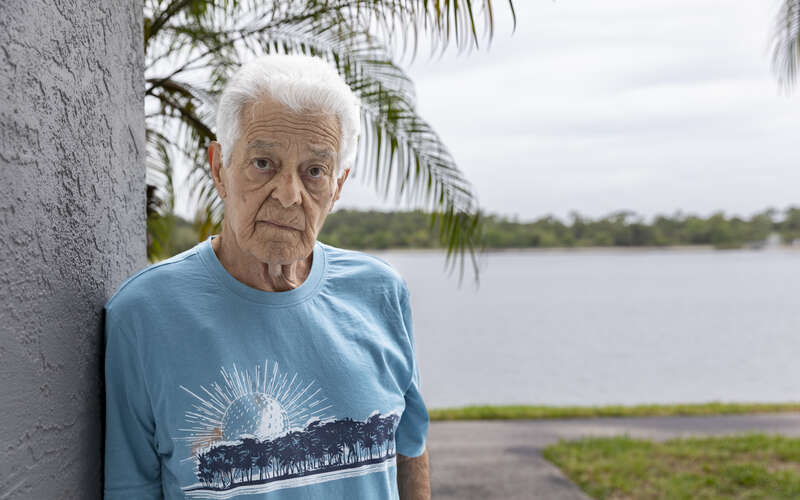
While Anthony Russo and his wife, Eileen, have enjoyed their community in Fort Myers for the past five winters, the Massachusetts natives never expected to spend more than six months at a time in their southern home. Their plans shifted in November 2024 when Anthony, 79, discovered a lump under his arm. Concerned, he visited his primary care provider, who suspected cancer and sent him to a local oncologist.
The oncologist confirmed their fears. Anthony had an aggressive type of non-Hodgkin lymphoma.
“He was going to be on a very aggressive treatment plan,” recalled Eileen, who has been diligently caring for Anthony since his diagnosis and said doctors wanted to use chemotherapy and radiation multiple times a week. “He went for one eight-hour treatment, and the following day, when he was supposed to go back, he was sent to the hospital.”
When he arrived for his second treatment, Anthony had difficulty breathing. The doctors at the local hospital discovered a blockage in Anthony’s heart. He was immediately scheduled for a quintuple bypass, postponing his cancer treatment.
“That delayed everything about six weeks,” Eileen said. “His doctor and the cardiologist determined they couldn’t go as aggressively as they wanted to with the cancer treatments.”
With lower doses of chemotherapy, the cancer treatments continued and Anthony handled them well. Unfortunately, his cancer did not respond to chemotherapy, putting him at very high risk of dying within a few months if the disease remained uncontrolled. At this point, Anthony was weak and, given his multiple complicated medical problems, was not a candidate for further standard aggressive treatment options to cure his cancer.
Anthony’s community oncologist recommended the Russos visit Moffitt Cancer Center for a completely different approach.
The Russos again delayed their return to Massachusetts. They remained in Florida and drove to Tampa to meet with the team at Moffitt.
An Ideal Candidate for BiTE Therapy
The Russos were not familiar with Moffitt prior to his diagnosis and had considered returning home to Boston to seek a new treatment for Anthony. However, after speaking with Sameh Gaballa, MD, a hematologist and medical oncologist in the lymphoma section of the Malignant Hematology Department at Moffitt, they felt like their best option was to stay in the Sunshine State.
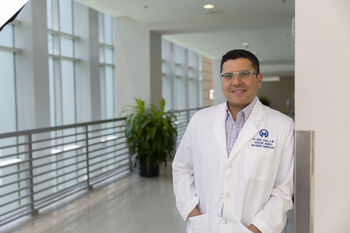
Sameh Gaballa, MD, explains that cancer patients with challenging health issues are excellent candidates for BiTE therapy.
They learned the cancer center could administer a novel immunotherapy called bispecific T-cell engager (BiTE) therapy. The innovative immunotherapy directs a patient’s own immune cells to target cancer cells with precision and can be administered through an outpatient infusion.
After being monitored on the initial treatments at Moffitt, Anthony could continue receiving the BiTE therapy administered by his local oncologist closer to their home in Fort Myers. Anthony traveled to Moffitt for his first treatment in December.
“Our friends told us, to be honest, that we should go back north and get treatment,” Eileen said. “But I thought it was better for him to be down here in the sunshine than being stuck in a house during winter.”
Anthony agreed. He also felt like he was in the right hands with his care team in Florida.
“I told my wife, ‘Hey, if I’m going to do it, I’m going to stick with these people here.’ I told them that whatever they wanted to do, go ahead and do it,” Anthony said.
Understanding BiTE Therapy vs. CAR T
Immunotherapy takes several forms when it comes to treating cancer. Chimeric antigen receptor T-cell (CAR T) therapy, for example, is commonly used to treat patients with non-Hodgkin lymphoma.
It helps reprogram the patients’ own immune cells to attack specific cancer cells. But that type of therapy is difficult on the body, requires a lot of time in the hospital and is not recommended for all patients with significant underlying health problems.
“We do a lot of CAR T therapy at Moffitt, but for Anthony, he wasn’t a candidate because his medical situation was more complicated,” Gaballa said. “He was an ideal candidate for bispecific antibody therapy since the incidence of inflammatory conditions and their severity is much lower.”
Cancer patients with challenging health issues are excellent candidates for BiTE therapy because it works differently from CAR T, Gaballa said. Rather than extracting a patient’s T cells for reprogramming like in CAR T, BiTE therapy doesn’t require cell extraction and reinfusion. Instead, it’s an off-the-shelf therapy tha
t is injected into the patient and bonds to individual immune cells.
“While BiTE is inside the body, the therapy acts as kind of a magnet,” Gaballa explained. “It pulls your own T cells and attaches them physically to the cancer cells so they can go in and kill it.”
The outpatient therapy is used to treat several blood cancers, including acute lymphoblastic leukemia, multiple myeloma, lung cancer and melanoma. There is also promising potential for the therapy to be used in other solid tumor cancers found in the prostate, breast or gastric system, Gaballa said.
At Moffitt, the Specialized Oncology Non-Cellular Immunotherapy Comprehensive Care program, known as SONIC, is a dedicated unit with a specialized team to administer these novel bispecific antibody therapies both in the outpatient and inpatient settings. The SONIC service also enables patients to receive cutting-edg
e investigational bispecific antibodies on clinical trials for many different types of cancers.
The SONIC service monitors the patients initially and can then coordinate with local oncologists to allow patients to continue BiTE therapy near their home. It’s an innovative way to make cancer care more accessible and more convenient. However, patients must stay close to the cancer center for the first two cycles so Moffitt specialists can manage any early side effects.
In Anthony’s case, BiTE therapy was combined with Polatuzumab, a targeted cancer therapy used to treat specific types of aggressive non-Hodgkin lymphoma.
To begin his treatment, Anthony and Eileen booked a hotel room near Moffitt as Gaballa and the SONIC team recommended. If Anthony experienced any side effects from the BiTE therapy, Moffitt’s team was nearby.
Fortunately for Anthony, his first two treatments were successful and without any uncomfortable side effects.
“None of this has bothered him in the least,” Eileen said. “He would drive himself to his appointments if I’d let him.”
World-Class Care Via Virtual Monitoring
Because Anthony’s response was so positive, the Russos were able to return to Fort Myers and continue treatments locally. Gaballa worked with Anthony’s local oncologist to ensure the BiTE therapy treatments continued successfully, and he checked in regularly on the Russos through video calls.
The convenience of local care paired with virtual checkups meant that Anthony could continue to benefit from Moffitt’s world-class expertise without spending two hours in the car each way for every infusion.
For six months, Anthony had continued success with the ongoing therapy, which involved a treatment dose every three weeks. He tolerated BiTE therapy well, and the only impact he noticed is a little weakness in his legs and a hit to his social life. “Before this we were playing shuffleboard and bags,” Anthony said. “We were very active.” The couple backed away from social commitments and events in their community during his treatment, simply because they were unsure of how the therapy and his cancer would impact their schedule. Still, Eileen said their southern neighbors have been extremely supportive.
“Everybody prayed for him and dropped by to see how he was doing. Everyone was very concerned,” Eileen said. “It’s a wonderful community down here where we are.”
Finding The Path to Remission
In May 2026, the Russos finally heard the words every cancer patient wants to hear: “You’re in complete remission.”
Scans showed that Anthony’s BiTE therapy was successful, with no indication of non-Hodgkin lymphoma. Part of the success can be credited to Anthony’s lack of other extensive therapies preceding BiTE therapy, Gaballa said.
“The earlier you administer BiTE therapy, the better chances for the right outcome,” Gaballa explained. In cases like Anthony’s, the therapy is only available after other options are exhausted. “So, if you’re doing it early on like Anthony did, where there weren’t a lot of other therapies involved, you can reach remission.”
While remission has always been the goal, Anthony is not yet considered “cured.” Gaballa will continue to monitor him every six months with CT scans to check for any disease recurrence.
“Anyone who reaches remission following the full course of treatments will continue to be monitored every six months or so,” Gaballa said. “The imaging studies will help us monitor the disease to determine if there is any evidence of recurrence. If it hasn’t come back after two years, many patients are considered ‘cured’ at that point.”
There’s No Place Like Home
Anthony is almost as excited to return to Massachusetts as he is to be in remission. The former pipefitter and business manager of his local union is looking forward to returning to the home he has shared with his wife for more than 54 years. It’s a home he hasn’t seen in nearly two years.
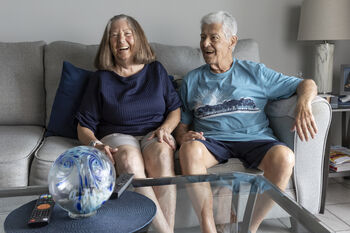
The Russos are excited to get back to their home in Massachusetts, but they're not ruling out a permanent move to the Sunshine State.
“As soon as Dr. Gaballa says it’s OK to go home, I’m gone,” Anthony laughed. “I know I can’t do a lot of the things I used to do because I kind of run out of gas, you know? But we’re going to try.”
Anthony is thankful for Gaballa and the whole Moffitt team for the treatment he received. In fact, he said he’s proud to give the cancer center and the doctor a glowing endorsement.
“I’d recommend him to anybody,” Anthony said. “I would tell people from Massachusetts to come down and see him, he’s so good!”
Eileen also praises Gaballa and Anthony’s medical team of doctors, advanced practice providers and nurses, but she credits Anthony’s go-with-the-flow attitude through it all.
“You know, he’s made it through all of this and didn’t let anything bother him, which was probably a good thing,” Eileen said. “His cardiologist thinks he’s a miracle.”
As the Russos prepare to return to the Northeast, they’re excited to explore their options for the future. Will they remain snowbirds, or will they return to Florida full time? They’ve not decided. But it’s a discussion they’re looking forward to having soon.
“As far as moving down here permanently, that’s something Anthony has wanted to do all along,” Eileen said. “I’m the one who was on the fence. But we’ve enjoyed the weather, the pool, the yard and community here in Fort Myers.”
Whatever they decide, they’ll decide together. Anthony said he’s trusted his wife for more than 50 years to help make the right decisions and guide them, and it was she who asked the right questions to navigate his cancer treatment.
That’s something Eileen is quick to confirm.
“Oh yeah, he owes me big time,” Eileen laughed. “I remind him of that every day.”
This story originally appeared in Moffitt's Momentum magazine.
 Medically reviewed by Sameh Gaballa, MD, Malignant Hematology Department
