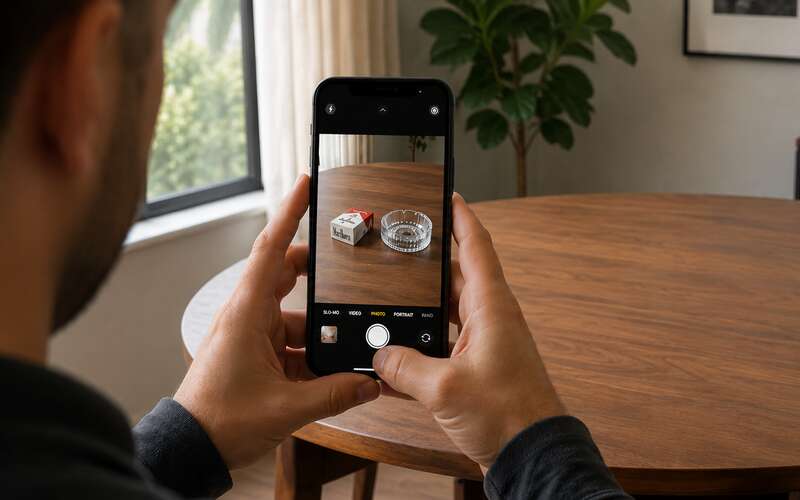

Can Augmented Reality Help People Quit Smoking and Vaping?
Key Takeaways:
- Moffitt’s ARC app uses virtual smoking cues to help people practice managing cravings in the places and situations where they normally occur
- Researchers aim to enroll more than 2,000 people to determine whether adding ARC to standard Quitline treatment can improve smoking cessation, with early data showing encouraging reductions in cravings
- A new AR app designed for young adults will use realistic virtual vaping devices to help users manage triggers and cravings, with hopes of eventually testing the technology in a larger clinical trial
A morning cup of coffee. The drive to work. Finishing a meal.
For someone trying to quit smoking, cravings can come from everywhere.
Over years of smoking, those everyday experiences can become closely linked with cigarettes. Even after someone decides to quit, those familiar triggers can produce powerful cravings and increase the risk of relapse.
Researchers at Moffitt Cancer Center are testing whether a technology better known for games and social media could help break those connections.
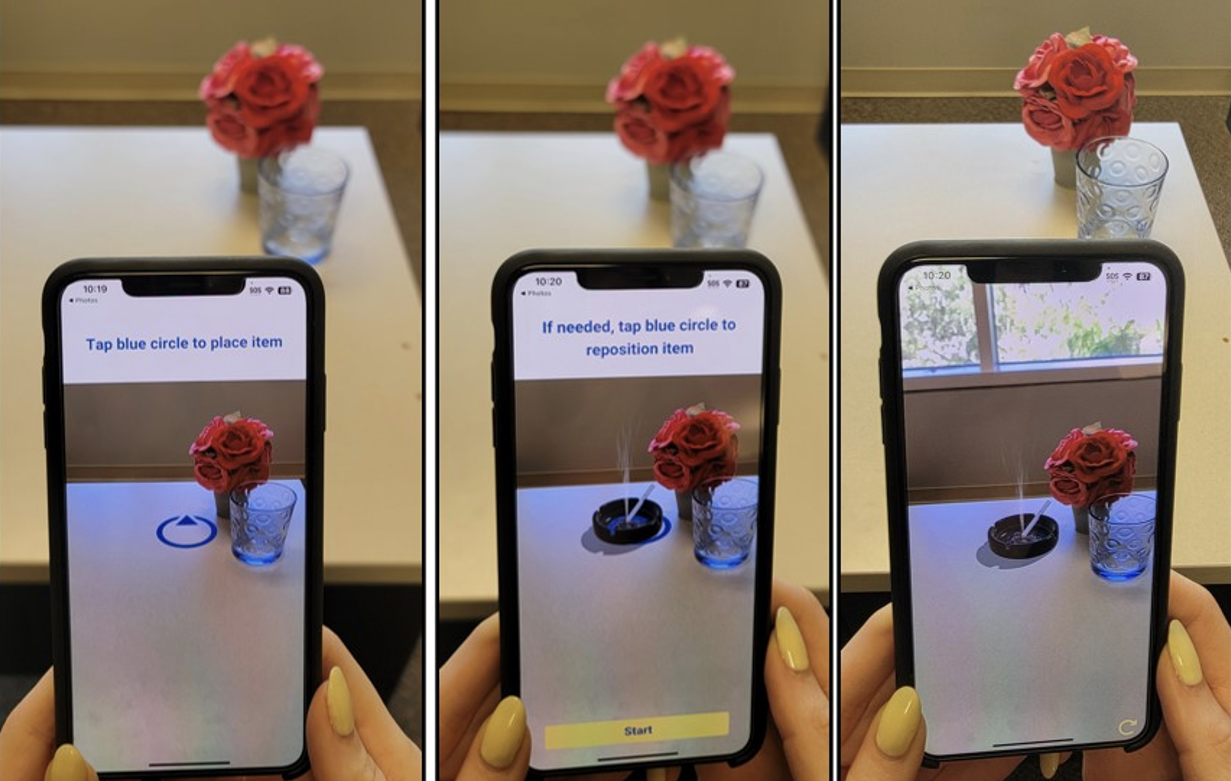
Moffitt’s ARC app uses augmented reality to place virtual smoking cues, such as an ashtray and cigarettes, into a user’s real-world environment through a smartphone screen. The technology is designed to help people repeatedly encounter common smoking triggers without smoking, with the goal of reducing cravings over time.
The App for Reducing Craving, or ARC, uses augmented reality (AR) to place realistic virtual cigarettes, ashtrays, lighters and other smoking cues into a person's surroundings through a smartphone screen. The goal isn't to distract someone from a craving. It's to help retrain their response to the things that trigger it.
"We started with an idea of just using augmented reality as a way to help assist folks in quitting smoking," said Christine Vinci, PhD, a researcher in Moffitt's Department of Health Outcomes and Behavior .
Smoking is linked to many types of cancers including lung, head and neck, bladder, kidney, pancreatic, colorectal and cervical cancers. Helping people quit smoking is one of the most effective ways to reduce their future cancer risk.
Bringing Treatment Into the Real World
ARC is based on a behavioral treatment known as cue exposure therapy. By repeatedly exposing someone to a smoking-related trigger without allowing them to smoke, researchers hope to gradually weaken the connection between that trigger and the craving it produces.
The concept isn't new. Researchers have known for decades that repeatedly exposing people to cigarettes and other smoking cues in a controlled setting can reduce cravings.
The problem is where that learning happens.

Christine Vinci, PhD
"We know this works in the lab with real cigarettes and ashtrays and lighters," Vinci said. But when people leave the lab and encounter the same triggers in their everyday lives, those cravings can return.
Augmented reality offers a potential solution. Instead of requiring people to visit a clinic, ARC allows them to conduct cue exposure sessions in the places where they normally experience cravings.
Using their phone's camera, participants can place virtual smoking objects onto a real surface. The current app includes 20 smoking-related AR images, some incorporating movement such as rising smoke. During the study, participants are encouraged to complete multiple short sessions each day, particularly in places and situations where they would typically smoke.
Putting ARC to the Test
After years of development and smaller studies, ARC is now being evaluated in a large randomized controlled trial.
The National Institutes of Health-funded study aims to enroll 2,072 people who smoke through the Tobacco Free Florida Quitline. Participants receive standard Quitline cessation treatment and are randomly assigned to use either ARC with its augmented reality features or a control version of the app without AR.
The researchers will ultimately compare smoking abstinence six months after enrollment.
Vinci says the trial is approaching the halfway point in recruitment, meaning researchers cannot yet evaluate the primary outcome. But early data on cravings are providing an encouraging signal.
Toward the end of the 35 days participants use the app, those receiving the AR intervention appear to be reporting lower cravings than participants in the control group.
"It's kind of an early signal that the app is doing what we expect it to do," Vinci said. The bigger question, she added, is whether those reductions in cravings will ultimately translate into greater success quitting smoking.
Vinci emphasizes that ARC isn't designed to be a standalone solution. Instead, researchers envision it working alongside proven cessation approaches such as nicotine replacement therapy, counseling and coping-skills training.
From Cigarettes to Vaping

Vani Simmons, PhD
Now, Vinci and Vani Simmons, PhD, director of Moffitt’s Tobacco Research and Intervention Program, are applying what they've learned from ARC to another challenge: helping young adults quit vaping.
The researchers are collaborating to develop a smartphone-based AR intervention that places virtual vaping devices into users' real-world environments.
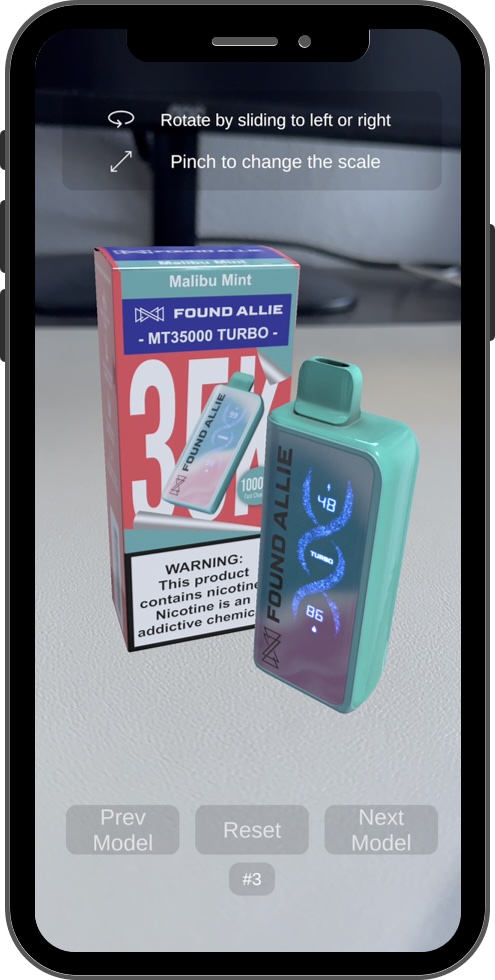 Although cigarettes and vapes both deliver addictive nicotine, Simmons says vaping presents distinct challenges. Devices come in a wide range of shapes, colors and styles, and young adults may associate vaping with everything from social situations and stress to convenience and habit.
To ensure the virtual cues reflect those experiences, researchers interviewed young adults who vape about commonly used devices, brands and product types. Those findings guided development of 20 different AR vaping cues.
Moffitt researchers are adapting augmented reality technology to help young adults quit vaping. The smartphone app places realistic virtual vaping devices into a user’s real-world environment, allowing them to practice managing cravings without actually vaping.
The underlying idea remains the same. Users would repeatedly encounter virtual vaping cues without actually vaping, potentially weakening the connection between those triggers and cravings over time.
Researchers hope to eventually evaluate the vaping app in a larger clinical trial and, like ARC, pair the technology with existing cessation resources rather than use it on its own.
"Many young adults tell us they want to quit vaping, but we still have relatively few evidence-based tools designed specifically for them," Simmons said. "Augmented reality gives us an opportunity to bring support directly into the situations where cravings happen, helping people practice coping skills in real time and in the real world."